

Winter Vehicle and Camper Preparedness Guide
Winter Vehicle and Camper Preparedness Guide
Winter travel can turn a delay into an exposure emergency. Prepare the vehicle or camper, monitor forecasts and avoid travel when officials advise staying off roads.
Maintain the vehicle
Check battery, tires, fluids, lights, wipers, brakes, heater and fuel before severe weather. RV and camper systems require manufacturer-specific winterization and ventilation procedures.
Carry a winter kit
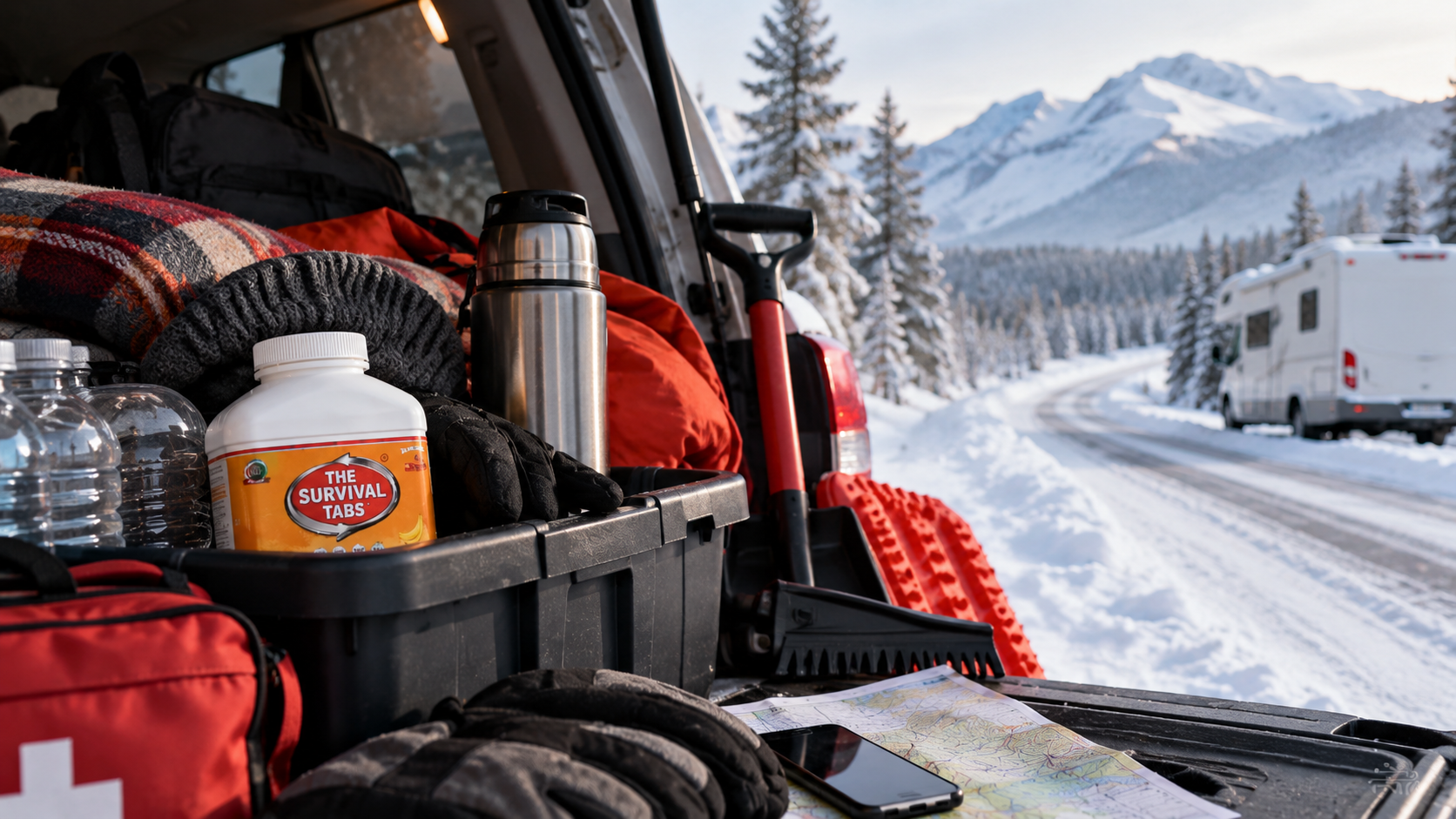
Include warm clothing, blankets, water, nonperishable food, medication, phone charging, flashlight, first aid, map, ice scraper, shovel, traction material and reflective signaling equipment.
If stranded
Call for help, share location and follow official guidance. Staying with the vehicle may improve visibility to rescuers unless the location is immediately dangerous. Keep the exhaust area clear before limited engine use and never rely on combustion heaters in unsafe enclosed spaces.
Carbon monoxide
Generators, stoves and fuel-burning heaters can kill in enclosed or poorly ventilated spaces. Follow manufacturer instructions, use appropriate alarms and never improvise indoor operation.
Food and water
Protect water from freezing where practical and inspect food exposed to vehicle temperature extremes. Survival Tabs may add compact no-cook backup nutrition, but not warmth, water, rescue communication or sufficient long-duration calories.