

Winter Emergency Shelter and Snow Safety Guide
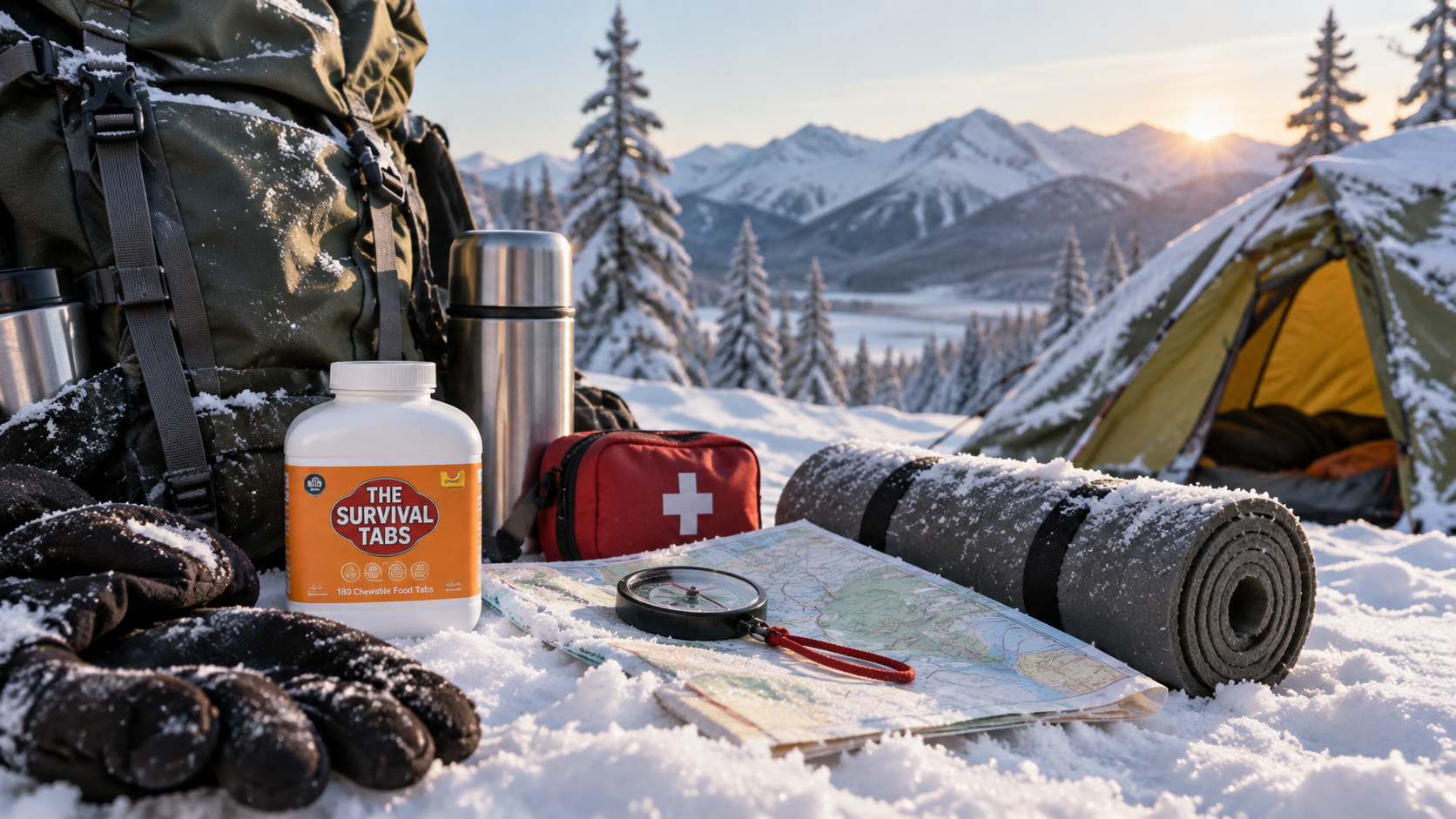
Purpose and limits
This guide helps a stranded group choose and manage the safest available winter shelter while rescue is contacted.
It is not a technical snow-construction, mountaineering, or avalanche-rescue manual.
Official warnings, land-manager rules, emergency instructions, and hands-on training take priority.
- Activate rescue early.
- Prevent further exposure.
- Choose the lowest-risk available shelter.
- Maintain ventilation and rescue visibility.
- Abandon any shelter that becomes unsafe.
The rescue-first sequence
Building can consume time, energy, daylight, and heat.
Before construction, contact help, mark the location, treat urgent injuries, add clothing, and use existing shelter.
A visible vehicle, building, or intact tent may be safer than an improvised structure.
- Stop and assess.
- Call or signal for help.
- Account for every person.
- Protect from wind and wet.
- Select the simplest safe option.
Pre-trip winter plan
Winter shelter safety starts before travel.
Match equipment and route to forecast, terrain, snowpack, remoteness, daylight, and group ability.
Leave an itinerary and overdue-response procedure.
- Check official weather forecasts.
- Check avalanche forecasts where relevant.
- Check road, trail, and land closures.
- Carry redundant communications.
- Plan conservative turnaround times.
- Identify emergency access points.
Personal winter equipment
Clothing and sleep systems are the first layer of shelter.
Moisture management matters because sweat and wet fabric accelerate heat loss.
Carry enough insulation for an unplanned stop.
- Layered non-cotton clothing.
- Windproof and waterproof outer layers.
- Warm hat, mittens, face protection, and insulated waterproof boots.
- Insulated sleeping pad and cold-rated sleep system.
- Dry reserve layers in waterproof storage.
- Headlamp, signaling, navigation, and first-aid equipment.
Group equipment
Shared equipment must reflect group size and the loss of one item.
Distribute critical gear rather than placing everything in one pack or vehicle.
Know the equipment before the emergency.
- Four-season or condition-appropriate shelter.
- Repair sleeve, patches, cord, stakes, and shovel suitable to training.
- Multiple lights and batteries.
- Emergency blankets and ground insulation.
- Stove and fuel only for lawful outdoor use.
- Communication backup and power bank.
Choose shelter before building
Use the least complex option that provides protection without introducing a greater hazard.
Existing legal structures, an intact vehicle, and a properly selected tent often require less energy than snow excavation.
Never enter abandoned buildings, caves, mines, or unstable structures.
- Existing staffed facility when accessible.
- Vehicle when road-stranded and safe to remain.
- Tent on a screened site.
- Simple wind protection using carried equipment.
- Snow shelter only when conditions, training, time, tools, and site are appropriate.
Site hazard screening
A sheltered-looking depression can be an avalanche path, flood channel, cornice runout, tree-fall zone, or snow-drift trap.
Assess hazards before unpacking or digging.
If hazards cannot be evaluated, choose more conservative terrain or remain with a visible vehicle.
- Avoid avalanche start zones, tracks, and runout.
- Avoid cornices and slopes below them.
- Avoid dead trees, loaded branches, cliffs, stream channels, lake ice, and roadways.
- Avoid areas where wind deposits rapidly drifting snow.
- Avoid geothermal, utility, electrical, and exhaust hazards.
Avalanche boundary
Avalanche terrain requires specialized education, forecasts, equipment, and judgment.
A low danger rating does not mean no danger.
Do not use this article to decide that a slope is safe.
- Read the regional avalanche forecast.
- Avoid slopes and runout zones when uncertain.
- Do not dig into a slope to create shelter.
- Do not travel farther into hazard to find deeper snow.
- Follow trained local guidance and retreat when conditions worsen.
Wind and drifting snow
Wind removes heat and can bury tents, block vents, and erase tracks.
Use terrain and carried barriers that do not expose the group to avalanche, tree, or collapse hazards.
Monitor wind direction and deposition throughout the stay.
- Lower exposure without entering gullies or runout.
- Orient openings away from prevailing wind when safe.
- Keep vents and exits clear.
- Mark shelter location above expected drifting.
- Reassess after every major wind increase.
Vehicle shelter
When stranded in winter, a vehicle is often visible and protects from wind.
Remain with the vehicle unless a clearly safer occupied shelter is very close and travel is safe.
Carbon monoxide is a critical hazard when the engine runs.
- Call for help and share location.
- Display a distress marker.
- Clear the exhaust pipe before running the engine.
- Vent slightly on the downwind side and follow official guidance.
- Run the engine only intermittently as directed and monitor occupants.
- Never sleep with an unsafe engine or blocked exhaust operating.
Tent shelter
A tent must match expected wind, precipitation, snow load, and site conditions.
A season label is not a safety guarantee.
Snow accumulation can deform or collapse a tent.
- Use every manufacturer-required anchor and guy line.
- Protect the floor from abrasion and water.
- Keep ventilation open.
- Remove accumulating snow safely and frequently.
- Keep combustion devices outside.
- Inspect poles, fabric, anchors, and exits after weather changes.
Simple wind protection
A tarp, emergency bivy, vehicle, pack wall, or natural terrain may reduce wind without major excavation.
Do not cut live trees or build heavy overhead structures.
Keep coverings from sealing around the face.
- Block wind at the body level.
- Insulate from the ground.
- Keep breathing openings clear.
- Secure loose material against wind.
- Maintain a visible exit and external marker.
Snow-shelter decision gate
Snow shelters can insulate, but excavation can cause sweating, exhaustion, injury, burial, and collapse.
Use them only with suitable snow, stable terrain, adequate time, tools, training, and a rescue plan.
Do not begin if an existing safer option is available.
- Confirm the site is outside avalanche and overhead hazards.
- Confirm enough daylight and energy.
- Use a buddy system.
- Set a stop time and abandonment threshold.
- Keep rescue signaling active.
- Never let an untrained child excavate unsupervised.
No technical construction tutorial
This guide does not provide dimensions, load calculations, tunnel geometry, or advanced snow-cave methods.
Construction details vary with snow type, terrain, weather, group ability, and professional guidance.
Improvised structures cannot be certified as safe.
- Use recognized hands-on winter training.
- Follow land-manager guidance.
- Choose minimal excavation.
- Avoid deep unsupported spans.
- Do not claim a shelter is stormproof or collapse-proof.
Ventilation and carbon monoxide
Snow, fabric, and wind can block air exchange quickly.
Every enclosed shelter needs continuous ventilation and frequent checks.
Fuel-burning devices can consume oxygen and create fatal carbon monoxide.
- Keep multiple vents open when appropriate.
- Clear vents after drifting or snowfall.
- Never run a stove, heater, lantern, grill, or engine in a tent or snow shelter.
- Cook fully outside and away from openings.
- Treat headache, nausea, dizziness, confusion, or unusual sleepiness as an emergency.
Entrances and exits
A shelter is unsafe if occupants cannot leave quickly.
Snowfall and drifting can block a low entrance or trap doors and zippers.
Maintain an external marker and an internal tool only when it can be stored safely.
- Keep the primary exit clear.
- Identify a secondary escape approach when feasible.
- Do not pile gear in the exit.
- Check zippers and closures regularly.
- Clear accumulated snow from outside with a buddy.
Snow load and collapse checks
Snow changes with wind, temperature, sun, rain, and settling.
Cracking, sagging, falling granules, blocked vents, or distorted supports are warning signs.
Leave early rather than testing a failing structure.
- Inspect ceiling and walls without striking them.
- Check tent poles and roof loading.
- Listen for settling or cracking.
- Move occupants out if conditions deteriorate.
- Do not re-enter a collapsed or unstable shelter for gear.
Ground insulation
Conduction into snow and frozen ground can drain heat even inside a windproof shelter.
Use insulated pads, packs, dry clothing, and other appropriate barriers.
Do not rely on compacted snow alone.
- Separate every sleeper from snow.
- Protect pads from puncture.
- Keep wet equipment away from sleep insulation.
- Share spare insulation with the coldest or least mobile person.
- Recheck pressure points and circulation.
Clothing and moisture
Overexertion during digging can soak base layers.
Slow the work, rotate tasks, and ventilate clothing before sweat accumulates.
Change wet layers without exposing the person longer than necessary.
- Open or remove layers before heavy work.
- Use frequent warm-up breaks.
- Protect hands and face.
- Replace wet socks and gloves.
- Keep one dry sleep layer reserved.
Hypothermia response
Confusion, slurred speech, poor coordination, drowsiness, or reduced responsiveness can indicate serious hypothermia.
Stop exposure, insulate gently, and seek emergency medical help.
A severely cold patient must be handled carefully.
- Move into shelter.
- Remove wet clothing when safe.
- Warm the trunk with protected heat sources.
- Do not give alcohol.
- Do not give drinks to an unconscious person.
- Follow dispatcher CPR instructions.
Frostbite response
White, gray, waxy, firm, or numb skin requires prompt protection and medical evaluation.
Do not rub frostbitten tissue or use snow.
Avoid thawing when refreezing is possible.
- Get into shelter.
- Remove constricting items.
- Do not walk on frostbitten feet unless essential for survival.
- Use warm, not hot, water only under appropriate guidance.
- Do not use stoves, fires, heating pads, or direct radiant heat on numb skin.
Water and snowmelt
Eating snow lowers body temperature and does not replace safe hydration planning.
Melt snow using a lawful outdoor system with adequate fuel.
Water from snow, ice, lakes, and streams may require treatment.
- Start with a small amount of liquid water when melting snow.
- Collect clean-looking snow away from contamination.
- Treat natural-source water as directed by public-health and land guidance.
- Store water to prevent refreezing.
- Do not operate a stove inside shelter.
Food and energy
Cold work increases energy needs, but food cannot reverse severe cold illness.
Use familiar foods that can be eaten safely with minimal preparation.
Avoid dietary or medical improvisation.
- Eat regular small portions when alert and able to swallow.
- Protect food from wildlife.
- Plan no-cook backup foods.
- Do not rely on caffeine or alcohol for warmth.
- Do not use Survival Tabs as a sole diet or medical treatment.
Fire safety
Open fire may be prohibited, ineffective, or dangerous in winter conditions.
Check restrictions and use safer alternatives.
Never move fire or embers into a shelter.
- Keep fire outside and downwind.
- Clear combustible material as required.
- Supervise continuously.
- Extinguish completely.
- Do not heat rocks for enclosed-space use.
- Do not use accelerants or improvised fuel.
Rescue visibility
A well-hidden shelter may be warm but difficult to find.
Make location visible without creating avalanche, fall, or fire hazards.
Keep signals operating after sheltering.
- Mark the route from vehicle or trail when lawful.
- Use bright fabric or reflective material.
- Share coordinates and updates.
- Maintain an audible signaling option.
- Do not wander repeatedly from the known location.
Children and families
Children lose heat quickly and may hide symptoms.
Assign an adult to observe each child rather than relying on self-report.
Keep play away from excavation, roofs, vents, tools, and traffic.
- Use dry fitted layers.
- Check hands, feet, face, behavior, and speech.
- Keep children off shelter roofs.
- Do not let children sleep against walls where snow or condensation wets bedding.
- Evacuate early when a child becomes unusually quiet, clumsy, or confused.
Older adults and health needs
Cold can worsen mobility, circulation, breathing, and medication challenges.
Plan early assistance and avoid asking a vulnerable person to perform strenuous excavation.
Use the person's established medical plan.
- Preserve mobility aids.
- Keep medications within required temperature limits.
- Provide extra ground insulation.
- Schedule regular checks.
- Seek early clinical advice for worsening symptoms.
Disability and access
A winter shelter must work for the people using it.
Consider mobility, transfer space, communication, sensory needs, service animals, and caregiver support.
Do not separate a person from essential devices.
- Create a stable accessible approach when possible.
- Protect batteries from cold.
- Use the person's communication method.
- Keep exits wide enough for needed assistance.
- Include evacuation support in every check.
Pets and service animals
Animals need shelter, water, food, and protection from frostbite and hazards.
Do not allow animals to block vents or exits.
Keep service animals with their handlers whenever possible.
- Use insulated bedding.
- Dry paws and coats.
- Protect from antifreeze, fuel, food hazards, and wildlife.
- Monitor for weakness, shivering, confusion, or injury.
- Contact a veterinarian for concerning symptoms.
Sanitation
Waste management can contaminate snow, water, and campsites.
Follow land-manager rules even during an emergency when feasible.
Keep sanitation separate from sleeping and water collection.
- Use approved waste systems.
- Wash or sanitize hands.
- Store hygiene supplies where they will not freeze unusably.
- Keep waste away from vents and entrances.
- Pack out materials as required.
Inspection schedule
Winter shelter conditions can change faster than sleeping occupants notice.
Assign awake checks when severe weather or drifting creates risk.
Record conditions and actions.
- Check vents.
- Check exits.
- Check snow load and supports.
- Check every person's warmth and responsiveness.
- Check weather, communication, and rescue updates.
Abandonment criteria
Leaving an unsafe shelter early is safer than waiting for collapse or poisoning.
Move to a predefined alternative without entering greater terrain hazard.
Account for every person and critical medication.
- Leave for blocked ventilation.
- Leave for collapse signs or structural distortion.
- Leave for carbon-monoxide symptoms.
- Leave for flooding, fire, avalanche, tree, or ice hazard.
- Leave when a safer rescue direction is received.
Practice drills
Practice should use safe conditions and qualified instruction.
Never bury a person, obstruct ventilation, or simulate collapse.
Focus on decisions and communication.
- Practice forecast checks.
- Practice site rejection.
- Practice tent snow-load inspection.
- Practice emergency calls and coordinates.
- Practice hypothermia recognition and rescue handoff.
Frequently asked questions
A snow cave is not automatically safer than a tent; site, snow, ventilation, construction, and rescue factors matter.
A candle is not a safe substitute for ventilation or heat planning.
Deep snow is not proof of avalanche safety.
- Do not sleep with a stove or heater operating inside.
- Do not eat snow as the primary hydration method.
- Do not rely on a four-season label as a guarantee.
- Do not build beneath cornices, dead trees, or loaded branches.
- Stay with a visible safe vehicle unless official guidance or immediate danger requires leaving.
Explicit exclusions
This article excludes detailed high-risk construction and rescue instruction.
Safety boundaries must remain through review.
Any future technical content requires specialist authorship.
- No avalanche route finding or companion-rescue tutorial.
- No deep snow-cave dimensions or structural calculations.
- No tree cutting, heavy roof building, or deep excavation.
- No indoor combustion or heated-rock systems.
- No stormproof, collapse-proof, or survival guarantees.
- No delaying rescue to complete a shelter.
Professional review gate
This guide requires multidisciplinary review before publication.
Regional snow, avalanche, fire, and land-use differences must be checked.
Product references must remain within approved claims.
- Winter search-and-rescue specialist.
- Avalanche educator or forecaster.
- Cold-weather outdoor educator.
- Emergency physician or paramedic.
- Structural or snow-shelter specialist.
- Accessibility, pediatric, veterinary, fire/CO, legal, environmental, and product-compliance reviewers.
Official sources
These links support winter forecasts, shelter decisions, cold injury, ventilation, and terrain awareness.
Local land managers and avalanche centers may provide more specific current instructions.
Verify all guidance immediately before publication.
- National Weather Service — Winter Before
- National Weather Service — Winter During
- National Park Service — Winter Adventure
- National Park Service — Mount Rainier Winter Safety
- National Park Service — North Cascades Winter Safety
- CDC — Preventing Hypothermia
- CDC — Preventing Frostbite