

Wildfire Preparedness Guide
Status: Production Draft
Pillar: Emergency Preparedness Center
Topic Category: Wildfire Preparedness
Legacy records consolidated: 3 (IDs 131, 138, 139)
Primary audience: Households, renters, homeowners, caregivers, pet owners, and people living in or traveling through wildfire-prone areas
Editorial approach: Calm, practical, safety-first, and based on official guidance
Wildfire Preparedness Guide
Wildfires can spread quickly, disrupt roads and utilities, and create dangerous smoke far beyond the fire line. Good preparation is not about predicting exactly what will happen. It is about receiving warnings early, leaving before conditions become dangerous, protecting people with additional needs, reducing smoke exposure, and returning only when officials say it is safe.
This guide explains how to prepare your household before wildfire season, what to do when fire or smoke threatens your area, how to evacuate safely, and how to manage the first stages of recovery.
Important safety note
Always follow instructions from local fire, law-enforcement, public-health, and emergency-management authorities. Conditions can change rapidly. This guide supports household planning but does not replace local evacuation orders, professional medical advice, fire-code requirements, or qualified property assessments.
1. Understand Your Local Wildfire Risk
Wildfire risk is not limited to homes beside forests. Wind-driven embers can travel ahead of a fire, smoke can affect communities many miles away, and evacuation routes may become congested or close unexpectedly.
Start by identifying:
• Whether your home, workplace, school, or regular travel route is in a wildfire-prone area.
• Which local agency issues evacuation warnings and orders.
• How alerts are delivered: phone notifications, text messages, sirens, radio, local apps, or door-to-door notices.
• At least two ways to leave your neighborhood.
• Nearby shelters, cleaner-air spaces, and temporary animal-shelter options.
• Household members who may need extra time or assistance.
Do not rely on social media alone. Enroll in official local alert systems and keep a battery-powered or hand-crank radio available in case mobile or internet service fails.
2. Know the Difference Between a Warning and an Order
Terminology varies by jurisdiction, but many communities use stages such as evacuation warning, evacuation order, shelter in place, or area closed.
An evacuation warning generally means you should prepare to leave and consider leaving early if anyone in your household needs extra time. An evacuation order means leave immediately by the route authorities recommend.
Do not wait to see flames. Smoke, falling ash, road congestion, shifting wind, and utility failures can make a delayed departure much more dangerous.
Households that should strongly consider leaving during the warning stage include those with:
• Infants or young children.
• Older adults.
• People with limited mobility.
• People who use oxygen or powered medical equipment.
• People with asthma, COPD, heart disease, diabetes, chronic kidney disease, or other chronic conditions.
• Pregnant household members.
• Multiple pets, livestock, or animals requiring trailers.
• Limited transportation.
3. Build a Household Wildfire Plan
A useful plan should be short enough to use under stress.
Write down:
• Who makes the decision to leave if officials have not yet issued an order.
• Who helps children, older adults, or anyone with mobility or communication needs.
• Who gathers medications, documents, phones, chargers, and go-bags.
• Who handles pets or livestock.
• Which vehicle will be used and where its keys are kept.
• Two evacuation routes and one out-of-area meeting place.
• An out-of-area contact everyone can call or message.
• What to do if family members are separated at work or school.
Practice the plan at least once before the highest-risk season. A simple drill should include receiving a pretend alert, loading the vehicle, securing pets, and driving the primary route.
4. Prepare Your Evacuation Go-Bags
Each household member should have access to essential supplies that can be loaded quickly. Keep bags light enough to carry.
Include:
• Water and shelf-stable food.
• Prescription medicines and a written medication list.
• Copies of identification, insurance information, emergency contacts, and important account numbers.
• Phone charging cables, power banks, and a car charger.
• Flashlight or headlamp with spare batteries.
• NIOSH-approved respirators suitable for smoke particles, stored clean and dry.
• Basic first-aid supplies.
• Change of clothing, sturdy shoes, and weather-appropriate layers.
• Hygiene items.
• Cash in small denominations.
• Hearing-aid batteries, glasses, mobility-device accessories, or other personal equipment.
• Supplies for infants, older adults, and people with disabilities.
• Pet carriers, leashes, food, water, medicines, vaccination records, and identification.
Compact emergency nutrition may be useful as one portable component of a broader evacuation food plan. It should not replace water, regular meals, medical nutrition requirements, or food appropriate for children and people with specific dietary needs.
5. Prepare Your Vehicle
During high-risk periods:
• Keep the fuel tank at least half full or maintain an appropriate charge for an electric vehicle.
• Park facing the direction of departure when practical.
• Avoid blocking the driveway with stored items or additional vehicles.
• Keep keys, glasses, wallets, phones, and shoes in a consistent location.
• Store a paper map because navigation apps may fail or direct traffic toward closed roads.
• Carry water, a first-aid kit, basic roadside equipment, and phone charging options.
• Secure child seats and animal carriers in advance.
Never drive around roadblocks or into heavy smoke when authorities have closed a route. Use the route specified by emergency personnel.
6. Plan for Pets and Livestock
Animals make evacuation slower, so prepare before an alert.
For household pets:
• Use labeled carriers or sturdy leashes.
• Keep recent photos and identification information.
• Prepare food, water, medicines, waste bags, and bedding.
• Identify hotels, shelters, friends, or boarding facilities that accept animals.
For horses or livestock:
• Arrange transport and trailer access before fire season.
• Practice loading animals.
• Identify more than one destination.
• Leave early; loading and moving large animals can take considerable time.
• Follow local animal-control, agricultural-extension, and emergency-management guidance.
Do not release animals onto roads or open land unless directed by authorities or required by an immediate life-threatening situation.
7. Reduce Risk Around the Home
Property preparation depends on building type, local vegetation, fire codes, climate, and community rules. Use local fire-department, forestry, Firewise, or qualified professional guidance rather than relying on a single universal measurement or do-it-yourself construction claim.
Common risk-reduction actions include:
• Removing dry leaves, needles, and debris from roofs, gutters, decks, and areas immediately beside structures.
• Keeping combustible materials away from exterior walls and under decks.
• Maintaining vegetation according to local defensible-space requirements.
• Trimming dead branches and removing dead plants.
• Keeping address numbers visible to responders.
• Ensuring driveways and gates allow emergency access where applicable.
• Checking vents, roofing, siding, windows, and decks for vulnerabilities with qualified guidance.
• Storing fuels and flammable materials safely and in compliance with local rules.
Renters should ask property managers about vegetation maintenance, alarms, evacuation procedures, and smoke-control measures. Apartment residents should know every available exit and never use elevators during a fire emergency unless officials specifically direct otherwise.
8. Prepare for Wildfire Smoke
Wildfire smoke is a mixture of gases and fine particles. It can irritate the eyes, nose, throat, and lungs and can cause coughing, wheezing, headaches, chest discomfort, and difficulty breathing. Smoke may remain hazardous after the visible fire threat has passed.
People at increased risk include children, pregnant people, older adults, outdoor workers, and people with asthma, COPD, heart disease, diabetes, chronic kidney disease, or other chronic conditions.
Before smoke season:
• Discuss a smoke plan with a healthcare professional if someone has a chronic condition.
• Maintain prescribed medicines and follow the person’s action plan.
• Learn how to check the Air Quality Index.
• Choose a room that can be closed off from outside air.
• Consider an appropriately sized portable air cleaner.
• Replace HVAC filters according to manufacturer guidance and the system’s capabilities.
• Avoid indoor activities that add particles, such as smoking, burning candles, frying, or using fireplaces.
A respirator can reduce exposure to smoke particles when it fits and is used correctly, but it does not remove all gases and does not replace evacuation. Cloth masks, bandanas, and loose face coverings do not provide the same particle protection as a properly used NIOSH-approved respirator.
People with breathing or heart conditions should ask a healthcare professional whether respirator use is appropriate for them.
9. Monitor Conditions Without Delaying Departure
Use multiple official information sources:
• Local emergency alerts.
• Local fire and law-enforcement updates.
• Emergency Alert System broadcasts.
• NOAA Weather Radio.
• AirNow Air Quality Index and Fire and Smoke Map.
• State or regional fire-information services.
Avoid repeatedly going outside to look for smoke or flames. Prepare while information is still available, and leave when ordered.
10. What to Do When a Wildfire Threatens
When an evacuation warning is issued:
• Charge phones and power banks.
• Place go-bags, medicines, documents, pet supplies, and mobility equipment in the vehicle.
• Dress in long pants, a long-sleeved shirt, sturdy closed shoes, and eye protection if ash is present.
• Bring pets indoors or place livestock near loading areas.
• Close windows and doors.
• Follow local instructions about utilities; do not shut off gas unless directed or trained to do so.
• Tell an out-of-area contact where you are going.
• Consider leaving early if your household needs extra time.
When an evacuation order is issued:
• Leave immediately.
• Follow official routes.
• Keep vehicle windows closed and ventilation set to recirculate when smoke is present, if safe to do so.
• Drive slowly with headlights on because visibility may be poor.
• Watch for emergency vehicles, pedestrians, animals, debris, and downed power lines.
• Do not return for forgotten items.
11. If You Cannot Evacuate Normally
Call emergency services and follow their instructions. Explain your location, the number of people present, medical or mobility needs, and whether animals are involved.
Do not improvise a shelter location based on internet advice. Suitable actions depend on fire location, building construction, roads, weather, and responder instructions.
If trapped in a vehicle or structure, contact emergency services, stay as low as practical away from smoke, and follow official instructions. These are last-resort situations, not alternatives to early evacuation.
12. Shelter and Temporary Relocation
At a shelter or temporary location:
• Register so family members can locate you.
• Tell staff about medical, mobility, communication, dietary, or respiratory needs.
• Keep medicines and critical equipment with you.
• Continue checking air quality.
• Keep pets secured and follow shelter rules.
• Avoid returning until authorities lift restrictions.
A hotel, friend’s home, community shelter, or cleaner-air center may be appropriate depending on local conditions. Confirm that the destination is outside the threatened area and reachable by an open route.
13. Power Outages During Wildfires
Wildfires may damage electrical infrastructure or lead utilities to shut off power to reduce ignition risk.
Prepare for:
• Loss of refrigeration.
• Failure of powered medical equipment.
• Limited fuel availability.
• Traffic-signal outages.
• Reduced mobile service.
• Unsafe generator use.
Never operate a portable generator, grill, camp stove, or fuel-burning device indoors, in a garage, or near doors, windows, or vents. Carbon monoxide can kill without warning. Follow the manufacturer’s instructions and current local safety guidance.
14. Returning Home
Do not return until authorities say the area is safe.
On return:
• Watch for downed power lines, damaged trees, unstable structures, hot spots, leaking fuel, and broken glass.
• Do not enter a visibly damaged building until it has been assessed.
• Continue monitoring air quality because smoke may persist for days.
• Keep children and pets away from ash and debris.
• Wear appropriate protective clothing and follow public-health guidance for ash cleanup.
• Photograph damage before moving or discarding items when it is safe to do so.
• Contact your insurer promptly and keep records of conversations and expenses.
• Follow official drinking-water and food-safety advisories.
Ash may contain irritating or hazardous material, especially when buildings, vehicles, plastics, treated wood, or household chemicals burned. Do not use leaf blowers or other methods that put ash back into the air. Large, contaminated, or structurally hazardous cleanup should be handled by qualified professionals.
15. Food and Water After a Wildfire
Discard food exposed to heat, smoke, ash, firefighting chemicals, or unsafe temperatures when official food-safety guidance recommends doing so. Packaging that appears closed may not protect food from extreme heat or chemical contamination.
Do not drink tap water if authorities have issued a do-not-drink or boil-water notice. Boiling does not remove fuels, toxic chemicals, or radioactive contamination. Follow the exact advisory issued for your water system.
16. Health Warning Signs
Seek urgent medical help for severe trouble breathing, chest pain, confusion, fainting, blue or gray lips, or other signs of a medical emergency.
Contact a healthcare professional for persistent coughing, wheezing, shortness of breath, asthma symptoms, eye irritation, or other symptoms that do not improve after leaving smoky conditions.
Follow personal asthma, COPD, heart-disease, diabetes, pregnancy, or other medical plans. Do not change prescribed treatment based only on general online information.
17. Insurance and Documentation
Before fire season:
• Review insurance coverage and deductibles.
• Photograph or video rooms, major possessions, vehicles, and outbuildings.
• Store copies of policies and inventories in secure cloud storage and in the evacuation document kit.
• Record serial numbers for high-value equipment.
• Confirm how temporary housing and evacuation expenses are handled.
After damage:
• Contact the insurer through an official number.
• Keep receipts.
• Do not sign repair or assignment documents you do not understand.
• Be cautious of contractors or charities demanding immediate payment.
• Use official disaster-assistance channels and verify identities.
18. Wildfire Preparedness Checklist
Before wildfire season
□ Register for local emergency alerts.
□ Identify two evacuation routes.
□ Choose an out-of-area contact and meeting location.
□ Prepare go-bags, medicines, documents, respirators, and chargers.
□ Plan transport for pets and livestock.
□ Maintain the vehicle and keep adequate fuel or charge.
□ Review insurance and photograph possessions.
□ Reduce combustible debris around the home according to local guidance.
□ Prepare a cleaner-air room and learn to check AQI.
□ Practice the evacuation plan.
During elevated fire weather
□ Monitor official alerts and forecasts.
□ Charge devices and keep the vehicle ready.
□ Keep pets close and animal transport available.
□ Place essential items near the exit.
□ Check on neighbors who may need assistance without delaying your own evacuation.
During an evacuation warning
□ Load bags, medicines, documents, mobility equipment, and animals.
□ Dress for smoke, ash, and debris.
□ Notify your out-of-area contact.
□ Leave early if your household needs additional time.
During an evacuation order
□ Leave immediately.
□ Use the official route.
□ Do not return for belongings.
□ Do not bypass roadblocks.
After the wildfire
□ Wait for official permission to return.
□ Check structural, electrical, fuel, tree, and ash hazards.
□ Follow air-quality, water, and food advisories.
□ Document damage safely.
□ Contact insurers and official assistance programs.
□ Arrange professional inspection or cleanup where needed.
Frequently Asked Questions
Should I wait for an evacuation order before leaving?
Not necessarily. People who need extra time, have medical or mobility needs, transport animals, or lack reliable transportation may need to leave during an evacuation warning. Follow local guidance and never delay once an order is issued.
Is wildfire smoke dangerous if the fire is far away?
Yes. Smoke can travel long distances and may affect air quality even when flames are not nearby. Check official air-quality information and reduce exposure.
Does an N95-type respirator protect against all wildfire smoke hazards?
A properly fitted NIOSH-approved particulate respirator can reduce exposure to smoke particles. It does not remove every gas or vapor, and it does not make it safe to remain in an evacuation area.
Can I use a wet cloth or bandana instead?
A wet cloth or bandana does not provide the same particle filtration as a properly used approved respirator. Follow public-health guidance.
Should I shut off utilities before leaving?
Only follow local utility and emergency instructions. Shutting off gas or electrical systems incorrectly can create additional hazards.
Can I return briefly to collect belongings?
Do not re-enter a closed evacuation area. Conditions may change rapidly, and damaged roads, utilities, structures, trees, and ash can remain dangerous.
Can boiling make all post-fire water safe?
No. Boiling can address many biological hazards, but it does not remove fuels, toxic chemicals, salts, or radioactive contamination. Follow the specific notice from the water authority.
What images should accompany this article?
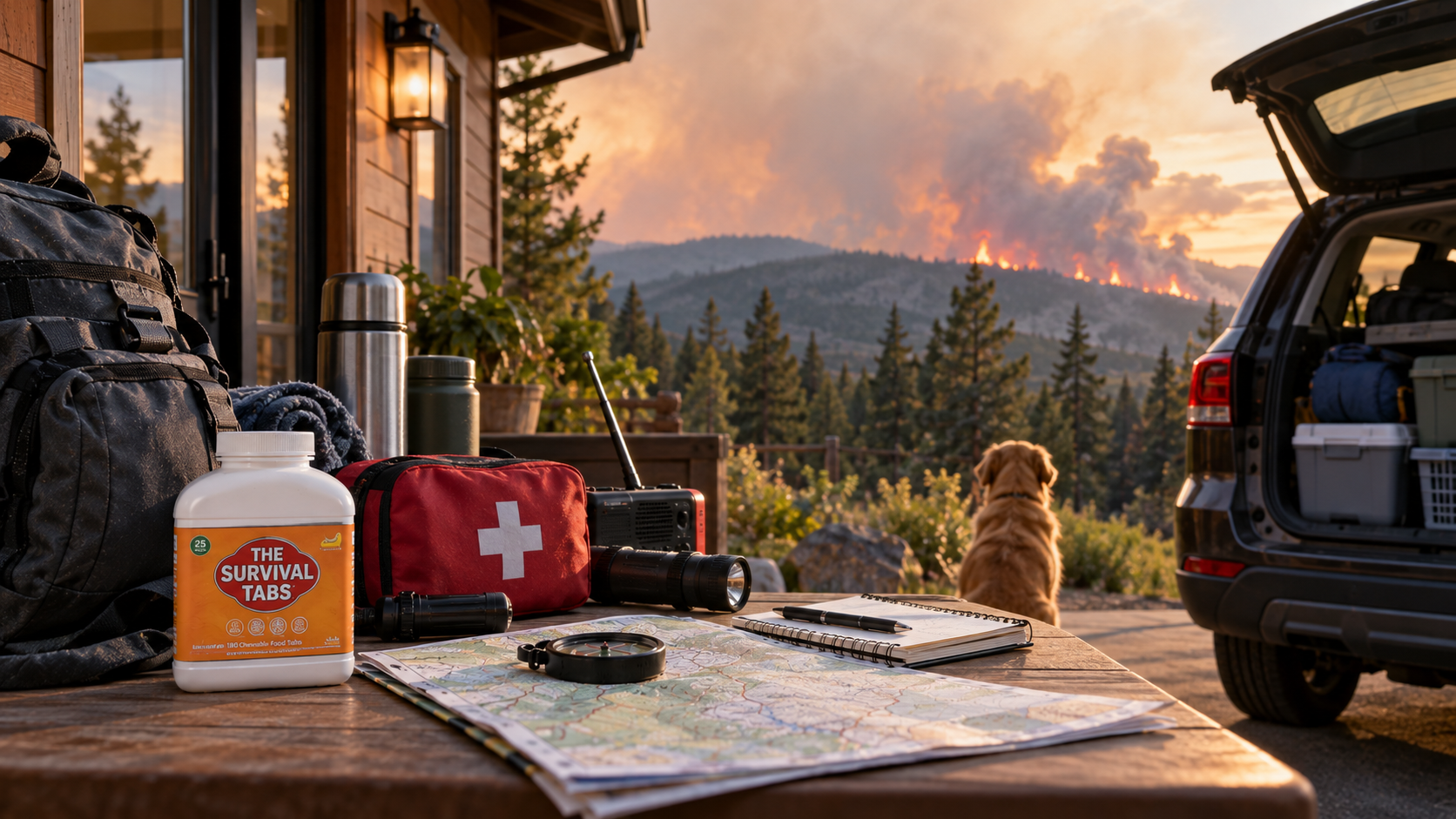
Featured image: A calm, realistic household wildfire-evacuation scene showing a family loading labeled go-bags and a pet carrier into a vehicle under a smoky but non-sensational sky. No visible injuries, panic, flames surrounding people, military imagery, or product dominance.
Supporting image 1: A clear preparedness layout showing a go-bag, water, documents, medicines, phone charger, flashlight, NIOSH-approved respirator, and pet supplies.
Supporting image 2: A simple evacuation-plan diagram with two routes, a meeting point, an out-of-area contact, and a reminder to follow official alerts.
Supporting image 3: A cleaner-air room with closed windows, a portable air cleaner, a correctly installed HVAC filter, and an AQI display.
Suggested featured-image alt text: Household loading wildfire evacuation supplies and a pet carrier into a vehicle before leaving.
SEO Package
SEO title: Wildfire Preparedness Guide: Evacuation, Smoke and Recovery
Meta description: Prepare for wildfire with a calm, practical guide to alerts, evacuation routes, go-bags, smoke protection, pets, power outages and safe return.
Suggested handle: wildfire-preparedness-guide
Suggested future URL: https://thesurvivaltabs.com/blogs/knowledge-center/wildfire-preparedness-guide
Schema type: Article with FAQPage only if the FAQ markup exactly matches the visible published questions and answers.
Editorial exclusions
This article intentionally excludes:
• Fear-based “survival” or catastrophe marketing.
• Claims that any food product prevents harm, improves emergency performance, or replaces a balanced diet.
• Instructions to ignore evacuation orders or defend property.
• Unverified fire shelters, improvised respirators, or last-minute structural modifications.
• Universal defensible-space measurements that may conflict with local law.
• Detailed fuel, electrical, generator, or gas shutoff procedures beyond official safety principles.
• Medical treatment advice beyond recognized emergency signs and direction to follow healthcare professionals.
Official sources used for verification
CDC — Wildfires and Your Safety
https://www.cdc.gov/wildfires/about/index.html
CDC — Preparing for Wildfires
https://www.cdc.gov/wildfires/safety/index.html
CDC — Safety Guidelines: Wildfires and Wildfire Smoke
https://www.cdc.gov/wildfires/safety/how-to-safely-stay-safe-during-a-wildfire.html
CDC — Safety Guidelines: After a Wildfire
https://www.cdc.gov/wildfires/safety/how-to-safely-stay-safe-after-a-wildfire.html
AirNow / U.S. EPA — Wildfire Smoke: A Guide for Public Health Officials, 2026
https://www.airnow.gov/publications/wildfire-smoke-guide/wildfire-smoke-a-guide-for-public-health-officials/
AirNow / U.S. EPA — Wildfire Smoke and Health Factsheets, 2026
https://www.airnow.gov/publications/wildfire-guide-factsheets/
Ready.gov — Wildfires
https://www.ready.gov/wildfires
U.S. Fire Administration — Wildfire Safety
https://www.usfa.fema.gov/prevention/wildfire/
Production QA Summary
• Calm, non-sensational framing: Passed
• Evacuation orders prioritized: Passed
• Smoke and vulnerable-population guidance included: Passed
• Pets, livestock, disability, medication, and transport planning included: Passed
• Generator and carbon-monoxide warning included: Passed
• Post-fire ash, water, food, insurance, and reentry guidance included: Passed
• Unsupported product, health, performance, and survival claims excluded: Passed
• Official 2026 smoke guidance incorporated: Passed
• Images not yet generated: Pending
• Shopify publication: Not yet queued
Production status: CONTENT LOCKED — IMAGE PENDING