

Wilderness Food Preservation Guide
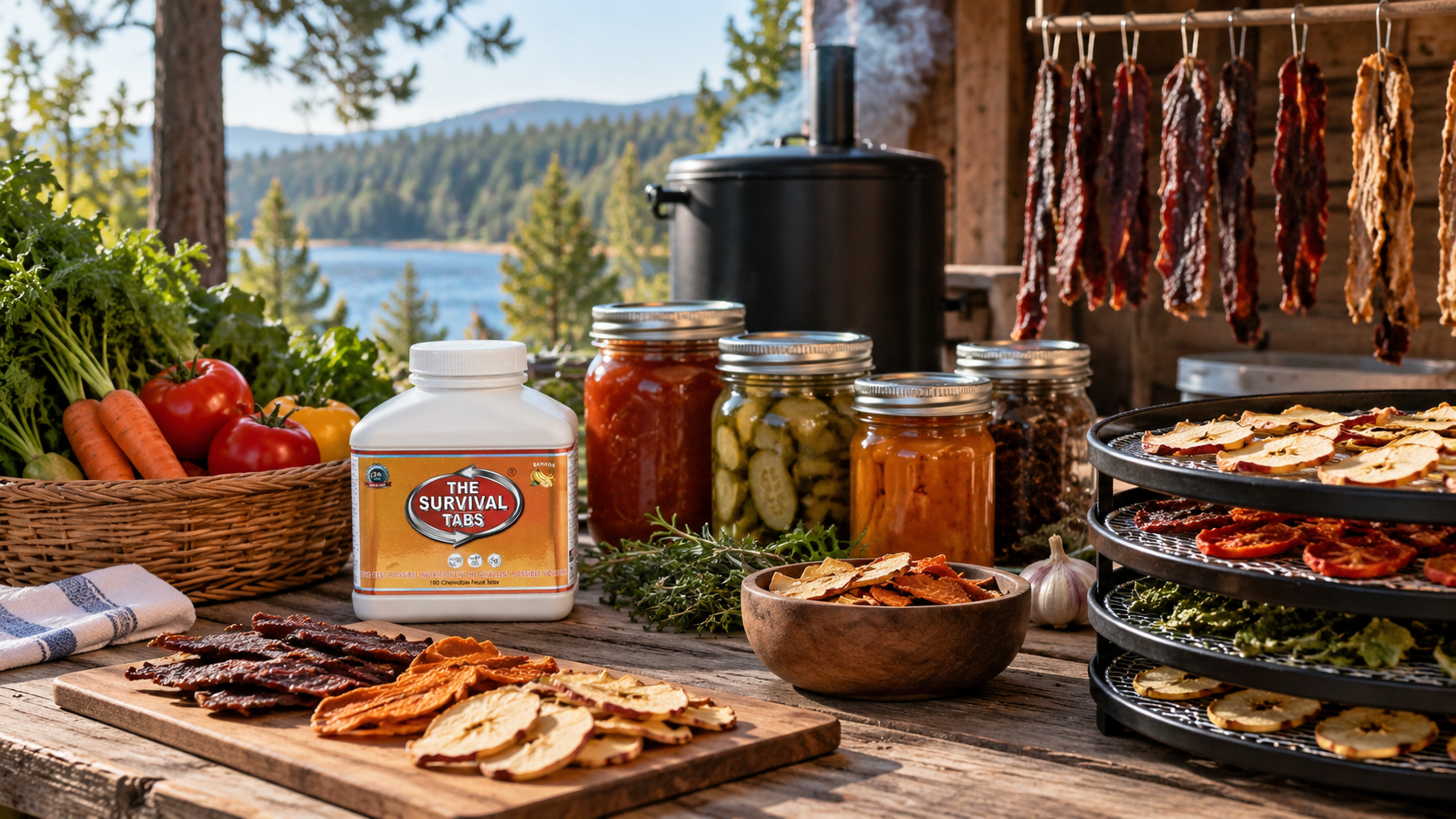
Food preservation can extend the usefulness of fish, meat, produce, and other foods, but unsafe preservation can allow dangerous microorganisms or toxins to develop without obvious changes in smell or appearance. In emergency preparedness, tested food-safety methods are more important than improvisation.
The First Question: Can the Food Be Kept Cold?
If reliable refrigeration or freezing is available, use it according to current food-safety guidance. During power outages, minimize opening refrigerators and freezers and follow official time-and-temperature guidance when deciding whether food can be kept.
Drying
Drying reduces moisture, but safe drying depends on the food, preparation, temperature, airflow, humidity, and final moisture level. Do not assume that sun-drying, hanging meat, or placing food near a fire automatically makes it shelf stable. Use tested instructions for the specific food.
Smoking
Smoking adds flavor and can be part of a tested preservation process, but smoking alone does not automatically make fish or meat safe for room-temperature storage. Some smoked products still require refrigeration, freezing, or additional tested processing. Follow authoritative recipes and processing methods.
Canning
Low-acid foods such as meat, fish, and many vegetables require tested pressure-canning procedures. A boiling-water canner is not an interchangeable substitute. Use current tested recipes, correct jar sizes, specified processing times, pressure adjustments for altitude, and appropriate equipment.
Freezing
Freezing is practical when power is dependable. Package foods to limit air exposure and label them with contents and dates. A long outage can compromise frozen food; use current food-safety guidance rather than refreezing questionable food.
Salting, Curing, and Fermentation
These methods require controlled formulations and conditions. Do not estimate salt concentrations, curing agents, temperatures, or fermentation times. Use validated recipes from authoritative food-preservation sources.
Fish and Game
Fresh fish and game are highly perishable. Field handling, contamination, temperature, and processing time affect safety. This guide does not provide hunting, trapping, butchering, or field-dressing instructions. Once legally obtained food is ready for preservation, use tested food-safety procedures appropriate to the specific species and product.
Emergency Conditions
When clean water, refrigeration, sanitation, thermometers, tested equipment, or fuel are unavailable, some preservation methods may no longer be safe. It can be better to use food promptly or discard questionable food than attempt an improvised long-term preservation process.
Storage
Store preserved foods under the conditions specified by the tested method. Label containers and rotate supplies. Inspect packages for leakage, swelling, broken seals, mold, pest damage, or other signs of compromise. When in doubt, follow official food-safety guidance.
A Safer Preparedness Strategy
Practice preservation during normal conditions, not for the first time during a disaster. Maintain tested instructions with your equipment and keep a diversified shelf-stable food supply so an emergency does not force risky preservation decisions.
Editorial note: Consolidates legacy IDs 148, 149, 155, 156, 200, 201, 216, 229, 238, 239, 251, 252, 270, 271, and 274. Hunting/trapping instruction, field dressing, improvised canning, unverified smoking methods, and arbitrary time-temperature claims excluded. Food-safety review required before publication.