

Wilderness First Aid and Snakebite Response Guide
Purpose and limits
This guide organizes safe first actions until professional care is reached.
Remote settings change logistics, not the limits of lay care.
Emergency instructions and current hands-on training take priority.
- Call emergency services early.
- Stay within training.
- Prevent additional injury.
- Document actions and changes.
- Do not delay evacuation for diagnosis.
Trip medical planning
Prevention and a realistic evacuation plan are the foundation of wilderness first aid.
Match preparation to route, season, group health, remoteness, and communications.
Leave an itinerary and overdue-response plan with a reliable contact.
- Check official weather and land alerts.
- Identify access and evacuation points.
- Record allergies and essential medicines.
- Carry two communication methods when feasible.
- Plan for children, older adults, disability, and severe allergy.
First-aid kit system
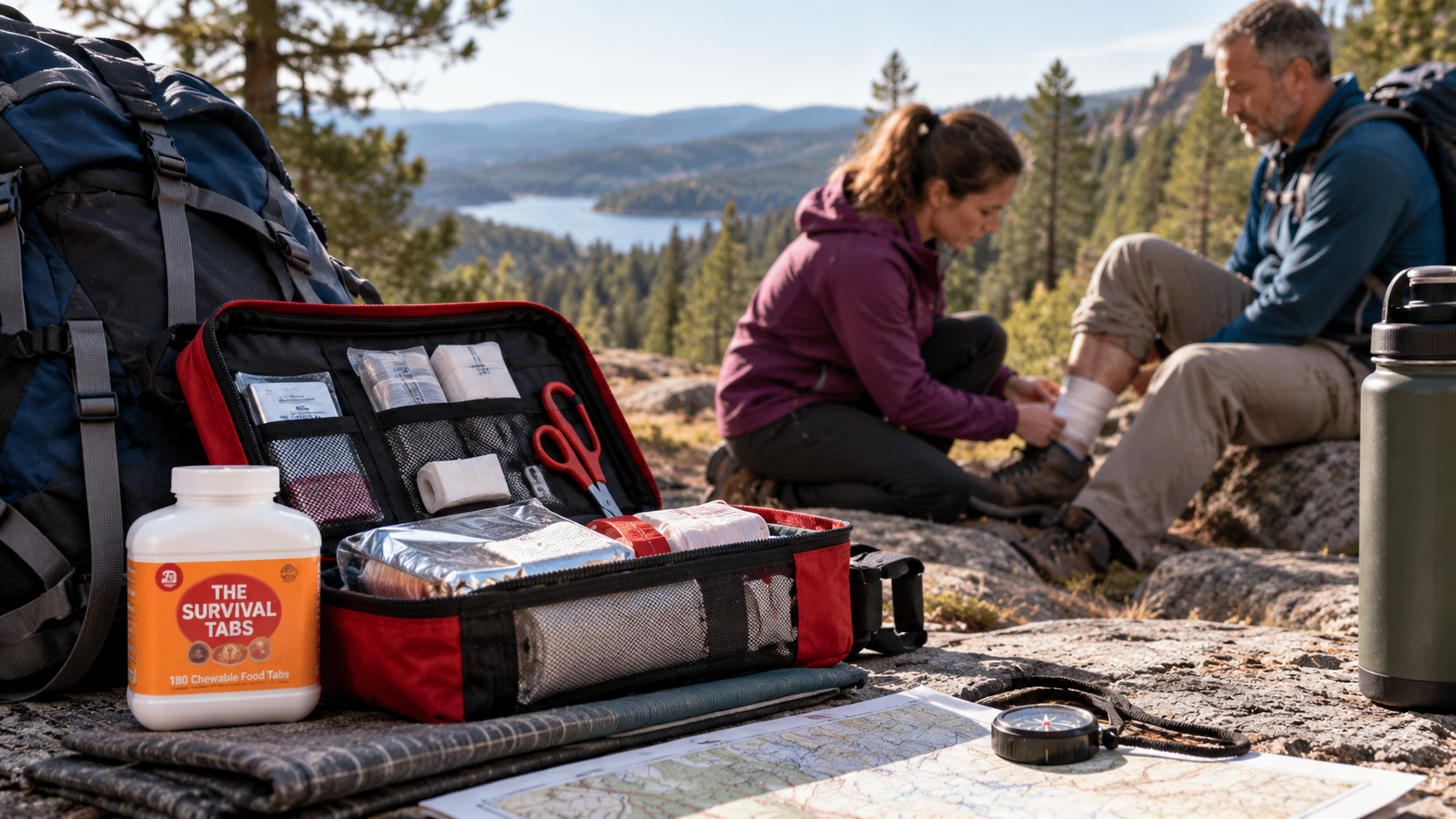
Organize supplies by function and keep them dry.
Inspect dates, seals, batteries, and quantities before travel.
Carry only equipment the group knows how to use.
- Protective gloves and eye protection.
- Bleeding-control dressings.
- Clean wound coverings and irrigation water.
- Wraps, padding, tape, and splinting materials.
- Emergency blanket, light, signaling, and patient notes.
Scene safety
Pause before approaching the patient.
Look for fire, water, lightning, falling objects, unstable terrain, animals, traffic, and body-fluid hazards.
Do not create a second patient.
- Stop the group in a protected area.
- Use barriers when available.
- Identify an escape route.
- Do not enter swift water, caves, mines, or unstable structures.
- Request trained technical rescue.
Emergency communication
Contact local emergency services or the land manager promptly for serious problems.
Give facts rather than a guessed diagnosis.
Preserve battery power and remain available.
- Give exact location and coordinates.
- State patient count and ages.
- Describe consciousness, breathing, bleeding, and changes.
- Report weather, terrain, and access hazards.
- List care already given and callback details.
Primary assessment
Use the sequence taught by a recognized first-aid course.
Check responsiveness and normal breathing, and follow dispatcher CPR/AED instructions.
Control immediately life-threatening bleeding within training.
- Assess responsiveness.
- Assess airway and breathing.
- Control life-threatening bleeding.
- Protect from environmental exposure.
- Repeat after every significant change.
Secondary assessment
After immediate threats, perform a calm head-to-toe check without unnecessary movement.
Ask what happened and compare both sides when appropriate.
Do not repeatedly test painful joints.
- Record symptoms and onset.
- Record allergies.
- Record medications and last dose.
- Record relevant history and last intake.
- Record events leading to the incident.
Evacuation decision
Be conservative when choosing to stay, walk out, or request rescue.
Consider condition, terrain, weather, daylight, communications, and group capacity.
Walking and improvised carries can worsen injuries.
- Seek emergency rescue for threats to life, limb, eyesight, breathing, circulation, or consciousness.
- Ask professionals before moving a serious patient when communication exists.
- Mark the location for rescuers.
- Do not leave a vulnerable patient alone unless summoning help requires it.
- Reassess continuously while waiting.
Severe bleeding
Life-threatening bleeding needs immediate control and emergency activation.
Use direct pressure and approved methods from current training.
Do not repeatedly lift a dressing to inspect.
- Wear gloves when possible.
- Expose only enough to locate bleeding.
- Apply firm direct pressure.
- Use a commercial tourniquet only as trained for life-threatening limb bleeding.
- Record placement time and do not loosen it without professional direction.
Wounds
Remote wounds may require professional evaluation after bleeding is controlled.
Use clean irrigation water and clean coverings.
Never put soil, leaves, plant paste, oils, powders, or glue into a wound.
- Cover with a clean non-stick dressing.
- Do not field-close deep or contaminated wounds.
- Seek care for puncture, bite, crushing, gaping, or heavily contaminated wounds.
- Watch for spreading redness, fever, pus, red streaks, or worsening pain.
- Ask clinicians about tetanus and rabies risk.
Fractures and joint injuries
Treat deformity, major swelling, numbness, weakness, or loss of use as serious.
Support the injury in the position found.
Do not reduce a dislocation or straighten a suspected fracture.
- Remove constricting items if safe.
- Pad and secure a splint only as trained.
- Check circulation, sensation, and movement before and after.
- Loosen a wrap if color, warmth, sensation, or pain worsens.
- Evacuate open fractures and circulation loss urgently.
Head neck and spine
Major falls, impacts, altered consciousness, neurologic symptoms, or spinal pain require cautious handling.
Do not make the patient walk to prove fitness.
Minimize movement while maintaining airway and scene safety.
- Call emergency services.
- Monitor breathing and responsiveness.
- Do not remove a helmet unless airway care requires trained removal.
- Record vomiting, seizure, confusion, weakness, or pupil changes.
- Do not give food or drink to an altered patient.
Heat illness
Confusion, collapse, seizure, or very high temperature after heat exposure is an emergency.
Begin cooling and activate emergency help.
Sweating does not rule out heat stroke.
- Stop exertion.
- Move to shade or cooling.
- Remove excess clothing.
- Use rapid cooling methods from training and dispatcher advice.
- Give fluids only if fully alert and able to swallow safely.
Hypothermia
Cold illness can impair judgment before the person recognizes danger.
Prevent further heat loss and handle a severely cold patient gently.
Wet clothing, wind, fatigue, and immobility increase risk.
- Shelter from wind and precipitation.
- Insulate from the ground.
- Replace wet layers when safe.
- Warm the trunk with protected heat packs.
- Evacuate confusion, poor coordination, drowsiness, or reduced responsiveness.
Burns and smoke
Stop the burning process without entering danger.
Cool thermal burns with clean cool water when practical; do not use ice directly.
Smoke inhalation and major burns require urgent care.
- Remove jewelry and non-stuck clothing.
- Cover loosely with clean non-stick material.
- Do not break blisters.
- Do not apply butter, oil, toothpaste, or plants.
- Do not re-enter fire, smoke, chemical, or electrical hazards.
Anaphylaxis
Breathing difficulty, throat or tongue swelling, collapse, or rapidly worsening systemic symptoms may be anaphylaxis.
Help use the patient's prescribed epinephrine according to their plan and training.
Temporary improvement does not remove the need for urgent evaluation.
- Activate emergency response.
- Remove the trigger only when safe.
- Record epinephrine time.
- Prepare for CPR.
- Do not substitute antihistamines for epinephrine in suspected anaphylaxis.
Snakebite priorities
Any suspected venomous snakebite needs urgent medical evaluation.
Move away without trying to capture the snake.
Keep the patient calm and as still as practical.
- Call emergency services or the local poison center.
- Do not let the patient drive.
- Remove rings, watches, and tight clothing.
- Cover with a clean dry dressing.
- Use a distant photograph only when safe and never delay transport.
Snakebite prohibitions
Traditional snakebite treatments can cause injury and delay antivenom.
Regional guidance may differ, so follow local medical instructions.
Do not assume limited early pain means the bite is harmless.
- Do not cut or suck the bite.
- Do not apply ice or electric shock.
- Do not use plant material or chemicals.
- Do not apply an improvised constriction band.
- Do not run, capture the snake, or delay evacuation.
Bites stings and ticks
Bites and stings can cause allergy, infection, toxin exposure, or disease.
Monitor for breathing difficulty and systemic symptoms.
Animal bites need assessment for infection, tetanus, and rabies.
- Wash minor exposures when safe.
- Use fine-tipped tweezers for ticks according to public-health guidance.
- Do not identify species at personal risk.
- Seek care for wild-animal, bat, deep, facial, or hand bites.
- Activate emergency care for anaphylaxis or rapidly worsening illness.
Poison exposure
Unknown plants, mushrooms, sap, oils, and chemicals should not be eaten or used as medicine.
Do not induce vomiting unless poison professionals direct it.
Avoid spreading contamination through clothing, tools, or pets.
- Call emergency services for collapse, seizure, breathing difficulty, or unresponsiveness.
- Contact Poison Control or the relevant local service.
- Remove contaminated clothing carefully.
- Rinse as directed for the substance.
- Do not invent an antidote or mix chemicals.
Chest pain stroke seizure diabetes
These conditions are not routine trail fatigue.
Activate emergency help and record onset or last-known-well time.
Protect a person during seizure without restraint or objects in the mouth.
- Monitor airway and breathing.
- Use prescribed rescue medication only under the patient's plan.
- Do not give food or drink when swallowing is unsafe.
- Prepare for rapid evacuation.
- Do not leave the patient alone.
Water emergencies
Do not enter swift, cold, flooded, or surf water without rescue training and equipment.
Use shore-based reach or throw methods when possible.
Breathing difficulty after submersion needs urgent evaluation.
- Call professional rescue.
- Use flotation.
- Do not become a second victim.
- Begin trained resuscitation when indicated.
- Protect from cold and monitor continuously.
Lightning
Thunder means the group is close enough to be struck.
Move from exposed ridges, open water, isolated trees, and conductive hazards using official guidance.
A lightning patient carries no residual electrical charge once the scene is safe.
- Call emergency services.
- Begin CPR/AED care as trained.
- Treat burns and trauma.
- Prepare for multiple patients.
- Do not shelter under an isolated tree or shallow overhang.
Monitoring and comfort
Position the patient for breathing, circulation, comfort, and injury protection.
Do not force one universal position.
Protect from wet ground, wind, cold, and excessive heat.
- Track responsiveness and orientation.
- Track breathing quality.
- Track skin color and temperature.
- Track pain and neurologic changes.
- Time-stamp observations, medicines, communications, and movement.
Children older adults and access
Do not assume age or disability explains new symptoms.
Use the person's normal communication, mobility, sensory aids, caregiver knowledge, and medical plan.
Children and medically vulnerable people may deteriorate quickly.
- Use plain language.
- Keep desired support persons involved.
- Preserve mobility and communication devices.
- Do not improvise pediatric medication doses.
- Seek early professional advice when assessment is uncertain.
Psychological first aid
Fear, confusion, anger, or panic may follow injury or becoming lost.
Use calm factual updates without making promises.
Do not diagnose mental illness in the field.
- Introduce yourself and ask communication preferences.
- Reduce crowding and noise.
- Offer simple safe choices.
- Seek emergency help for self-harm, violence, severe confusion, or inability to stay safe.
- Do not shame, threaten, or abandon a distressed person.
Medication boundaries
Use medication only under law, training, labels, prescriptions, and established plans.
Do not share prescriptions or improvise doses.
Record every medicine and time.
- Keep medicines labeled.
- Protect temperature-sensitive products as directed.
- Carry an approved delay supply.
- Review interactions before travel with a clinician or pharmacist.
- Never use unidentified tablets or animal medicine.
Documentation and handoff
Clear notes reduce information loss when rescuers arrive.
Separate observation from assumption.
Protect personal information.
- Record patient identity and age.
- Record incident time, mechanism, and location.
- Record history, allergies, medicines, and last intake.
- Record treatments and response.
- Give rescuers a concise chronological handoff.
Practice drills
Low-risk drills build reliable behavior.
Never simulate invasive care, restraint, dangerous carries, or real medication administration.
Debrief judgment and communication, not just speed.
- Practice scene safety.
- Practice coordinate reporting.
- Practice patient notes.
- Practice environmental protection.
- Practice conservative evacuation decisions.
Frequently asked questions
Plants cannot safely replace medical treatment because potency, identity, contamination, allergy, and delay are unpredictable.
Snakebite suction, cutting, ice, and electric shock are not recommended.
Walking out after a serious injury or snakebite may worsen harm; seek professional direction.
- Use a tourniquet only for life-threatening limb bleeding and only as trained.
- Treat small worsening wounds or bites conservatively.
- Do not diagnose fractures or concussion in the field.
- Survival Tabs do not replace medicine, safe water, clinical nutrition, or a balanced long-term diet.
- Current CPR/AED, first aid, bleeding-control, and wilderness first-aid training are recommended.
Explicit exclusions
Hazardous legacy treatment claims are intentionally excluded.
These boundaries must remain through editorial review.
Future additions require authoritative evidence and professional review.
- No medicinal-plant treatment claims.
- No homemade ointments or internal remedies.
- No snakebite cutting, suction, ice, shock, or capture.
- No improvised invasive procedures or drug dosing.
- No unsafe rescue, diagnosis, or delayed evacuation.
Professional review gate
This educational guide requires multidisciplinary review before publication.
Regional differences and current protocols must be checked.
Product language must remain within approved claims.
- Emergency or wilderness-medicine clinician.
- Paramedic or nurse with remote-care experience.
- Certified first-aid/CPR educator.
- Poison-control or toxicology specialist.
- Accessibility, SAR, legal, privacy, safeguarding, regulatory, and product-compliance reviewers.
Official sources
These official resources support training, planning, poison response, snakebite response, and wilderness safety.
Local services may provide additional region-specific instructions.
Review links and guidance again immediately before publication.
- American Red Cross — Wilderness and Remote First Aid
- American Red Cross — First Aid Training
- CDC/NIOSH — Venomous Snakes
- CDC — Animals After a Disaster
- National Park Service — Ten Essentials
- National Park Service — Wilderness Safety
- Poison Control — Snakebites