

When building a bunker for long-term survival, several key safety features, waterproofing methods, insulation materials, food supply strategies, and power generation options are crucial to consider
When building a bunker for long-term survival, several key safety features, waterproofing methods, insulation materials, food supply strategies, and power generation options are crucial to consider. Let's explore these aspects along with the benefits of Survival Tabs for bunker living.

Essential Safety Features for Bunkers
Physical Protection
Underground bunkers should be constructed with reinforced concrete or steel to withstand severe weather conditions, earthquakes, and potential impacts[1]. This structural integrity is vital for protecting occupants from external threats.
Secure Entrances
Implement sophisticated security systems like biometric scanners or access codes to ensure only authorized individuals can enter the bunker[1]. This prevents unauthorized access and enhances overall safety.

Air Filtration
Install an N.B.C. (Nuclear, Biological, Chemical) filter system to ensure clean air supply, protecting occupants from potential airborne threats[1].
Multiple Exits
Include at least two escape routes to provide alternative ways out in case one becomes blocked or compromised.
Ensuring Long-Term Waterproofing
To keep your bunker dry and moisture-free over time:
1. Apply waterproofing paint to both exterior and interior walls, ceiling, and floor[2].
2. Install a proper drainage system around the bunker's perimeter:
- Dig a trench and fill it with gravel
- Place clay drain pipes sloping away from the bunker
- Cover drainage holes with grates to prevent debris entry[2]
3. Regularly inspect and maintain waterproofing measures to address any issues promptly.
Best Insulation Materials for Bunkers
Several effective insulation options for bunkers include:
1. Cellulose: Made from recycled paper products, it's eco-friendly and provides excellent insulation[3].
2. Polyisocyanurate: Available as rigid foam boards or spray foam, offering high insulation value[3].
3. Polyurethane: Can be used in closed-cell or open-cell formulas, providing excellent insulation and moisture resistance[3].
4. Cotton: Made from recycled materials, it's treated with borate for fire and pest resistance[3].

Setting Up a Sustainable Food Supply
To ensure a long-lasting food supply in your bunker:
1. Focus on non-perishable items like canned goods, dried fruits, and nuts[4].
2. Incorporate dehydrated and freeze-dried foods for variety and nutrition[4].
3. Store staples such as rice, pasta, flour, and cooking oil[4].
4. Implement proper storage techniques like temperature control, humidity management, and air quality control[4].
5. Use preservation methods such as canning, vacuum sealing, and freeze-drying to extend food shelf life[4].
6. Organize your food storage using the FIFO (First In, First Out) method to minimize waste[4].

Electricity Generation Options for Bunkers
For sustainable power in your bunker:
1. Solar generators: Ideal for long-term, sustainable power generation.
2. Wind turbines: Can be effective if your location allows for above-ground components.
3. Hydroelectric systems: Viable if you have access to a water source.
4. Geothermal power: Efficient but requires specific geological conditions.
5. Fuel cells: Can provide consistent power with proper fuel storage.
Survival Tabs Benefits for Long-Term Bunker Survival
Survival Tabs offer several advantages for bunker living:
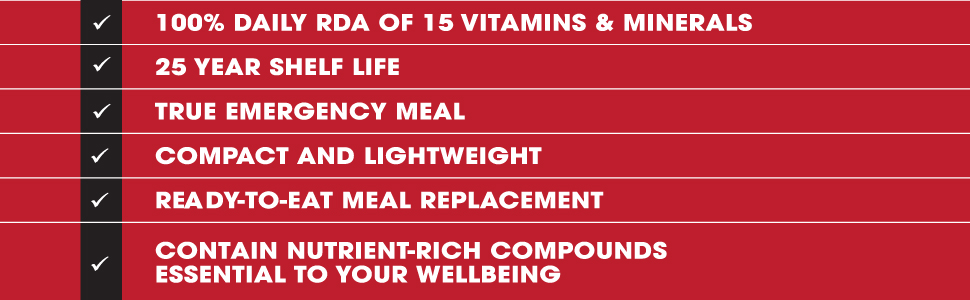
1. Long shelf life: With a 25-year shelf life, they're ideal for long-term storage.
2. Compact size: Easy to store and transport, maximizing limited bunker space.
3. Complete nutrition: Provides 100% of daily recommended vitamins and minerals.
4. Efficient absorption: 99% absorption rate ensures maximum nutrient utilization.
5. Ready-to-eat: Requires no preparation, ideal when resources are limited.
6. Mental health support: Balanced nutrition contributes to overall well-being in stressful situations.
By incorporating these safety features, waterproofing methods, insulation materials, food storage strategies, power generation options, and Survival Tabs into your bunker planning, you'll be well-prepared for various long-term survival scenarios.
***Statements regarding dietary supplements have not been evaluated by the FDA and are not intended to diagnose, treat, cure, or prevent any disease or health condition.***
 |
 |
 |
 |
 |
|
|---|---|---|---|---|---|
| 720 Tabs Emergency Food Survival Gluten Free and Non-GMO 25 Years Shelf Life | Food Supply 96 Tabs Emergency Food Replacement Disaster Preparedness | Ultimate Preparedness Emergency Food Supply 25 year shelf life | Emergency Food Ration Survival MREs Food Replacement | Emergency Food Survival Food Meal Replacement MREs Gluten Free and Non-GMO | |
| Day Serving | 60 days | 8 days | 120 days | 15 days | 2 days |
| Shelf-Life | 25 years | 25 years | 25 years | 25 years | 25 years |
| Non-GMO | ✓ | ✓ | ✓ | ✓ | ✓ |
| Gluten Free | ✓ | ✓ | ✓ | ✓ | ✓ |
| Tabs Amount | 720 | 96 | 1440 | 180 | 24 |


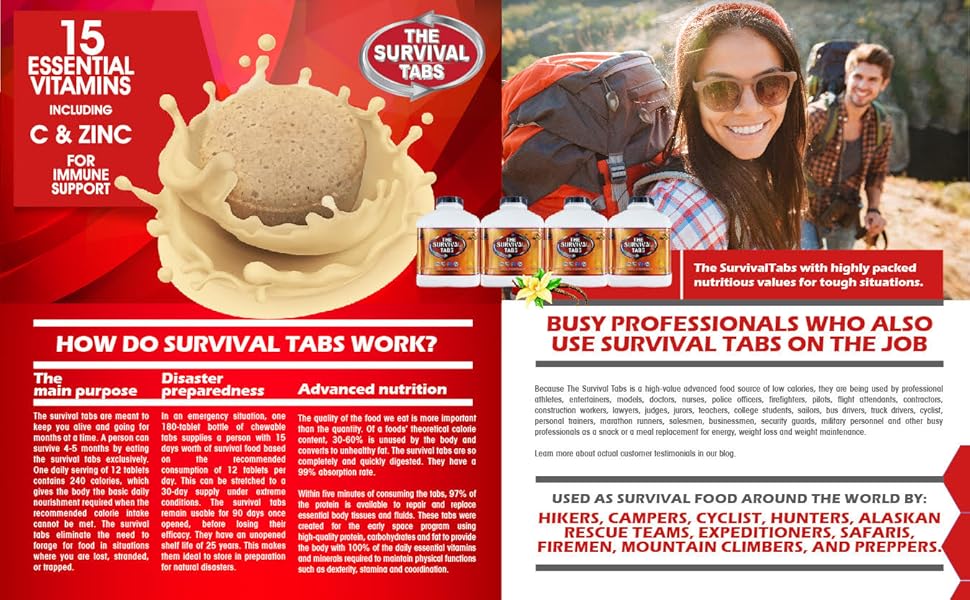
Emergency Foods contain 100% of the U.S. RDA of 15 Essential Vitamins & Minerals. Made with the highest quality protein which is essential in survival situations where your body needs to assimilate as much as possible from what you eat. With most of the food, we eat 30%-60% of the calorie content leaves the body unused. The Survival Tabs have such a highly concentrated formula that 99% of their calorie content is absorbed by the body with 97% of the protein content being available to repair or replacement of muscles, nerves, etc.