

Volcano Preparedness Guide
Volcano Preparedness Guide
Volcanic hazards can include ash, gases, falling debris, lava, lahars and disrupted roads, power, water and air quality. Follow official volcano observatories, emergency management and local evacuation instructions.
Know local hazards
Learn whether home, school and work are in mapped hazard areas and identify multiple evacuation routes. Hazard type and safe action vary by location and eruption.
Prepare for ash
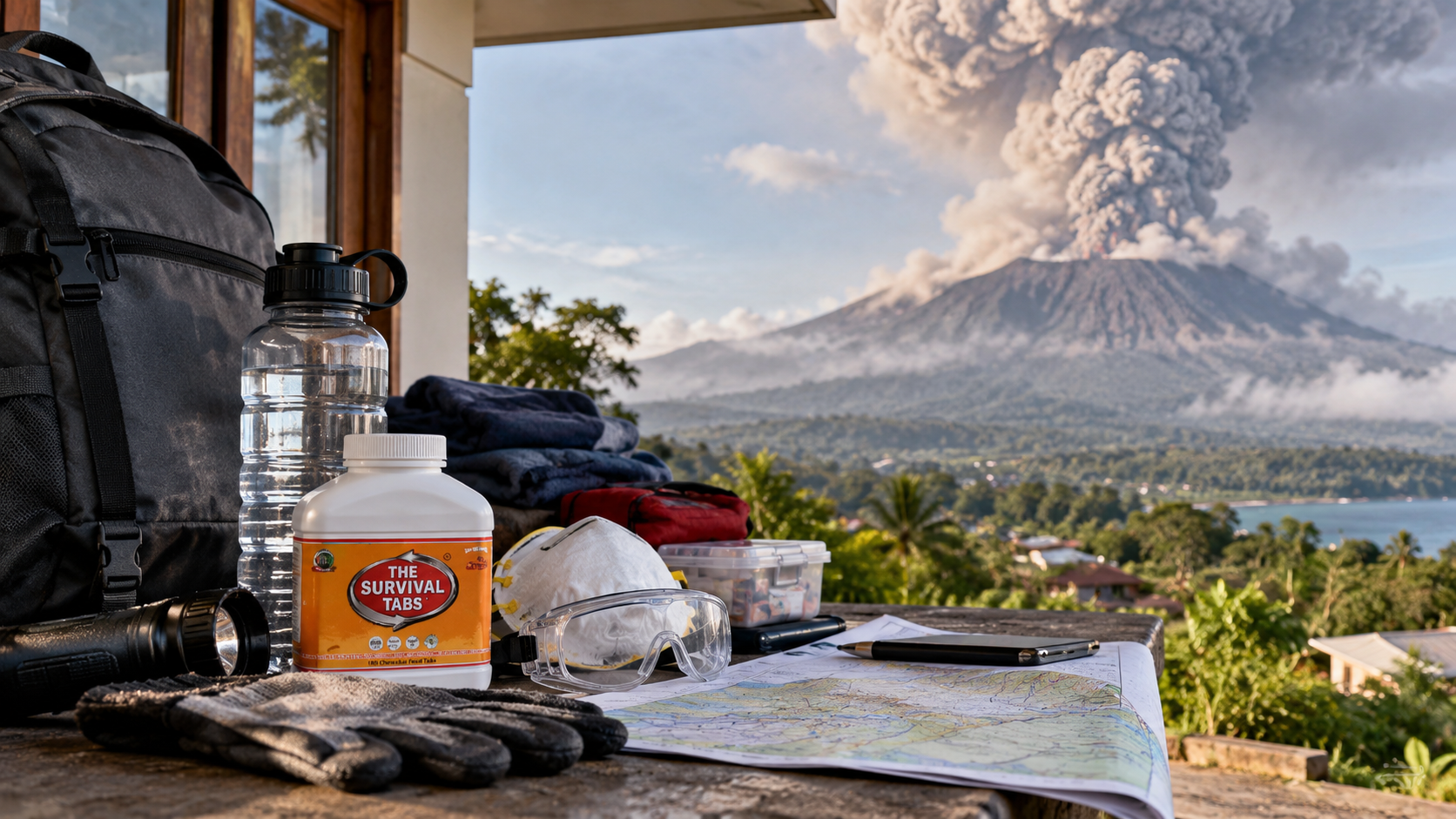
Plan clean indoor air, closed windows and doors, appropriate masks or respirators under current health guidance, eye protection, medication and protection for electronics and water. People with respiratory conditions should seek individualized advice.
Evacuate when directed
Leave early with water, portable food, medication, documents, communication supplies and pet arrangements. Do not enter closed zones or approach an eruption for viewing.
Driving and cleanup
Ash can reduce visibility, damage engines and make roads slippery. Avoid unnecessary driving. Cleanup can be heavy and hazardous; follow local instructions and obtain professional help for roofs, electricity and structural risk.
Food and water
Protect supplies from ash and contamination. Follow official drinking-water instructions. Survival Tabs may be one sealed portable food layer but do not replace water, evacuation or respiratory protection.