

Vegan Emergency Food Storage Guide
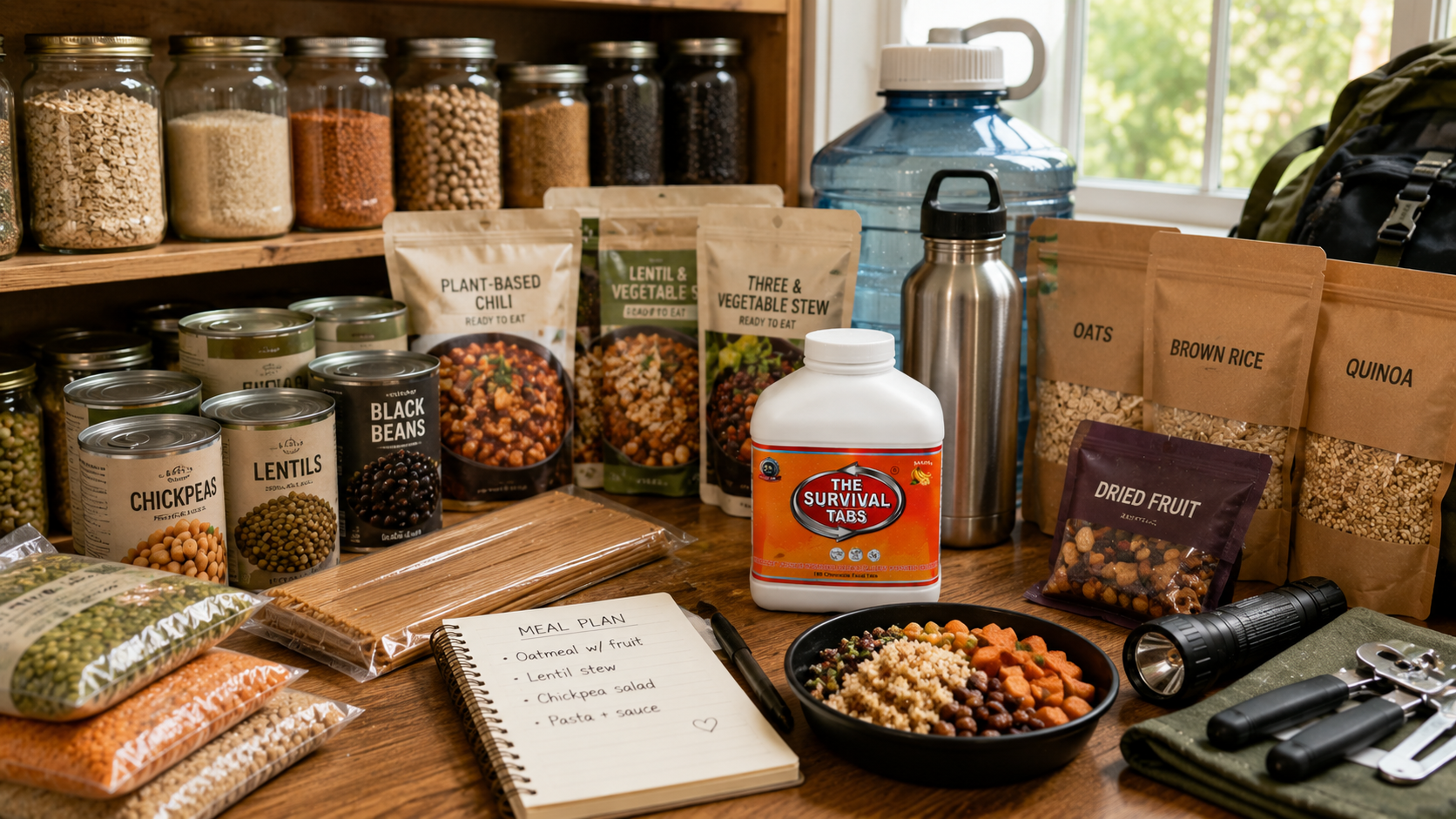
A practical, safety-first plan for building a shelf-stable plant-based emergency food supply
A vegan emergency food supply should do more than remove animal products. It must provide enough food energy, protein, variety, essential nutrients, safe water, and foods the household can actually prepare and eat during a disruption.
This guide is for short-term emergency planning and longer household resilience. It is not a personalized medical diet, a substitute for professional nutrition care, or a promise that one food can meet every need.
Start with the emergency, not the shopping list
Plan for the disruptions most likely where you live: power loss, water interruption, evacuation, severe weather, supply delays, or temporary isolation. The same food may work well for one event and poorly for another.
Set a realistic planning period
- Begin with several days of food and safe water for every household member.
- Extend the supply gradually if local hazards or distance from services justify it.
- Keep a portable portion for evacuation and a larger home supply for sheltering in place.
- Store familiar foods rather than an entirely new emergency-only menu.
Ready.gov recommends a several-day supply of nonperishable food, including foods the family will eat and any special dietary needs.
Inventory people, restrictions, and equipment
- Record the number of adults, children, older adults, and visitors you may need to feed.
- List vegan requirements separately from allergies, intolerances, religious restrictions, and medical diets.
- Identify foods that require cooking, soaking, refrigeration, a can opener, or large amounts of water.
- Note whether you can cook safely during an outage and whether local rules permit the equipment.
- Plan for mobility, chewing, swallowing, sensory, and accessibility needs.
Build the food supply in layers
A resilient vegan supply combines ready-to-eat foods with simple staples. This avoids depending entirely on either expensive packaged meals or dry foods that require fuel and water.
Layer 1: ready-to-eat foods
- Canned beans, lentils, chickpeas, and peas.
- Shelf-stable plant-based meals and soups that clearly meet your dietary requirements.
- Nut and seed butters, where allergies permit.
- Crackers, tortillas, crispbread, and ready-to-eat grains.
- Canned fruit, applesauce, dried fruit, and shelf-stable fruit cups.
- Vegetables in cans or retort pouches.
- Fortified cereals and shelf-stable plant beverages in small containers.
Ready-to-eat items reduce dependence on cooking fuel and safe preparation water. Small containers also reduce the need to refrigerate leftovers after opening.
Layer 2: low-fuel staples
- Quick oats and instant whole-grain cereals.
- Couscous, quick-cooking grains, and instant rice.
- Dehydrated beans, lentils, or soups designed for short cooking times.
- Textured vegetable protein and other dry plant proteins with clear preparation instructions.
- Powdered plant beverages or fortified mixes, if the household already uses them.
Measure the water and fuel required for each item. A low-cost dry staple is not truly practical if it consumes water or fuel you may not have.
Layer 3: longer-term pantry staples
- Dry beans, lentils, split peas, rice, pasta, oats, and other grains.
- Shelf-stable oils and calorie-dense spreads in manageable containers.
- Nuts and seeds in quantities you can rotate before quality declines.
- Shelf-stable sauces, seasonings, and ingredients that make basic foods acceptable.
Longer-term dry foods work best when they are already part of normal household meals. Practice cooking them with the equipment, fuel, and water you expect to have.
Plan nutrition, not just product count
A shelf full of low-calorie foods may look substantial while failing to provide enough energy. A supply built mostly from refined starch may provide calories but little variety or protein. Use food labels and a simple meal plan rather than counting packages.
Food energy
- Estimate ordinary household portions from foods you already eat.
- Include calorie-dense items such as nut or seed butter, oil, nuts, seeds, grains, and legumes.
- Avoid relying only on low-calorie vegetables, beverages, or snack foods.
- Adjust for age, body size, activity, pregnancy, breastfeeding, and medical needs with qualified guidance.
Protein
- Use a mix of beans, lentils, peas, soy foods, nuts, seeds, grains, and fortified products.
- Check serving sizes and protein amounts on Nutrition Facts labels.
- Spread protein-containing foods across meals instead of depending on one item.
- Choose alternatives for anyone with soy, peanut, tree-nut, sesame, or other allergies.
Emergency planning does not require every meal to be nutritionally perfect. The goal is a varied supply that can support the household while normal food access is disrupted.
Vitamin B12 and other nutrients that need attention
Vitamin B12 is naturally limited in plant foods. NIH notes that vegans have a higher risk of vitamin B12 deficiency and that fortified foods or supplements can reduce that risk.
- Include reliable B12-fortified foods already accepted by the household.
- Do not assume a product contains B12; verify the current Nutrition Facts label.
- Follow an existing clinician-approved supplement plan rather than improvising during an emergency.
- Store supplements securely and observe the labeled storage and expiration instructions.
Other nutrients that may require deliberate planning include iron, calcium, vitamin D, iodine, zinc, omega-3 fats, and—for some life stages—choline. Needs vary, so people who are pregnant, breastfeeding, managing a medical condition, or feeding children should review their plan with a qualified clinician or registered dietitian.
Iron
NIH explains that iron from plant foods is absorbed less efficiently than heme iron from animal foods, so people following vegetarian patterns may need greater attention to iron intake.
- Include beans, lentils, peas, iron-fortified cereals, nuts, seeds, and dried fruit.
- Pair plant iron sources with shelf-stable vitamin C sources when practical.
- Do not start high-dose iron supplements without professional advice.
- Keep iron-containing supplements away from children.
Water and cooking fuel are part of the food plan
Food and water cannot be planned separately. Dry beans, rice, pasta, powdered foods, and dehydrated meals require water for preparation, and some require long cooking.
- Store drinking water and additional water needed for food preparation.
- Keep no-cook options for times when fuel, ventilation, or safe water is limited.
- Use only safe water for drinking, washing produce, preparing food, and cleaning utensils.
- Never operate charcoal grills, camp stoves, or generators indoors or in enclosed spaces.
- Test your emergency cooking method before an emergency and follow the manufacturer’s instructions.
Ready.gov advises storing at least one gallon of water per person per day for several days for drinking and sanitation. Individual needs and hot conditions can require more.
Storage and rotation
Choose the storage location
- Keep food cool, dry, and away from direct sunlight, pests, chemicals, and fuel.
- Store supplies above possible floodwater and away from temperature extremes.
- Use sturdy shelving and avoid overloading upper shelves with heavy cans.
- Keep portable emergency food where it can be reached quickly.
Label and organize
- Write the purchase date and the manufacturer’s best-by or use-by date where it can be seen.
- Group foods by meal or function rather than hiding them in one deep container.
- Place earlier dates at the front and newer items behind them.
- Keep a manual can opener with canned foods.
- Maintain a simple inventory showing quantity, location, allergens, and replacement date.
Inspect on a schedule
- Check monthly for leaks, pests, moisture, heat exposure, and damaged packaging.
- Rotate foods into normal meals before quality declines.
- Replace swollen, leaking, deeply rusted, punctured, or severely damaged cans.
- Follow manufacturer instructions after opening and do not assume a resealed package is shelf-stable.
Food dates often relate to quality, but package condition and storage history still matter. When safety is uncertain, discard the item rather than tasting it.
Power outages, floods, and contamination
During a power outage
- Keep refrigerator and freezer doors closed as much as possible.
- Use appliance thermometers to decide whether perishable food remained at a safe temperature.
- Do not rely on smell or appearance alone.
- Shift first to foods that need no refrigeration or cooking.
FDA guidance says an unopened refrigerator generally keeps food cold for about four hours, while a full freezer may hold temperature for about 48 hours and a half-full freezer for about 24 hours.
After flood exposure
- Discard food in packaging that is not waterproof if it may have contacted floodwater.
- Discard home-canned food and containers with screw caps, snap lids, pull tops, or crimped caps after possible floodwater contact.
- Follow current public-health instructions for any undamaged all-metal cans or retort pouches.
- Do not use food or water with an unusual odor or evidence of contamination.
Household-specific boundaries
Infants and young children
Do not treat a general vegan pantry as an infant-feeding plan. Infant formula, breastfeeding support, safe water, age-appropriate foods, and feeding equipment require their own emergency planning.
- Use ready-to-feed infant formula when recommended and available because it does not require added water.
- Never dilute formula beyond label or clinical instructions.
- Check foods for age suitability, choking risk, allergens, and preparation requirements.
- Review vegan feeding plans for infants and young children with a pediatric clinician or qualified dietitian.
Pregnancy, breastfeeding, older adults, and medical diets
- Preserve the person’s usual medically appropriate foods whenever possible.
- Keep written dietary requirements with emergency health information.
- Ask a clinician or registered dietitian about nutrient, texture, blood-sugar, kidney, gastrointestinal, or medication-related restrictions.
- Include specialty foods and feeding supplies that may be difficult to replace during a disaster.
Pets are not people
Do not feed pets from a human vegan emergency pantry as the default plan. Dogs, cats, birds, and other animals have species-specific nutritional needs, and cats in particular require nutrients that are not safely improvised from human staples.
- Store the pet’s normal complete and balanced food.
- Keep enough safe water, bowls, medications, records, and a manual can opener if needed.
- Ask a veterinarian before changing a pet’s diet or using a vegan formulation.
Where compact emergency foods fit
Compact foods can add portability and convenience, but they should be evaluated by the same standards as the rest of the supply: current ingredient label, allergen statement, calories, nutrient profile, water needs, shelf life, storage instructions, and intended use.
Do not assume that Survival Tabs or any other product is vegan unless the current package label and manufacturer information explicitly confirm it. Product formulations and labels can change.
A compact nutrition product should not automatically be treated as a complete long-term diet. Use it as one planned component alongside water and a varied food supply, consistent with its current label.
A simple seven-step build process
- List every person, dietary restriction, allergy, medical need, and pet.
- Choose the number of days and whether the supply must support evacuation, sheltering in place, or both.
- Write a no-cook menu first, then add low-fuel and longer-term meals.
- Calculate food energy, protein, preparation water, and fuel from actual labels and portions.
- Check B12 and other nutrient coverage, and seek professional review where needed.
- Buy a small test batch, prepare it with emergency equipment, and correct the plan.
- Label, store, inspect, rotate, and update the inventory after every use or household change.
Common mistakes to avoid
- Buying only dry beans and rice without enough water, fuel, oil, seasonings, or ready-to-eat food.
- Counting packages instead of estimating portions and food energy.
- Assuming every plant-based product is vegan or suitable for every allergy.
- Ignoring vitamin B12 and other nutrient gaps.
- Depending on refrigeration during a likely power outage.
- Storing large containers that create leftovers with no refrigeration.
- Buying unfamiliar foods the household will not eat.
- Treating supplements as substitutes for food or taking high doses without guidance.
- Using a human vegan pantry as a pet-feeding plan.
- Leaving the supply untouched until labels, tastes, household needs, or equipment have changed.
Frequently asked questions
Can a vegan emergency food supply be nutritionally adequate?
Yes, but adequacy depends on the complete menu, portions, duration, life stage, health needs, and reliable sources of nutrients such as vitamin B12. Review longer-term or medically complex plans with a registered dietitian or clinician.
Are rice and beans enough?
They can be useful staples, but a complete plan also needs enough total food, safe water, cooking fuel, fats, variety, micronutrient coverage, and ready-to-eat options.
Should I buy only foods with very long shelf lives?
No. Foods you normally eat and rotate may be more reliable than unfamiliar products stored for years. Follow the manufacturer’s storage guidance and inspect packaging regularly.
Is honey vegan?
Honey is produced by bees and is generally excluded from vegan diets. Use a plant-based sweetener if strict vegan compliance is required.
Can I rely on supplements during an emergency?
Supplements may be part of an established nutrition plan, but they do not replace adequate food and water. Follow label directions and professional guidance, particularly for children, pregnancy, medical conditions, and iron-containing products.
How often should I review the supply?
A brief monthly inspection and a more complete seasonal review are practical starting points. Also review after using supplies, moving, changing household size, receiving a new diagnosis, or changing dietary needs.
Publication and professional-review note
This article provides general preparedness education. It does not diagnose nutrient deficiency, prescribe supplements, set individualized calorie needs, or replace medical or dietetic care.
Before publication, a registered dietitian or qualified clinician should review the nutrition sections, especially guidance for infants, children, pregnancy, breastfeeding, older adults, and medical diets.
Sources
FDA — Food and Water Safety During Power Outages and Floods