

How to Use Survival Tabs with Other Emergency Foods
How to Use Survival Tabs with Other Emergency Foods
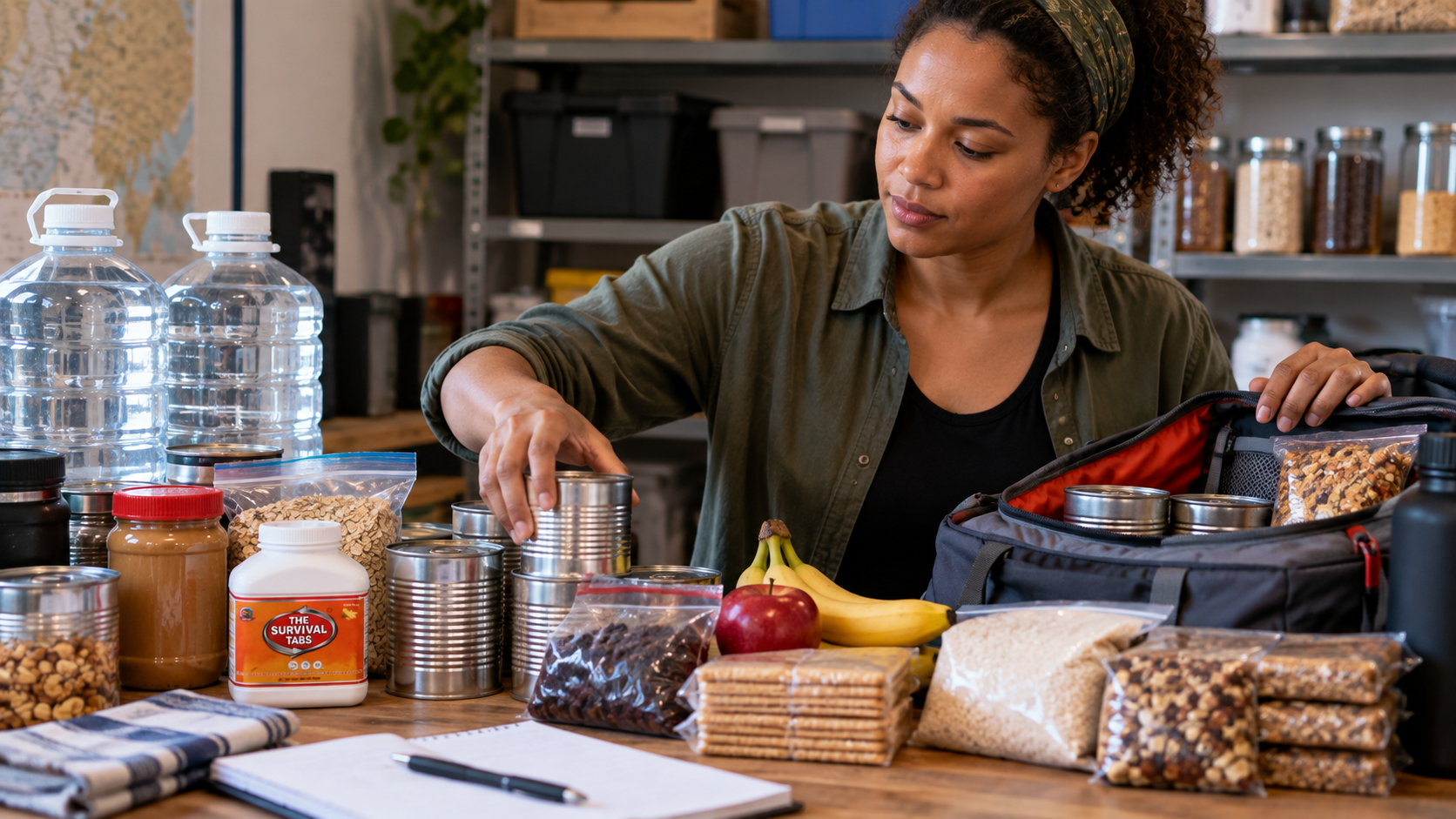
A resilient emergency food plan combines formats. Survival Tabs offer compact, no-cook reserve nutrition; ordinary shelf-stable foods supply more calories, familiar meals, fiber, variety and household-specific choices.
Start with water
Store safe drinking water using current official guidance. Account for preparation water needed by rice, oats, dehydrated meals or drink mixes. No food product replaces hydration.
Use familiar foods as the base
Choose canned meals, beans, fish or meat, nut or seed butter where allergies permit, crackers, oats, rice, dried fruit, shelf-stable milk and other foods the household already tolerates. Include a manual can opener and no-cook options.
Add calories deliberately
The current reviewed Survival Tabs serving provides 240 calories. That is not a normal full day of energy for most adults. Pair compact nutrition with adequate food portions rather than counting a serving as a complete daily diet.
Match food to the situation
Home reserves can include heavier cans and cooking staples. Evacuation bags need durable, portable foods. Vehicle and workplace supplies need frequent inspection for heat or damage.
Plan for dietary needs
Keep allergy-safe, infant, medical-diet, easy-to-chew and culturally appropriate foods. Review the exact Survival Tabs label for milk and other ingredient information.
Rotate the broader pantry
Use and replace ordinary foods before quality declines, inspect long-storage packages and update quantities when the household changes.
Example layered role
Water, familiar no-cook foods, a calorie-dense item, canned protein or beans, fruit, utensils and a compact Survival Tabs reserve create a more balanced system than any single product alone.