

Urban Emergency Preparedness Guide
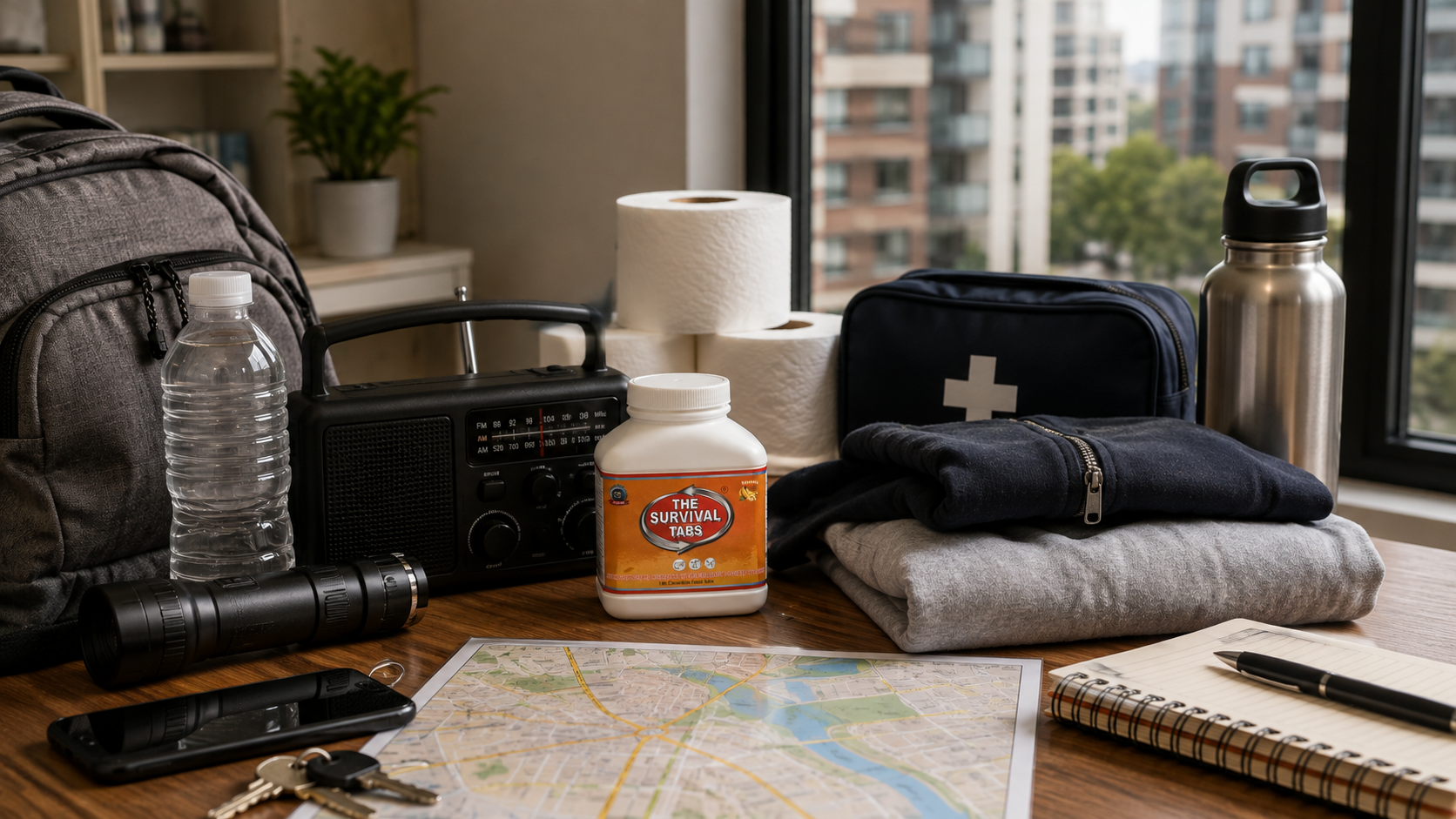
A practical, low-space plan for apartments, high-rises, dense neighborhoods, and transit-dependent households
Urban emergencies are familiar hazards made more complex by density, shared building systems, traffic, limited storage, and dependence on elevators or public transportation.
This guide uses a calm, education-first approach. It does not preserve hazardous urban-bushcraft instructions, unverified natural remedies, or claims that technology can guarantee safety.
Always follow current instructions from local emergency management, fire officials, building management, utilities, transit agencies, and public-health authorities. Call 911 or the local emergency number for an immediate threat to life.
1. Know Your Building and Neighborhood
Preparedness begins with the place where you actually live. Plans designed for detached homes may fail in apartments, dormitories, basement units, high-rises, and mixed-use buildings.
* Identify every normal exit, emergency stairwell, exterior door, and accessible route.
* Learn whether stairwell doors lock behind you and where reentry is possible.
* Locate alarms, extinguishers, sprinklers, and building communication systems without tampering.
* Ask management how evacuation, water shutoffs, elevator outages, and resident assistance are handled.
* Record the building address, unit number, management contact, and after-hours maintenance number.
* Do not assume elevators will operate during fire, flood, earthquake, or power failure.
* Never enter restricted mechanical, electrical, roof, or utility spaces.
* Map two walking routes away from the neighborhood.
* Mark nearby shelters, hospitals, pharmacies, cooling centers, warming centers, and fire stations.
* Note bridges, tunnels, underpasses, construction zones, and flood-prone streets.
* Keep a paper map because phones and apps may fail.
2. Build an Urban Hazard Profile
Use local emergency-management information to identify hazards that affect your exact address, including fire, flooding, severe weather, earthquakes, extreme temperatures, poor air quality, utility failure, and nearby transportation or industrial incidents.
* Check whether the address lies in an official hazard zone.
* Ask whether electric pumps support water, elevators, doors, sewage, heating, or cooling.
* Identify basements, garages, subway entrances, and low roads that may flood.
* Learn which hazards require immediate evacuation and which may require sheltering.
* List every person who needs mobility assistance, medication, refrigeration, interpretation, or caregiver support.
* Review the profile after construction, a move, a medical change, or a new household member.
3. Create a Communication Plan
City networks may be overloaded even when infrastructure is intact. Use several channels and reduce unnecessary calls.
* Choose an out-of-area contact who can relay status.
* Give everyone the contact number on paper.
* Agree on a short check-in message such as SAFE—HOME.
* Use text when authorities say it is more likely to get through.
* Choose one meeting place near home and one outside the neighborhood.
* Plan how children, older adults, caregivers, and people without phones reconnect.
* Save official emergency, transit, utility, and building-alert channels.
* Keep a battery radio where local broadcasts are available.
* Treat social posts as unverified until confirmed by a responsible official source.
4. Decide Whether to Shelter or Evacuate
Neither leaving nor staying is always safer. Follow the hazard, building conditions, and current official instructions.
* Evacuate when authorities order it.
* Leave for fire, smoke, structural damage, rising water, gas odor, or another immediate threat.
* Leave when essential medical or accessibility needs cannot be maintained safely.
* Shelter when authorities instruct residents to do so.
* Remain indoors when hazardous air, severe weather, flooding, or unsafe streets make travel more dangerous.
* Reassess whenever conditions or official instructions change.
* For fire, use stairs rather than elevators unless the fire department directs otherwise.
* If you cannot exit because of fire, smoke, or disability, call 911, give your precise location, close doors between you and smoke, and follow dispatcher instructions.
5. Build a Low-Space Supply System
Use layers: everyday essentials, a compact evacuation bag, and a rotating home supply.
* Carry identification and a paper emergency-contact card.
* Keep necessary medication and medical information accessible.
* Carry a charged phone, compact power bank, flashlight, keys, and transit fare.
* Keep comfortable walking shoes and weather layers ready.
* Pack water and lightweight ready-to-eat food appropriate for the carrier.
* Include medication, prescriptions, medical-device supplies, and clinician instructions.
* Add hygiene supplies, masks when appropriate, a first-aid kit, paper map, and contact list.
* Include infant, older-adult, disability, and pet supplies when applicable.
* Store water in approved containers and follow current local guidance.
* Keep shelf-stable foods that fit dietary, allergy, cultural, and medical needs.
* Include a manual can opener and foods requiring no cooking.
* Rotate supplies into normal use.
* Do not block exits, sprinklers, radiators, electrical panels, or ventilation.
* Do not store fuel or propane where prohibited or unsafe.
6. Plan for Accessibility
Normal accessibility can disappear when elevators, automatic doors, lighting, intercoms, and transit fail.
* Ask management for the official accessible evacuation and refuge procedures.
* Arrange a personal support network rather than assuming staff will be available.
* Share only information helpers need and protect privacy.
* Plan for mobility devices, batteries, chargers, transfer equipment, oxygen, refrigeration, service animals, and communication aids.
* Keep model numbers, instructions, and provider contacts with essential equipment.
* Identify accessible transportation before an evacuation order.
* Never use an improvised carry or stair device unless trained, authorized, and appropriate.
* Tell dispatchers and responders your exact location and assistance needs.
7. Reduce Apartment and High-Rise Fire Risk
Shared walls, shafts, and corridors can allow smoke and conditions to change quickly. Prevention, early warning, closed doors, and known exits matter more than improvised escape tools.
* Maintain smoke and carbon-monoxide alarms as required.
* Learn the sound and meaning of building alarms.
* Keep corridors, stairs, balconies, and unit exits clear.
* Do not wedge open fire doors.
* Do not overload outlets or run damaged cords under rugs.
* Stay with active cooking.
* Use space heaters only as designed and away from combustibles.
* Never use grills, camp stoves, generators, or charcoal devices indoors or in enclosed balconies or garages.
* Close the apartment door behind you when evacuating a fire if safe.
* Go to the meeting place and never reenter until authorities permit it.
8. Prepare for Utility Failure
Urban outages can stop elevators, water pumps, refrigeration, communications, ventilation, sewage systems, and electronic access.
* Report outages through official channels.
* Use flashlights instead of candles.
* Conserve phone power and keep refrigerator and freezer doors closed.
* Never backfeed building wiring or perform unqualified electrical work.
* Never run a generator in an apartment, hallway, garage, balcony, rooftop area, or near openings.
* Relocate early if heat, cold, medical equipment, refrigeration, water, or accessibility needs cannot be maintained.
* Confirm whether a water interruption affects the unit, building, or public system.
* Follow boil-water, do-not-drink, and do-not-use advisories exactly; they are different.
* Prioritize stored water for drinking, medication, infants, and essential food preparation.
* Do not assume clear water is safe.
* Avoid unverified filtration or chemical-treatment formulas.
9. Plan for Heat, Cold, and Poor Air
Upper floors, limited ventilation, and dense surfaces can intensify heat and air-quality problems.
* Know official cooling and warming centers and accessible routes.
* Check on medically vulnerable household members and agreed neighbors.
* Do not treat a fan as a complete solution in dangerous heat.
* Never heat a home with an oven, grill, or camp stove.
* Move before indoor conditions become medically unsafe.
* Follow official instructions about windows, ventilation, and evacuation during smoke or chemical incidents.
* Use portable air cleaners only as designed and within room-size limits.
* People with respiratory or cardiac conditions should follow individualized clinical advice.
* Do not improvise respirators or rely on unverified masks for gases or vapors.
10. Prepare for Transit Disruption
An urban evacuation may involve closed stations, gridlock, long walks, stairs, crowding, and changing routes.
* Keep walking shoes and weather layers accessible.
* Know official transit-alert channels.
* Identify routes avoiding tunnels, underpasses, flood zones, and damaged areas.
* Never enter a subway, tunnel, garage, or underpass when flooding is possible.
* Maintain a bicycle if it is part of the plan.
* Plan for children, pets, luggage, mobility devices, and limited walking endurance.
* Carry only what can be managed safely.
* Follow traffic control, transit staff, and emergency personnel.
11. Coordinate Safely with Neighbors
Neighbors can share warnings and check on residents but must not replace responders, clinicians, utility workers, or officials.
* Exchange contact information voluntarily.
* Agree on a simple check-in procedure.
* Identify residents who request help and the help they authorize.
* Share official information with its source and time.
* Report smoke, gas odors, structural damage, trapped occupants, flooding, and medical emergencies.
* Help keep exits clear without entering hazardous areas.
* Protect resident lists, medical information, schedules, and access details.
* Do not conduct forced entry, security patrols, medical treatment, rescue, or utility work without authorization and training.
12. Adapt for Renters, Students, Travelers, and People Without Cars
Preparedness should not depend on property ownership, private vehicles, expensive equipment, or permanent residence.
* Renters should document hazards and maintenance requests.
* Students should learn dormitory alerts, evacuation, reunification, and closure procedures.
* Travelers should record their lodging address and local emergency number.
* People without cars should identify accessible evacuation transport and backup pickup plans.
* Use under-bed or approved shelf storage without creating falling or fire hazards.
* Build supplies gradually, prioritizing water, medication, light, communication, sanitation, and no-cook food.
* Save instructions in preferred languages where available.
* Use trusted local organizations for current housing, immigration, legal, and assistance information.
13. Protect Documents and Money
Organized records speed evacuation and recovery while careless copies can create identity risk.
* Organize identification, insurance, lease, medication, and contact information.
* Store copies securely.
* Keep a small amount of cash because electronic payment may fail.
* Record insurer and account contact methods without carrying unnecessary credentials.
* Photograph property and serial numbers for legitimate claims.
* Beware disaster scams, unsolicited contractors, false aid applications, and requests for payment or sensitive data.
* Use official assistance channels and verify web addresses.
14. Practice and Maintain the Plan
A plan that has never been tested may hide locked doors, dead batteries, inaccessible routes, excessive bag weight, or a meeting point inside the hazard area.
* Test alerts, contacts, lights, power banks, radios, alarms, and accessibility equipment.
* Walk both exit routes without disrupting the building.
* Rotate food, water, medication, and batteries appropriately.
* Confirm building contacts, shelters, transit options, and local emergency pages.
* Update after a move, new pet, new roommate, medical change, or construction project.
* Discuss one scenario each quarter.
* Record one improvement and finish it before the next review.
15. Act When an Emergency Begins
Pause long enough to identify the hazard, then take the correct action without delaying escape from immediate danger.
* Move away from immediate danger.
* Call emergency services for threats involving life, fire, gas, structural failure, violence, or urgent medical need.
* Check one official alert source.
* Choose hazard-appropriate shelter or evacuation.
* Take medication, accessibility equipment, phone, keys, identification, and the evacuation bag only when doing so does not delay escape.
* Send a short status message when communications allow.
* Conserve water, food, power, and phone battery.
* Avoid restricted and damaged areas.
* Reassess as smoke, water, temperature, medical needs, or instructions change.
16. Recover Safely
Recovery begins only after the immediate hazard is controlled and authorities permit access.
* Do not reenter until authorities permit it.
* Photograph damage only from a safe location.
* Follow utility instructions before restoring appliances or using water.
* Discard food, medicine, or products when official guidance says they may be unsafe.
* Report building damage through documented channels.
* Use official assistance and insurance processes.
* Review failures and update the plan.
17. Avoid Common Mistakes
Urban preparedness fails when people rely on gear, apps, or improvised skills while ignoring building systems and official plans.
* Do not buy gear before learning the building plan.
* Do not assume a phone app always works.
* Do not keep every supply in one inaccessible closet.
* Do not plan only around driving.
* Do not use elevators during fire or when prohibited.
* Do not wait until indoor heat, cold, air quality, or medical conditions become critical.
* Do not store fuel or operate combustion equipment in prohibited spaces.
* Do not rely on natural remedies, homemade repellents, improvised water treatment, or “urban bushcraft.”
* Do not share resident medical data or access codes broadly.
* Do not create unofficial rescue, security, or medical roles.
* Do not treat Survival Tabs or any single food as a complete long-term diet.
18. Publication Review Requirements
This guide is general education, not individualized emergency, fire, medical, building-code, electrical, legal, accessibility, transit, or public-safety advice.
* Verify building instructions with management and the local fire authority.
* Verify shelters and emergency-management contacts for the jurisdiction.
* Require qualified fire and life-safety review.
* Require accessibility and medical-device review by qualified professionals and affected users.
* Review tenant, privacy, legal, transit, utility, and insurance statements for jurisdiction-specific accuracy.
* Recheck every link and time-sensitive statement before publication and on a maintenance schedule.
Frequently Asked Questions
How much should I store in a small apartment?
Build toward current local guidance while prioritizing safe water, necessary medication, no-cook food, light, communications, and sanitation. Never create dangerous shelf loads or blocked exits.
Should I buy an emergency ladder for a high-rise?
Do not substitute an unapproved escape device for the building fire plan. Ask local fire officials or management about approved routes. Improvised exterior escape from height can be fatal.
Can I use a balcony for a generator or grill?
No. Exhaust and fire can enter your unit or neighboring units. Follow building rules, local law, manufacturer instructions, and official separation guidance.
What if I cannot use stairs?
Create an individualized plan with management, your support network, local emergency services where available, and qualified accessibility or medical professionals. Know how to report your exact location and needs.
Official Sources
* Ready.gov — Make a Plan
* Ready.gov — Build a Kit
* Ready.gov — Evacuation
* Ready.gov — Shelter
* Ready.gov — People with Disabilities
* Ready.gov — Power Outages
* U.S. Fire Administration — Home Fire Escape Plans
Last reviewed for source availability: July 26, 2026. Recheck official links and local procedures before publication.