

Two-Week Emergency Supply Guide
Two-Week Emergency Supply Guide
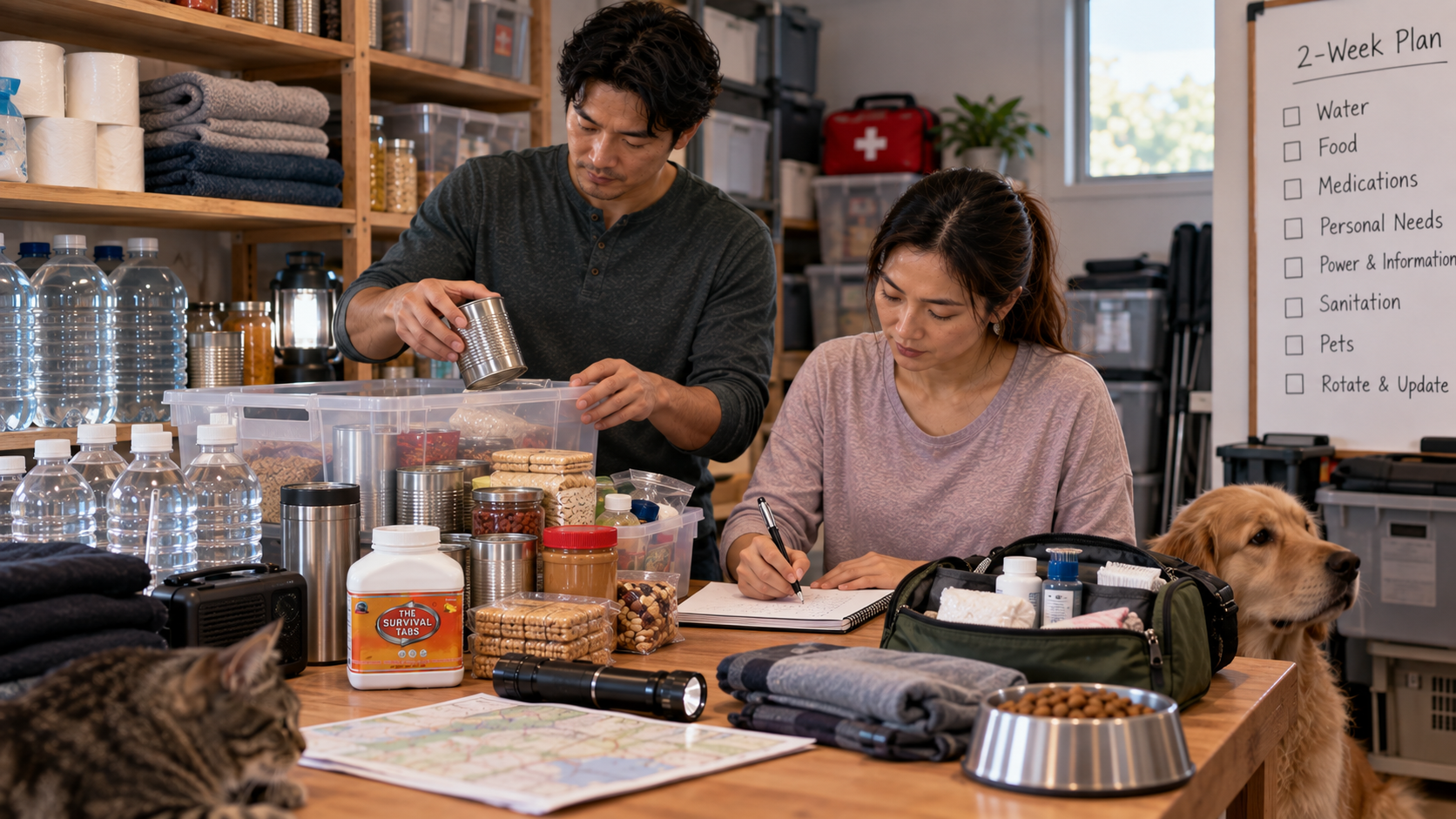
A two-week emergency supply is a deeper household reserve for disruptions beyond a short evacuation kit. Build it by extending the same systems used for shorter emergencies: water, food, medications and personal needs, communications, power, sanitation and household-specific requirements.
Start with the household List everyone the reserve must support, including pets, and note infant supplies, medications, allergies, disability-related equipment, medically required diets and other non-negotiable needs.
Water first Use current emergency-management guidance to determine appropriate water quantities and storage for your household and climate. Store water safely and include a way to follow local treatment or boil-water instructions. Consider drinking, food preparation and basic hygiene.
Build a 14-day food plan Choose shelf-stable foods that fit your household and can be prepared under likely utility conditions. Include no-cook options. Estimate portions by actual household use and account for water and fuel required for preparation.
Medications and personal needs Discuss emergency medication continuity with healthcare professionals and the insurer or pharmacy before disruption. Include hygiene items, glasses or contact supplies, mobility or communication equipment consumables and everyday essentials difficult to replace quickly.
Power and information Plan for lighting, phone charging and official information. Battery-powered or hand-crank radio capability provides another path. Use generators only according to manufacturer instructions and established carbon-monoxide safety guidance; never improvise indoor generator use.
Sanitation Extended outages can disrupt water and sewer service. Store hygiene supplies, trash bags and cleaning materials and follow local public-health instructions if sanitation systems are affected.
Layer the reserve Keep a smaller evacuation bag separate from the two-week home reserve. The home reserve supports prolonged disruption; the go-bag supports mobility.
Rotate foods and consumables, test batteries and charging devices, update documents and adjust quantities when household membership changes. Survival Tabs can provide a compact long-shelf-life nutrition layer for appropriate users, but a resilient two-week plan still requires safe water, food variety, necessary medications and household-specific supplies.