

Tsunami Preparedness Guide
Quick answer: If you are near the coast and feel strong or long shaking, see the ocean behave unusually, or hear a loud ocean roar, move inland or to higher ground immediately. Do not wait for an official alert.
Know whether you are exposed
Check official local tsunami maps for home, work, school, lodging, and regular travel routes. Learn the community’s evacuation signs, routes, assembly areas, and whether vertical evacuation is part of the local plan. A beach, harbor, river mouth, or low coastal road may be exposed even when your home is not.
Build an immediate evacuation plan
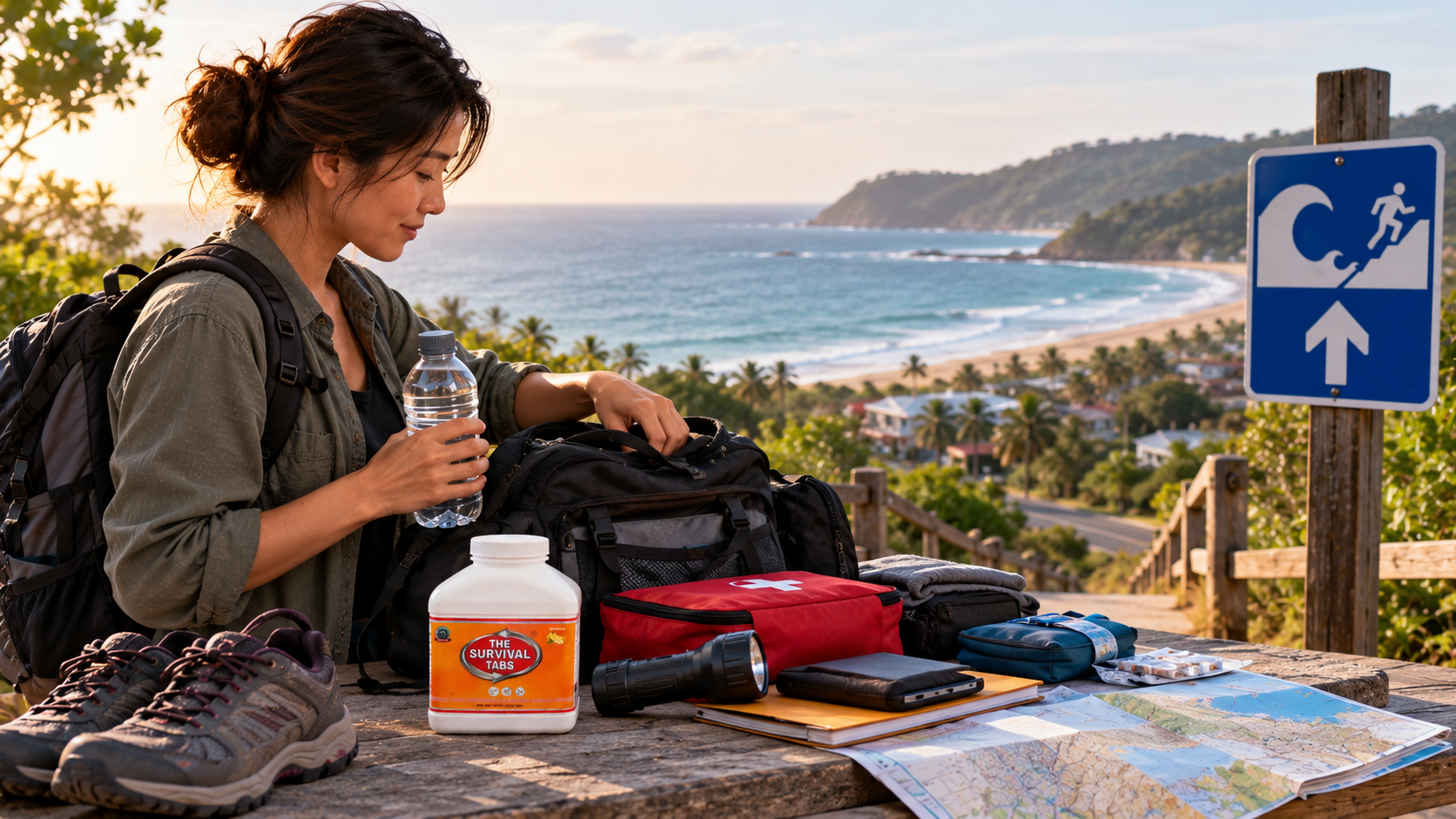
Plan a walking route because roads may be damaged or congested. Choose an accessible alternative for anyone who cannot use the primary route. Keep shoes, essential medication, identification, a small light, water, and a compact go-bag ready. Practice without entering restricted areas.
Act on natural warnings
After strong or prolonged coastal shaking, protect yourself during the shaking, then evacuate as soon as movement is safe. Move away from beaches, harbors, rivers, and low coastal areas. A tsunami can arrive in multiple waves; the first wave may not be the largest.
Communicate without delaying
Use a written family plan and an out-of-area contact. Send a short text when service is available. Do not stop in an evacuation zone to collect possessions, watch the ocean, take photographs, or wait for separated household members.
Return carefully
Remain in the safe area until authorities issue an all-clear. Expect damaged roads, contaminated water, debris, unstable structures, and interrupted utilities. Follow local public-health and utility instructions during reentry.
Quick checklist
- Follow current official alerts and local instructions.
- Include medications, accessibility, children, older adults, pets, and transport needs.
- Keep essential contacts and records available offline.
- Review supplies and plans after every major change or event.
Frequently asked questions
Can I drive?
Follow the local evacuation plan. Walking may be faster when roads are damaged or congested, but accessibility and distance can require other arrangements.
Is one wave the end?
No. Tsunamis can include multiple waves over many hours. Wait for the official all-clear.
Official sources
- Ready.gov — Tsunamis: https://www.ready.gov/tsunamis
- NOAA Tsunami Program: https://www.tsunami.gov/
This guide provides general preparedness education. Current local instructions, product labels, and qualified professional guidance take priority.