

Tornado Preparedness Guide
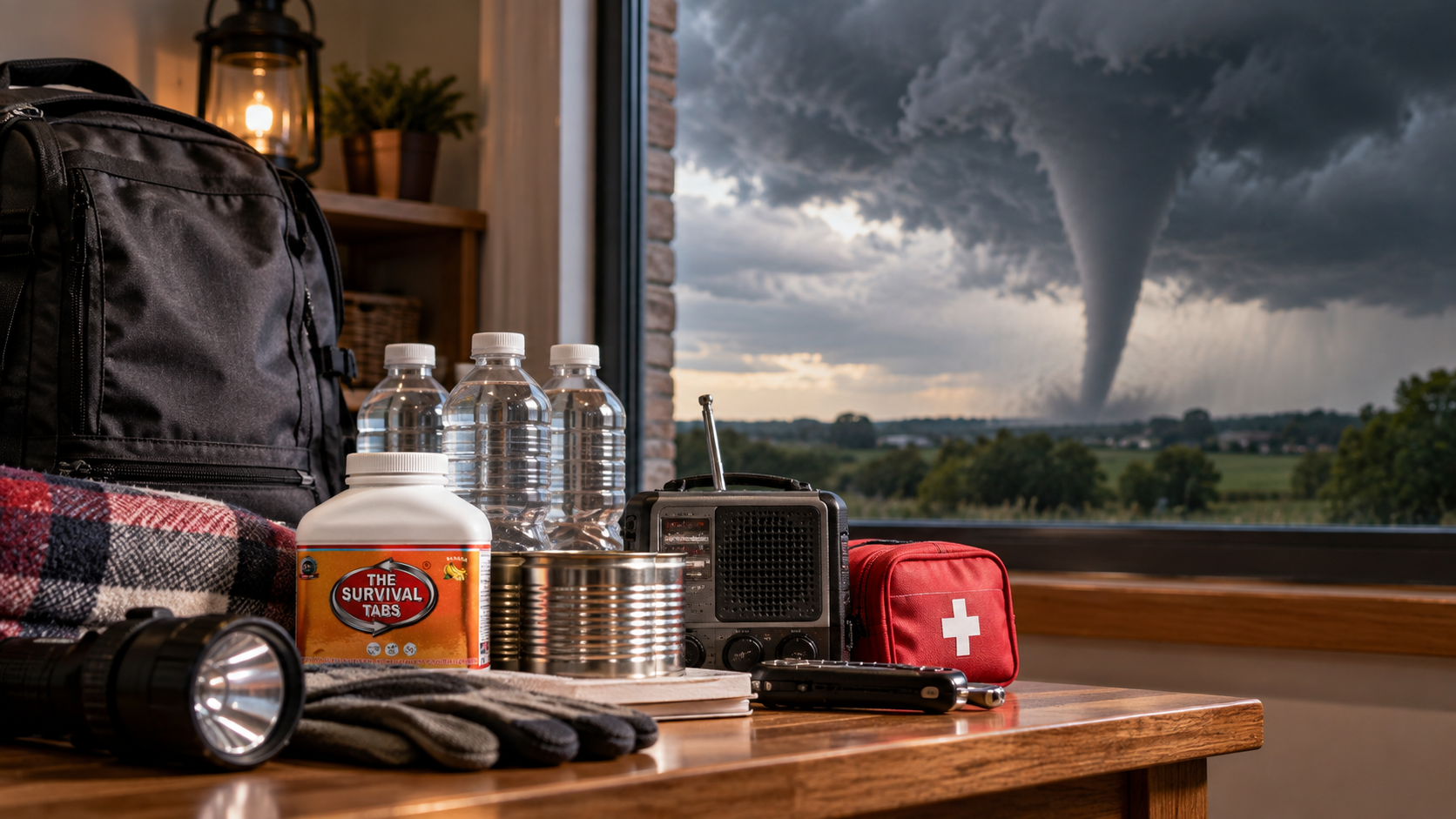
A safety-first guide to tornado alerts, shelter decisions, household planning, immediate protective action, and cautious recovery.
Purpose and limits
This guide supports household preparedness. It does not certify a room, building, shelter, or safe room; replace local warnings; or substitute for emergency services, structural professionals, medical care, or local building requirements.
Immediate checklist
- Enable several reliable warning methods.
- Know the difference between a tornado watch and warning.
- Choose the best available shelter before storms develop.
- Practice reaching it quickly.
- Keep shoes, helmets, lights, and communication tools nearby.
- Plan for children, pets, medications, and accessibility needs.
- Act immediately when a warning is issued.
- Avoid damaged buildings and power lines afterward.
Understand tornado alerts
A watch means tornadoes are possible in and near the watch area; a warning means a tornado is occurring or imminent and requires immediate protective action.
- Use official National Weather Service and local emergency alerts.
- Do not rely on outdoor sirens as the only indoor warning method.
- Keep a battery-backed radio or other outage-resistant alert option.
- Review the plan when a watch is issued.
Choose the best available shelter
The strongest option is a purpose-built safe room or storm shelter that meets applicable standards.
- Use a basement when it is the safest available location and not threatened by flooding.
- Without a basement, choose a small interior room on the lowest level of a sturdy building.
- Stay away from windows, exterior walls, and large open rooms.
- Do not call an ordinary closet or bathroom a certified safe room.
Safe rooms and structural review
A FEMA safe room is an engineered structure, not a do-it-yourself label.
- Use qualified design and installation professionals.
- Verify permits, anchoring, access, ventilation, and occupancy.
- Do not alter a safe room without professional review.
- Keep the route clear and the door operable.
Apartments, high-rises, and shared buildings
- Learn the building’s severe-weather plan before a warning.
- Ask management where residents should shelter.
- Avoid elevators during an emergency unless officials specifically direct otherwise.
- Move early enough to reach the designated area safely.
- Do not shelter in glass-walled lobbies or large-span rooms.
Manufactured and mobile homes
Manufactured and mobile homes are not safe tornado shelters.
- Identify a sturdy building or approved shelter in advance.
- Know opening hours, access rules, and travel time.
- Leave early when tornado risk increases and officials recommend action.
- Never wait for visual confirmation before moving to safer shelter.
Vehicles and outdoor locations
A vehicle is not a reliable tornado shelter.
- Do not stop under a highway overpass.
- If time allows, reach a sturdy building outside the tornado’s path.
- Follow official local guidance when no sturdy shelter is reachable.
- Protect the head and neck and avoid traffic hazards.
Schools, workplaces, and public venues
- Learn the site plan and designated refuge areas.
- Follow trained staff and official instructions.
- Avoid gyms, auditoriums, warehouses, and other large open rooms when directed to interior refuge.
- Account for visitors and people needing assistance.
- Do not leave a safer building to drive into a warning area.
Household shelter supplies
Keep supplies compact so they do not block movement or exits.
- Store sturdy shoes, work gloves, flashlights, and a whistle.
- Include first-aid supplies, essential medications, and medical information.
- Keep a charged phone, battery bank, and weather radio.
- Add hearing protection and head protection appropriate for household members.
Children
- Teach a short, calm action phrase and practice it.
- Assign each adult a clear responsibility.
- Keep comfort items only when they do not delay sheltering.
- Coordinate school and childcare reunification plans.
- Never send a child to retrieve belongings during a warning.
Older adults and disability access
The fastest safe route must work for the person’s actual mobility, communication, sensory, and medical needs.
- Practice transfers and mobility-device placement.
- Keep backup communication methods.
- Store essential medication and equipment within reach.
- Arrange assistance without blocking the shelter route.
Pets and service animals
- Include animals in drills when safe.
- Keep carriers, leashes, and identification accessible.
- Store a small animal supply module near the shelter.
- Do not delay human protective action to search for a hiding pet.
- Plan for service-animal access and post-storm hazards.
During a tornado warning
- Go to the best available shelter immediately.
- Use drop, cover, and head-and-neck protection as appropriate to the location.
- Remain away from windows.
- Keep listening for official updates.
- Stay sheltered until the immediate threat has passed.
If debris traps you
- Protect your airway from dust when possible.
- Use a whistle, text message, or tapping to signal rescuers.
- Avoid unnecessary movement that may shift debris.
- Do not light matches or flames.
- Call emergency services if a safe communication method works.
Immediately after the storm
Expect sharp debris, unstable structures, damaged utilities, and downed lines.
- Check for injuries without entering unsafe areas.
- Use sturdy footwear and gloves.
- Stay clear of fallen power lines and report them.
- Leave damaged buildings when officials or shifting noises indicate danger.
Medical boundaries
- Give only care within your training.
- Call emergency services for serious injury, breathing difficulty, heavy bleeding, loss of consciousness, or suspected crush injury.
- Do not move a seriously injured person unless an immediate hazard requires it.
- Use clean supplies when available.
- Seek professional evaluation when symptoms are uncertain or worsening.
Utilities and fire hazards
Treat damaged electrical, gas, and structural systems as professional hazards.
- Do not touch wet electrical equipment.
- Do not operate fuel-burning equipment indoors or near openings.
- Avoid flames when a gas leak may exist.
- Follow utility and fire-department instructions.
Cleanup
Cleanup can expose people to nails, glass, dust, mold, chemicals, unstable debris, and powered-tool hazards.
- Wait for permission before entering damaged property.
- Use task-appropriate protective equipment.
- Keep children and pets away from debris.
- Use trained professionals for structural, electrical, gas, hazardous-material, and major tree hazards.
Documentation and recovery
Document damage only from safe locations.
- Photograph property before cleanup when possible.
- Record discarded items and expenses.
- Contact insurers and official assistance channels.
- Beware of unlicensed contractors and disaster scams.
Practice and review
- Run drills in daylight and darkness.
- Time the shelter route without rushing unsafely.
- Test alert tools and backup power.
- Update the plan after moves, renovations, or household changes.
- Debrief real warnings and correct problems.
Frequently asked questions
Is a bathtub always the safest place?
No. The safest available location depends on the building. A purpose-built safe room or storm shelter is preferred; otherwise use the best interior, lowest-level refuge available and follow local guidance.
Should I open windows?
No. Do not spend warning time opening windows. Move to shelter immediately.
Is a highway overpass safe?
No. Overpasses do not provide reliable tornado protection and can expose people to wind, debris, and traffic hazards.
Can I shelter in a mobile home?
No. Plan to reach a sturdy building or approved shelter before the threat arrives.
Should I try to outrun a tornado by car?
Driving can place you in traffic, debris, hail, flooding, and rapidly changing storm paths. Follow official local guidance and prioritize sturdy shelter.
How long should I stay sheltered?
Remain until official information and conditions indicate the immediate threat has passed; storms may produce multiple tornadoes.
Where do Survival Tabs fit?
They may be one compact part of a broader emergency food kit. They are not protective equipment, a sole diet, or a substitute for water, shelter, warnings, medicine, or rescue.
Professional review required before publication
- Meteorology and warning review
- Emergency-management review
- Structural and safe-room review
- Fire and electrical review
- Medical review
- Accessibility and safeguarding review
- Veterinary and service-animal review
- Legal and product-compliance review
Authoritative sources
National Weather Service tornado safety
National Weather Service watch and warning guidance
FEMA safe rooms
CDC tornado guidance
CDC safety after a tornado
FEMA safe-room resources