

Quick Emergency Meals Guide
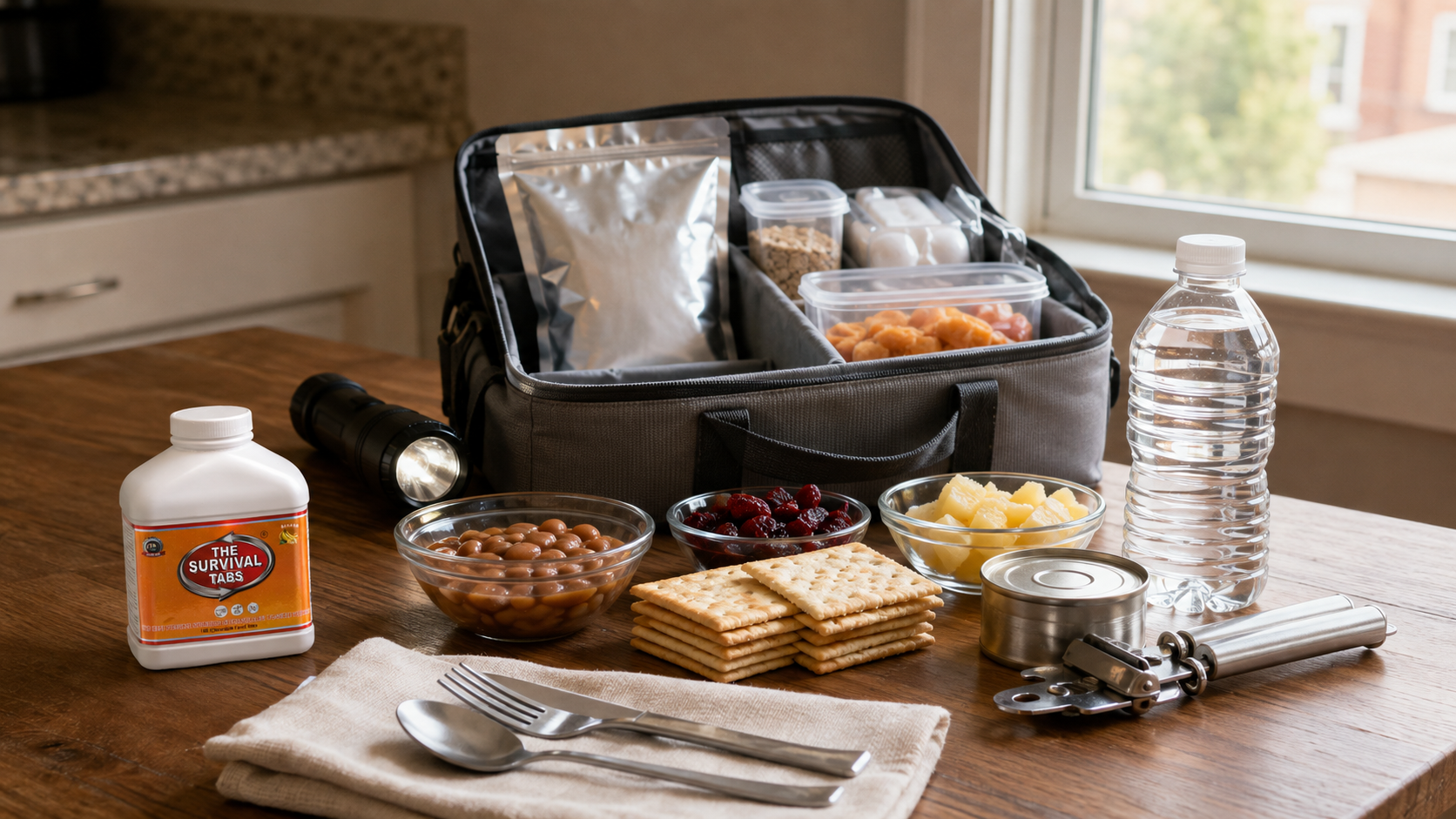
Safe, practical no-cook and minimal-cook food for outages, evacuations, and other disruptions
A quick emergency meal is not a special recipe. It is a meal you can assemble safely with the food, water, tools, time, and energy actually available during a disruption.
This guide helps households plan simple meals without depending on refrigeration, normal utilities, or complicated cooking. It emphasizes food safety, dietary fit, accessibility, and calm decision-making.
It does not replace individualized advice from a clinician or registered dietitian. People with diabetes, kidney disease, food allergies, swallowing problems, metabolic conditions, pregnancy-related needs, or medically prescribed diets should build a personal plan with a qualified professional.
What Makes an Emergency Meal Work
A useful emergency meal should be safe, easy to open, realistic to prepare, acceptable to the people eating it, and appropriate for the conditions.
* Uses little or no cooking.
* Uses little safe water for preparation and cleanup.
* Relies mainly on shelf-stable ingredients.
* Can be portioned without leaving unsafe leftovers.
* Includes foods household members will actually eat.
* Fits allergies, medical diets, cultural needs, and sensory preferences.
* Can be opened and prepared with available tools.
* Does not require risky indoor flames or improvised heating.
* Produces manageable packaging and waste.
* Can be repeated without relying on one single food.
Speed is helpful, but safety comes first. A meal that takes three minutes is not useful if it depends on spoiled refrigerated food, contaminated water, an unsafe heat source, or a can that is damaged.
Plan in Three Meal Modes
Mode 1: No-cook
Use no-cook meals when power, fuel, ventilation, mobility, time, or cleanup capacity is limited.
* Ready-to-eat canned foods eaten immediately after opening.
* Shelf-stable pouches of fish, chicken, beans, lentils, or prepared grains.
* Nut or seed butter with crackers, tortillas, or shelf-stable bread.
* Dry cereal with shelf-stable milk opened for immediate use.
* Fruit cups, applesauce, dried fruit, or commercially packaged fruit.
* Shelf-stable hummus or bean spreads where labeled for room-temperature storage.
* Nutrition bars selected for dietary fit and safe chewing.
* Commercially packaged emergency food used according to its label.
Mode 2: Add safe water
Use this mode only when the water is known to be safe under current public-health guidance. Some products need hot water; others can soften in safe cold water if their label permits it.
* Instant oatmeal or cereal prepared with safe water.
* Powdered milk or beverage mixes prepared exactly as labeled.
* Instant soups or noodles prepared with the required safe water and heat.
* Dehydrated meals prepared according to package instructions.
* Couscous or other quick grains only when safe preparation conditions are available.
* Oral rehydration products used only according to their directions or medical advice.
Mode 3: Minimal-cook
Use minimal cooking only with an approved appliance or stove in a location where it is legal and safe. Never bring outdoor grills, charcoal devices, camp stoves, or generators into a home, garage, tent, vehicle, or other enclosed or partly enclosed space.
* Heat one pot rather than preparing several dishes.
* Choose foods that are already cooked and need only warming.
* Use measured water so none is wasted.
* Cook only the portion that will be eaten promptly.
* Keep children, pets, and combustible materials away from heat.
* Stop if ventilation, fuel, equipment, or supervision is inadequate.
The Quick-Meal Formula
Instead of memorizing recipes, combine components that meet the household’s needs. A basic formula is: main food plus energy food plus fruit or vegetable plus safe drink.
Main food
* Beans or lentils in a can or pouch.
* Fish, chicken, or meat in a can or pouch.
* Shelf-stable tofu or other protein product when labeled for room-temperature storage.
* Nut or seed butter.
* A familiar commercially packaged meal.
* Another suitable protein chosen with medical or dietary guidance.
Energy food
* Crackers.
* Tortillas.
* Shelf-stable bread.
* Ready-to-eat cereal.
* Rice or grain pouch labeled for shelf-stable storage.
* Granola or an appropriate snack bar.
* Potatoes, pasta, or grains when safe cooking is available.
Fruit or vegetable
* Canned vegetables.
* Canned fruit packed in water or juice.
* Fruit cups or applesauce.
* Dried fruit.
* Shelf-stable vegetable or fruit puree.
* Fresh produce that remains safe and undamaged.
Safe drink
* Commercially bottled water.
* Water stored and treated according to public-health guidance.
* Shelf-stable milk or an alternative beverage, used as labeled.
* Another drink appropriate for the person’s medical needs.
Not every meal must be perfectly balanced. Across the day, aim for variety and enough food and fluid for the people involved. Avoid claims that a single snack, supplement, bar, tablet, or canned item provides everything everyone needs.
Fast Meal Combinations
These are planning examples, not universal prescriptions. Check labels, allergies, medical needs, package condition, water safety, and storage history before use.
Bean-and-cracker plate
Ready-to-eat beans, crackers or tortillas, canned vegetables, and fruit.
Tuna pouch meal
Tuna pouch, crackers, fruit cup, and safe water.
Chicken wrap
Shelf-stable chicken pouch with a tortilla and shelf-stable condiment packets.
Nut-butter snack meal
Nut or seed butter, crackers, dried fruit, and shelf-stable milk or safe water.
Cereal meal
Ready-to-eat cereal, shelf-stable milk, and fruit.
Canned soup meal
Ready-to-eat soup that can be eaten as labeled, with crackers and fruit.
Bean spread meal
Mashed ready-to-eat beans with crackers or tortillas and canned vegetables.
Fish-and-rice bowl
Shelf-stable fish pouch with a ready-to-eat grain pouch and vegetables.
Lentil plate
Ready-to-eat lentils, crackers, fruit, and safe water.
Breakfast box
Shelf-stable cereal or bar, fruit cup, nut or seed butter, and a drink.
Low-prep comfort meal
A familiar shelf-stable entrée with fruit or vegetables and a safe drink.
Evacuation meal
Individually packaged food requiring no utensils beyond those packed with it.
If a product normally requires refrigeration after opening, use a single-serving package when possible. Discard leftovers when safe cold storage is unavailable.
Canned-Food Safety
* Reject cans that are bulging, leaking, badly dented at seams, deeply rusted, cracked, or spurting when opened.
* Do not taste food to decide whether it is safe.
* Wash hands and clean the can opener when safe water and cleaning supplies are available.
* Wipe the top of an undamaged can before opening when contamination is possible.
* Use a manual can opener that household members can operate.
* Transfer no food into unclean or unlabeled containers.
* Eat opened perishable food promptly when refrigeration is unavailable.
* Follow public-health instructions after floods, fires, chemical incidents, or other contamination events.
* When in doubt, throw it out.
Food exposed to floodwater or unsafe contamination may need to be discarded even when the package looks intact. Follow local authorities and current CDC or food-safety guidance rather than improvising a cleanup method.
Power-Outage Decisions
Keep refrigerator and freezer doors closed as much as possible. Time and temperature—not smell or appearance alone—determine whether many perishable foods remain safe.
* Record when the power failed, if known.
* Use an appliance thermometer if one is available.
* Keep cold food cold; do not repeatedly open doors to check it.
* Move food to a cooler only when sufficient ice or another safe cold source is available.
* Discard perishable refrigerated food when official time-and-temperature guidance says it is unsafe.
* Never taste questionable food.
* Do not refreeze or cook food as a way to reverse unsafe temperature exposure.
* Follow local instructions if the outage is linked to flooding, wildfire smoke, chemical release, or damaged utilities.
Official CDC guidance states that, with doors kept closed, food is generally safe for up to four hours in a refrigerator, up to 48 hours in a full freezer, and up to 24 hours in a half-full freezer. Conditions vary, so use current official guidance and measured temperatures when possible.
Safe Water and Cleanup
* Use bottled or otherwise verified safe water for drinking, food preparation, brushing teeth, ice, and cleaning food-contact items during an advisory.
* Do not use water under a do-not-use advisory for cooking or cleanup unless authorities explicitly permit it.
* Prefer meals that require no added water during a shortage.
* Measure preparation water rather than pouring freely.
* Use disposable plates or liners when water for dishwashing is limited.
* Keep hand-cleaning supplies with the food kit.
* Separate food waste from clean supplies.
* Protect opened food from insects, rodents, pets, dust, and floodwater.
Water used to prepare infant formula must meet current public-health and product instructions. Ready-to-feed formula may reduce water-preparation risks in emergencies; caregivers should follow CDC guidance and their child’s healthcare professional.
Cooking and Heating Boundaries
* Never use charcoal indoors.
* Never use a generator indoors or near doors, windows, or vents.
* Never use a gas oven or stovetop to heat a home.
* Do not create a stove from cans, chemicals, candles, bricks, or other improvised materials.
* Do not heat sealed cans.
* Do not use damaged cords, overloaded outlets, or wet electrical equipment.
* Use appliances only as designed and according to manufacturer instructions.
* Keep a working carbon-monoxide alarm where fuel-burning equipment may affect occupied spaces.
* Choose no-cook food whenever safe heating cannot be confirmed.
Dietary and Medical Planning
* Make a written list of allergies and medically restricted foods.
* Store familiar foods that are normally tolerated.
* Read labels every time; formulas and facilities can change.
* Avoid cross-contact from shared utensils, open packages, or communal serving.
* Keep quick-acting carbohydrate available when prescribed for hypoglycemia planning.
* Plan adequate safe fluid for medications and dietary needs.
* Ask a clinician or dietitian how an emergency changes meal timing, sodium, potassium, carbohydrate, protein, or fluid limits.
* Pack texture-modified or easy-to-swallow foods when required.
* Keep backup feeding equipment and power plans for medically necessary devices.
* Do not substitute general emergency-food advice for a prescribed medical diet.
Infants and young children
* Prioritize safe feeding supplies and caregiver instructions.
* Use ready-to-feed formula when recommended and appropriate.
* Never dilute formula to make it last longer.
* Do not prepare formula with unsafe water.
* Keep age-appropriate foods and safe feeding tools.
* Watch closely for choking hazards.
Older adults and people with disabilities
* Include easy-open packaging or adaptive openers.
* Choose foods that match chewing and swallowing needs.
* Use large-print labels or tactile organization when helpful.
* Keep food and water within safe reach.
* Plan assistance without assuming a person cannot make their own decisions.
* Include backup communication for dietary and medical needs.
Portioning and Leftovers
* Open the smallest suitable package.
* Serve only what will be eaten.
* Use clean utensils.
* Do not return served food to the original package.
* Mark opening time when cold storage is available but uncertain.
* Discard leftovers that cannot be kept at a safe temperature.
* Do not save food from a plate for later.
* Keep pets away from human food and food-preparation areas.
Tools to Pack
* Manual can opener.
* Eating utensils.
* A small food-safe knife with a protective cover, if appropriate.
* Disposable plates, bowls, or cleanable mess kits.
* Paper towels or clean cloths.
* Hand-cleaning supplies.
* Trash bags.
* Food-safe storage bags or containers.
* Permanent marker and tape for labels.
* Appliance thermometer and food thermometer when relevant.
* Adaptive grips or openers.
* Printed food-safety and medical instructions.
A 15-Minute Household Setup
1. List every person, pet, dietary restriction, allergy, and feeding need.
2. Choose three no-cook breakfasts, three lunches, and three dinners the household accepts.
3. Calculate water needed for drinking, food preparation, medications, and basic hygiene.
4. Buy or assemble one day of food first.
5. Test whether everyone can open and prepare it safely.
6. Replace large packages with practical single servings where waste would be unsafe.
7. Pack a manual opener, utensils, cleaning supplies, and trash bags.
8. Label one container as the immediate-use meal kit.
9. Store backup food in a cool, dry, accessible place.
10. Add items to a rotation list and check them on a routine schedule.
When an Emergency Begins
1. Follow official instructions about evacuation, sheltering, water, and food contamination.
2. Check whether electricity, safe water, refrigeration, and cooking are available.
3. Use food already at risk of spoilage only while it remains within official safety limits.
4. Move to shelf-stable no-cook meals when safety is uncertain.
5. Open one package at a time.
6. Track special-diet meals and medications.
7. Limit unnecessary refrigerator and freezer opening.
8. Keep food areas clean and separate from fuel, chemicals, waste, and floodwater.
9. Document losses when insurance or disaster assistance may apply.
10. Replace depleted items after the emergency.
Using Survival Tabs Responsibly
Survival Tabs may be included as one compact component of an emergency food plan when the product is suitable for the individual and used according to its current label.
* Verify current product facts and serving directions against the official label and website.
* Consider allergies, medical diets, age, chewing ability, and clinician guidance.
* Use safe water as needed.
* Do not describe the product as a cure, medical treatment, or guaranteed protection.
* Do not assume one product replaces water, varied food, prescribed nutrition, or individualized medical care.
* Do not rely on Survival Tabs as a person’s sole long-term diet.
Common Mistakes
* Buying unfamiliar food that nobody will eat.
* Depending on refrigeration during a likely outage.
* Packing food but no manual opener.
* Assuming all canned food is safe after flooding or package damage.
* Using unsafe water to prepare a shelf-stable meal.
* Creating indoor flames or using outdoor appliances inside.
* Opening large packages without a leftover plan.
* Ignoring allergies, medication timing, or texture needs.
* Treating snack foods as nutritionally complete.
* Forgetting pets and service animals.
* Storing food where heat, moisture, pests, or chemicals can damage it.
* Waiting for an emergency to test the plan.
Frequently Asked Questions
Do emergency meals have to be hot?
No. Safe no-cook food is often the best choice when utilities, ventilation, fuel, supervision, or cleanup are limited.
Can I eat food directly from a can?
Many commercially canned foods are ready to eat, but follow the label. Use only an undamaged can with a safe storage history, clean the top when possible, and do not save unsafe leftovers.
Is food safe if it smells normal?
Not necessarily. Dangerous food may look and smell normal. Follow official time, temperature, package-condition, and contamination guidance.
Should I cook refrigerated food after a long outage?
Cooking does not reliably undo every hazard created by unsafe storage. Discard food when official guidance says it is unsafe.
What if safe water is limited?
Choose ready-to-eat food that needs no added water, protect stored drinking water, reduce dishwashing with safe disposable items, and follow local water instructions.
How much variety is necessary?
Enough to support dietary needs, avoid dependence on one item, and maintain acceptance. Build a short repeatable menu first, then expand.
Can one bar, tablet, or supplement replace meals?
Do not assume it can. Check the label and obtain professional advice for individual needs. Emergency food planning should include water, varied foods, and medically necessary nutrition.
Professional Review Required Before Publication
* Registered dietitian or clinician for medical diets, infant feeding, pregnancy, chronic disease, and nutrition language.
* Food-safety specialist for time-temperature rules, canned-food decisions, sanitation, and contamination events.
* Emergency-management specialist for outage, evacuation, and shelter guidance.
* Fire-safety and carbon-monoxide specialist for cooking and heating boundaries.
* Accessibility specialist for packaging, communication, reach, mobility, and feeding needs.
* Legal and regulatory review for product statements, label claims, and jurisdiction-specific requirements.
Official Sources
* Ready.gov — Food
* FoodSafety.gov — Food Safety During Power Outages
* CDC — Keep Food Safe After a Disaster or Emergency
* CDC — Emergency Water Supply
* CDC — Emergency List for Families With Infants and Young Children
* MyPlate.gov — What Is MyPlate?
Review official guidance again before publication and after major public-health updates. Local authorities and current product labels control when they are more specific than this general guide.