

Survival Tabs Shelf Life, Storage, and Safety Guide
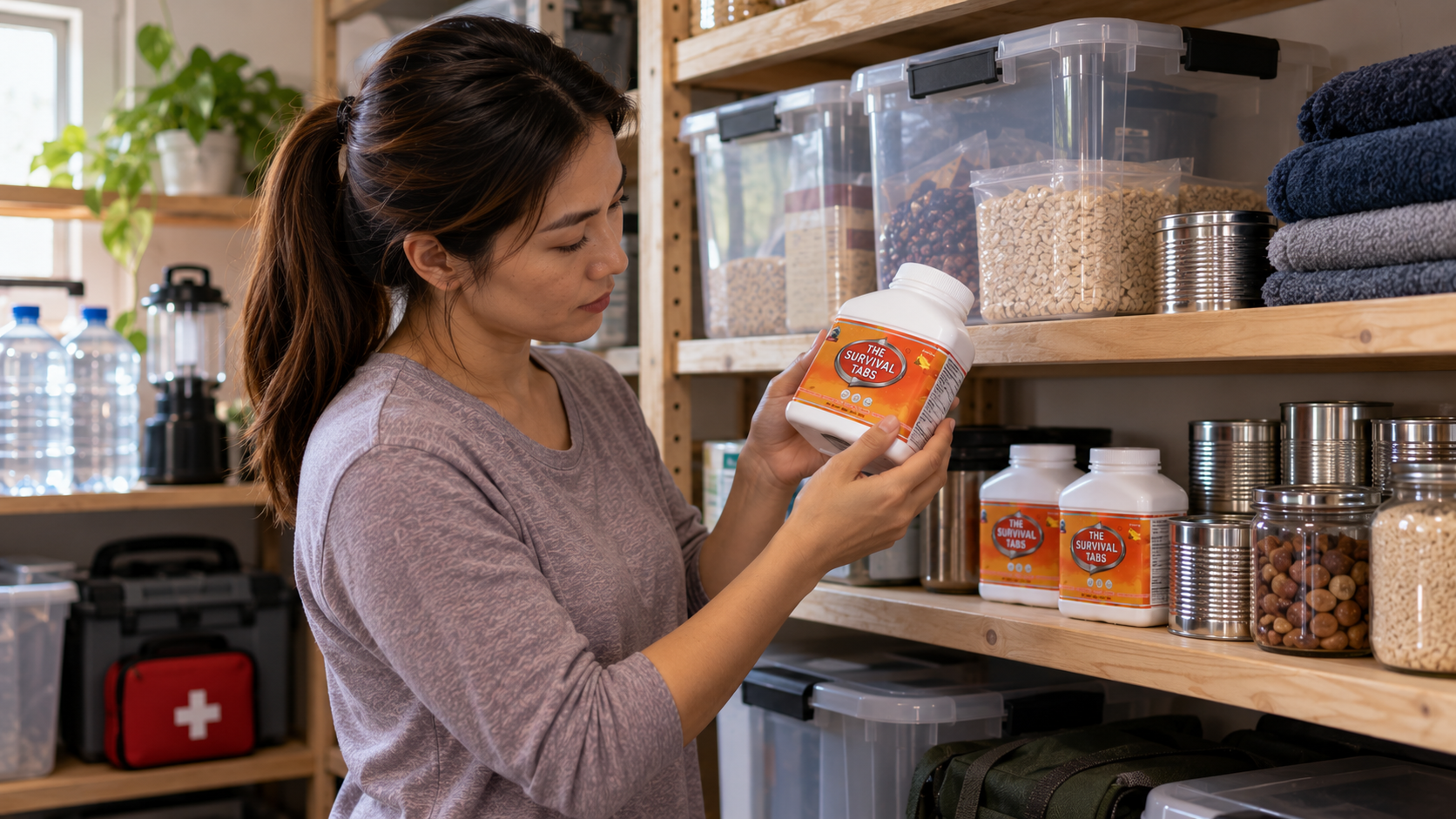
Survival Tabs Shelf Life, Storage, and Safety Guide
Long shelf life depends on the correct product, intact factory packaging and storage within current manufacturer instructions. The package label is the source of truth for the bottle or pouch in hand.
Understand the shelf-life statement
Current product information states a 25-year shelf life for unopened Survival Tabs stored appropriately. This does not automatically apply after opening, after seal damage or after exposure to conditions outside the instructions.
Choose a stable location
Keep unopened packages dry, protected from direct sunlight, excessive heat, pests, chemicals and physical damage. Avoid locations with repeated temperature swings or condensation. Vehicles require more frequent inspection because interior heat can become extreme.
Inspect without opening
Check for punctures, swelling, broken seals, moisture, contamination or unusual damage. Preserve the printed lot, date, ingredient, allergen and storage information. Replace questionable packages rather than depending on appearance or smell alone.
After opening
Follow the current package directions. Keep remaining tablets clean, dry and closed. Use clean, dry hands or utensils and note the opening date. A secondary container may help organization but does not restore the original factory seal.
Flood, fire and chemical exposure
Do not use food that has contacted floodwater, firefighting chemicals, fuel, sewage, pests or other contaminants. Follow public-health and manufacturer disposal guidance.
Annual review
Review storage location, packaging condition, quantity and household dietary needs. Rotate any shorter-life companion foods and update records when supplies move.
Claims boundary
A shelf-life statement is not a survival guarantee and does not mean the product replaces water, adequate calories or varied food. Verify current serving, ingredient and allergen information before use.