

Small-Space Emergency Supply Storage Guide
Knowledge Center ID: ST-KC-103
Quick answer: Small homes can hold effective emergency supplies by prioritizing core needs, separating household storage from a carryable evacuation bag, using safe vertical and hidden space, and rotating consumables instead of hoarding.
<!-- IMAGE:IMG-ST-KC-103-01 -->
Preparedness Does Not Require a Garage
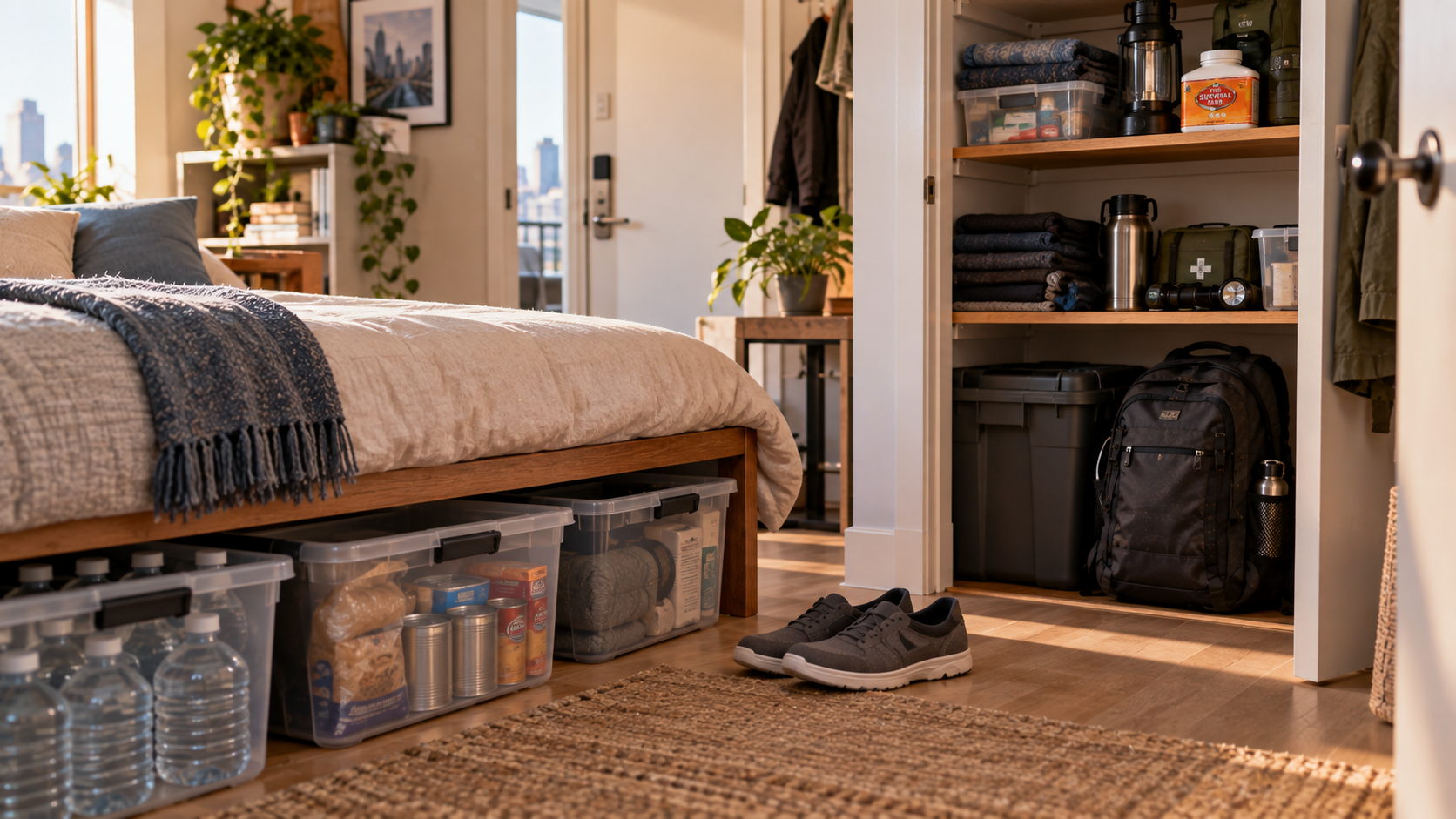
A small apartment, dorm, studio, or shared home can still hold useful emergency supplies. The key is prioritizing essentials, rotating what you actually use, and storing them where they remain dry, safe, and accessible.
Avoid filling every free space with equipment. A smaller, well-maintained kit is better than a large collection that blocks exits or contains expired supplies.
Prioritize by Function
Organize supplies around basic needs:
- Water.
- Food.
- Medication and first aid.
- Lighting.
- Communication and charging.
- Hygiene.
- Warmth or weather protection.
- Documents and cash.
- Pet or accessibility needs.
This prevents duplicate purchases and helps you see which important needs are still missing.
Use Vertical and Hidden Storage Carefully
High shelves, closet tops, under-bed bins, cabinet backs, and narrow shelving can add capacity, but heavy items should not be stored where they could fall or where they are difficult to retrieve.
Keep frequently needed emergency items lower and easier to reach. Do not block sprinklers, electrical panels, windows used for escape, vents, heaters, or building fire equipment.
<!-- IMAGE:IMG-ST-KC-103-03 -->
Separate Home Supplies From the Evacuation Bag
A household supply can stay in bins or cabinets. A separate evacuation bag should contain only what is practical to carry: identification, essential medication, water, compact food, flashlight, charger, hygiene basics, contact information, and household-specific necessities.
Keeping these two systems separate avoids trying to move a week of household supplies during a rapid evacuation.
<!-- IMAGE:IMG-ST-KC-103-02 -->
Rotate Instead of Hoarding
Use a “store what you use, use what you store” approach for food, batteries, hygiene products, and other consumables. Mark purchase or replacement dates and check the kit periodically.
Do not store more fuel, chemicals, compressed gas, or other hazardous materials than building rules and local codes allow. Many multi-unit buildings prohibit certain fuels entirely.
Water in a Small Home
Water is bulky, so spread containers across safe locations rather than creating an unstable stack. Use food-grade containers and keep them away from chemicals, heat, and direct sunlight when possible.
If storage is extremely limited, keep as much as reasonably fits and know where official emergency water distribution information would be announced. Do not rely solely on filters; some contaminants require different treatment.
Accessibility Matters
Emergency supplies must be reachable by the people who need them. A high shelf is not useful to someone who cannot safely reach it. Keep essential medication, mobility-device supplies, hearing-aid batteries, glasses, communication aids, and other critical items in accessible locations.
Label bins clearly for household use, but avoid exposing sensitive medical or identity information in shared spaces.
15-Minute Small-Space Storage Reset
1. Clear one accessible shelf or bin.
2. Put essential documents in a protected pouch.
3. Gather flashlights and chargers.
4. Add a small food and water reserve.
5. Add medication and first-aid essentials.
6. Build one carryable evacuation bag.
7. Move heavy objects off high shelves.
8. Check exits and vents remain clear.
9. Write replacement dates on consumables.
10. Schedule the next review.
Frequently Asked Questions
Where is the best place to store an emergency kit?
A dry, accessible place close enough to reach quickly but not blocking an exit.
Can I store water under the bed?
Yes if containers are food-grade, stable, protected from damage, and easy to inspect.
Should everything go in one container?
Not necessarily. Splitting supplies can make better use of space and reduce the chance of losing everything to one leak or obstruction.
What should stay closest to the door?
A compact evacuation bag, shoes, essential medication, keys, identification, and items needed for immediate departure.
Related Knowledge Center Topics
Apartment Emergency Preparedness Guide; 72-Hour Emergency Kit Guide; Urban Emergency Preparedness Guide; Emergency Shelter Basics; Complete Guide to Emergency Preparedness.
SEO and Publishing Package
SEO title: Small-Space Emergency Supply Storage Guide
Meta description: Organize emergency food, water, medication, lighting, documents, and a go-bag safely in an apartment, studio, dorm, or other small living space.
Suggested URL: /blogs/knowledge-center/small-space-emergency-supply-storage-guide
Suggested schema: Article with FAQPage markup where supported and validated.
Manual Image Plan
IMG-ST-KC-103-01
Placement: Featured
Prompt: Bright small apartment with neatly organized emergency supplies under a bed and on a closet shelf, uncluttered exits, realistic editorial photography, no text.
Alt text: Emergency supplies stored neatly in a small apartment without blocking living space.
IMG-ST-KC-103-02
Placement: After “Separate Home Supplies From the Evacuation Bag”
Prompt: Side-by-side editorial scene showing a larger home supply bin and a compact carryable evacuation backpack, clean composition, no labels or text.
Alt text: Household emergency supplies separated from a compact evacuation bag.
IMG-ST-KC-103-03
Placement: After “Use Vertical and Hidden Storage Carefully”
Prompt: Small closet with light supplies on upper shelf, heavier water containers safely lower, clear floor access, no text.
Alt text: Small-space emergency storage arranged with heavier supplies kept low.
Official Sources
Ready.gov — Build a Kit: https://www.ready.gov/kit
Ready.gov: https://www.ready.gov/
FEMA — Caregivers Preparedness Guide: https://www.ready.gov/sites/default/files/2024-02/ready-gov_caregivers-preparedness-guide.pdf
Editorial note: This guide is educational and does not replace building rules, fire codes, emergency-management guidance, or instructions for medications and hazardous materials.