

RV & Road-Trip Emergency Preparedness Guide
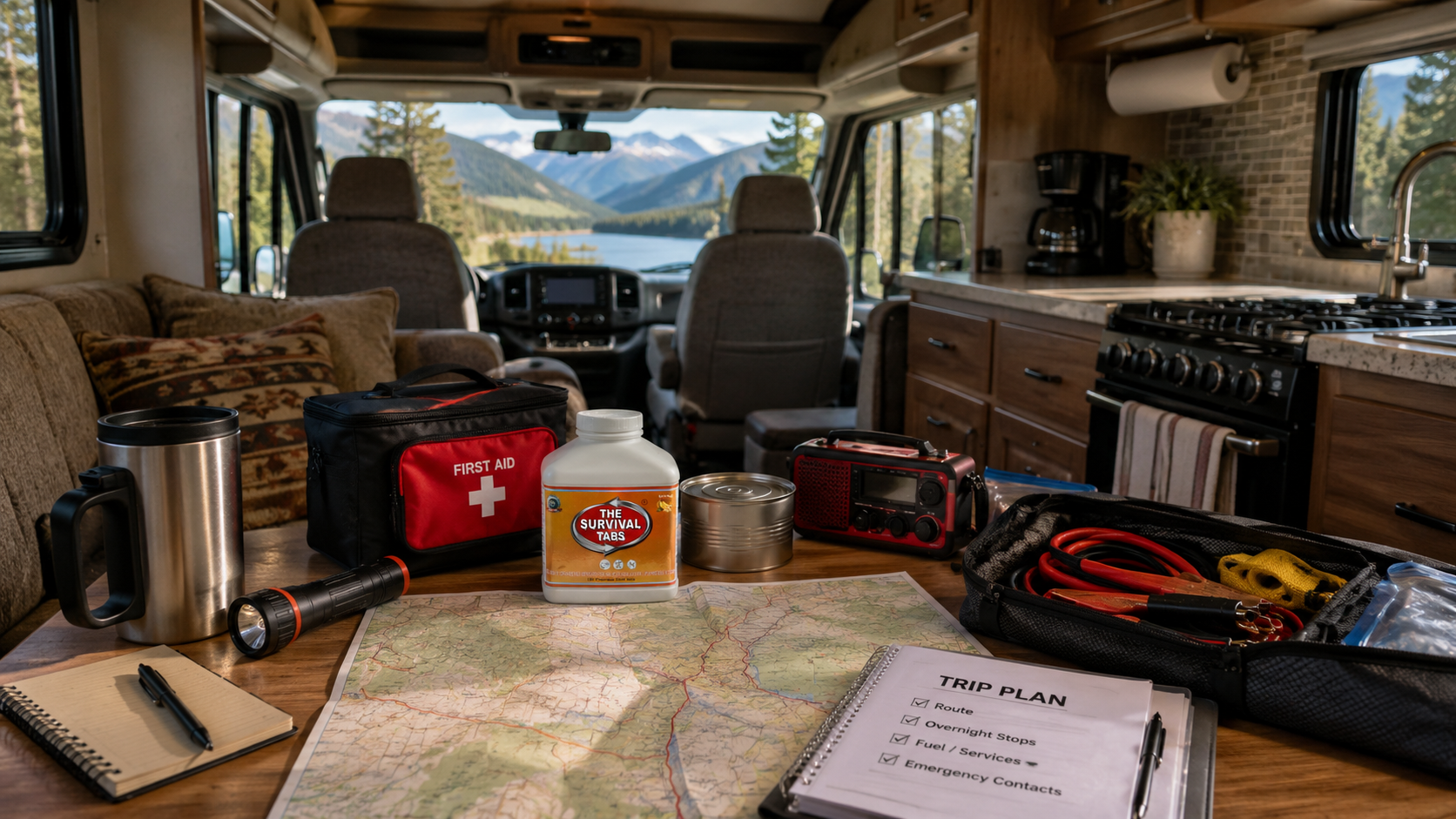
An RV or road trip offers freedom, but it also moves your household into changing weather, unfamiliar roads, variable cell coverage, and locations where help may take longer to arrive. Good preparedness is not about packing every possible gadget. It is about preventing common problems, carrying the right essentials, and knowing what to do when plans change.
This guide applies to motorhomes, camper vans, towable trailers, pickup campers, and ordinary passenger vehicles. Adapt it to your vehicle, passengers, route, season, and the distance between services.
Key Takeaways
• Inspect and maintain the vehicle before departure; supplies cannot replace safe tires, brakes, batteries, fluids, and towing equipment.
• Plan the route, weather, fuel stops, overnight locations, and backup options before leaving.
• Carry separate roadside, household, medical, food, water, communication, and weather layers.
• Secure all cargo so it cannot shift, block exits, or become a projectile.
• Use generators, grills, camp stoves, heaters, propane systems, and batteries only as their manufacturers direct.
• Keep essential supplies accessible from outside or near an exit.
• Review the kit before every major trip and at least twice a year.
1. Start With the People, Vehicle, and Route
Preparedness begins with the actual trip rather than a generic checklist. Record who is traveling, medical or mobility needs, pets, vehicle type, route, season, expected temperatures, overnight stops, and the longest stretch between reliable services.
Before departure:
• Share the route and expected arrival time with a trusted contact.
• Download maps for offline use and carry a paper map.
• Check weather, road closures, wildfire, flood, storm, and evacuation information.
• Identify fuel or charging stops, repair facilities, hospitals, safe overnight options, and alternate routes.
• Confirm campground rules, road restrictions, bridge clearances, weight limits, and seasonal closures.
• Avoid schedules that pressure the driver to speed or continue while tired.
Remote travel, extreme temperatures, towing, and travel with children, older adults, pets, or medical equipment require more reserve time and supplies.
2. Complete a Pre-Trip Vehicle Inspection
Even a well-stocked vehicle can become unsafe when basic maintenance is ignored. Follow the owner’s manuals and service schedule for the vehicle, trailer, generator, appliances, batteries, tires, and towing equipment.
Check:
• Tires, including tread, pressure when cold, sidewalls, valve stems, and the spare.
• Brakes, lights, turn signals, mirrors, windshield, wipers, and washer fluid.
• Engine oil, coolant, transmission fluid, brake fluid, and other manufacturer-specified fluids.
• Starting battery, house batteries, charging equipment, and visible cable damage.
• Belts, hoses, leaks, and warning lights.
• Hitch, coupler, safety chains, breakaway system, trailer connector, and load distribution.
• Propane cylinders, valves, lines, detectors, and appliance operation according to manufacturer instructions.
• Fire extinguishers, smoke alarms, carbon-monoxide alarms, and emergency exits.
• Registration, insurance, roadside-assistance details, and current recall information.
Do not exceed the vehicle, axle, tire, roof, hitch, or trailer weight ratings. If you are unsure about towing setup, propane, brakes, tires, electrical systems, or structural condition, use a qualified technician.
3. Build a Roadside Emergency Layer
Roadside supplies should be reachable without unloading the entire vehicle. Keep them in a clearly labeled compartment and make sure every driver knows where they are.
A practical roadside layer may include:
• Charged phone, vehicle charger, and power bank.
• Reflective warning triangles or other legal warning devices.
• Flashlight or headlamp with spare batteries.
• First-aid kit.
• Jumper cables or a properly rated jump pack.
• Tire-pressure gauge, compatible spare tire, jack, and tools specified by the manufacturer.
• Work gloves, eye protection, and weather-appropriate outerwear.
• Basic tools and temporary-repair materials appropriate to the vehicle and the traveler’s skills.
• Drinking water, shelf-stable food, necessary medication, and blankets.
• Paper map, roadside-assistance information, and emergency contacts.
Place warning devices only when it is safe and legal to exit the vehicle. On high-speed roads, blind curves, bridges, or other dangerous locations, staying belted inside and calling emergency services may be safer than attempting a repair.
4. Carry Water and Food That Fit the Trip
Carry drinking water for normal use plus a delay. Increase the reserve for heat, remote routes, medical needs, pets, and locations where water quality is uncertain. Store water in food-grade containers, protect it from contamination and extreme heat, and inspect containers for leaks.
Your food plan should include:
• Familiar shelf-stable meals and snacks.
• Ready-to-eat options for delays when cooking is unsafe or impossible.
• Foods appropriate for allergies, medical diets, children, and older adults.
• A manual can opener when canned food is carried.
• A compact backup food option for the roadside kit or day packs.
• Enough safe cooking fuel only when it can be legally and correctly stored and used.
Do not depend entirely on refrigerated food. Monitor refrigerator operation and food temperatures, especially after a power loss. When food safety is uncertain, discard the food rather than tasting it.
5. Plan for Health, Medication, and First Aid
Keep necessary medication accessible and stored according to its label. Discuss extended travel, refill timing, refrigeration, and backup arrangements with a pharmacist or healthcare professional.
Carry:
• A first-aid kit appropriate to the group and trip.
• Current medication list, allergies, emergency contacts, and insurance information.
• Prescription medicines and essential over-the-counter items.
• Spare glasses, hearing-aid batteries, mobility supplies, and device chargers.
• Sunscreen, insect protection, hygiene supplies, and masks when appropriate.
• Pet medication, vaccination records, restraints, carrier, food, and water.
Training matters. Travelers should understand basic first aid, when to call emergency services, and how to communicate their location.
6. Use Power, Fuel, Propane, and Cooking Equipment Safely
RVs may combine gasoline or diesel, propane, generators, batteries, solar equipment, inverters, and shore power. Each system has different hazards. Follow the manufacturer’s instructions and campground rules.
Carbon monoxide is colorless and odorless. Never use a grill, camp stove, charcoal device, or fuel-burning appliance inside a vehicle, RV, tent, garage, or other enclosed space unless the appliance is specifically designed and approved for that installed use. Portable generators must remain outdoors and away from doors, windows, and vents as directed by the manufacturer and public-safety guidance.
Also:
• Test smoke, propane, and carbon-monoxide alarms.
• Keep exhaust outlets clear.
• Do not sleep with an engine running.
• Inspect shore-power cords and connectors for damage.
• Use correctly rated equipment and never improvise electrical connections.
• Keep combustibles away from heat sources.
• Shut down equipment before refueling.
• Store fuels and cylinders only in approved locations and containers.
• Keep exits and emergency windows clear.
If an alarm sounds or occupants develop headache, dizziness, weakness, nausea, chest pain, or confusion, move to fresh air and seek emergency help. Do not re-enter until the source is professionally evaluated.
7. Prepare for Heat, Cold, and Severe Weather
Vehicles and RVs can heat or cool quickly. Treat temperature control as a safety issue, not just a comfort issue.
For heat:
• Carry extra drinking water.
• Use shade and ventilation when safe.
• Avoid leaving people or pets in an unattended vehicle.
• Know where climate-controlled public locations or alternate lodging are available.
• Adjust travel times to avoid extreme heat when possible.
For cold:
• Carry layered clothing, hats, gloves, blankets, and dry socks.
• Maintain adequate fuel or charge without relying on unsafe indoor combustion.
• Keep snow tools, an ice scraper, and traction material when conditions warrant.
• Stay with the vehicle when stranded unless remaining creates immediate danger and a safer location is clearly reachable.
Monitor official alerts. Do not drive into flooded roads or around road-closure barriers. If conditions exceed the vehicle, driver, or route capabilities, stop in a safe location or change plans.
8. Maintain Communication and Navigation Backups
Cell service and navigation apps can fail. Use more than one way to communicate and navigate.
• Keep phones charged and carry compatible cables and power banks.
• Download offline maps and carry a current paper map.
• Write down emergency, insurance, roadside-assistance, campground, and family contacts.
• Establish check-in times with a trusted person.
• Know how to identify your location using road, mile, exit, trail, or GPS information.
• Consider an appropriate satellite communicator for genuinely remote travel, with its subscription active and operation practiced in advance.
Call emergency services for immediate danger. For non-life-threatening mechanical problems, use roadside assistance or a qualified service provider.
9. Secure Cargo and Preserve Access
Loose items can injure occupants, damage systems, and block exits. Heavy supplies should be low, balanced, and secured. Do not exceed storage-compartment ratings.
Keep these items immediately accessible:
• Fire extinguisher.
• First-aid kit.
• Flashlight.
• Phone and charger.
• Roadside warning equipment.
• Essential medication.
• Weather clothing.
• A small amount of food and water.
• Documents and emergency contacts.
Do not bury the jack, spare, shutoff controls, electrical disconnects, propane controls, or emergency exits behind cargo. Check the load after the first part of the trip and after rough roads.
10. Create a Safe Stop and Overnight Plan
Not every convenient parking place is safe or legal for overnight use. Confirm permission, local rules, campground requirements, and weather risks.
When stopping:
• Park on stable ground away from flood channels, falling branches, traffic, and fire hazards.
• Set the parking brake and use leveling or wheel equipment as instructed.
• Maintain ventilation without compromising security.
• Keep keys, shoes, flashlights, and essential supplies in predictable locations.
• Know two ways out when the RV design permits.
• Keep a clear path from sleeping areas to exits.
• Avoid advertising valuables or leaving equipment unsecured.
If anyone in the group feels unsafe, leave when it is safe to do so and choose another location.
11. Know What to Do During a Breakdown
When a mechanical problem occurs:
1. Reduce speed smoothly and move as far from traffic as safely possible.
2. Turn on hazard lights.
3. Stop in a visible, stable location when possible.
4. Keep occupants belted if exiting would expose them to traffic.
5. Call emergency services for immediate danger or roadside assistance for mechanical help.
6. Give a precise location, vehicle description, direction of travel, and the nature of the problem.
7. Do not attempt repairs beyond your equipment, training, or safe working space.
8. Conserve phone power, water, food, and temperature-control resources while waiting.
For a crash, fire, suspected fuel or propane leak, carbon-monoxide alarm, medical emergency, or unsafe roadside location, prioritize evacuation or emergency services as circumstances require.
12. Build Three Organized Kits
Instead of one overloaded bin, divide supplies by function.
Roadside kit
Warning devices, lights, jumper equipment, tire tools, gloves, roadside contacts, and immediate weather protection.
Household travel kit
Water, food, hygiene, clothing, bedding, medication, first aid, communication, documents, pet supplies, and sanitation items.
RV systems kit
Only the tools, fuses, connectors, hoses, adapters, and spare parts recommended for the specific RV and understood by the traveler. Label potable-water items separately from waste-system equipment.
This structure makes supplies easier to find and reduces cross-contamination.
13. Maintain the System
Review the vehicle and kit before every major trip. Conduct a deeper review at least twice a year.
• Rotate food and water according to packaging and storage guidance.
• Replace expired, damaged, leaking, recalled, or heat-compromised items.
• Test lights, chargers, alarms, radios, and power banks.
• Inspect batteries for damage or leakage.
• Update medication, documents, contacts, maps, and roadside coverage.
• Replace outgrown clothing and revise passenger or pet supplies.
• Confirm tools and parts still match the current vehicle.
• Practice finding the fire extinguisher, exits, shutoffs, and first-aid kit.
• Record the review date on the inventory.
Frequently Asked Questions
What belongs in an RV emergency kit?
At minimum, include communication and charging, first aid, water, shelf-stable food, required medication, flashlights, warning devices, weather protection, maps, roadside-assistance information, and vehicle-specific tools. RVs also require safe planning for propane, power, sanitation, alarms, and emergency exits.
How much water should we carry?
The amount depends on travelers, pets, climate, medical needs, route, storage capacity, and time between reliable water sources. Carry a practical reserve beyond normal consumption and increase it for heat or remote travel. Never overload the vehicle to carry more water.
Can we run a generator overnight?
Use a generator only as its manufacturer allows and only outdoors with exhaust safely away from doors, windows, vents, and neighboring occupied areas. Maintain working carbon-monoxide alarms. Never use a portable generator inside an RV, vehicle, tent, garage, or other enclosed space.
Should emergency supplies stay in the RV year-round?
Only when storage temperatures, security, moisture, and manufacturer limits allow it. Extreme heat and cold can damage food, water containers, medication, batteries, electronics, and adhesives. Remove or rotate sensitive items seasonally.
What if there is no cell service?
Use offline and paper maps, maintain a written trip plan and check-in schedule, and carry a suitable satellite communicator for remote routes if warranted. Practice using it before departure.
Where should the emergency kit be stored?
Store heavy items low and secured. Keep roadside gear, medication, first aid, flashlights, warning devices, documents, and some food and water accessible without unloading the vehicle. Never block exits or safety equipment.
Final RV & Road-Trip Preparedness Checklist
• Route, weather, stops, alternate routes, and check-in plan confirmed.
• Vehicle, tires, brakes, fluids, batteries, towing equipment, and recalls checked.
• Roadside kit is complete and accessible.
• Water and food match the travelers, pets, climate, and route.
• Medication, first aid, health records, and mobility needs are covered.
• Phones, chargers, offline maps, paper maps, and contacts are ready.
• Smoke, propane, and carbon-monoxide alarms work.
• Generator, fuel, propane, cooking, and electrical systems will be used safely.
• Cargo is balanced and secured; exits and safety equipment remain clear.
• Heat, cold, severe-weather, and overnight backup plans are ready.
• Inventory and review date are current.
Sources and Safety References
Ready.gov — Car Safety: https://www.ready.gov/car
Ready.gov — Build a Kit: https://www.ready.gov/kit
NHTSA — Summer Driving Tips: https://www.nhtsa.gov/summer-driving-tips
NHTSA — Winter Driving Tips: https://www.nhtsa.gov/winter-driving-tips
NHTSA — Driving in Severe Weather: https://www.nhtsa.gov/road-safety/driving-in-severe-weather
CDC — Carbon Monoxide Poisoning Basics: https://www.cdc.gov/carbon-monoxide/about/index.html
Editorial Note
This article provides general preparedness education. Vehicle, RV, towing, electrical, propane, fuel, medical, and emergency requirements vary. Follow current laws, official alerts, owner’s manuals, product instructions, and qualified professional guidance.