

Rural Community Emergency Preparedness Guide
Knowledge Center ID: ST-KC-099
Quick answer: Rural preparedness should account for longer travel distances, limited alternate roads, weaker cellular coverage, private wells, livestock, and potentially longer utility-restoration times.
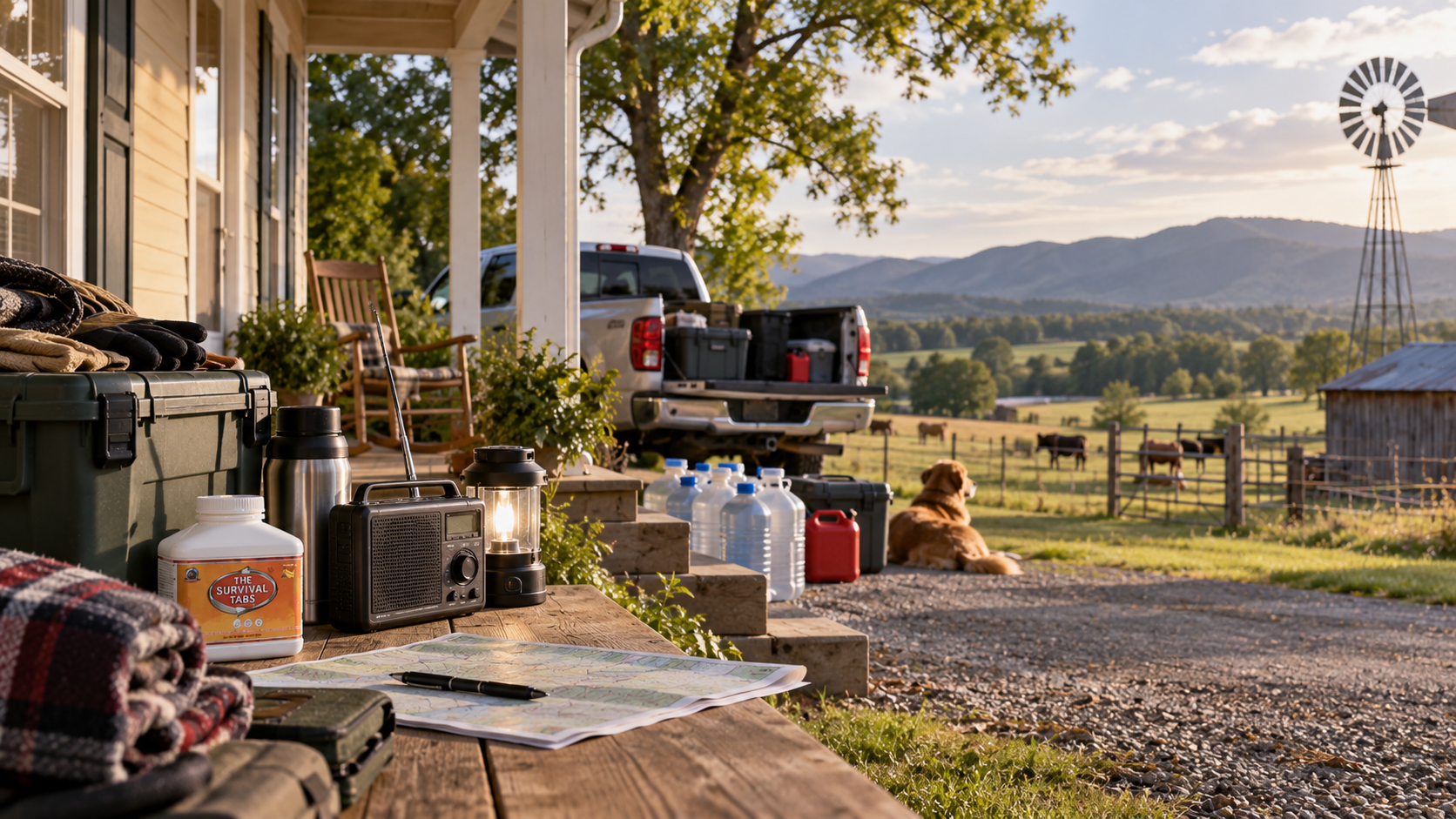
<!-- IMAGE:IMG-ST-KC-099-01 -->
Rural Preparedness Has Different Constraints
Rural communities may face long travel distances, limited alternate roads, smaller emergency-service staffs, weaker cellular coverage, private wells and septic systems, livestock needs, and longer restoration times after storms or fires. These differences make local planning especially important.
Preparedness should be practical and community-based, not built around the assumption that every household can buy specialized equipment.
Plan Around Distance and Access
Identify more than one route to important destinations when geography allows. Know which roads are vulnerable to flooding, wildfire, snow, landslides, or bridge closures. Keep vehicles reasonably fueled or charged and avoid postponing evacuation when officials warn that access may become limited.
Households that depend on a single road should discuss alternate communication and check-in methods before severe weather.
Water and Power Need Special Attention
Private wells often depend on electricity, so an outage may also become a water-supply problem. Store drinking water and understand how your well system behaves when power fails. Do not connect generators to household wiring without approved transfer equipment installed according to code.
If using a generator, operate it outdoors at least 20 feet from doors, windows, and vents, with exhaust directed away, following manufacturer instructions and carbon-monoxide safety guidance.
<!-- IMAGE:IMG-ST-KC-099-02 -->
Communications Beyond Cell Service
Know where cellular coverage is weak. Keep battery radios for official broadcasts and consider legally appropriate radio or satellite options where justified. A paper contact list remains valuable when phones are damaged or uncharged.
Neighbors can also establish physical check-in locations, but no one should travel into dangerous conditions merely to complete a check-in.
Livestock and Animals
Include feed, water, identification, carriers or trailers where appropriate, veterinary contacts, and evacuation destinations in the plan. Moving large animals takes time; do not wait until the last minute when wildfire, flood, or severe weather threatens.
Follow local agricultural extension, animal-control, emergency management, and veterinary guidance.
<!-- IMAGE:IMG-ST-KC-099-03 -->
Community Coordination
Small communities often already have strong informal networks. Turn those relationships into a simple preparedness system: verified contacts, voluntary check-in lists, transportation plans, warming or cooling options, generator safety information, and connections to local government and volunteer organizations.
Respect privacy and avoid assuming that older adults or people with disabilities automatically need assistance; ask what support they want.
Rural Preparedness Checklist
- Know hazards specific to your roads and property.
- Maintain several communication methods.
- Store water if your well depends on power.
- Plan safe generator use.
- Keep vehicle evacuation options ready.
- Include livestock and pets.
- Know neighbors who voluntarily want check-ins.
- Maintain paper maps and contact lists.
- Identify local shelters, clinics, fuel sources, and supply points.
- Review plans before fire, storm, or winter seasons.
Frequently Asked Questions
Do rural households need more supplies than urban households?
The amount depends on local access and likely restoration times. Rural households may reasonably plan for longer service interruptions, but supplies should still be rotated and tailored to actual needs.
What if cell service is unreliable?
Use multiple methods such as radio, paper contacts, landlines where available, satellite services, or legally operated radio systems.
How should private-well households prepare?
Understand whether the pump requires electricity and keep an emergency drinking-water supply.
Should neighbors share generators?
Only with a safe plan that follows manufacturer guidance, electrical codes, fuel rules, and carbon-monoxide precautions. Improvised power connections are dangerous.
Related Knowledge Center Topics
Complete Guide to Emergency Preparedness; Community Emergency Preparedness Guide; Emergency Radio and Communication Guide; Power Outage Preparedness Guide; Off-Grid Emergency Preparedness Guide.
SEO and Publishing Package
SEO title: Rural Community Emergency Preparedness Guide
Meta description: Prepare rural households and communities for road closures, outages, private-well disruptions, weak cell service, livestock needs, and longer recovery times.
Suggested URL: /blogs/knowledge-center/rural-community-emergency-preparedness-guide
Suggested schema: Article with FAQPage markup where supported and validated.
Manual Image Plan
IMG-ST-KC-099-01
Placement: Featured
Prompt: Realistic rural household preparedness scene with farmhouse, pickup, water containers, radio and organized supplies, calm landscape, no weapons, no text.
Alt text: Rural household prepared for service interruptions with basic supplies and communication equipment.
IMG-ST-KC-099-02
Placement: After “Water and Power Need Special Attention”
Prompt: Educational realistic scene of a private well household during an outage with stored drinking water and a generator positioned safely outdoors far from the home, no text.
Alt text: Rural home with stored water and generator safely operated outdoors.
IMG-ST-KC-099-03
Placement: After “Livestock and Animals”
Prompt: Calm farm preparedness scene showing livestock evacuation trailer, water and feed organized before severe weather, no distress, no text.
Alt text: Livestock evacuation supplies prepared before an emergency.
Official Sources
FEMA: https://www.fema.gov/
Ready.gov — Plan Ahead: https://www.ready.gov/plan
USDA Rural Development: https://www.rd.usda.gov/
Editorial note: This guide is educational and does not replace local emergency-management, utility, veterinary, agricultural-extension, electrical-code, or manufacturer instructions.