

Rainwater Harvesting for Emergency Preparedness
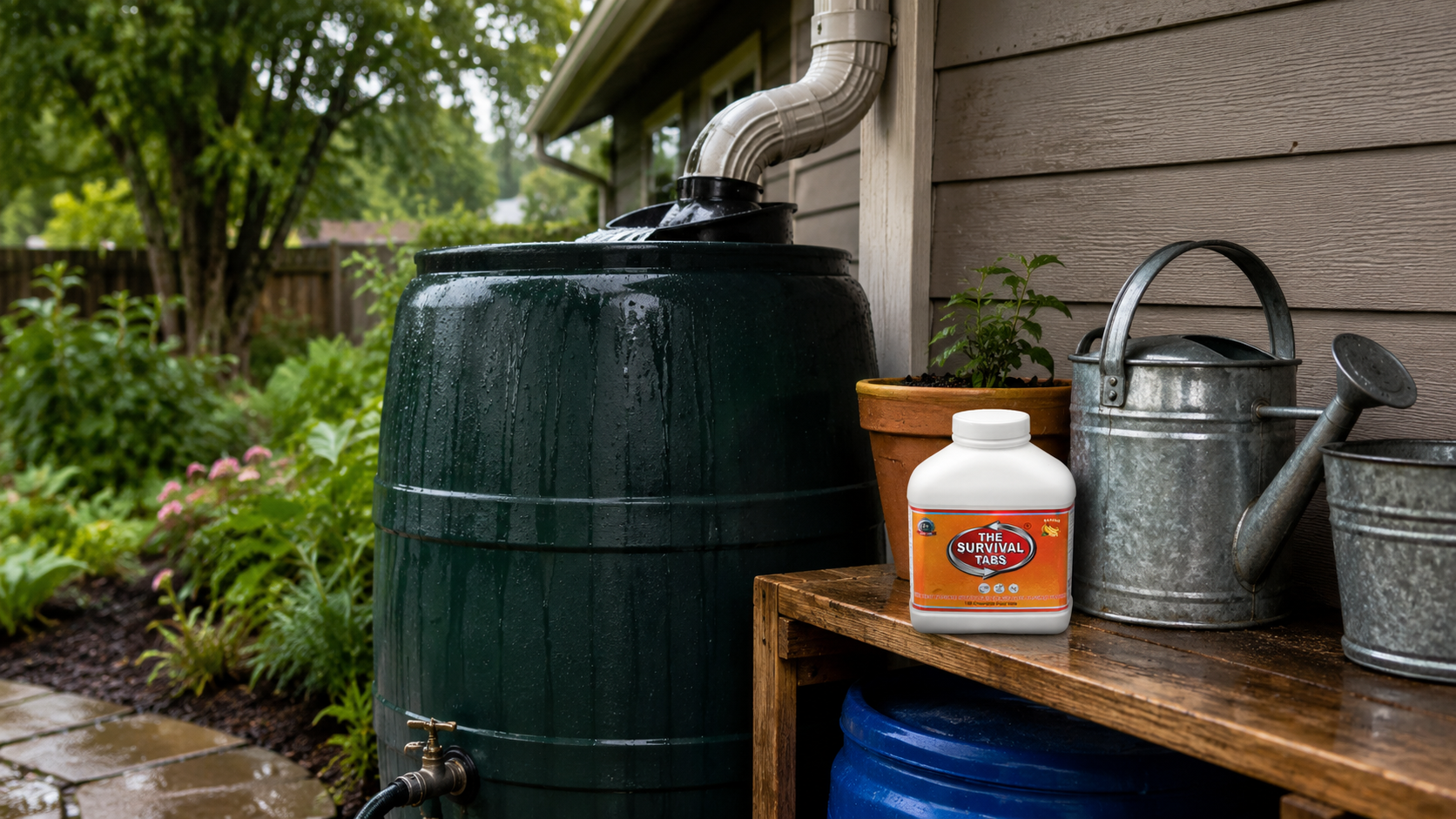
A practical guide to collecting, storing, maintaining, and safely using rainwater before and during emergencies.
Rainwater harvesting can strengthen a household water plan, especially when storms, drought, power failures, or damaged infrastructure interrupt normal service. It should be treated as a supplemental system—not an automatic source of safe drinking water.
The safest strategy is layered: keep a separate supply of commercially bottled or properly stored drinking water, use harvested rainwater first for appropriate non-drinking tasks, and treat rainwater for consumption only when necessary and when contamination by chemicals or fuel is not suspected.
1. Start With the Right Role for Rainwater
A rainwater system collects runoff—usually from a roof—moves it through gutters and downspouts, and stores it in a covered barrel or cistern. The intended use determines how carefully the system must be designed, maintained, tested, and treated.
Good emergency uses
- Toilet flushing when local guidance permits.
- Cleaning tools, outdoor surfaces, and some sanitation tasks.
- Irrigating non-food landscaping and, where permitted, gardens.
- Supporting fire-safety or property-protection activities only when the system is designed for that purpose.
- Serving as source water that may be treated for drinking in a true emergency.
Do not assume rainwater is safe to drink
Rainwater can pick up germs and chemicals from the air, roof, gutters, animal droppings, insects, roofing materials, storage tanks, and handling equipment. Clear water is not necessarily safe water.
Use bottled, boiled, or appropriately treated water for drinking, cooking, brushing teeth, making ice, washing food, and preparing infant formula whenever authorities say the normal supply may be unsafe.
Water contaminated with fuel, toxic chemicals, or radioactive material cannot be made safe by boiling or ordinary disinfection. Use another source and follow public-health instructions.
2. Check Local Rules Before Building
Rainwater harvesting rules differ by state, county, city, plumbing code, system size, and intended use. Potable systems generally face stricter requirements than non-potable barrels used for landscaping.
- Check whether a permit, inspection, backflow device, licensed installer, or water-quality testing is required.
- Confirm which indoor and outdoor uses are allowed.
- Ask whether non-potable pipes, taps, and tanks require labels or a separate color.
- Check overflow, drainage, mosquito-control, and setback requirements.
- If the system connects to household plumbing, use a qualified professional and prevent cross-connections with drinking-water lines.
3. Choose a Safer Collection Surface
Most household systems collect from roofs, but roof condition and material matter. Avoid collecting for potential drinking use from surfaces that may contain lead, asbestos, treated wood, fresh coatings, excessive bird or rodent contamination, or other questionable materials.
Keep trees and animal access away from the collection area when practical. Do not collect runoff from parking areas, roads, chemically treated surfaces, or anywhere fuel, pesticides, or industrial residues may be present.
If you do not know what a roof or coating contains, use the water only for a locally approved non-potable purpose until the system and water have been professionally evaluated.
4. Build the Collection Path
Core components
- A clean, sound collection surface.
- Gutters and downspouts sized for local rainfall.
- Leaf screens or debris excluders.
- A first-flush diverter where appropriate.
- A covered, watertight storage tank made from suitable material.
- Screened inlets, vents, and overflow openings.
- A tap or outlet positioned to reduce sediment pickup.
- Safe overflow drainage away from foundations, septic systems, and neighboring property.
A first-flush diverter routes the first portion of roof runoff away from storage. That initial flow often carries the highest load of dust, droppings, pollen, and debris. It improves source-water quality but does not make the remaining water automatically potable.
Every opening should be protected against insects, animals, and debris. Keep the lid secured so children cannot open or enter the tank. Large cisterns are confined spaces; never enter one without professional confined-space procedures.
5. Estimate How Much Water You Can Collect
A simple planning estimate is:
Gallons collected ≈ roof area in square feet × rainfall in inches × 0.623 × collection efficiency.
Collection efficiency accounts for first-flush diversion, splash, gutter loss, leaks, and overflow. A conservative planning factor such as 0.75 to 0.90 is more realistic than assuming every drop reaches the tank.
Example: a 1,000-square-foot roof receiving 1 inch of rain has a theoretical yield of about 623 gallons. At 80% efficiency, roughly 498 gallons may reach storage.
Actual yield depends on roof shape, storm intensity, system condition, tank capacity, and local weather. Never size an emergency plan around a single optimistic rainfall event.
6. Size Storage Around Use, Not Hope
Start with an emergency water budget. Separate drinking and cooking needs from sanitation, cleaning, pets, and irrigation. Stored drinking water should remain the first line of defense.
- List each planned use and estimate daily demand.
- Multiply by the number of people, pets, and expected outage days.
- Compare demand with realistic dry-period length, not just annual rainfall.
- Include space for sediment, first-flush loss, and overflow.
- Choose a tank that can be cleaned, drained, inspected, and isolated.
A small rain barrel may be useful for sanitation and gardening but is not a complete household emergency-water system. Larger cisterns require stronger foundations, safe overflow design, access control, and often professional engineering.
7. Protect Water in Storage
- Use an opaque or shaded tank to limit algae growth.
- Keep the tank watertight, covered, and screened.
- Label non-potable water clearly.
- Keep hoses, buckets, and taps clean and off the ground.
- Prevent backflow and cross-connections with potable plumbing.
- Drain overflow away from buildings and standing-water areas.
- Protect above-ground tanks and pipes from freezing where relevant.
- Do not store chemicals, fuel, pesticides, or waste near the system.
Stagnant water, heat, sunlight, organic debris, and animal access can all degrade quality. Storage does not disinfect rainwater; it can create new contamination if the tank is poorly maintained.
8. Treat Water According to the Hazard
Treatment must match the intended use and the contaminants that may be present. No single filter or disinfectant removes every germ and chemical.
For germs
If emergency officials allow the source to be used and chemical contamination is not suspected, boiling is the most reliable household method for killing germs. Follow current CDC or local health-department instructions for elevation, boil time, cooling, and clean storage.
When boiling is not possible, use an approved emergency disinfection method exactly as directed by public-health authorities or the product manufacturer. Filter cloudy water first through a clean cloth, paper towel, or suitable filter, but remember that simple filtration alone may not disinfect it.
For chemicals
Boiling does not remove fuel, toxic chemicals, heavy metals, or radioactive contamination and may concentrate some contaminants. Ordinary chlorine disinfection also does not solve chemical contamination.
If a wildfire, chemical spill, industrial release, contaminated roof, flood, or fuel leak may have affected the catchment, do not use that water for drinking or bathing. Switch to a safe source and obtain local guidance or laboratory testing.
For ongoing potable use
A system intended to provide drinking water routinely should be designed and maintained to applicable health and plumbing standards. It may require multiple treatment barriers, professional design, periodic laboratory testing, and detailed maintenance records.
9. Create an Emergency Operating Plan
Before an emergency
- Store a separate emergency drinking-water supply.
- Inspect the roof, gutters, screens, first-flush device, tank, tap, and overflow.
- Clean the system on a written schedule.
- Keep treatment supplies, clean containers, labels, gloves, and instructions together.
- Write down which household uses are allowed for untreated rainwater.
- Record local health-department and utility contact information.
- Practice drawing water without contaminating the tap or container.
After a storm or disaster
- Check official notices before using any questionable source.
- Inspect for damaged roofing, smoke residue, ash, floodwater, dead animals, chemicals, or fuel.
- Isolate the tank if contamination is possible.
- Use stored drinking water first.
- Reserve untreated rainwater for approved non-potable uses.
- Treat small batches for consumption only when needed and only when chemical contamination is not suspected.
- Store treated water in clean, covered, food-grade containers and avoid hand contact with the inside.
10. Maintenance Schedule
After major storms
- Remove roof and gutter debris when conditions are safe.
- Check screens, overflow paths, first-flush operation, leaks, and tank security.
- Look for unusual odor, color, sediment, dead animals, ash, or chemical residue.
Monthly during the rainy season
- Inspect inlet screens and mosquito barriers.
- Confirm labels remain readable.
- Check that the outlet area is clean and drains properly.
- Verify that overflow does not create erosion or standing water.
At least annually, or as locally required
- Clean gutters and collection components.
- Inspect the tank interior from outside without entering it.
- Remove sediment using a safe manufacturer-approved procedure.
- Service filters, pumps, treatment devices, and first-flush parts.
- Test water if it will be used for drinking or another regulated use.
- Review local rules and update the household emergency plan.
Increase inspection frequency after wildfire smoke, dust storms, pest activity, roof work, long dry periods, floods, or other contamination events.
11. Common Mistakes to Avoid
- Assuming clear rainwater is safe to drink.
- Using an old chemical drum or unknown container as a tank.
- Leaving the barrel open to mosquitoes, animals, sunlight, or children.
- Connecting non-potable water to household plumbing without backflow protection.
- Ignoring roofing material and nearby contamination sources.
- Relying on a first-flush diverter as the only treatment step.
- Believing a basic filter removes every germ and chemical.
- Boiling water that may contain fuel or toxic chemicals.
- Letting overflow damage the foundation or create standing water.
- Depending on future rainfall instead of storing drinking water now.
12. Household Checklist
- Separate emergency drinking-water supply is stored.
- Permits and allowed uses are confirmed.
- Roof and collection surfaces are suitable.
- Gutters, debris screen, and first-flush device work.
- Tank is covered, opaque, watertight, secured, and labeled.
- Inlets, vents, and overflow are screened.
- Overflow drains safely.
- No cross-connection exists with potable plumbing.
- Treatment supplies and clean containers are available.
- Maintenance and testing schedule is documented.
- Everyone in the household knows which water is safe for which use.
Frequently Asked Questions
Can I drink rainwater directly from a barrel?
Do not assume it is safe. Roof runoff and storage systems can contain germs and chemicals. Use a safe drinking-water supply whenever possible and follow current public-health guidance for treatment and testing.
Does a first-flush diverter make rainwater potable?
No. It can reduce dirt and contamination carried by the first runoff, but it does not replace treatment, testing, maintenance, or local potable-water requirements.
Can boiling make all rainwater safe?
Boiling kills many disease-causing germs, but it does not remove fuel, toxic chemicals, radioactive material, or every other contaminant. Do not boil and drink chemically contaminated water.
Can I use rainwater after a wildfire?
Ash, smoke residue, damaged roofing, firefighting chemicals, and airborne contaminants may affect a catchment. Isolate questionable water, use another source, and follow local health and environmental guidance.
What type of container should I use?
Use a durable, watertight tank intended for water storage and compatible with the intended use and treatment. For water that may be consumed, use food-grade materials and follow applicable standards.
How often should I test the water?
Testing frequency depends on local rules, system design, source risk, treatment, and intended use. Routine potable use generally requires more formal testing than non-potable landscaping use.
Bottom Line
Rainwater harvesting can add resilience, but only when the system is designed around realistic yield, safe storage, clear non-potable labeling, regular maintenance, and hazard-appropriate treatment.
Keep stored drinking water as the primary emergency supply. Treat harvested rainwater as potentially contaminated, never try to boil away chemicals or fuel, and follow local health and plumbing requirements.
Sources
CDC — Collecting Rainwater and Your Health: An Overview
CDC — How to Find Clean Water in an Emergency
CDC — How to Make Water Safe in an Emergency