

Radiological Emergency Preparedness Guide
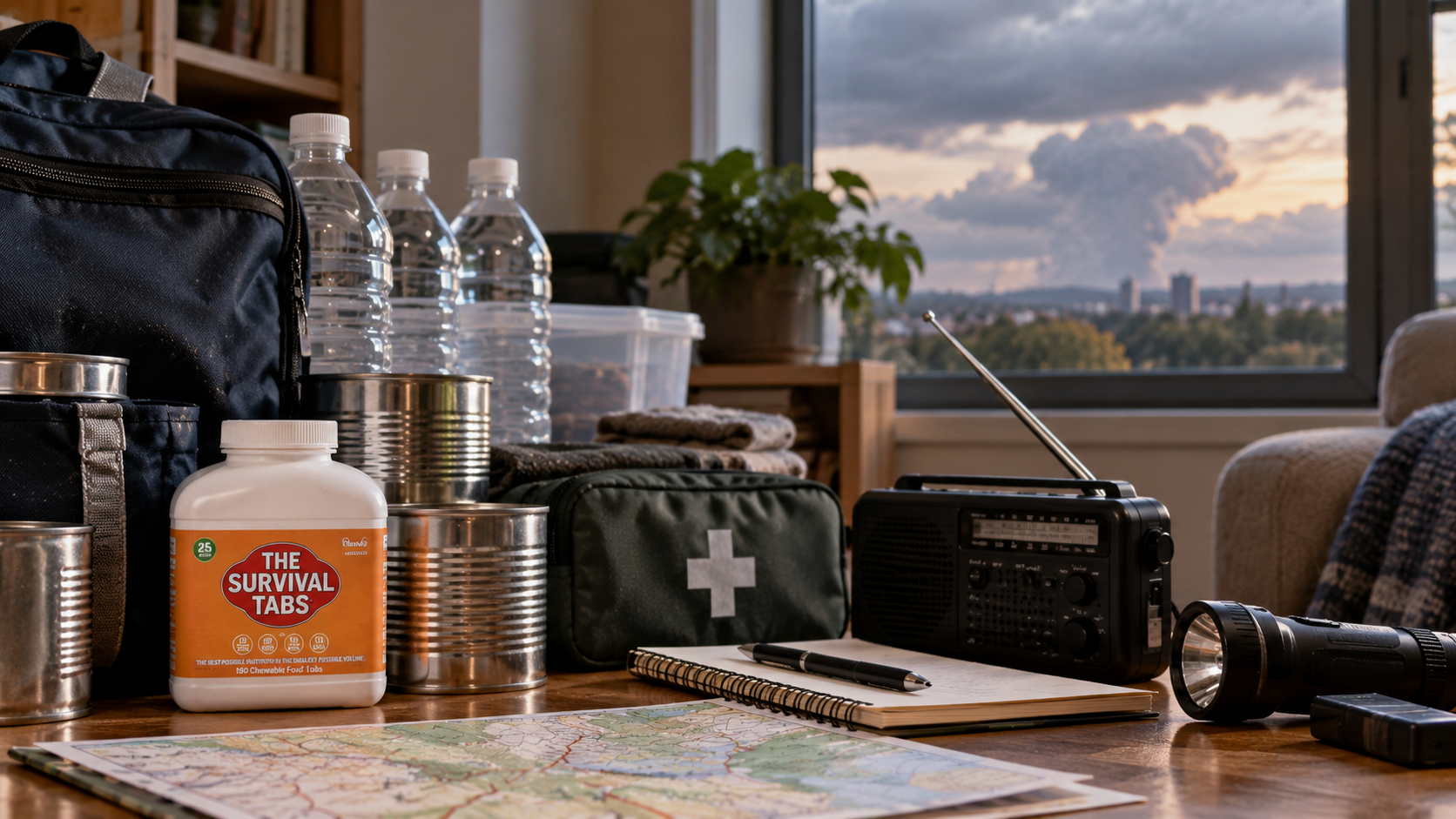
Calm, official-source guidance for households before, during, and after a radiation emergency
Purpose and limits
Radiation emergencies can include a nuclear power plant accident, transportation or industrial incident, radiological dispersal device, or nuclear detonation.
The correct protective action depends on the incident, location, weather, building, and official instructions.
This guide supports household planning. It does not replace emergency alerts, public-health orders, medical care, radiation monitoring, or professional cleanup.
The core public message is simple: get inside, stay inside, and stay tuned.
Preparedness should reduce exposure and confusion without encouraging panic, confrontation, or hazardous experimentation.
Immediate action summary
If an alert or visible event suggests a radiation emergency, act promptly.
- Get inside the nearest substantial building.
- Move away from exterior walls, windows, doors, and the roof.
- Use a basement or central interior room when available and safe.
- Stay inside unless the building is unsafe or officials direct evacuation.
- Follow official alerts by radio, phone, television, or local emergency channels.
- If you were outside, remove the outer layer of clothing carefully.
- Bag removed clothing and place it away from people and animals.
- Wash exposed skin and hair gently when water is available.
- Put on clean clothing.
- Use sealed food and beverages or items that were already indoors.
- Do not take potassium iodide unless officials or a healthcare professional instruct you.
- Do not leave shelter to collect relatives, pets, supplies, or photographs.
Understand the hazard
Radiation exposure and radioactive contamination are related but different.
Exposure means energy passed through or reached the body.
Contamination means radioactive material is on the body, clothing, surfaces, food, water, or inside the body.
A person can be exposed without becoming contaminated.
External contamination can sometimes be reduced by removing outer clothing and washing.
Neither smell, taste, appearance, nor ordinary household instruments can reliably determine whether radiation is present.
Official monitoring and instructions are essential.
The protection principles
Radiation protection is commonly organized around time, distance, and shielding.
- Reduce time near a confirmed or suspected source.
- Increase distance from the source when officials direct movement.
- Put dense building material between people and radioactive material.
- Avoid unnecessary outdoor trips.
- Avoid contaminated dust, smoke, debris, and standing water.
- Do not handle unknown objects or damaged radiation-marked equipment.
- Do not enter an evacuated or restricted area.
- Let trained responders perform monitoring, rescue, and cleanup.
Plan before an emergency
Households should adapt an all-hazards emergency plan rather than build a fear-based nuclear-war lifestyle.
Record local alert systems, nearby substantial buildings, household needs, communication methods, and evacuation routes.
People who live, work, study, worship, or travel in different places need location-specific shelter options.
- Identify a basement or central interior room at home.
- Identify a protected interior location at work.
- Ask schools and care facilities about reunification procedures.
- Identify substantial buildings along regular travel routes.
- Know how to disable routine ventilation only when officials advise it.
- Keep battery-powered alert and radio options.
- Download official alert applications used locally.
- Keep chargers and power banks ready.
- Store printed contact and medication information.
- Plan for at least several days of basic supplies.
- Include water, sealed food, hygiene supplies, lighting, radio, batteries, and first aid.
- Include masks for dust comfort, while recognizing they do not block penetrating radiation.
- Include spare clothing and plastic bags for clothing isolation.
- Include accessibility, communication, sensory, and mobility supports.
- Include infant, child, older-adult, pregnancy, and caregiver needs.
- Include pet food, water, medication, carriers, leashes, and sanitation supplies.
Choose a shelter location
The best immediately available substantial building is usually safer than remaining outdoors.
Do not delay entry while searching for a perfect shelter.
Once indoors, choose a location that maximizes barriers between occupants and outside surfaces.
- Prefer a basement when it is structurally safe and not flooding.
- Otherwise use the middle of a large building.
- Choose a room with few or no windows.
- Stay away from exterior walls and the roof.
- Close exterior doors and windows.
- Close fireplace dampers when safe.
- Turn off fans or systems drawing outside air if officials advise it.
- Do not block essential ventilation in a way that creates carbon-monoxide or oxygen hazards.
- Keep emergency exits usable.
- Do not shelter in a garage with a running vehicle.
- Do not use generators, grills, camp stoves, or fuel-burning heaters indoors.
- Do not enter structurally damaged basements, tunnels, mines, or confined spaces.
When the building is damaged
A damaged building may present fire, collapse, gas, electrical, or smoke hazards.
Radiation protection does not override immediate life threats.
- Move away from fire, collapse, heavy smoke, or a suspected gas leak.
- Use the safest nearby substantial building if movement is necessary.
- Cover your nose and mouth to reduce dust inhalation while moving.
- Spend as little time outdoors as practical.
- Avoid visible dust clouds and debris.
- Do not touch downed power lines.
- Do not enter elevators after a blast or major power disruption.
- Assist others only within your ability and without entering an unstable area.
- Tell officials about trapped, injured, or missing people when communications permit.
After a bright flash or explosion
Do not look toward a bright flash.
Drop or take cover from heat, glass, and debris if immediate blast effects are possible.
After the shock wave passes and movement is safe, enter the nearest substantial building.
- Protect your head and neck.
- Stay away from windows.
- Expect broken glass and falling debris.
- Do not rush outdoors to inspect damage.
- Do not drive unless officials direct evacuation or the current structure is unsafe.
- Avoid damaged bridges, tunnels, utility lines, and fuel leaks.
- Treat fires and major injuries as immediate emergencies.
- Once sheltered, begin official-alert monitoring.
Stay inside
Officials may advise sheltering for a defined period based on monitoring and incident conditions.
Do not substitute a fixed internet rule for live instructions.
- Remain in the protected location.
- Keep exterior openings closed.
- Limit movement into entryways and exterior rooms.
- Create a clean area away from removed outer clothing.
- Keep children and pets out of the decontamination area.
- Monitor several official communication channels.
- Conserve phone batteries.
- Use text messages when networks are congested.
- Avoid repeated nonessential calls.
- Record the time and content of important instructions.
- Reassess fire, flooding, structural, medical, and ventilation conditions.
- Leave only for an immediate life threat or official evacuation order.
Stay tuned
Rumors can cause harmful movement and medication decisions.
Use sources tied to emergency management, public health, law enforcement, fire services, utilities, or facility operators.
- Enable Wireless Emergency Alerts.
- Keep a battery or hand-crank radio.
- Know the local emergency radio station.
- Follow local emergency-management and public-health accounts.
- Confirm screenshots and forwarded messages against an official source.
- Note the affected area and time of each instruction.
- Check whether advice applies to your exact location.
- Do not share maps or plume predictions without a current official source.
- Do not amplify casualty estimates or attack claims that cannot be verified.
- Preserve battery power by scheduling checks rather than constantly refreshing.
Self-decontamination
Self-decontamination reduces material that may be on the body; it does not reverse radiation already received.
If you were outside, follow official instructions and keep contamination away from the shelter’s clean area.
- Remove the outer layer of clothing carefully.
- Avoid shaking clothing.
- Keep clothing away from the face.
- Place clothing in a plastic bag or sealable container.
- Put the bag away from people and pets.
- Wash exposed skin gently with soap and lukewarm water.
- Shampoo hair gently.
- Do not use conditioner because it may bind material to hair.
- Do not scrub, scratch, or abrade skin.
- Do not use bleach, solvents, disinfectants, or harsh chemicals on the body.
- Cover cuts before washing when practical.
- Blow the nose gently and wipe eyelids and ears if dust is present.
- Put on clean clothing.
- If no shower is available, wash exposed areas with a wet cloth.
- Keep runoff and used cloths away from food-preparation areas.
- Seek medical advice for burns, wounds, breathing problems, or severe symptoms.
Help another person decontaminate
Protect dignity, privacy, temperature, mobility, and medical devices.
- Explain each step calmly.
- Use gloves if available.
- Avoid direct contact with dust and removed clothing.
- Provide a seated option for anyone at risk of falling.
- Keep mobility aids within reach.
- Do not remove essential medical devices.
- Wipe mobility-aid contact surfaces only as official guidance allows.
- Use clean blankets or clothing after washing.
- Keep infants and small children warm.
- Prevent contaminated water or clothing from entering the clean area.
- Wash your own hands and exposed skin afterward.
Children and infants
Children need simple directions and close supervision.
Caregivers should not separate from children merely to retrieve supplies.
- Bring children inside immediately.
- Keep them away from windows and exterior doors.
- Remove outer clothing without pulling contaminated material across the face when possible.
- Wash gently and prevent chilling.
- Use sealed formula, food, and water according to official guidance.
- Never dilute infant formula to extend supply.
- Do not improvise feeding changes without medical or public-health direction.
- Keep identification and caregiver contact information with each child.
- Use quiet activities to reduce movement and distress.
- Explain that sheltering is a safety action, not punishment.
- Follow school or childcare reunification instructions instead of self-deploying.
Pregnancy and breastfeeding
Pregnant and breastfeeding people should follow the same immediate sheltering and decontamination actions.
Medication decisions require official or clinical guidance.
- Keep prenatal medication and records accessible.
- Maintain hydration and regular nutrition using safe supplies.
- Contact a healthcare professional when communication is available for individual concerns.
- Do not take potassium iodide or other countermeasures without instruction.
- Follow public-health guidance about infant feeding and water safety.
- Seek urgent care for obstetric warning signs when emergency services advise how to access care.
Older adults and disabilities
Shelter plans must work for people with mobility, sensory, cognitive, communication, and medical needs.
- Preselect an accessible interior shelter area.
- Keep a manual mobility backup when possible.
- Store extra batteries for hearing, communication, and mobility devices.
- Keep medication lists and device instructions in print.
- Include glasses, hearing aids, chargers, catheters, ostomy supplies, and continence supplies.
- Maintain an accessible path to exits and sanitation.
- Use plain language and repeat verified instructions.
- Provide visual, written, or tactile communication as needed.
- Assign support roles without removing the person’s autonomy.
- Register for local access-and-functional-needs programs when available.
- Plan for service animals and their supplies.
Medical conditions and medications
Continue routine medications that were safely stored indoors unless a clinician or official source says otherwise.
Do not ration or alter prescription dosing without medical direction.
- Keep at least a current medication list.
- Record allergies and relevant diagnoses.
- Store prescriptions in labeled containers.
- Protect temperature-sensitive medication according to its instructions.
- Keep backup power plans for essential devices.
- Contact the pharmacy or prescriber when safe access becomes available.
- Call emergency services for life-threatening symptoms.
- Do not diagnose acute radiation syndrome from nonspecific symptoms.
- Do not use veterinary medication, supplements, iodine tincture, or salt as substitutes for approved treatment.
Potassium iodide
Potassium iodide, or KI, protects only the thyroid from radioactive iodine under specific circumstances.
It does not protect the whole body and does not protect against all radioactive materials.
Incorrect use can cause harm.
- Take KI only when public-health officials, emergency responders, or a healthcare provider instruct you.
- Use only an approved product.
- Follow the exact age- and condition-specific instruction provided.
- Do not take extra doses.
- Do not give adult doses to children.
- Do not use table salt, seaweed, iodine drops, or topical iodine as substitutes.
- Do not delay sheltering or evacuation to obtain KI.
- Remember that shielding, distance, time, and official instructions remain essential.
Food safety
Sealed food and food that was already indoors are generally the safest initial options.
Follow local testing and public-health instructions as conditions change.
- Prefer unopened cans, jars, bottles, boxes, and sealed packages.
- Use food from a closed refrigerator or freezer if it remains otherwise safe.
- Wipe the outside of containers before opening when advised.
- Keep wipes and outer packaging away from eating surfaces.
- Wash hands before preparing food.
- Use clean utensils and preparation areas.
- Do not eat outdoor garden produce until officials say it is safe.
- Do not consume wild plants, game, fish, milk, or eggs from an affected area without clearance.
- Do not taste food to determine whether it is contaminated.
- Observe ordinary spoilage and temperature-discard rules as well as radiation guidance.
- Keep infant and medical-diet foods reserved for the intended person.
Water safety
Radiation contamination is not made safe by ordinary boiling.
Public-health and environmental agencies will test supplies and issue instructions.
- Use commercially bottled water when officials advise it.
- Use sealed beverages.
- Keep containers closed until needed.
- Follow local instructions for public and private water systems.
- Do not assume a private well is protected.
- Do not use improvised filters as proof of radiological safety.
- Do not add bleach, iodine, or other chemicals to remove radioactive material.
- Do not collect rainwater, snow, or surface water in an affected area.
- Tap water may still be appropriate for washing according to official guidance.
- Reserve the safest known water for drinking, food preparation, infant feeding, and medication.
Sanitation inside shelter
Sanitation must not create a new exposure, injury, or illness hazard.
- Designate a toilet area.
- Store waste away from food and sleeping areas.
- Wash or sanitize hands after toileting and before food preparation.
- Keep decontamination waste separate from routine trash.
- Do not burn waste.
- Do not dump suspect waste outdoors.
- Control pet waste promptly.
- Ventilate only as official instructions and building safety allow.
- Monitor for carbon monoxide if any approved combustion system is present elsewhere in the building.
- Never use a generator, charcoal device, grill, or camp stove indoors.
Pets and service animals
Bring animals inside if this can be done without delaying human shelter.
Do not go back outside to search during a dangerous fallout period.
- Keep animals in the protected interior area.
- Use stored food and water.
- Keep carriers, leashes, identification, and medication ready.
- Prevent licking of dust, paws, or fur before cleaning.
- Follow official pet-decontamination guidance.
- Wear gloves when handling suspect dirt or waste.
- Keep animals away from bagged clothing.
- Do not use harsh chemicals on fur or skin.
- Contact a veterinarian for illness, injury, or medication questions.
- Keep service animals with their handlers whenever possible.
Communication and reunification
Family members may be in different safe buildings.
The safest reunion may be delayed until officials approve movement.
- Establish an out-of-area contact.
- Use brief text messages.
- State your location, condition, and shelter status.
- Do not promise an immediate pickup.
- Follow school, hospital, and care-facility reunification systems.
- Record who is accounted for.
- Record who may need official welfare checks.
- Do not enter restricted areas.
- Avoid sharing sensitive medical or location data publicly.
- Update contacts when official evacuation changes your location.
Evacuation
Evacuation timing and route should come from officials whenever possible.
Leaving a protective building at the wrong time can increase exposure.
- Confirm that the order applies to your zone.
- Note the route and destination.
- Take essential medication, identification, communication aids, and household go-kits.
- Wear outer layers that cover skin.
- Close windows and vents as directed when traveling by vehicle.
- Avoid dust, smoke, debris, and standing water.
- Do not take shortcuts through restricted areas.
- Do not stop to photograph the incident.
- Follow reception-center screening instructions.
- Tell staff about medical, access, language, infant, and animal needs.
- Do not return until authorities say it is safe.
Community reception centers and monitoring
Officials may establish locations for contamination screening, decontamination, registration, and referral.
- Follow appointment, route, and entry instructions.
- Bring identification if readily available, but do not delay life safety for paperwork.
- Disclose where you were and when.
- Report decontamination already completed.
- Report wounds, burns, pregnancy, implanted devices, and urgent medical needs.
- Keep household members together when possible.
- Preserve privacy and follow staff directions.
- Do not bring bagged suspect clothing into a clean area unless directed.
- Ask how results and follow-up instructions will be communicated.
Symptoms and medical care
Radiation emergencies can also cause blast injuries, burns, trauma, smoke inhalation, anxiety, dehydration, and interrupted care.
Symptoms alone cannot confirm radiation dose.
- Call emergency services for severe bleeding.
- Call for difficulty breathing.
- Call for major burns.
- Call for altered consciousness.
- Call for crushing injury or suspected fracture.
- Seek urgent advice for persistent vomiting after a known event.
- Tell clinicians the location and timing of possible exposure.
- Do not delay lifesaving first aid solely because contamination is suspected.
- Avoid invasive procedures beyond your training.
- Do not use online dose calculators as a diagnosis.
Mental health and calm decision-making
Fear, uncertainty, isolation, and graphic misinformation can impair judgment.
- Use a scheduled information check.
- Give children honest, age-appropriate explanations.
- Maintain hydration, meals, medication, rest, and routine.
- Limit repeated viewing of distressing footage.
- Correct rumors gently with official information.
- Use breathing and grounding techniques.
- Contact crisis or medical support through locally approved channels when available.
- Watch for confusion, panic, hopelessness, or inability to perform basic care.
- Share tasks so one caregiver does not carry every responsibility.
Cleanup and return
Household cleanup after a confirmed radiological incident requires official clearance and location-specific instructions.
Do not treat ordinary cleaning as a substitute for professional assessment.
- Wait for reentry authorization.
- Follow zone-specific instructions.
- Use required protective equipment.
- Avoid dry sweeping or actions that raise dust unless officials approve.
- Do not pressure-wash contamination into drains or soil.
- Do not handle unknown debris.
- Do not move contaminated items to another property.
- Keep children and animals away from cleanup areas.
- Follow waste collection and disposal instructions.
- Document official notices, property conditions, and approved work.
- Use licensed or authorized specialists when required.
Food production and agriculture after an incident
Gardens, livestock, feed, milk, eggs, fish, game, and stored crops may require testing or restrictions.
- Follow agricultural and public-health agencies.
- Keep animals from suspect pasture, water, and feed when directed.
- Do not sell, donate, or distribute untested affected food.
- Do not assume washing makes produce safe.
- Do not compost suspect material without authorization.
- Record harvest, feed, water, and animal locations.
- Follow quarantine, testing, and disposal orders.
- Seek veterinary guidance for exposed animals.
Documentation and insurance
Safe documentation can support assistance and recovery.
- Photograph damage only after authorities permit entry.
- Keep copies of evacuation and reentry orders.
- Save receipts for lodging, transport, supplies, cleanup, and medical care.
- Record damaged or discarded property.
- Keep test and monitoring results.
- Record conversations with agencies and insurers.
- Protect identity, medical, and location information.
- Do not sign unfamiliar cleanup contracts under pressure.
- Verify contractors and assistance programs.
- Report suspected fraud through official channels.
Household planning worksheet
Complete this worksheet before an emergency and review it annually.
- Local alert system:
- Emergency radio station:
- Home interior shelter:
- Work or school shelter:
- Out-of-area contact:
- Household members and daytime locations:
- Medication and device needs:
- Accessibility and communication needs:
- Infant and child needs:
- Pet and service-animal needs:
- Safe water and sealed-food supply:
- Battery, radio, and charging plan:
- School and care-facility reunification plan:
- Evacuation routes and reception locations:
- Date of last drill:
Shelter readiness checklist
- Interior room identified.
- Emergency exits remain usable.
- Smoke and carbon-monoxide alarms work.
- Radio and spare batteries are present.
- Phones and power banks are charged.
- Water and sealed foods are stored.
- Prescription supplies are current.
- First-aid supplies are available.
- Spare clothing and plastic bags are available.
- Hygiene and sanitation supplies are present.
- Printed contacts and records are protected.
- Accessibility supports are ready.
- Infant and child supplies are ready.
- Pet and service-animal supplies are ready.
First-hour checklist
- Enter a substantial building.
- Move to the basement or center.
- Stay away from windows and exterior walls.
- Check immediate fire, gas, collapse, and medical hazards.
- Close openings as appropriate.
- Monitor official alerts.
- Send one short status message.
- Decontaminate anyone who was outside.
- Isolate removed outer clothing.
- Change into clean clothes.
- Use sealed food and drinks.
- Keep children and animals in the clean area.
- Record official instructions.
- Do not self-administer KI.
- Do not leave unless the building is unsafe or officials direct it.
Ongoing shelter checklist
- Recheck official information.
- Confirm household accountability.
- Conserve batteries.
- Maintain medication schedules.
- Track food and water use.
- Maintain sanitation.
- Monitor temperature and ventilation.
- Check smoke and carbon-monoxide alarms.
- Watch for medical warning signs.
- Keep decontamination materials isolated.
- Prevent rumor sharing.
- Prepare only for routes and actions officials announce.
Practice drills
Drills should build calm familiarity without simulating traumatic detail.
- Practice moving to the interior shelter.
- Time how long it takes to account for everyone.
- Practice receiving alerts.
- Practice sending a short text status.
- Review clothing-removal and bagging steps without using contaminated material.
- Practice setting up accessible seating and communication.
- Review pet movement and containment.
- Review medication and device backup plans.
- Discuss why reunion may be delayed.
- Correct gaps and record the drill date.
Common mistakes
- Remaining outdoors to watch or record an event.
- Driving without official direction.
- Sheltering next to windows.
- Leaving to retrieve family members who are already sheltered.
- Taking KI without instruction.
- Using salt, iodine, supplements, or seaweed as radiation medicine.
- Believing a mask blocks penetrating radiation.
- Boiling water to remove radioactive material.
- Using homemade filters as proof of safety.
- Shaking contaminated clothing indoors.
- Scrubbing skin harshly.
- Using bleach or solvents on the body.
- Running generators or grills indoors.
- Sharing unverified plume maps or attack claims.
- Returning before official clearance.
Frequently asked questions
How long should I stay inside?
Follow local officials. Initial official guidance often emphasizes remaining inside while monitoring and hazard conditions are assessed; do not replace live instructions with a universal time promise.
Is my basement always the best place?
A structurally safe, dry basement can provide useful shielding. Do not enter one that is flooding, burning, collapsing, filled with smoke, or affected by gas or electrical hazards.
Can I drive away immediately?
Not automatically. A vehicle provides less shielding than a substantial building, and travel can move you into fallout or congestion. Follow official evacuation instructions unless the building presents an immediate life threat.
Does a face mask protect me from radiation?
A well-fitted mask may reduce inhalation of some dust, but it does not block penetrating radiation and does not replace sheltering.
Can I wash contamination off?
Removing outer clothing and gently washing exposed skin and hair can reduce external contamination. Follow official guidance and avoid harsh chemicals.
Should I take potassium iodide?
Only when public-health officials, emergency responders, or a healthcare provider instruct you. KI protects only the thyroid from radioactive iodine and can cause harm if misused.
Can I boil contaminated water?
Boiling does not remove radioactive materials. Follow official water instructions and use bottled water when advised.
Can I eat food from my refrigerator?
Food that was already indoors may be safe if it also meets ordinary temperature and spoilage rules. Follow current local instructions.
Should I pick up my children from school?
Follow the school’s emergency and reunification instructions. Unplanned travel can expose you and interfere with protective operations.
What should I do with pets?
Bring them inside when this can be done immediately and safely. Use stored food and water, prevent contact with suspect dust, and follow official animal-decontamination advice.
Can Survival Tabs protect against radiation?
No. Survival Tabs are food and do not shield radiation, remove contamination, prevent radiation injury, replace medication, or serve as a sole diet. Product use must remain within the approved label and ordinary food-safety guidance.
What if official instructions conflict with this guide?
Follow current instructions from authorized local emergency, public-health, law-enforcement, fire, or facility officials. They have incident-specific monitoring and jurisdiction.
Explicit safety exclusions
This article does not provide or endorse the following:
- Nuclear weapon construction or operational details.
- Attack planning, targeting, evasion, or tactical concealment.
- Homemade radiation detectors or improvised dosimeters.
- Fallout plume prediction guarantees.
- Outdoor radiation experiments.
- Entry into restricted or contaminated areas.
- Handling unknown radioactive sources.
- DIY hazardous-material cleanup.
- Dry sweeping, burning, dumping, or relocating suspect contamination.
- Homemade radiation medicines or supplements.
- Potassium-iodide self-dosing.
- Salt, seaweed, tincture, or topical iodine substitution.
- Diagnosis of radiation dose or acute radiation syndrome.
- Unqualified medical, veterinary, structural, electrical, or environmental advice.
- Claims that ordinary masks block penetrating radiation.
- Claims that boiling or household filters remove radioactive material.
- Claims that any food or product protects against radiation.
- Claims that Survival Tabs are radiation protection or a sole diet.
- Fear-based, political, conspiratorial, or apocalyptic marketing.
Professional review required before publication
This article requires qualified review because guidance may vary by incident and jurisdiction.
- Radiation health physicist or radiological-protection specialist.
- Emergency-management professional.
- Public-health physician or radiation-emergency clinician.
- Environmental monitoring and cleanup specialist.
- Nuclear-facility or radiological-incident preparedness specialist.
- Fire, emergency medical, and hazardous-materials responder.
- Structural and building-safety professional.
- Water-quality and food-safety professional.
- Pediatric, maternal-health, geriatric, and disability-access reviewer.
- Veterinary emergency-preparedness professional.
- Legal, privacy, insurance, and regulatory reviewer.
- Survival Tabs product-compliance reviewer.
Official sources
Ready.gov — Radiation Emergencies
CDC — Preparing for a Radiation Emergency
CDC — What to Do: Stay Inside
CDC — Food, Drinking Water, and Medicine Safety
CDC — Potassium Iodide
EPA — Radiation Emergencies and Preparedness
EPA — Radiological Emergency Response
Final publication note
Verify every link, medical statement, jurisdictional instruction, and Survival Tabs product reference immediately before publication.
Remove or update any time-sensitive instruction that no longer matches current official guidance.