

Private Well Safety After Flooding
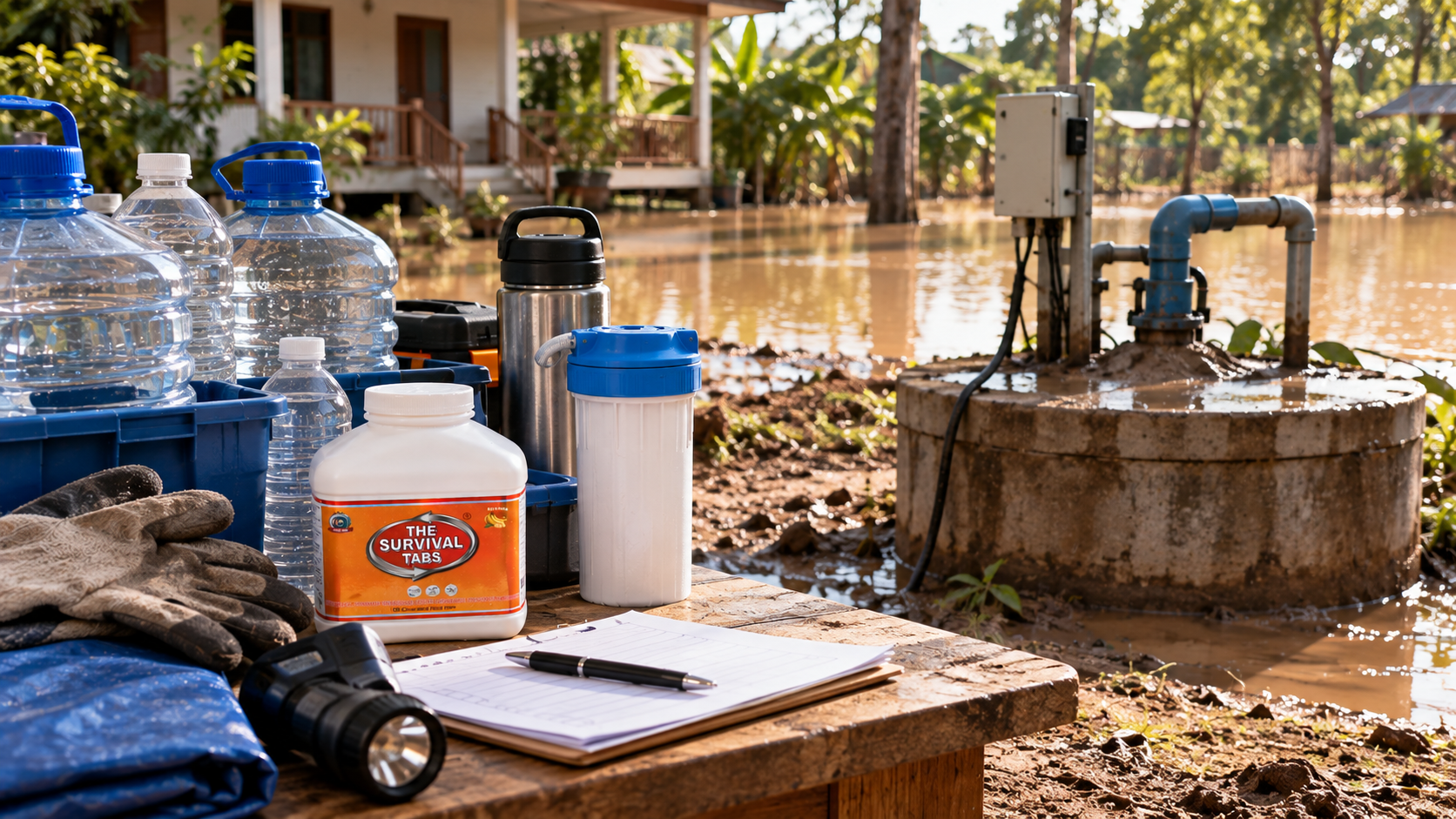
Protect your household after flooding by isolating a private well, using alternate water, and arranging inspection and testing.
Assume a flooded well may be unsafe
Floodwater can carry sewage, fuel, chemicals, sediment, and microbes into a private well. If floodwater reached the wellhead or nearby ground, do not use the well for drinking, cooking, brushing teeth, washing dishes, or making ice until local authorities or a qualified professional say it is safe.
Avoid electrical and equipment hazards
Do not turn on a flooded pump. Submerged wiring, controls, and pump components can create shock hazards or suffer damage. Wait until floodwater recedes, then have a qualified electrician, well contractor, or pump contractor inspect the electrical system and equipment before operation.
Use a temporary safe supply
Follow local drinking-water notices. Use commercially bottled water or another supply identified as safe by public-health officials. Keep clean containers covered and separate from fuel, pesticides, and cleanup chemicals. Boiling does not remove every chemical contaminant, so do not assume it makes flood-contaminated well water safe.
Inspect, clean, disinfect, and test
A licensed well professional may need to inspect the casing, cap, seals, pump, and surrounding area; remove sediment; and disinfect the system. Testing requirements vary by location and event. Contact the local health department or drinking-water authority for approved laboratories, sampling instructions, and the conditions for returning the well to service.
Document the recovery
Photograph damage, keep contractor and laboratory records, and note the date of each sample. Retest if water changes in color, taste, or odor, or when local officials advise it. Maintain the wellhead above runoff where possible and keep contaminants away from the well area.
Sources
U.S. EPA, “What to Do With Your Private Well After a Flood” (epa.gov/privatewells); local health department guidance.
Quick checklist
- Learn the local hazard and official alert channels.
- Choose safe actions, routes, and backup options before an emergency.
- Keep essential supplies accessible and review the plan with everyone involved.
- Follow current instructions from emergency and public-health authorities.
Frequently asked questions
How often should I review this plan?
Review it at least twice a year and after a move, household change, major equipment change, or local emergency.
Should official instructions override this guide?
Yes. Conditions vary, so current directions from emergency responders, utilities, public-health agencies, and local authorities take priority.