

Power Outage Preparedness Guide
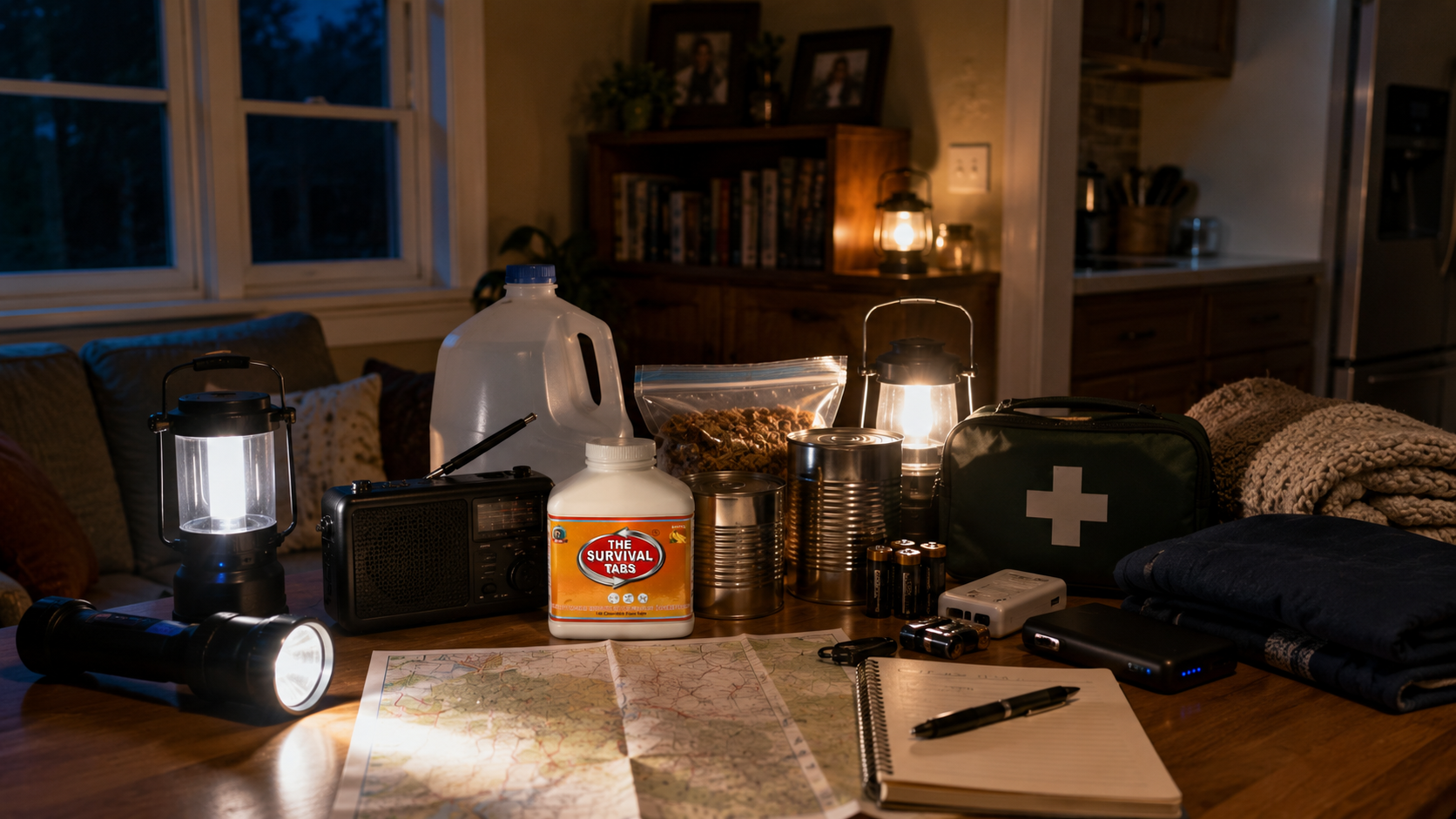
A calm, practical plan for short blackouts, extended outages, and extreme temperatures
A power outage can interrupt lighting, refrigeration, communications, medical equipment, water systems, heating, and cooling. The safest response begins before the lights go out: understand which household needs depend on electricity, build several layers of backup, and decide in advance when remaining at home is no longer safe.
This guide focuses on common, evidence-based actions for households. Follow instructions from local utilities, emergency managers, fire departments, and public-health authorities during an actual outage.
Quick action checklist
- Confirm whether the outage is limited to your home or affects the neighborhood.
- Use flashlights or battery-powered lanterns instead of candles whenever possible.
- Unplug sensitive electronics and turn off appliances that were running when power failed.
- Keep one light switched on so you know when service returns.
- Keep refrigerator and freezer doors closed.
- Check local alerts and the utility outage map using a battery radio or charged phone.
- Check on children, older adults, neighbors, and anyone who relies on powered medical equipment.
- Move to a safer location if indoor heat, cold, smoke, flooding, or medical needs exceed your backup plan.
Prepare before an outage
Make a household power-dependency list
List everything that becomes difficult or unsafe without electricity. Include refrigeration, well pumps, garage doors, elevators, mobility devices, oxygen equipment, refrigerated medicines, internet-based phones, heating controls, air conditioning, and pet or livestock systems. For each essential item, identify a backup and the amount of time that backup can operate.
People who depend on electrically powered medical equipment should make a personal outage plan with their healthcare provider and utility. Know the equipment manufacturer’s backup instructions, keep emergency contacts available on paper, and do not improvise electrical connections.
Build a blackout kit
- LED flashlights or lanterns and spare batteries
- Battery or hand-crank radio
- Charged power banks and correct charging cables
- Three days or more of drinking water and ready-to-eat food, adjusted for household needs
- Manual can opener, basic utensils, and sanitation supplies
- First-aid supplies and necessary medicines
- Blankets, warm layers, sun protection, and simple cooling supplies
- Appliance thermometers for the refrigerator and freezer
- Printed contacts, utility account details, and local shelter or cooling-center information
- Carbon monoxide alarms with battery backup
Plan communications and charging
Charge phones and power banks when severe weather or utility warnings are expected. Download essential maps and contacts for offline use. Preserve phone power by lowering screen brightness, using low-power mode, closing unnecessary apps, and limiting streaming. A vehicle can sometimes recharge a phone, but never run a vehicle inside a garage, even with the garage door open.
Choose backup power by function, not by marketing claims. Small power banks may cover phones and lights. Larger battery stations may run selected devices if their output and usable capacity match the load. Solar panels recharge only when weather, orientation, and panel capacity allow. Test the complete system before relying on it.
What to do when the power goes out
Protect people first
Assess immediate hazards: downed lines, fire, flooding, extreme temperatures, carbon monoxide risk, and interrupted medical equipment. Treat every fallen wire as energized, keep well away, and report it to the utility or emergency services. Never enter standing water near electrical equipment.
If anyone has trouble breathing, confusion, loss of consciousness, suspected heat stroke, or possible carbon monoxide poisoning, move to safety and call emergency services. Carbon monoxide cannot be seen or smelled.
Reduce electrical and fire risk
Turn off or unplug appliances and sensitive electronics to reduce damage from surges and prevent multiple devices from restarting at once. Leave one lamp on. Avoid candles where flashlights are available. If you must open an electric garage door manually, use the manufacturer’s instructions and confirm the door can be controlled safely.
Generator and fuel safety
Portable generators can be useful, but incorrect use can be fatal. Operate a generator outdoors only, at least 20 feet from windows, doors, and attached garages, with exhaust directed away from buildings. Never use one in a house, garage, basement, crawlspace, shed, or enclosed porch.
- Install and test battery-backed carbon monoxide alarms.
- Keep the generator dry and follow the manufacturer’s operating instructions.
- Let the generator cool before refueling; spilled fuel can ignite on hot components.
- Store fuel only in approved containers and away from living areas and ignition sources.
- Use properly rated outdoor extension cords in good condition.
- Never connect a generator directly to household wiring unless a qualified electrician has installed an approved transfer switch.
Never use a charcoal grill, camp stove, gas oven, or vehicle engine to heat an indoor space. These can cause fire, burns, or carbon monoxide poisoning.
Food and water safety
Keep refrigerator and freezer doors closed as much as possible. According to the FDA, an unopened refrigerator keeps food cold for about four hours. A full unopened freezer holds temperature for about 48 hours; a half-full freezer for about 24 hours.
Use appliance thermometers rather than appearance or smell. When power returns, frozen food may be refrozen or cooked if it still contains ice crystals or is 40°F (4°C) or below. Discard refrigerated perishable food that has been above 40°F for four hours or more. When in doubt, throw it out.
Do not place food outdoors or in snow as a substitute for controlled refrigeration. Outdoor temperatures vary, food can be contaminated, and animals may reach it. If local water safety is uncertain, follow official boil-water or do-not-use notices.
No-cook emergency nutrition
Keep familiar foods that can be eaten without cooking, refrigeration, or large amounts of water. Include options for allergies, infants, older adults, and medical diets. The Survival Tabs can serve as one compact, shelf-stable layer in a broader food plan, but they should not replace water or a varied emergency food supply. Follow the product label and store unopened packages as directed.
Extreme heat without power
Loss of air conditioning can make a home unsafe quickly, especially for older adults, infants, pregnant people, people with chronic illness, and residents of upper floors or dense urban areas. Close blinds on sun-facing windows, reduce heat-producing activities, wear lightweight clothing, drink water regularly, and move to the coolest available part of the building.
Know where to find an air-conditioned location such as a cooling center, library, mall, or designated shelter. Do not rely on an electric fan when indoor conditions are dangerously hot. Monitor household members and neighbors for dizziness, heavy sweating, nausea, weakness, confusion, or loss of consciousness. Heat stroke is an emergency: call emergency services and begin rapid cooling.
Extreme cold without power
Conserve warmth by choosing one safe room, closing unused rooms, blocking drafts with rolled towels, and wearing loose layers with a hat and warm socks. Use blankets and sleeping bags, and keep everyone dry. Check on neighbors and do not wait for dangerous cold to develop before relocating.
Use only heating equipment approved for indoor use and follow clearance and ventilation instructions. Keep portable heaters away from bedding, curtains, children, and pets. Never use a gas stove or oven to heat the home. If the building cannot remain safely warm, go to a heated shelter or other safe location.
Urban and apartment considerations
- Know how to use stairs if elevators stop and keep mobility needs in the evacuation plan.
- Ask building management how emergency lighting, water pumps, entry systems, and fire alarms operate during outages.
- Keep keys and a small flashlight accessible if electronic locks or garage doors fail.
- Do not operate generators, grills, or fuel-burning equipment on balconies, in hallways, or near neighboring windows.
- Keep a modest cash reserve because card terminals and ATMs may be offline.
- Coordinate a check-in plan with nearby people rather than assuming mobile service will remain available.
After power returns
- Wait a few minutes before reconnecting major appliances, unless the utility gives different instructions.
- Inspect cords, outlets, and appliances for water exposure, overheating, or damage before use.
- Check refrigerator and freezer temperatures and discard unsafe food.
- Reset clocks, alarms, medical-device settings, and household safety systems.
- Recharge batteries and replace anything used from the kit.
- Record what failed, what lasted, and what should be improved before the next outage.
A practical maintenance schedule
Monthly
- Charge power banks and test flashlights, radios, and carbon monoxide alarms.
- Confirm medical-device backups and emergency contacts remain current.
Every six months
- Rotate food, water, medicines, and spare batteries as needed.
- Run a short household drill and test backup charging under realistic loads.
Before severe-weather seasons
- Review utility alerts, shelter locations, fuel storage, generator maintenance, and extreme-temperature plans.
- Adjust supplies for household changes, guests, pets, and new medical needs.
Sources
U.S. Food and Drug Administration — Food and Water Safety During Power Outages and Floods
National Weather Service — Heat Safety
The Survival Tabs — Product Q&A
Editorial note
This article consolidates 15 legacy Survival Tabs records covering general blackouts, winter outages, urban grid-down planning, emergency charging, and redirects from speculative outage scenarios. Sensational claims, unsupported survival promises, dated product rankings, and unsafe heating or generator suggestions were excluded.