

Managing Relationships During Emergencies
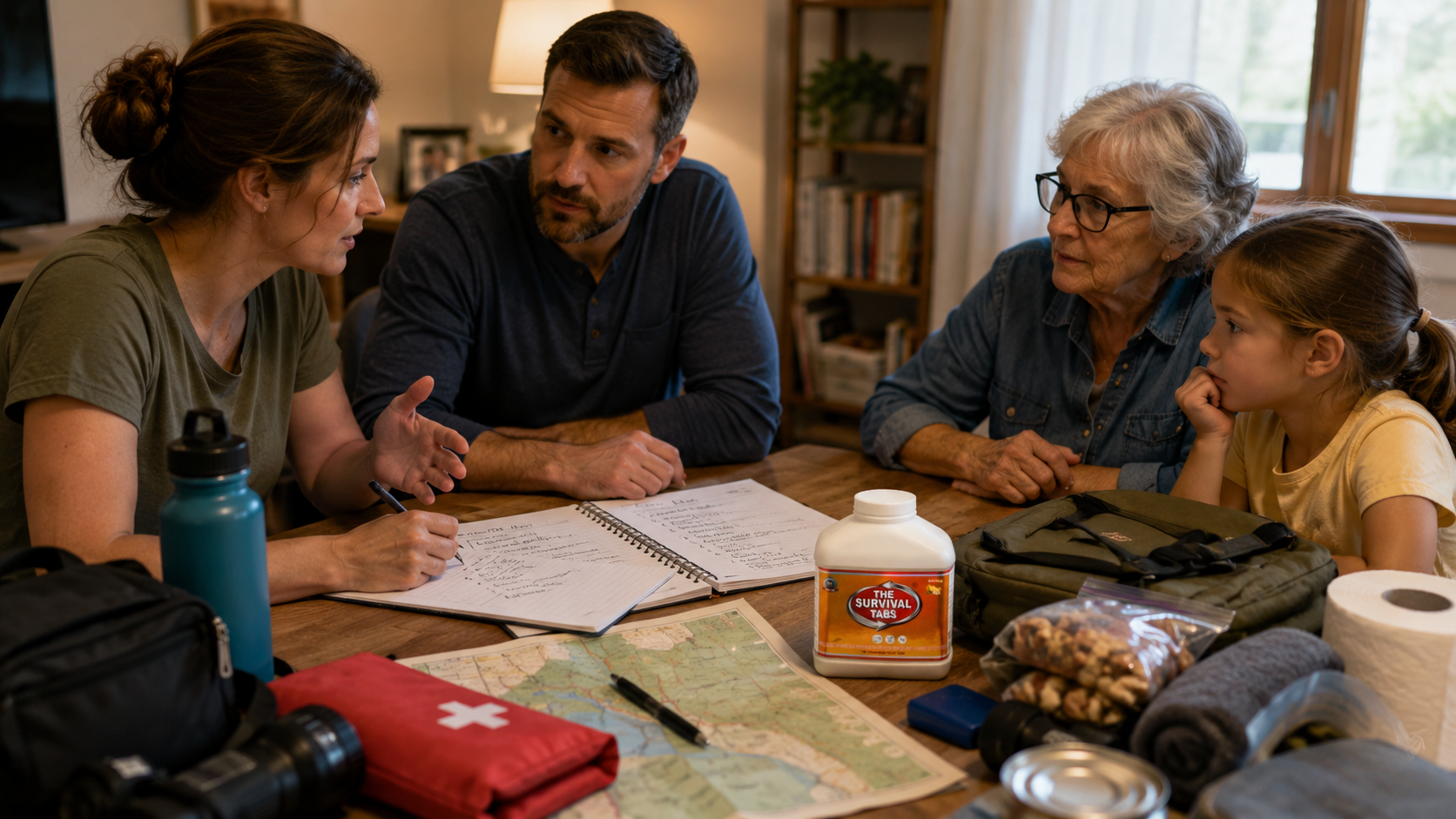
A calm, practical guide to communication, boundaries, shared resources, caregiving, conflict prevention, and safety when normal routines are disrupted.
Emergencies place pressure on time, money, food, shelter, transportation, privacy, and emotional capacity. Those pressures can expose old disagreements or create new ones. A useful relationship plan does not try to predict every argument. It establishes clear priorities, fair decision rules, consent-based roles, and safe ways to pause or escalate a problem.
This guide is educational. It does not replace emergency instructions, legal advice, mental-health care, domestic-violence services, child- or adult-protection professionals, or qualified medical support. Immediate danger always takes priority over keeping a discussion calm.
Quick answer
Manage relationships during an emergency by agreeing on safety priorities before the crisis, assigning realistic roles, writing down communication and reunification plans, deciding how shared supplies will be allocated, and using short, respectful boundary statements. During conflict, slow the decision, reduce stimulation, separate facts from assumptions, offer limited choices, and pause when anyone is overwhelmed. Do not use negotiation to delay evacuation, medical care, emergency reporting, or escape from violence.
* Put life safety and official emergency instructions first.
* Make roles voluntary, specific, and matched to each person’s capacity.
* Separate urgent needs from preferences and convenience.
* Use the same resource-allocation rule for everyone unless a documented medical or access need requires priority.
* Keep private medical, financial, and location information limited to people who genuinely need it.
* Pause discussions when voices, threats, impairment, or confusion make a safe decision unlikely.
* Seek qualified help when conflict involves violence, coercion, abuse, self-harm risk, exploitation, or inability to meet essential care needs.
What this guide covers
* Advance household agreements and communication plans.
* Compassionate limits with relatives, friends, neighbors, and guests.
* Fair use of food, water, medication, fuel, cash, space, and transportation.
* Conflict prevention and low-risk de-escalation.
* Caregiving limits, accessibility, children, older adults, and service animals.
* Privacy, documentation, reunification, shelters, and temporary shared housing.
* Warning signs that require emergency, clinical, legal, or protective support.
* Recovery conversations after the immediate danger passes.
What this guide does not provide
* A script guaranteed to control another person’s behavior.
* Instructions for restraining, detaining, interrogating, threatening, or punishing anyone.
* Advice to hide crimes, abuse, injuries, contagious illness, or hazardous conditions.
* Permission to withhold prescribed medication, disability supports, food, water, or safe exit.
* Tactical advice for defending supplies, setting traps, displaying weapons, or organizing unauthorized enforcement.
* A diagnosis of a family member, guest, neighbor, or survivor.
* A substitute for local emergency services, licensed care, legal counsel, or protection agencies.
1. Build the relationship plan before the emergency
Agree on the order of priorities
* Immediate threats to life and physical safety.
* Official evacuation, shelter, fire, medical, and public-health instructions.
* Essential medical, disability, communication, and mobility needs.
* Safe water, food, sanitation, temperature control, and sleep.
* Reunification and reliable information.
* Protection of essential documents, animals, property, and routine preferences.
Writing the priority order in advance reduces arguments when several needs compete. It also makes clear that property, pride, convenience, and winning a disagreement come after immediate safety.
Define the decision roles
* Who receives official alerts and verifies information.
* Who can authorize evacuation when the group is separated.
* Who manages medications and medical-device supplies, with the user’s consent.
* Who checks children, older adults, pets, and service animals.
* Who tracks food, water, fuel, cash, and sanitation supplies.
* Who contacts the out-of-area person.
* Who records decisions, expenses, damage, and unmet needs.
* Who serves as backup when the primary person is absent or overwhelmed.
A role is a responsibility, not authority over another competent adult. Each person should know what they agreed to do, what they are not qualified to do, and when to hand the task to an official or professional.
State capacity and limits honestly
* Mobility, lifting, vision, hearing, communication, and sensory needs.
* Medication schedules, refrigeration, charging, and transportation needs.
* Childcare or adult-care responsibilities.
* Work, school, immigration, legal, or custody constraints.
* Stress triggers, sleep needs, and communication preferences.
* Skills that are current and verified.
* Tasks a person cannot safely perform.
Do not treat willingness as proof of competence. A person can care deeply and still be unable to drive safely, provide medical care, manage a generator, supervise children, or make complex decisions while exhausted.
2. Create a household emergency agreement
Keep the agreement short
* The hazards covered.
* The primary and backup meeting places.
* The out-of-area contact.
* The evacuation decision rule.
* The shelter-in-place decision rule.
* The minimum supplies reserved for essential needs.
* The rule for guests and unplanned arrivals.
* The process for resolving a non-urgent disagreement.
* The circumstances that end discussion and trigger outside help.
A one-page agreement that people remember is more useful than a long document nobody can find.
Use consent-based language
* “I can do this task until this time.”
* “I cannot safely provide that type of care.”
* “I agree to share these supplies under the written allocation plan.”
* “I do not consent to sharing my medical information beyond the people listed.”
* “If the official evacuation order is issued, we leave; we do not reopen the vote.”
* “If anyone feels unsafe, that person may move to the backup location and seek help.”
Review predictable disagreements
* Whether to evacuate or shelter.
* Which vehicle to use.
* Who may stay in the home.
* Whether supplies may be shared outside the household.
* How money may be spent.
* Who receives scarce charging, refrigeration, or transportation capacity.
* How pets and service animals are handled.
* When a caregiving arrangement has exceeded safe capacity.
* What information may be posted online.
3. Make the communication plan usable
Create redundant contact methods
* A paper contact card for every person.
* An out-of-area contact who can relay status.
* Primary and backup meeting places.
* School, childcare, workplace, care-facility, and medical contacts.
* A plan for text, voice, radio, in-person, and written notes.
* A message format that includes name, location, safety status, needs, and next check-in.
* Accessible formats and communication supports.
Communication plans should work when phones are busy, batteries are low, internet service is unavailable, or household members cannot speak privately.
Use a brief status format
1. State who you are and whether you are safe.
2. Give your confirmed location without unnecessary public detail.
3. Name the most urgent need.
4. State what action you are taking.
5. Give the next check-in time or trigger.
6. Avoid speculation and repeat only verified instructions.
Prevent rumor-driven conflict
* Identify the official local alert sources before an emergency.
* Separate verified facts, unconfirmed reports, and personal opinions.
* Do not forward alarming claims without checking the source and date.
* Correct errors without humiliating the person who shared them.
* If a fact is not needed for the current decision, postpone the debate.
4. Allocate limited resources fairly
Inventory before arguing
* Count usable supplies, not packages that may be damaged or inaccessible.
* Record water, food, medications, power, fuel, cash, hygiene items, space, and transportation.
* Estimate how long the disruption may last using official information.
* Identify items restricted to a specific person, prescription, medical device, service animal, or infant.
* Note resupply options and the risk of travel.
A written inventory replaces vague statements such as “we have plenty” or “you used everything” with information the group can verify.
Use a transparent allocation order
1. Reserve items needed to prevent immediate injury or medical deterioration.
2. Protect prescribed medications, disability supports, infant supplies, and safe water.
3. Meet basic needs for all people in the group.
4. Allocate remaining items according to workload, environment, and expected duration.
5. Record exceptions and the reason for them.
6. Reassess when conditions, group size, or official instructions change.
Avoid common fairness failures
* First-come, first-served when some people have mobility or communication barriers.
* Equal portions when a medical need requires a different amount or type.
* Giving the loudest person control of the inventory.
* Treating personal ownership as unlimited permission to endanger others in shared housing.
* Changing the rule secretly after supplies become scarce.
* Using food, water, medication, shelter, transport, or communication as punishment.
* Promising supplies that the household cannot safely provide.
5. Set compassionate boundaries
Use the four-part boundary
1. Acknowledge the person and the situation.
2. State the limit clearly.
3. Offer the safe help you can provide.
4. Name the next step or review time.
Example: “I know you are worried and need a place tonight. We cannot safely add another overnight guest. We can help you contact the official shelter information and charge your phone for twenty minutes.”
Keep boundary statements short
* “We cannot share prescription medication.”
* “We can provide one meal, but we cannot promise ongoing food.”
* “The vehicle is reserved for the medical transport plan.”
* “I can listen for ten minutes, then I need to rest.”
* “We will discuss money after the immediate evacuation decision.”
* “I will not continue while anyone is threatening or blocking the exit.”
* “That information is private and will not be posted.”
Do not over-explain
Long explanations invite negotiation over every detail. Give enough information to be respectful and understandable, then repeat the limit without adding threats, insults, diagnoses, or promises you cannot keep.
6. Respond to requests from friends, relatives, and neighbors
Ask the same screening questions
* Is anyone in immediate danger?
* What exact help is being requested?
* Is the request within our supplies, space, skills, and legal authority?
* Would agreeing compromise a medical, disability, child-safety, fire-safety, or evacuation need?
* Is an official service better equipped to help?
* Can we offer a smaller, time-limited form of assistance?
* How will the agreement end or be reviewed?
Use time-limited help
* A defined quantity of food or water.
* A specific charging period.
* A ride only when the route and vehicle are safe.
* A temporary check-in schedule.
* Help completing an official assistance request.
* A referral to verified local services.
* A clearly stated review time for temporary shelter.
Time limits prevent a compassionate emergency response from turning into an undefined obligation that the household cannot sustain.
Do not make unsafe promises
* Do not promise housing that violates occupancy, fire, lease, or shelter rules.
* Do not promise medical care outside your training.
* Do not transport someone when the route, driver, vehicle, or passenger needs make it unsafe.
* Do not share controlled or prescription medication.
* Do not guarantee confidentiality when law or immediate safety requires reporting.
* Do not promise that official assistance, reimbursement, or insurance will be approved.
7. De-escalate low-level conflict
First lower the pressure
* Move away from noise, crowds, heat, smoke, and unnecessary observers when safe.
* Offer water, seating, light, warmth, or a brief rest if available.
* Reduce the number of people speaking.
* Use a calm voice and ordinary language.
* Allow extra response time.
* Do not crowd, touch, corner, mock, film, or publicly shame the person.
* Keep exits clear.
Environmental discomfort, exhaustion, pain, fear, medication disruption, hunger, and information overload can intensify conflict. Addressing a basic need may make a decision possible, but it does not excuse threats or violence.
Use a simple decision process
1. Name the immediate decision.
2. List the verified facts.
3. Identify the safety constraints.
4. Offer two or three realistic options.
5. Choose the option that best protects essential needs.
6. Record the decision and when it will be reviewed.
7. Move non-urgent grievances to a later conversation.
Use reflective language carefully
* “I hear that you are worried we will run out.”
* “We agree that the child’s medication must stay cold.”
* “We disagree about the guest, so we will use the written capacity rule.”
* “I cannot confirm that report yet.”
* “We can pause for ten minutes unless an official instruction requires action now.”
Reflecting a concern does not mean agreeing with a false claim, accepting abuse, or surrendering a safety boundary.
8. Know when de-escalation is not enough
Stop the conversation and seek help when there is
* An immediate threat of violence or serious injury.
* A weapon displayed, threatened, or used.
* Blocking of exits, forced confinement, stalking, or coercive control.
* Abuse or exploitation of a child, older adult, person with a disability, or dependent person.
* Severe confusion, unconsciousness, breathing difficulty, uncontrolled bleeding, or other medical emergency.
* A credible threat of self-harm or harm to others.
* Fire, gas, structural, chemical, electrical, or environmental danger.
* Intoxication or impairment that makes safe agreement impossible.
* A missing child or dependent adult.
Move to safety if you can, follow official emergency instructions, and contact the appropriate local emergency or protective service. Do not remain in danger to finish a conversation or collect proof.
Do not attempt
* Physical restraint unless you are authorized, trained, and acting under applicable emergency protocols.
* A forced confession or improvised interrogation.
* Threats involving food, water, shelter, medication, children, animals, immigration status, or police.
* Unofficial detention, punishment, or property seizure.
* Weapons display as a communication technique.
* A mental-health or substance-use diagnosis.
* Secret recording where law or shelter rules prohibit it.
* Mediation between parties when violence, coercion, or a severe power imbalance is present.
9. Plan caregiving without creating hidden obligations
Write the care tasks
* Medication reminders and administration boundaries.
* Mobility and transfer assistance.
* Personal care and sanitation.
* Communication and interpretation support.
* Meal, hydration, and dietary requirements.
* Charging, refrigeration, oxygen, and other equipment needs.
* Supervision and wandering risk.
* Transport and evacuation support.
* Animal care and service-animal access.
Distinguish tasks that a family member may safely perform from tasks requiring licensed care, specialized equipment, two trained people, or an accessible vehicle.
Set caregiver limits
* Maximum continuous shift before relief.
* Tasks the caregiver cannot safely perform.
* Conditions that trigger medical or emergency support.
* Backup caregivers and contact methods.
* Consent and privacy rules.
* A plan for the caregiver’s sleep, food, medication, and emotional support.
* A transfer plan if the home or shelter cannot meet the person’s needs.
A caregiver who is exhausted, injured, frightened, or medically unstable may no longer be able to provide safe care. Reporting that limit early is responsible, not abandonment.
10. Include disability and access needs
Build a support network
* Ask each person what assistance they want and how it should be provided.
* Choose more than one support person.
* Share only the information each helper needs.
* Practice transfers, communication methods, equipment setup, and evacuation routes.
* Plan for accessible transport and shelter alternatives.
* Keep backup communication boards, chargers, batteries, and written instructions.
* Do not separate a person from essential equipment or a service animal without a genuine safety reason and an appropriate alternative.
Respect autonomy
* Speak to the person, not only to a companion.
* Ask before touching a person, mobility aid, service animal, medication, or device.
* Offer information in accessible formats.
* Allow extra processing or response time.
* Do not assume incapacity from speech, movement, sensory, cognitive, or psychiatric disability.
* Use supported decision-making when appropriate and lawful.
* Escalate capacity or guardianship questions to qualified professionals rather than deciding informally.
11. Support children and teenagers
Give clear, age-appropriate information
* Explain what happened without graphic detail.
* Say what adults are doing to keep people safe.
* Correct rumors gently.
* Keep routines where possible.
* Offer small, safe choices.
* Include comfort items and familiar activities.
* Do not make children responsible for adult fear, security, or medical decisions.
Prevent loyalty conflicts
* Do not ask a child to carry hostile messages between adults.
* Do not criticize another caregiver in front of the child.
* Follow custody and reunification rules unless immediate safety requires official intervention.
* Keep school and childcare emergency contacts current.
* Record who is authorized to collect the child.
* Use the family communication plan rather than social-media appeals that expose private details.
Watch for continuing distress
Changes in sleep, behavior, school functioning, appetite, attachment, mood, or physical complaints can occur after emergencies. Provide reassurance and routine, and seek qualified pediatric or mental-health support when reactions are severe, persist, worsen, or interfere with safety and daily functioning.
12. Include older adults
* Confirm medications, mobility aids, hearing and vision supports, dietary needs, and transport.
* Avoid talking over the person or assuming they cannot decide.
* Check for heat, cold, dehydration, isolation, falls, and interrupted care.
* Protect against scams, pressure, financial exploitation, and unauthorized changes to documents.
* Confirm the identity of anyone claiming to provide assistance.
* Use backup contacts if the primary caregiver is unavailable.
* Report suspected abuse, neglect, or exploitation through the appropriate local channel.
13. Protect privacy and dignity
Use need-to-know sharing
* Medical details only for care, transport, shelter accommodation, or emergency response.
* Location details only with trusted contacts and appropriate authorities.
* Financial information only with authorized people and verified agencies.
* Photos only with consent unless documentation is legally necessary.
* Children’s information only with authorized caregivers and officials.
* Passwords, recovery codes, and identity documents kept secure.
* Shelter rosters, aid lists, and neighborhood maps handled under applicable privacy rules.
Avoid public oversharing
* Do not post that a home is empty.
* Do not publish another person’s medical condition or shelter location.
* Do not share images of injured, grieving, displaced, or dependent people without permission.
* Do not post unverified accusations.
* Do not display documents, addresses, account numbers, license plates, or medication labels.
* Use official missing-person and reunification channels where available.
14. Manage temporary shared housing
Set house rules at the start
* Maximum occupancy and sleeping areas.
* Clear exits and fire-safety rules.
* Quiet hours and lighting.
* Food, water, sanitation, and cleaning responsibilities.
* Medication, smoking, alcohol, and substance rules.
* Children, pets, service animals, and visitors.
* Privacy, photography, and online posting.
* Money, fuel, transport, and charging limits.
* The review date and conditions for ending the arrangement.
Rules should be consistent, lawful, accessible, and tied to safety or capacity. They should not discriminate against protected groups or punish a person for requesting a reasonable accommodation.
Document shared decisions
* Names and emergency contacts.
* Arrival and planned review time.
* Supplies contributed or allocated.
* Medical or access needs shared with consent.
* Property damage or expenses.
* Conflicts, warnings, and referrals stated factually.
* The person responsible for follow-up.
Use neutral descriptions of observable events. Avoid labels such as “crazy,” “dangerous,” or “lazy.”
15. Handle money and property carefully
* Set a spending limit that one person may authorize.
* Require a second review for large, unusual, or non-urgent purchases.
* Keep receipts and photograph damage when safe.
* Do not sign unfamiliar contracts under pressure.
* Verify charities, contractors, landlords, insurers, and officials.
* Do not borrow, sell, transfer, or dispose of another person’s property without authority.
* Separate gifts, loans, shared purchases, and reimbursements in writing.
* Delay permanent financial decisions until immediate danger and extreme stress have passed when possible.
16. Reunification and separation
Plan before separation
* Primary and backup meeting locations.
* Out-of-area contact.
* Authorized pickup people for children and dependent adults.
* Communication intervals.
* What to do if the meeting place is unsafe.
* How to report a missing person.
* What information may be shared publicly.
* How long to wait before moving to the backup plan.
If someone chooses a different safe plan
Competent adults may make different lawful choices. State the known hazards and official instructions, document essential information, avoid sabotage or coercion, and agree on the next check-in if possible. Do not withhold identity documents, medication, mobility devices, money, phones, keys, or safe exit to force agreement.
17. Recover the relationship after the crisis
Hold a short after-action conversation
1. Confirm everyone’s immediate safety and basic needs.
2. Review what happened using a shared timeline.
3. Identify what worked.
4. Identify one or two failures that affected safety or care.
5. Repair incorrect information and replace used supplies.
6. Assign follow-up for medical, legal, financial, school, work, or housing needs.
7. Schedule a later discussion for deeper relationship issues.
The first review should improve the plan, not decide who is morally to blame. Serious misconduct, abuse, fraud, or violence should be handled through appropriate professional or legal channels rather than folded into a routine family debrief.
Offer repair without false promises
* Acknowledge a specific action and its impact.
* Correct misinformation.
* Return or replace property when possible.
* Pay documented shared expenses under the agreement.
* Update the plan to prevent recurrence.
* Respect a request for space.
* Seek counseling, mediation, legal advice, or another qualified service when appropriate.
Mediation may be unsuitable when there is abuse, coercion, retaliation risk, or a severe power imbalance.
18. Practical scenarios
A relative arrives asking to stay
1. Check immediate danger and urgent medical needs.
2. Confirm household capacity and fire-safety limits.
3. Apply the written guest rule.
4. Offer only the help the household can sustain.
5. Provide verified official options when the request cannot be met.
6. State a review time for any temporary arrangement.
Two adults disagree about evacuation
1. Check the official order and current hazard.
2. Follow mandatory instructions and do not delay for consensus.
3. Use the pre-agreed transport and reunification plan.
4. Allow competent adults to choose a lawful alternative without coercion.
5. Protect children and dependent people under applicable authority.
6. Record the separation and next contact plan.
A household member wants more than the agreed share
1. Recheck the inventory and any medical need.
2. Restate the allocation rule.
3. Explain the next resupply or review point.
4. Offer a safe substitute if available.
5. Do not use shame or public accusation.
6. Secure essential supplies without threats or punishment.
An argument is escalating in shared housing
1. Stop non-essential tasks and reduce the audience.
2. Keep exits clear and maintain distance.
3. Use one calm speaker.
4. Offer a short pause if immediate action is not required.
5. End discussion and seek help if threats, violence, coercion, impairment, or medical danger appear.
6. Document observable facts after safety is restored.
19. Frequently asked questions
Should we divide every supply equally?
Not always. Equal shares can be unfair or unsafe when medical, disability, infant, environmental, or workload needs differ. Use a transparent rule that protects essential needs first and document exceptions.
Can I refuse to share prescription medication?
Yes. Prescription medication should be used only by the person for whom it was prescribed and handled under applicable law and clinical guidance. Help the other person contact appropriate medical or emergency services.
What if a family member ignores the plan?
Protect immediate safety, follow official instructions, and avoid coercion. Review the person’s capacity, the urgency, and your legal responsibilities. Use outside help when a child, dependent adult, abuse, medical crisis, or immediate danger is involved.
How much should I explain when setting a boundary?
Give a short reason tied to safety, capacity, law, or the written plan. Offer a safe alternative if you can, then repeat the limit. You do not need to debate every objection.
Should we vote on evacuation?
A household discussion can help before an emergency, but a vote must not delay a mandatory evacuation, urgent medical response, or escape from immediate danger. Predetermine who monitors official instructions and what triggers action.
Can I ask a guest to leave?
Local law, shelter rules, lease terms, custody issues, disability accommodation, and immediate safety can affect the answer. Do not use force or withhold essential property. Seek qualified local legal or emergency guidance when the situation is disputed or unsafe.
What if someone is panicking?
Reduce stimulation, use short sentences, offer simple choices, and address immediate physical needs when safe. Do not diagnose, restrain, crowd, or force disclosure. Seek medical or crisis support if the person cannot stay safe or has severe symptoms.
When is professional counseling appropriate?
Consider qualified support when distress, anger, grief, sleep disruption, substance use, family conflict, or impaired functioning is severe, persists, worsens, or interferes with safety, caregiving, work, school, or daily life.
Is it wrong to limit help to extended family?
No household can promise unlimited support. A clear, consistent limit can protect essential needs and make the help you do offer more reliable. Avoid discrimination, retaliation, humiliation, or withholding essentials from someone already under your care.
How do we prevent resentment after the emergency?
Keep records, explain allocation rules, acknowledge errors, repair specific harms, replace shared supplies, and separate urgent safety decisions from unresolved historical relationship issues.
20. Household relationship-readiness checklist
* Priority order agreed.
* Official alert sources identified.
* Primary and backup decision roles assigned.
* Communication cards completed.
* Meeting locations chosen.
* Out-of-area contact confirmed.
* Evacuation and shelter triggers written.
* Resource inventory current.
* Medical and access priorities documented with consent.
* Allocation rule agreed.
* Guest and unplanned-arrival rule written.
* Care tasks and caregiver limits listed.
* Backup caregivers identified.
* Children’s pickup and reunification contacts current.
* Older-adult and disability supports confirmed.
* Pet and service-animal plans separated correctly.
* Privacy and social-media rules agreed.
* Spending authority and receipt process set.
* Temporary housing rules prepared.
* Conflict pause process practiced.
* Immediate-danger triggers understood.
* Professional and official contacts identified locally.
* Documents stored securely.
* Plan reviewed in accessible formats.
* Practice scheduled and lessons recorded.
Official sources
Ready.gov: Make a Plan
Ready.gov: Family Emergency Communication Plan
Ready.gov: Emergency Planning for People with Disabilities
CDC: Coping with a Disaster or Traumatic Event
CDC: Helping Children Cope with a Disaster
SAMHSA: How to Cope with Traumatic Events and Disasters
SAMHSA: Tips for Survivors—What to Expect in Your Personal, Family, Work, and Financial Life
SAMHSA: Coping with Anger After a Disaster or Other Traumatic Event
Editorial and professional review required before publication
* Emergency-management review.
* Licensed mental-health and disaster behavioral-health review.
* Domestic-violence, safeguarding, and victim-services review.
* Child-safety, elder-protection, and dependent-adult review.
* Disability-access and service-animal review.
* Medical, medication, and caregiving review.
* Shelter, housing, occupancy, and fire-safety review.
* Privacy, family-law, tenancy, reporting, and general legal review.
* Cultural and language-access review.
* Product-compliance review for any Survival Tabs references.
This article is educational. It should be reviewed against current authoritative guidance and applicable local law before publication, and maintained whenever emergency, safeguarding, accessibility, crisis-support, shelter, or privacy guidance changes.