

Outdoor Meal Comparison Guide
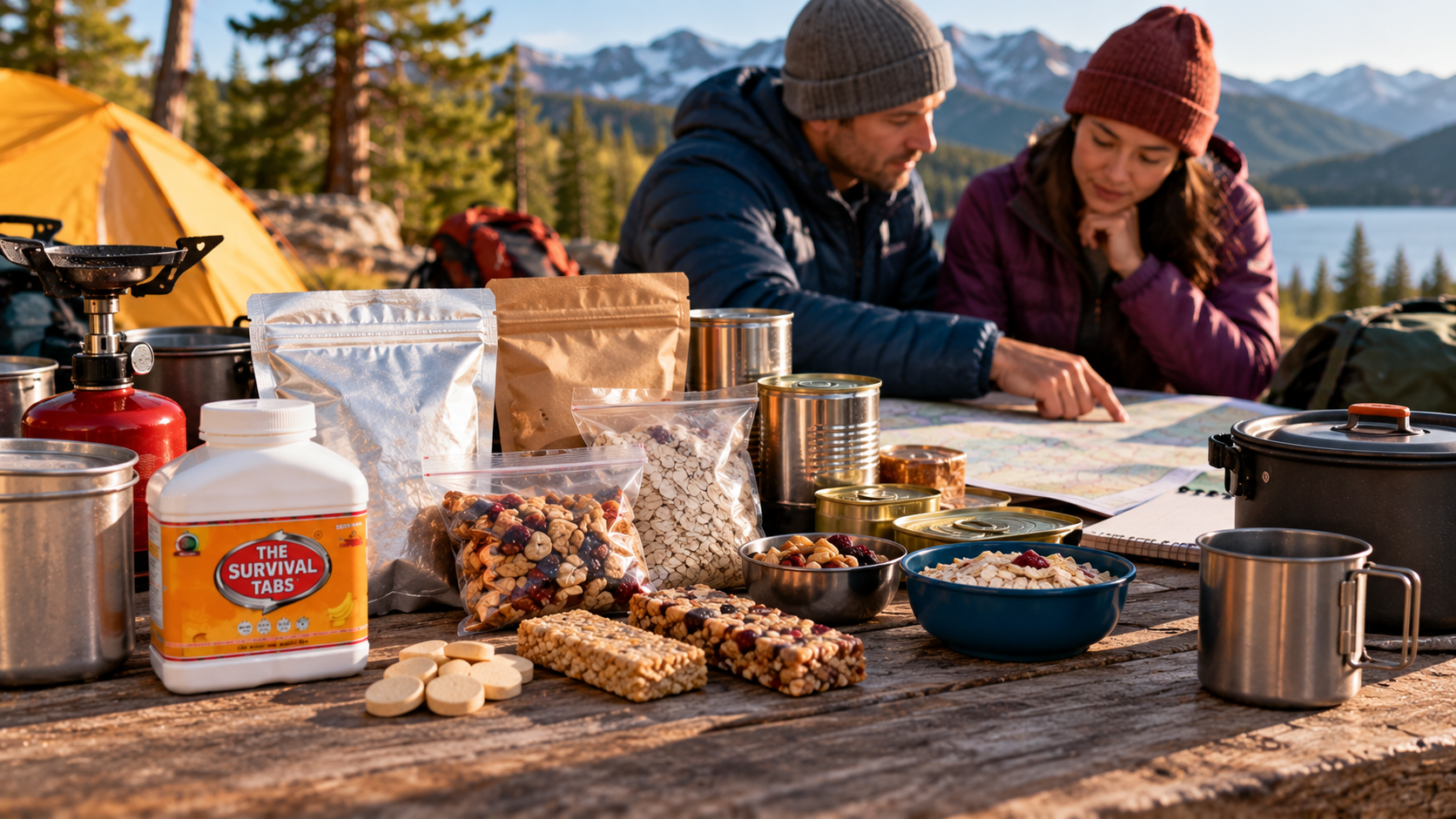
Outdoor Meal Comparison Guide
No outdoor food format is best for every trip. Compare ready-to-eat food, cans, dehydrated meals, bars, ordinary pantry food and compact tablets against the route and users.
Compare total weight
Include packaging, preparation water, stove and fuel—not just dry food weight. Cans are heavy but simple; dehydrated food is lighter but needs water and often heat.
Compare calories and nutrition
Read the label and calculate actual daily calories. Variety, protein, fat, fiber, allergens and medical diets matter more than serving-count marketing.
Compare preparation
Ready-to-eat food works during fire bans and bad weather. Cooked meals may improve comfort but add equipment, time and fuel risk.
Compare storage and waste
Consider heat, puncture resistance, resealing, wildlife rules and waste carried out.
Survival Tabs
They are compact and require no cooking, but the current 240-calorie serving is not equivalent to a full day of outdoor food. Use them as a backup layer, not as an automatic winner.