

Northwest Indiana Faces 102,000‑Customer Power Outage After Storms
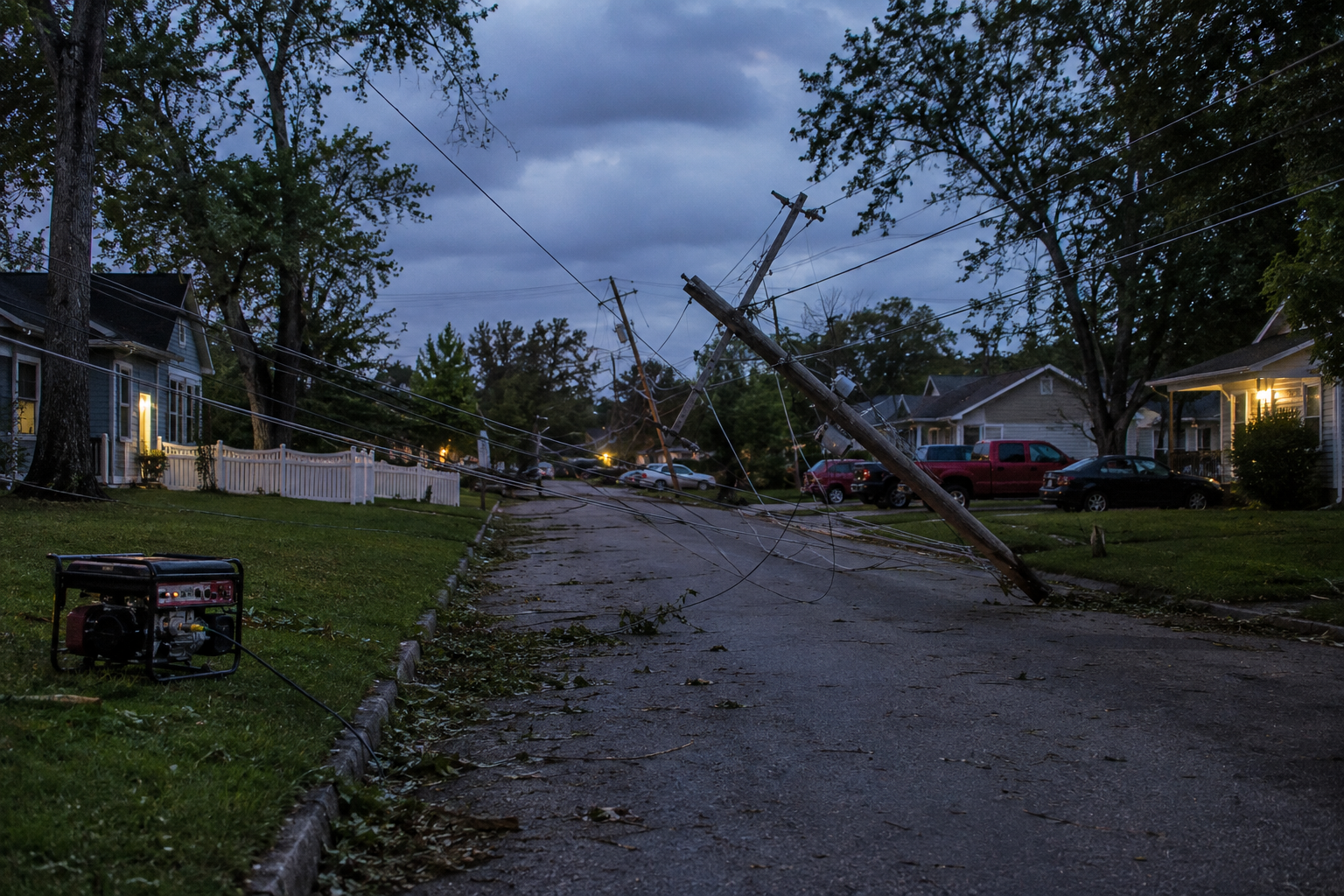
Northwest Indiana – As of 4 p.m. on Monday, August 14, 2026, the Northern Indiana Public Service Company (NIPSCO) reported that 102,000 customers are still without power following severe storms that struck the region on Tuesday, August 8, 2026.
In the town of Dyer, power lines remain down and several poles are leaning. Residents report that generators are running on nearly every block, and many have not seen NIPSCO crews in the area. “We still haven’t seen a NIPSCO truck,” said Nancy Hussey, who has been without power for six days. “It feels like we’re in an area where people don’t care about us.”
Dyer town officials expressed frustration with the delay, noting that the community is largely lower‑income and that the prolonged outage is affecting daily life and safety. NIPSCO’s spokesperson acknowledged the frustration and emphasized that restoration is dictated by the severity and extent of damage. “In some areas, repairs to major transmission and distribution infrastructure must be completed before work can begin on smaller sections of the system serving individual neighborhoods,” the company said. “Every community matters to us, and restoration priorities are based on system needs, safety considerations and the work required to restore service to the greatest number of customers as efficiently as possible.”
Customers in the affected area are advised to remain patient while NIPSCO works to restore power. The company has not yet provided a specific timeline for when service will be restored to all customers.
Preparedness Takeaway
Residents experiencing extended outages should ensure that backup generators are properly maintained and that emergency supplies, such as non‑perishable food and water, are readily available. While the situation is not a shelter‑in‑place scenario, having a plan for power loss can reduce stress and improve safety.
Source: CBS News. This article is an original summary based on the cited reporting.