

No-Cook Emergency Food Guide
No-Cook Emergency Food Guide
A no-cook emergency food plan helps when electricity or gas is unavailable, cooking is unsafe or evacuation limits equipment. Balance shelf life, nutrition, water needs, packaging and foods your household will actually eat.
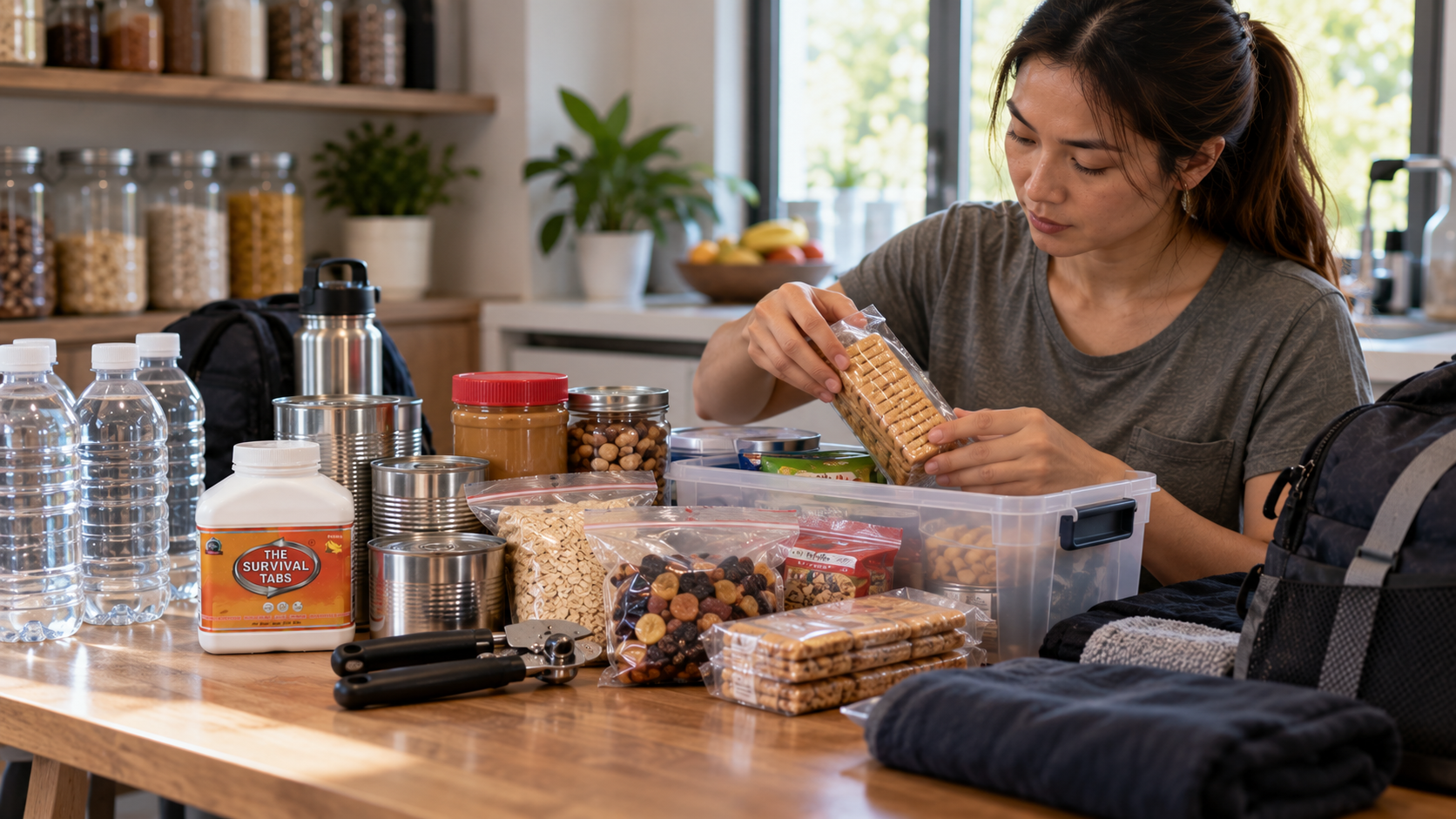
Truly ready-to-eat foods Options can include commercially packaged shelf-stable foods, nut or seed butters where allergies permit, canned foods that can safely be eaten without heating, dried fruit, crackers, ready-to-eat cereals, shelf-stable milk products and bars. Check labels rather than assuming every shelf-stable product is ready to eat.
Keep a manual can opener Canned food is less useful during an outage if the only opener is electric. Store a manual opener with the reserve.
Plan water separately Dry and dehydrated foods may increase drinking-water needs or require preparation water. Do not count preparation water as available drinking water. Maintain a dedicated safe-water plan.
Nutrition and variety Do not rely only on sweets or snack foods. Include a mix that provides energy and useful nutrients and accommodates allergies, intolerances, cultural preferences and medically required diets.
Food safety Power outages can affect refrigeration. Follow current public-health guidance for refrigerated and frozen foods and discard food when guidance indicates it is unsafe. Do not rely on smell or appearance alone.
Make the reserve usable Store foods dry and within recommended temperature conditions. Keep utensils and opening tools nearby. Rotate items through normal use.
Home reserves can include heavier cans; evacuation food should emphasize portability and durable packaging. Survival Tabs require no cooking and can be one component of a no-cook emergency food layer for appropriate users, alongside safe water and a broader food strategy.