Long-Term Food Storage and Emergency Preparedness: A Comprehensive Guide

Best Methods for Long-Term Food Storage
1. Dehydration: Removes moisture from foods, extending shelf life.
2. Freeze-drying: Preserves food while maintaining nutritional value.
3. Canning: Effective for fruits, vegetables, and meats.
4. Vacuum sealing: Removes air, preventing oxidation and spoilage.
5. Mylar bags with oxygen absorbers: Ideal for dry goods like rice and beans.
#LongTermFoodStorage #EmergencyPrep
Homemade Survival Bars That Last for Years
Recipe for long-lasting survival bars:
Ingredients:
- 2 cups oats
- 2.5 cups powdered milk
- 1 cup sugar
- 3 tbsp honey
- 1 package flavored gelatin
- 3 tbsp water
Instructions:
1. Mix dry ingredients
2. Heat honey, water, and gelatin
3. Combine wet and dry ingredients
4. Press into a pan and bake at 200°F for 1.5 hours
5. Cut into bars and store in airtight containers
These bars can last up to 20 years when properly stored!
#SurvivalBars #EmergencyFood
Essential Ingredients for Emergency Food Supplies
1. Rice and beans (for protein and carbohydrates)
2. Canned fruits and vegetables
3. Powdered milk
4. Honey (natural preservative)
5. Salt (for preservation and flavor)
6. Multivitamins (to supplement nutritional needs)
7. Dried herbs and spices (for flavor variety)
#EmergencyFoodSupplies #PrepperPantry

Properly Sanitizing Containers for Water Storage
1. Wash containers with dish soap and rinse thoroughly
2. Mix 1 teaspoon of unscented liquid chlorine bleach with 1 quart of water
3. Fill the container with this solution and let stand for 30 seconds
4. Empty the container and air dry
5. Fill with clean water for storage
#WaterStorageSafety #EmergencyWater
Best Types of Containers for Storing Emergency Water
1. Food-grade plastic containers (BPA-free)
2. Water bricks (stackable and space-efficient)
3. 55-gallon water barrels (for large-scale storage)
4. Stainless steel containers (durable and non-reactive)
5. Store-bought bottled water (convenient but less eco-friendly)
Remember to store water in a cool, dark place and rotate your supply every 6-12 months.
#WaterStorage #EmergencyPreparedness
By implementing these strategies for food and water storage, you'll be well-prepared for various emergency situations. Remember, preparation is key to ensuring your family's safety and comfort during challenging times.
#SurvivalSkills #EmergencyReadiness #FoodSecurity #WaterSecurity
***Statements regarding dietary supplements have not been evaluated by the FDA and are not intended to diagnose, treat, cure, or prevent any disease or health condition.***
 |
 |
 |
 |
 |
|
|---|---|---|---|---|---|
| 720 Tabs Emergency Food Survival Gluten Free and Non-GMO 25 Years Shelf Life | Food Supply 96 Tabs Emergency Food Replacement Disaster Preparedness | Ultimate Preparedness Emergency Food Supply 25 year shelf life | Emergency Food Ration Survival MREs Food Replacement | Emergency Food Survival Food Meal Replacement MREs Gluten Free and Non-GMO | |
| Day Serving | 60 days | 8 days | 120 days | 15 days | 2 days |
| Shelf-Life | 25 years | 25 years | 25 years | 25 years | 25 years |
| Non-GMO | ✓ | ✓ | ✓ | ✓ | ✓ |
| Gluten Free | ✓ | ✓ | ✓ | ✓ | ✓ |
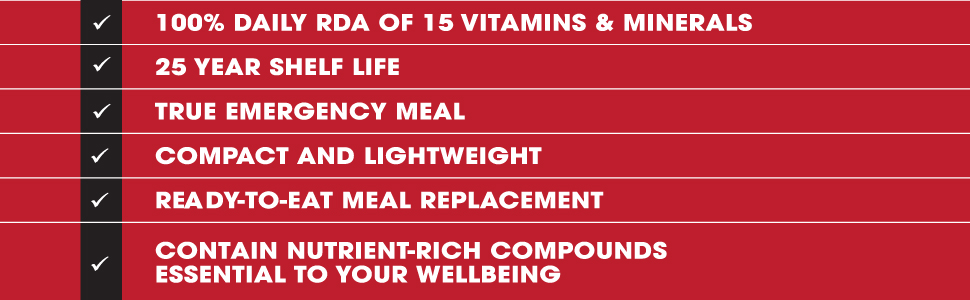
| Tabs Amount | 720 | 96 | 1440 | 180 | 24 |