

Living Off the Land: Preparedness Basics
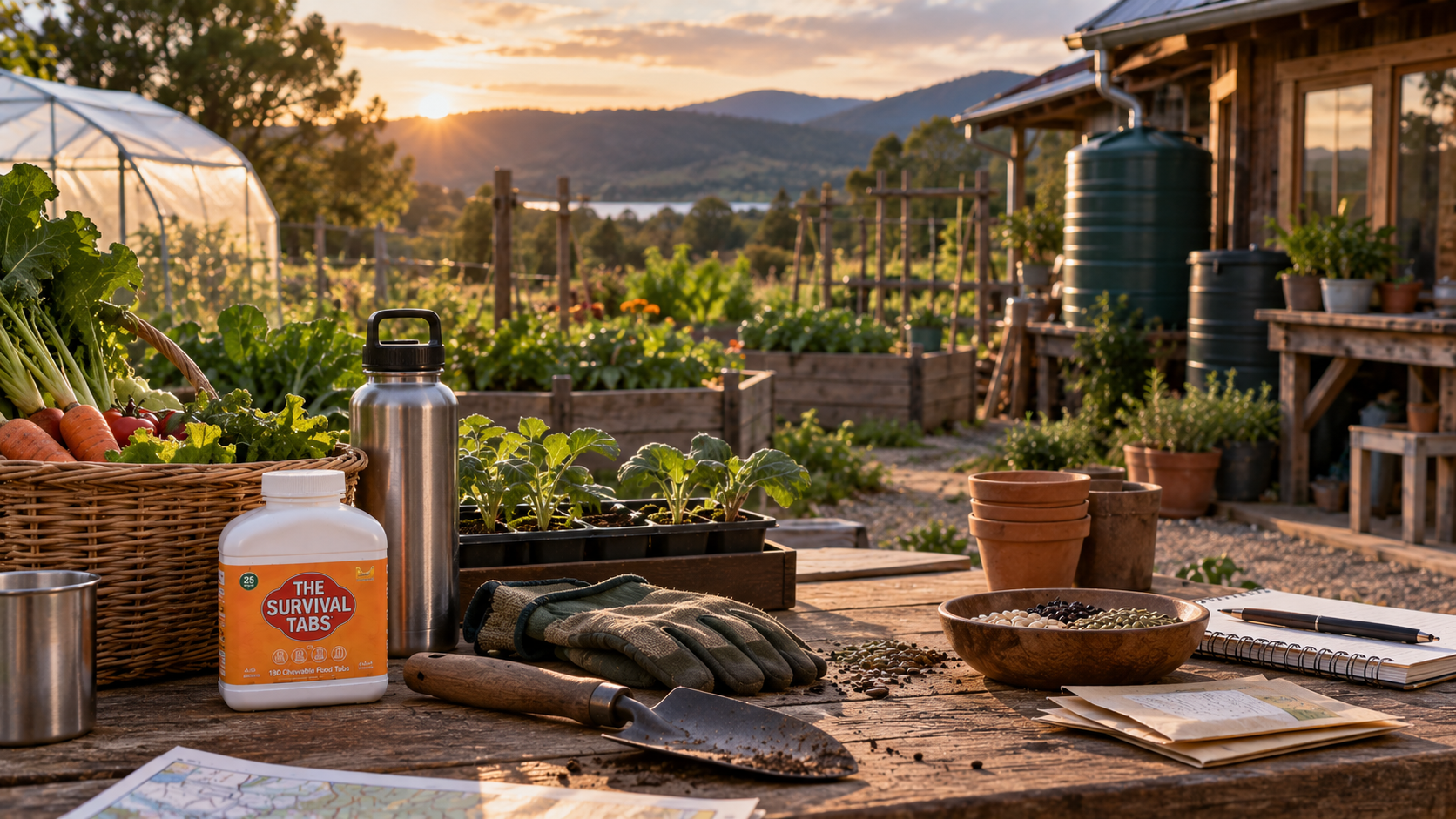
“Living off the land” is often portrayed as an emergency solution, but dependable self-sufficiency takes land, tools, local knowledge, time, water, seasonal planning, and practiced skills. In a real emergency, an established household supply is usually more reliable than expecting to immediately find food and water outdoors.
Start With Stored Essentials
Maintain a practical emergency supply of safe water, shelf-stable food, medications, lighting, communication tools, sanitation supplies, and weather-appropriate clothing. Outdoor skills should add resilience to this foundation rather than replace it.
Know the Local Environment
Learn the climate, seasonal temperature range, rainfall, wildfire or flood risks, water availability, soil conditions, and local regulations before depending on land-based resources. Conditions that work in one region may be unsafe or impossible in another.
Water Comes First
Natural-looking water can contain microorganisms, chemicals, or other contaminants. Do not assume a spring, stream, lake, or collected rainwater is safe to drink. Follow current public-health guidance for source selection and treatment. Some contamination cannot be made safe by ordinary boiling or filtration.
Gardening Is a Long-Term Skill
A productive garden requires suitable soil, seeds, water, sunlight, pest management, and time. Practice before an emergency. Grow foods appropriate to the local climate and learn succession planting, seed storage, composting, and irrigation under normal conditions. A new garden is not an immediate substitute for stored food.
Foraging
Never eat a wild plant, mushroom, berry, or other natural food unless identification is certain and local safety guidance supports its use. Toxic look-alikes can cause severe illness or death. Foraging also may be restricted on public or private land.
Food Preservation
Preservation methods such as canning, drying, smoking, fermenting, and freezing have different food-safety requirements. Use tested preservation methods from authoritative sources. Improvised processing can permit dangerous pathogens or toxins to develop even when food looks or smells normal.
Shelter and Temperature
Prioritize an existing safe structure whenever possible. Outdoor shelter skills are useful for short-term exposure emergencies, but they are not a substitute for structurally sound housing. Avoid hazardous improvised heating, underground structures, and unvented combustion.
Energy and Cooking
Plan safe methods for cooking and power before an outage. Camp stoves, grills, and generators can produce carbon monoxide and should not be used indoors or in enclosed areas unless a device is specifically designed and installed for that environment.
Tools and Maintenance
Basic hand tools, repair materials, protective equipment, spare parts, and maintenance knowledge can make an off-grid household more resilient. Choose tools based on actual property needs rather than accumulating specialized survival gear that has never been practiced with.
Community Matters
Neighbors, local farmers, tradespeople, emergency managers, community organizations, and family networks are major resilience assets. Self-sufficiency does not require isolation. Mutual assistance can provide skills, transportation, information, and resources that one household cannot maintain alone.
Build Capability Gradually
1. Establish household emergency supplies.
2. Learn local hazards and water sources.
3. Practice gardening on a manageable scale.
4. Learn safe food storage and preservation.
5. Improve backup cooking, lighting, and communication.
6. Practice repairs and maintenance.
7. Build relationships with nearby people and services.
8. Review the plan each season.
Editorial note: Consolidates legacy IDs 63 and 94 and related safe material. Hunting, trapping, weapons, hazardous foraging, improvised water treatment, and claims that a household can quickly become self-sufficient are excluded.