

Hurricane Preparedness Guide
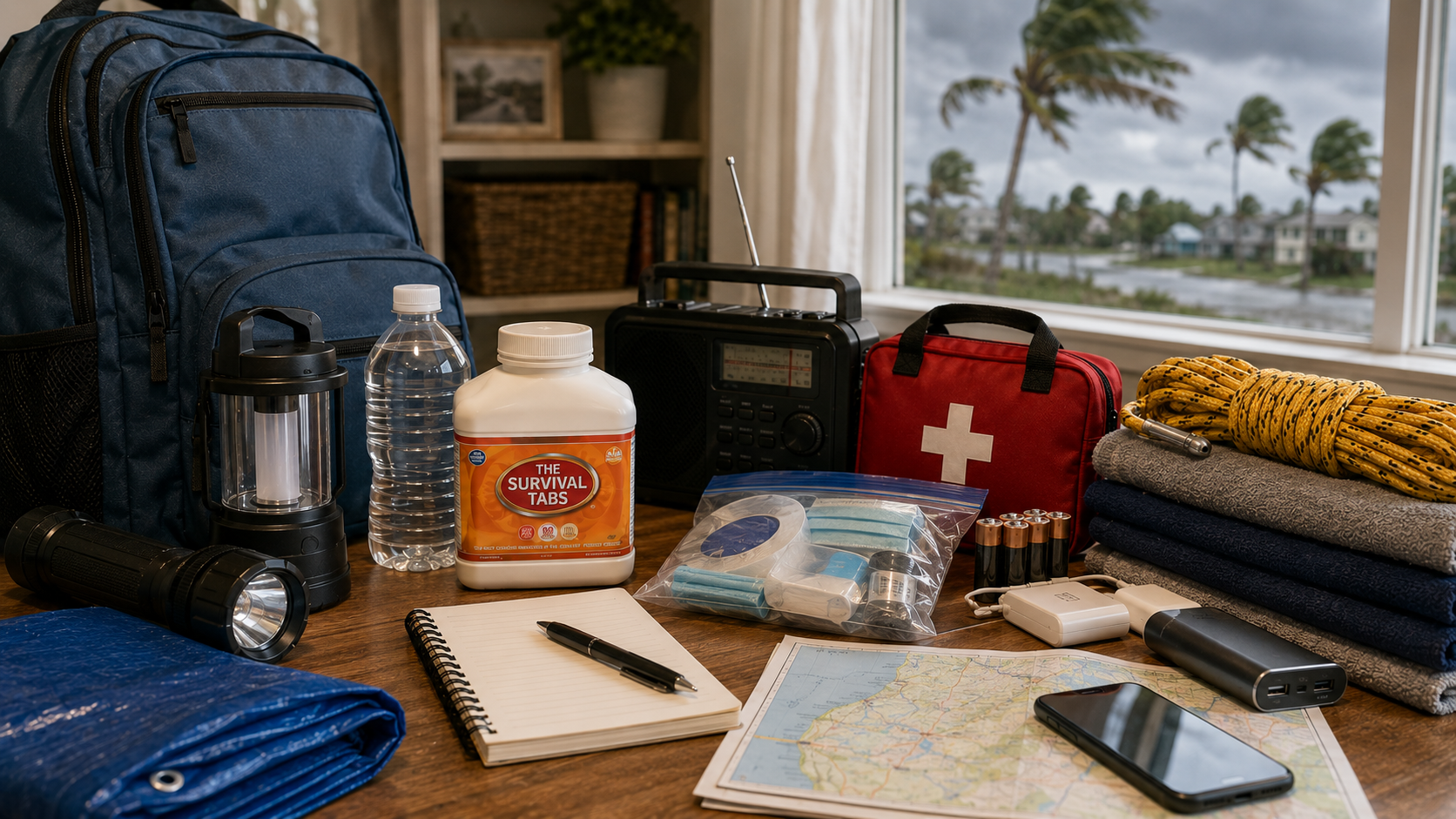
An evergreen guide to hurricane hazards, official forecasts, evacuation, sheltering, household supplies, accessibility, home protection, power loss, and recovery.
Purpose and limits
This guide does not forecast a specific storm, replace official orders, certify a home, direct structural work, or substitute for emergency services, the National Hurricane Center, local emergency management, insurers, utilities, clinicians, or licensed professionals.
Immediate checklist
- Know whether you face wind, surge, inland flooding, tornado, and evacuation risks.
- Use National Hurricane Center and local official information.
- Know your evacuation zone and route.
- Choose shelter and destination options.
- Build household supply and medication continuity plans.
- Protect documents and insurance records.
- Prepare for power and communication loss.
- Leave when officials direct evacuation.
Know the hazards
Hurricane risk is not limited to the category number.
- Plan for storm surge.
- Plan for rainfall and inland flooding.
- Plan for destructive wind and flying debris.
- Plan for tornadoes, rip currents, power loss, heat, and contaminated water.
Understand the forecast
Forecasts change as new data arrives.
- Use official National Hurricane Center products and local alerts.
- Distinguish the forecast track from the full hazard area.
- Read watches, warnings, storm-surge information, and rainfall forecasts.
- Do not use one social-media image as the entire decision basis.
Watch and warning decisions
A hurricane watch means conditions are possible; a hurricane warning means conditions are expected, with official lead times tied to tropical-storm-force winds.
- Use the watch period to finish preparations.
- Treat a warning as a time for protective action, not shopping.
- Account for the earlier arrival of hazardous wind and rain.
- Follow local evacuation timing.
Evacuation zones
Storm-surge and evacuation zones are not the same as wind categories.
- Find the official local zone tool.
- Know more than one route.
- Identify transportation assistance before the storm.
- Never drive around barricades or through floodwater.
Evacuation destinations
Plan several safe destinations outside the hazard area.
- Confirm hotels, friends, shelters, and pet policies.
- Carry identification, medication, communication aids, and essential equipment.
- Plan for charging and backup power.
- Tell an out-of-area contact where you are going.
Shelter at home
Shelter at home only when officials say it is appropriate and the building is suitable.
- Choose an interior area away from windows.
- Keep exits clear.
- Move supplies above likely flood levels.
- Be ready to change plans if officials issue new instructions.
Home and property protection
Use code-compliant measures and qualified professionals.
- Install approved shutters or protection appropriate to the building.
- Secure or bring in outdoor objects.
- Clear drains and gutters only when safe.
- Do not tape windows as a substitute for protection.
- Do not climb a roof as the storm approaches.
Renters and multifamily housing
- Know the landlord and building emergency plan.
- Ask about shutters, flood areas, generators, elevators, and shelter spaces.
- Protect personal property and renters-insurance records.
- Do not operate generators on balconies, corridors, roofs, garages, porches, or near shared openings.
- Evacuate when the building or local authority directs.
Manufactured homes and RVs
These structures may be unsafe in hurricane winds and flooding.
- Know the local evacuation requirement.
- Leave early for a sturdy destination.
- Secure the unit only within manufacturer and professional guidance.
- Do not remain because the storm category seems low.
Food
Plan shelf-stable foods that fit household needs and can be prepared safely.
- Include foods for children, allergies, disabilities, older adults, and cultural needs.
- Use no-cook options for outages.
- Avoid a plan dependent on refrigeration.
- Do not use Survival Tabs or any single product as a sole diet.
Water
- Store safe water in appropriate containers and follow official quantity guidance.
- Plan extra water for heat, medical needs, infants, pets, and sanitation.
- Follow boil-water, do-not-drink, and do-not-use advisories exactly.
- Do not assume clear flood or tap water is safe.
- Use the household emergency-water guide for treatment boundaries.
Medication and health
- Refill and organize essential medication within legal and clinical limits.
- Keep prescriptions, medication lists, allergies, and clinician contacts.
- Plan temperature-sensitive products and powered medical equipment.
- Carry mobility, hearing, vision, and communication aids.
- Know when loss of power requires relocation or emergency care.
Children
- Use calm, age-appropriate explanations.
- Give each adult a clear responsibility.
- Pack identification, health information, comfort items, and safe activities.
- Know school and childcare closure and reunification plans.
- Never assign children hazardous preparation tasks.
Older adults and disability access
- Plan accessible transportation, shelter, communication, toileting, charging, and personal assistance.
- Register for local assistance programs when available without assuming rescue is guaranteed.
- Practice transfers and equipment loading.
- Keep backup communication methods.
- Leave early when transport takes more time.
Pets and service animals
- Identify pet-friendly shelters and lodging.
- Keep carriers, leashes, identification, records, food, water, and medicine.
- Practice loading animals.
- Plan service-animal access and relief needs.
- Do not abandon animals or delay a life-saving evacuation to search during immediate danger.
Documents, cash, and insurance
- Protect identification, policies, property records, medical information, and contacts.
- Keep secure digital and physical copies.
- Photograph property before the storm from safe locations.
- Keep a modest amount of secured cash for payment outages.
- Review flood and wind coverage before a storm threatens.
Vehicles and fuel
- Maintain vehicles before hurricane season.
- Keep evacuation fuel above the household’s trigger level.
- Never store fuel in living areas or unsafe containers.
- Avoid last-minute travel when roads are already hazardous.
- Carry maps and emergency supplies.
Communication
- Use several ways to receive alerts.
- Keep phones and battery banks charged.
- Use an out-of-area contact.
- Prefer texts or short messages when networks are congested.
- Do not spread unverified storm tracks, damage reports, or shelter information.
Power outages
- Prepare batteries, lighting, cooling, food, medicine, and communication plans.
- Use flashlights rather than candles.
- Disconnect sensitive equipment when appropriate.
- Keep refrigerator and freezer doors closed.
- Move to a safe powered location when medical or heat risks cannot be controlled.
Generator boundaries
Portable generators produce deadly carbon monoxide.
- Operate outdoors only, at least 20 feet from doors, windows, and vents, with exhaust directed away.
- Never use a garage, basement, shed, porch, carport, corridor, roof, or balcony.
- Use battery-backed carbon-monoxide alarms.
- Never backfeed; use qualified transfer equipment.
During the storm
- Stay inside the designated safe area unless officials direct movement.
- Keep away from windows and exterior doors.
- Continue monitoring official information.
- Do not go outside during a calm eye.
- Avoid floodwater and damaged areas.
Tornadoes within tropical systems
Hurricanes and tropical storms can produce tornadoes.
- Enable tornado warnings.
- Know the best available interior shelter.
- Act immediately when warned.
- Do not leave hurricane shelter to look at the storm.
- Use the Tornado Preparedness Guide for detailed actions.
After the storm
- Wait for official clearance before returning or going outside.
- Expect floodwater, damaged roads, unstable buildings, downed lines, heat, animals, and contaminated water.
- Stay out of floodwater.
- Avoid damaged buildings.
- Report utility hazards.
Food, water, and medicine after an outage
- Follow official safety instructions.
- Discard food exposed to unsafe temperatures, floodwater, chemicals, or damaged packaging.
- Do not taste food to test it.
- Use safe water for drinking, cooking, brushing teeth, and medication.
- Ask pharmacists or clinicians about compromised medicine.
Cleanup and mold
Cleanup is hazardous and should begin only when reentry is allowed.
- Use appropriate protective equipment.
- Dry or remove wet materials promptly when safe.
- Never mix cleaning chemicals.
- Use professionals for structural, electrical, gas, sewage, hazardous-material, large-tree, and extensive mold hazards.
Claims and assistance
- Document damage from safe locations.
- Contact insurers promptly and follow claim instructions.
- Keep receipts, estimates, contracts, and communication records.
- Use official disaster-assistance channels.
- Verify contractors and beware of scams.
Community support
Coordinate without creating unofficial rescue, security, medical, or utility roles.
- Check on neighbors when conditions are safe.
- Share verified information.
- Respect privacy and scarce resources.
- Refer hazardous work to trained services.
Annual hurricane-season review
- Review the plan before local hurricane season.
- Check alerts, zones, routes, destinations, contacts, medicine, documents, and supplies.
- Inspect shutters and protective systems through qualified channels.
- Practice loading people, equipment, and animals.
- Update after each storm and drill.
Frequently asked questions
Does the category number describe every danger?
No. The Saffir-Simpson scale is based on wind speed and does not include storm surge, rainfall flooding, or tornadoes.
Should I evacuate only for a major hurricane?
No. Follow local evacuation orders and zone guidance. Serious surge and flooding can occur with storms of different categories.
Can I use tape on windows?
Tape is not a substitute for approved shutters or other appropriate protection.
Can I return when the wind stops?
Not necessarily. Wait for official clearance and remember that the eye can create a temporary calm before dangerous winds return.
Can I use a generator on a porch?
No. Operate it outdoors only at least 20 feet from openings, with exhaust directed away.
How much food and water should I store?
Use current official guidance and tailor the plan to household size, evacuation, climate, health, pets, and likely service interruption; no single number fits every case.
Where do Survival Tabs fit?
They may be one compact component of a varied emergency food plan. They are not a sole diet or substitute for safe water, medicine, shelter, evacuation, or official warnings.
Professional review required before publication
- Meteorology and National Hurricane Center review
- Emergency-management and evacuation review
- Structural, building-code, and flood review
- Public-health, food, water, and medical review
- Fire, electrical, fuel, and carbon-monoxide review
- Accessibility and safeguarding review
- Veterinary and service-animal review
- Insurance, legal, and privacy review
- Product-compliance review
Authoritative sources
Ready.gov hurricanes
National Hurricane Center
National Hurricane Center hazard guidance
CDC hurricane preparation
CDC safety after a hurricane
FEMA hurricane risk and evacuation planning