

Hurricane Cleanup and Recovery Guide
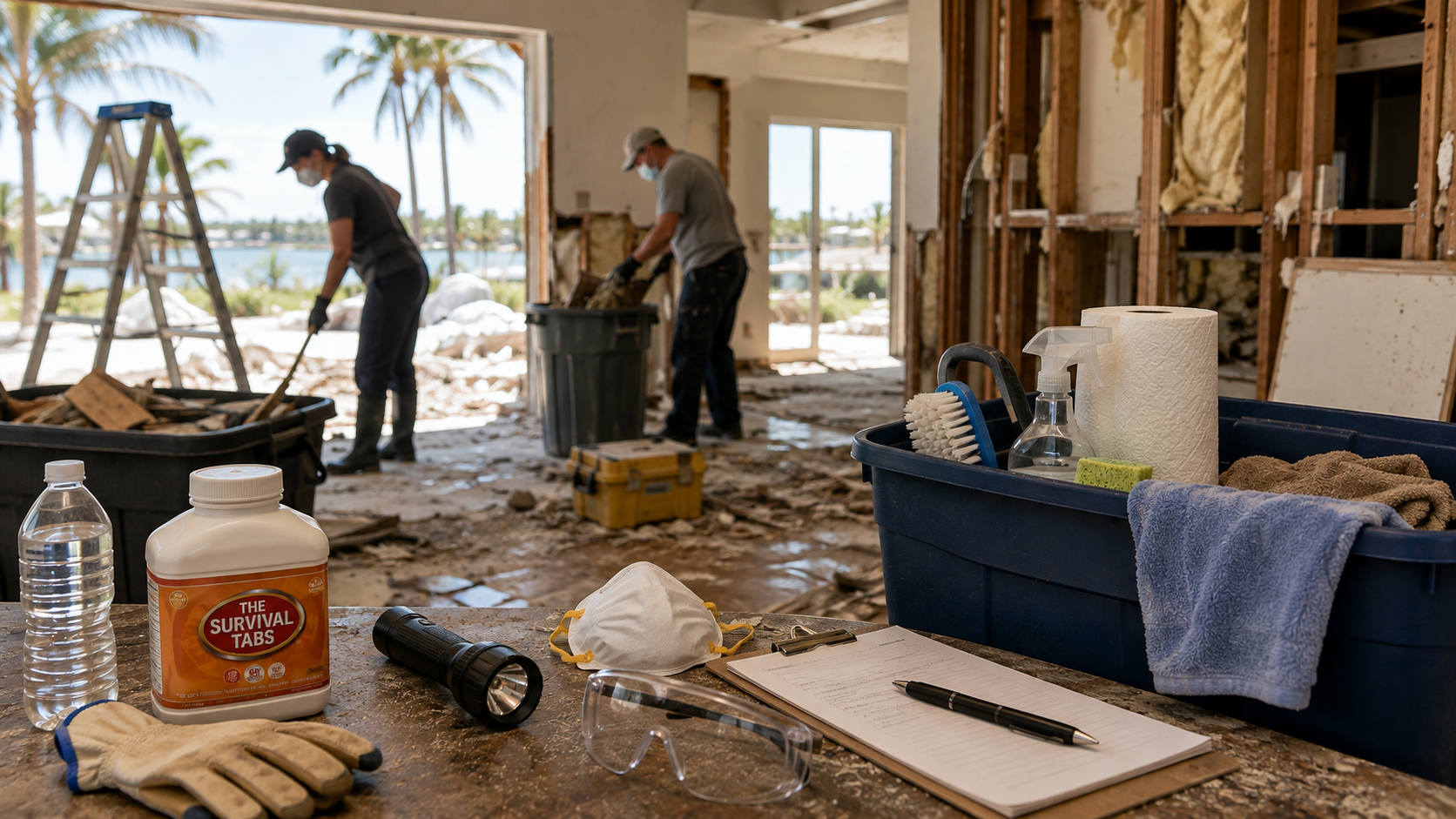
A safety-first guide to reentry, flood and structural hazards, mold and moisture, debris, utilities, documentation, and household recovery after a hurricane.
Purpose and limits
Cleanup is hazardous work. This guide does not certify a building, direct hazardous-material removal, prescribe medical treatment, or replace local authorities, emergency services, utilities, insurers, licensed contractors, environmental professionals, or public-health guidance.
Immediate checklist
- Wait for official reentry permission.
- Approach damaged property in daylight when possible.
- Stay out of floodwater.
- Avoid downed lines and damaged buildings.
- Photograph damage from safe locations.
- Use task-appropriate protective equipment.
- Stop when structural, electrical, gas, sewage, chemical, or major mold hazards are present.
- Keep children and animals away from cleanup.
Reentry decision
The storm ending does not mean the property is safe.
- Follow evacuation, curfew, road, and reentry orders.
- Do not enter a building officials have marked unsafe.
- Leave if you hear shifting, smell gas, see fire, or observe worsening damage.
- Use a qualified inspection when safety is uncertain.
Floodwater
Floodwater may contain sewage, chemicals, sharp objects, animals, and electrical hazards.
- Avoid contact whenever possible.
- Never drive through flooded roads.
- Wash exposed skin with safe water and soap as soon as possible.
- Seek medical advice for significant exposure, wounds, or illness.
Downed power lines
Assume fallen or low lines are energized.
- Keep people and animals well away.
- Do not touch lines, vehicles, trees, water, or objects in contact with them.
- Report the hazard to emergency services or the utility.
- Wait for trained crews.
Electrical systems
Water-damaged electrical systems and devices require professional evaluation.
- Do not touch wet equipment while connected to power.
- Do not energize a wet building or appliance.
- Use battery lighting during initial inspection.
- Have a qualified electrician inspect damaged systems.
Gas and fuel hazards
Damaged fuel systems can create fire, explosion, and poisoning hazards.
- Leave immediately if you smell gas or hear escaping gas.
- Avoid flames, switches, vehicles, and devices that may spark.
- Contact emergency services and the utility from a safe place.
- Do not restore service yourself.
Structural hazards
Wind, surge, flooding, trees, and impact can weaken roofs, walls, foundations, stairs, and floors.
- Observe from outside before approaching.
- Do not walk beneath sagging roofs or unstable trees.
- Do not remove load-bearing debris.
- Use structural engineers or qualified officials for uncertain damage.
Protective equipment
Protective equipment must match the task and does not make an unsafe site safe.
- Wear sturdy boots, gloves, long clothing, and eye protection for ordinary debris work.
- Use respiratory protection only according to current public-health and occupational guidance.
- Replace damaged or contaminated equipment.
- Stop when the hazard exceeds household capability.
Mold and moisture
Wet materials can support mold growth and should be dried or removed promptly when safe.
- Correct ongoing water entry first.
- Ventilate only when outdoor conditions and building safety allow.
- Separate clean areas from contaminated work.
- Use professional remediation for extensive damage, sewage, HVAC contamination, or high-risk occupants.
People at higher health risk
Mold, dust, chemicals, heat, and strenuous work may affect some people more severely.
- Keep children away from cleanup.
- People with asthma, lung disease, immune compromise, pregnancy, or other concerns should seek medical guidance.
- Arrange alternative lodging when the environment is unsafe.
- Do not pressure vulnerable people to participate.
Cleaning and disinfecting
Cleaning removes soil; disinfecting uses an appropriate product on a suitable surface after cleaning.
- Follow product labels.
- Never mix bleach with ammonia or other cleaners.
- Ventilate according to label and health guidance.
- Do not use disinfectants on skin, wounds, food, or drinking water unless specifically labeled and instructed.
Food and medicine
Storm, heat, floodwater, and power loss can make products unsafe.
- Discard food contacted by floodwater or unsafe chemicals.
- Follow official time and temperature guidance for refrigerated food.
- Do not taste food to test safety.
- Ask a pharmacist or clinician about temperature-sensitive or contaminated medication.
Drinking water
- Use official boil-water, do-not-drink, or do-not-use instructions.
- Do not assume clear water is safe.
- Use bottled or properly treated water according to public-health guidance.
- Protect clean containers from cross-contamination.
- Follow private-well testing and disinfection instructions from qualified authorities.
Sewage and sanitation
Sewage backups and damaged septic systems require specialized precautions.
- Avoid contact.
- Stop water use when authorities or septic professionals advise it.
- Keep contaminated items out of clean living areas.
- Use trained professionals for sewage-contaminated systems and major cleanup.
Generators and carbon monoxide
Portable generators produce carbon monoxide and must remain outdoors, far from openings, with exhaust directed away.
- Never operate a generator in a home, garage, basement, shed, porch, or carport.
- Use battery-backed carbon-monoxide alarms.
- Keep fuel away from ignition sources and hot equipment.
- Use qualified electrical transfer equipment; never backfeed a building.
Heat, exertion, and fatigue
Cleanup often occurs in hot, humid conditions with limited services.
- Schedule rest, hydration, and cooling.
- Use teams for lifting and avoid overexertion.
- Stop for dizziness, confusion, chest pain, fainting, or severe symptoms.
- Do not use alcohol or impairing substances during hazardous work.
Tools and chainsaws
Powered tools add cutting, kickback, electrical, noise, and fatigue hazards.
- Use only tools you are trained to operate.
- Follow manufacturer instructions and protective-equipment requirements.
- Keep bystanders away.
- Hire professionals for large trees, overhead limbs, utility contact, and unstable structures.
Debris and hazardous materials
Debris may include nails, glass, batteries, fuel, pesticides, asbestos, lead, refrigerants, and unknown chemicals.
- Do not burn mixed debris.
- Separate materials according to local instructions.
- Do not open, sniff, or combine unknown containers.
- Use local hazardous-waste and disaster-debris programs.
Documentation before disposal
Documentation can support claims and assistance, but never enter danger to obtain it.
- Photograph rooms and items from safe positions.
- Record serial numbers, descriptions, and approximate purchase information.
- Keep receipts for emergency work and temporary lodging.
- Ask the insurer before discarding high-value items when safe and practical.
Contractors and scams
Demand for repairs creates opportunities for fraud and unsafe work.
- Verify licenses, insurance, references, scope, permits, and payment terms.
- Get written estimates and contracts.
- Avoid large cash payments and high-pressure demands.
- Confirm disaster-assistance claims through official channels.
Temporary repairs
Temporary work should prevent further damage without creating new hazards.
- Follow insurer instructions when possible.
- Use qualified roof, electrical, gas, structural, and tree professionals.
- Photograph conditions before and after work.
- Do not climb damaged roofs or improvise structural supports.
Household recovery order
Use a controlled sequence.
- Confirm safety and utilities.
- Document damage.
- Stop water entry and begin safe drying.
- Separate clean and contaminated zones.
- Arrange professional work, claims, housing, and replacement of essentials.
Emotional recovery
Disaster cleanup can be exhausting and distressing.
- Set realistic work periods.
- Share decisions and document responsibilities.
- Watch for persistent distress or inability to function.
- Use qualified mental-health or crisis support when needed.
Frequently asked questions
Can I enter once the water goes down?
Not automatically. Wait for official reentry and assess structural, electrical, gas, sewage, chemical, and animal hazards.
Should I use bleach on all mold?
No. Follow current CDC/EPA guidance and product labels. Never mix cleaners, and use professional help for extensive or high-risk contamination.
Can I run a generator in a garage with the door open?
No. Operate it outdoors only, at least 20 feet from doors, windows, and vents, with exhaust directed away.
Can I save food in sealed packages after floodwater contact?
Many packages and containers cannot be safely salvaged. Follow current official food-safety guidance rather than guessing.
When do I need a professional?
Use professionals for structural uncertainty, electricity, gas, sewage, hazardous materials, major trees, extensive mold, HVAC contamination, and work beyond your training.
Where do Survival Tabs fit?
Uncontaminated, correctly stored product may be one compact food component. It is not a sole diet or a substitute for safe water, shelter, medicine, professional cleanup, or public-health guidance.
Professional review required before publication
- Emergency-management review
- Structural and building-safety review
- Electrical, gas, and fire review
- Public-health and environmental-health review
- Mold and remediation review
- Food, water, and pharmacy review
- Occupational-safety review
- Accessibility and safeguarding review
- Insurance, legal, and product-compliance review
Authoritative sources
CDC cleaning safely after a disaster
CDC hurricane safety after the storm
CDC flooded-home reentry
CDC mold cleanup guide
EPA mold and moisture guide
CDC hurricane preparedness and safety messaging