

How to Store Survival Tabs After Opening
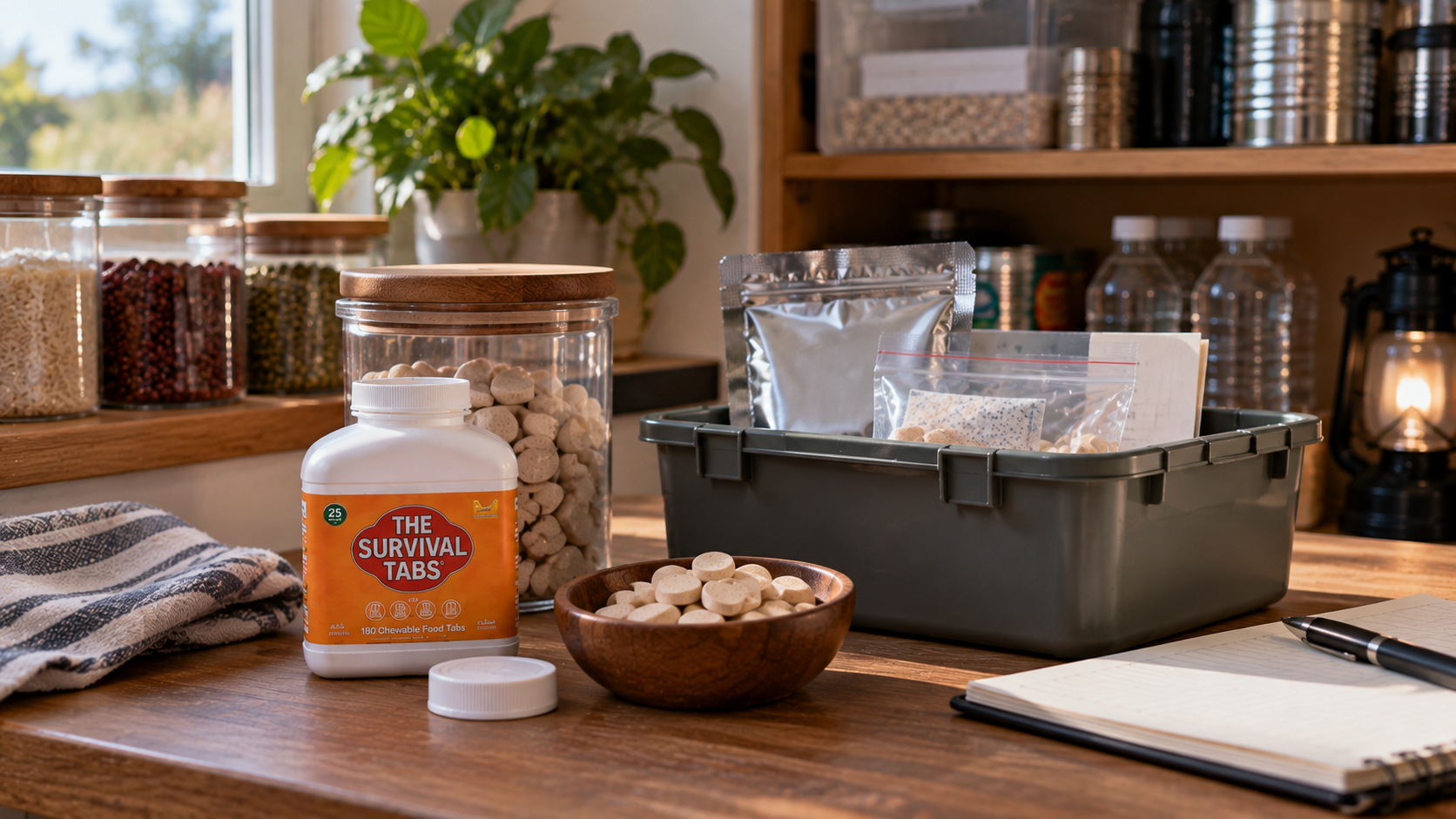
Proper storage after opening helps protect any dry emergency food from moisture, heat, contamination, pests, and packaging damage. Because packaging formats can change, the product label and current manufacturer instructions should always take priority over general advice.
Before Opening
Check the package for damage, punctures, swelling, broken seals, moisture, or contamination. Verify the printed date and storage instructions. Do not use a package that appears compromised when food safety is uncertain.
After Opening
Keep remaining tablets clean and dry. Close or reseal the original container as directed by the manufacturer. Minimize the amount of time the package remains open, particularly in humid environments. Use clean, dry hands or utensils when handling the product.
Moisture Control
Moisture can damage dry foods and packaging. Do not store an opened package near sinks, bathrooms, wet gear, condensation, or other high-humidity locations. If water enters the package or the product becomes visibly damp, follow manufacturer guidance rather than attempting to dry and restore it for long-term storage.
Temperature
Store in the conditions stated on the package. Avoid prolonged exposure to high temperatures, direct sunlight, vehicle interiors in hot weather, heaters, and other heat sources. A product's advertised shelf life assumes specified storage and intact packaging; it should not automatically be applied to an opened or damaged package.
Secondary Containers
If a secondary container is used for organization or pest protection, keep the original label, lot information, date information, allergen information, and instructions with the product. A secondary container does not restore the original factory seal or guarantee the unopened shelf life.
Emergency Kits and Vehicles
Inspect stored food periodically. Vehicle temperatures can become extreme, so vehicle kits may require more frequent inspection and rotation than food stored under stable indoor conditions. Replace damaged, contaminated, or questionable packages.
Labeling
After opening, consider noting the date opened on the package. This makes rotation easier and helps prevent forgotten partial packages from remaining in an emergency kit indefinitely.
What Not to Assume
• Do not assume the original unopened shelf-life claim still applies after opening.
• Do not consume food from packaging contaminated by floodwater, chemicals, pests, or other unsafe conditions.
• Do not rely on appearance or smell alone to determine whether every food is safe.
• Do not discard the original nutrition, allergen, lot, and storage information when transferring the product.
Emergency Food Planning
Survival Tabs can be one compact component of a broader emergency food supply. Maintain adequate drinking water and a variety of foods that meet household calorie, dietary, allergy, cultural, and medical needs.
Editorial note: Replaces legacy ID 108. Before publication, verify all opened-package instructions directly against the current Survival Tabs packaging/manufacturer guidance. No new post-opening shelf-life duration is asserted here because it requires manufacturer verification.