

How to Find State Emergency Management Resources
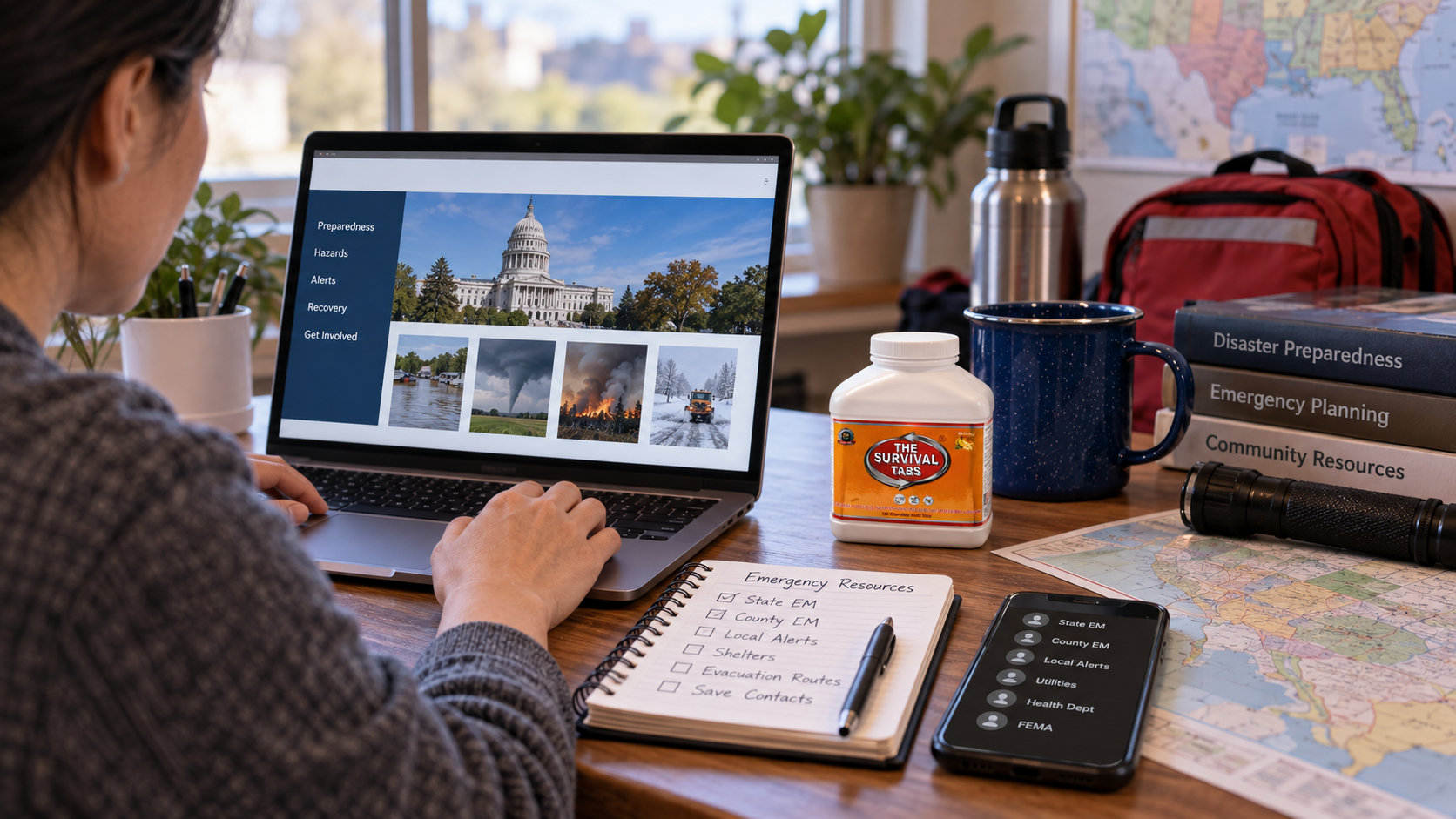
A practical guide to locating, verifying, saving, and using official preparedness information
State and local emergency-management offices translate broad national guidance into instructions for the hazards, roads, shelters, alert systems, and services in your area. This guide explains how to find the right office, confirm that it is official, and keep the information usable before, during, and after an emergency.
This is a United States–focused resource guide. Agency names, responsibilities, websites, phone numbers, and services change, so verify information directly with the responsible government office.
Quick answer
Start with your city or county emergency-management office for local alerts, evacuation routes, shelters, cooling or warming centers, and neighborhood-specific instructions. Use your state or territorial emergency-management agency for statewide planning, disaster information, and links to local offices. Use FEMA for federal preparedness information, disaster declarations, and recovery resources.
For an immediate threat to life, fire, or safety, call 911 or the local emergency number. Do not wait for a state agency to answer a routine office line.
What emergency-management agencies do
* Publish preparedness guidance for local hazards.
* Coordinate public alerts and warnings with authorized partners.
* Support evacuation, shelter, and emergency-operations planning.
* Coordinate government resources during declared emergencies.
* Share official situation updates and protective actions.
* Connect residents with recovery information after disasters.
They do not replace police, fire, emergency medical services, utilities, public-health departments, weather services, or relief organizations. The correct contact depends on the problem.
Use the correct level of government
City or county
Local offices usually provide the most specific information about evacuation zones, road closures, shelter locations, local alert enrollment, emergency operations, and community resources.
State or territory
State and territorial agencies coordinate statewide preparedness and response, connect local jurisdictions, publish hazard information, and may maintain statewide alert or assistance portals.
Tribal government
Tribal emergency-management or public-safety offices may issue instructions and coordinate resources for tribal lands and communities. Use the tribal government’s official website or verified office directory.
Federal
FEMA supports state, local, tribal, and territorial partners and provides federal preparedness and disaster resources. FEMA does not replace local instructions during an active emergency.
Seven-step search method
1. Identify the exact place you need information for: home, work, school, a relative’s address, or a travel destination.
2. Search the official state, territorial, tribal, county, or city government website for “emergency management,” “emergency services,” or “public safety.”
3. Confirm the website belongs to a government entity and that the contact information is current.
4. Find the local alert-registration page and learn which alerts require enrollment.
5. Locate hazard plans, evacuation information, shelter guidance, and accessibility resources.
6. Save essential contacts and instructions in more than one format.
7. Recheck the information at least twice a year and before high-risk seasons or travel.
How to verify an official source
* Prefer a .gov website or a page linked from an official government homepage.
* Confirm the jurisdiction name and physical service area.
* Check for a current office address, public phone number, and recent updates.
* Follow links from FEMA, Ready.gov, or an official state or local government directory.
* Be cautious with copied directories, commercial listings, social-media screenshots, and old blog posts.
* Do not assume the first search result is the correct agency.
* If a link is broken, return to the jurisdiction’s main government homepage and search from there.
A social-media account can be useful, but confirm it from the agency’s official website before relying on it. Impersonation and stale accounts are possible.
What to collect from each office
Contact information
* Main public information phone number.
* After-hours information line, if published.
* Official website and alert-registration page.
* Verified social-media channels used for public updates.
* Non-emergency police, fire, public health, and utility contacts.
Local protective-action information
* Evacuation zones and routes.
* Shelter-in-place guidance.
* Public shelter policies and what to bring.
* Transportation assistance procedures.
* Pet and service-animal policies.
* Cooling, warming, or clean-air center information.
Hazards and plans
* Flood, wildfire, hurricane, tornado, earthquake, winter storm, extreme heat, or other locally relevant hazards.
* Community emergency plans and preparedness guides.
* Maps showing evacuation, flood, fire, tsunami, or other hazard zones.
* Seasonal preparedness campaigns and exercise schedules.
Alerts and warnings
Do not rely on one channel. Power failures, damaged networks, disabled phone settings, travel, language barriers, and accessibility needs can affect delivery.
* Enable Wireless Emergency Alerts on compatible mobile phones.
* Register for local opt-in alerts when offered.
* Use NOAA Weather Radio where appropriate.
* Follow official state and local emergency-management channels.
* Keep a battery-powered or hand-crank radio available.
* Include an out-of-area contact in the household communication plan.
* Arrange an accessible backup method for anyone who may not receive audio, visual, or text alerts.
FEMA’s Integrated Public Alert and Warning System distributes authenticated alerts through channels that can include Wireless Emergency Alerts, the Emergency Alert System, and NOAA Weather Radio. Local alerting authorities decide when to issue many location-specific warnings.
Before an emergency
* Learn which office issues evacuation orders for your address.
* Save the exact name of your evacuation zone, if one applies.
* Know at least two routes out of the area.
* Identify likely shelter locations, but confirm that a shelter is open before traveling.
* Ask how transportation help is requested.
* Review medication, power, mobility, communication, and caregiver needs.
* Plan for children, older adults, pets, and service animals.
* Print essential pages or save them offline.
* Share the plan with household members and trusted contacts.
* Practice receiving an alert and taking the correct action.
During an emergency
* Follow current instructions from authorized local officials.
* Use 911 only for emergencies requiring immediate response.
* Avoid calling emergency lines for general information when an official information line is available.
* Do not travel to a shelter until its location and opening status are confirmed.
* Do not drive around barricades or into floodwater.
* Treat screenshots and forwarded messages as unverified until confirmed.
* Note the time, source, affected area, and expiration of each instruction.
* If official channels conflict, prioritize the authority responsible for your immediate location and hazard, then seek clarification through verified sources.
After an emergency
* Check official reentry instructions before returning.
* Use government disaster pages to identify legitimate assistance programs.
* Document damage safely and follow insurer instructions.
* Avoid contractors, charities, or assistance offers that cannot be verified.
* Keep receipts and records related to evacuation, temporary housing, repairs, and cleanup.
* Report downed lines, gas odors, structural hazards, or unsafe water to the responsible authority.
* Update saved contacts and plans based on what failed or changed.
Disaster declarations and assistance
A local emergency, a state declaration, and a federal disaster declaration are not the same. Eligibility for federal assistance depends on the specific declaration, designated area, program, and applicant circumstances.
* Use FEMA’s location search to review official disaster information.
* Confirm that your county, parish, borough, municipality, tribal area, or territory is included.
* Read program eligibility and deadlines on the official disaster page.
* Use only official application channels.
* Do not pay anyone to submit a FEMA application.
Emergency-management offices may share assistance information, but they cannot guarantee eligibility, approval, timing, or payment.
Accessibility and functional needs
* Ask whether alerts are available in accessible formats and multiple languages.
* Identify transportation assistance and registration procedures before an emergency.
* Confirm shelter accessibility, charging options, refrigeration limits, and service-animal policies.
* Keep a written description of essential supports, equipment, medications, and communication needs.
* Plan backup power for critical devices with qualified medical and electrical guidance.
* Include personal support networks; do not assume government services can meet every need immediately.
A registry, where offered, is not a guarantee of rescue, transportation, shelter placement, or uninterrupted services. Maintain a personal backup plan.
Travel and temporary locations
* Look up the emergency-management office for the destination, not only your home state.
* Save local alerts, weather information, evacuation routes, and shelter guidance before departure.
* Ask hotels, campgrounds, schools, and event venues about their emergency procedures.
* Keep location services and emergency-alert settings configured appropriately.
* Know the local emergency number when traveling outside the United States.
* Tell a trusted contact your route and expected return.
Create an offline emergency-resource card
Store a paper copy in the household emergency kit, vehicle kit, and travel documents. Keep a digital copy available offline.
* Home address and jurisdiction.
* Local emergency-management office.
* State or territorial emergency-management agency.
* Local alert enrollment method.
* Evacuation zone and primary routes.
* Official shelter-information source.
* Non-emergency police and fire numbers.
* Utility emergency numbers.
* Out-of-area household contact.
* Insurance and essential medical contacts.
Do not include unnecessary sensitive personal information on a card that could be lost.
Questions to ask your local office
* Which hazards are most likely in this area?
* Which agency issues evacuation or shelter-in-place orders?
* How do I enroll in local alerts?
* Are alerts available in other languages or accessible formats?
* Where are evacuation zones and routes published?
* How are shelter openings announced?
* What transportation assistance may be available?
* What are the policies for pets and service animals?
* Where are cooling, warming, or clean-air centers announced?
* How often are plans, maps, and contact pages updated?
Maintenance schedule
Every six months
* Test saved links and phone numbers.
* Review alert subscriptions and phone settings.
* Replace outdated printed pages.
* Confirm household contacts and meeting places.
Before hazard season
* Review hazard maps and evacuation zones.
* Confirm shelter and transportation information sources.
* Update supplies, medications, batteries, and backup power.
After moving or changing jobs or schools
* Repeat the search for every new jurisdiction.
* Update commute, childcare, caregiver, and reunification plans.
After an emergency or drill
* Record which channels worked.
* Correct missing or conflicting information.
* Share verified improvements with the household.
Common mistakes
* Saving a state office but not the city or county office.
* Treating a static 50-state directory as permanently current.
* Relying only on social media.
* Assuming shelters are always open.
* Confusing a preparedness office with 911 or disaster-assistance registration.
* Saving a phone number without the office name and jurisdiction.
* Ignoring tribal, territorial, campus, workplace, or special-district authorities.
* Failing to plan for power, connectivity, language, hearing, vision, mobility, or cognitive access barriers.
Frequently asked questions
Should I contact the state or county first?
For neighborhood-specific alerts, evacuation, shelters, and road information, start locally. Use the state or territorial agency for statewide resources and coordination. During an active emergency, follow the authority named in the official instruction.
Is FEMA my local emergency-management agency?
No. FEMA is the federal emergency-management agency. Local, state, territorial, and tribal authorities usually issue the most location-specific protective instructions.
Does every alert require registration?
No. Some alerts, including many Wireless Emergency Alerts, can reach compatible phones without a local subscription. Many communities also offer opt-in systems for additional messages.
Can I rely on a 50-state contact list?
Use a directory as a starting point only. Agency names, websites, phone numbers, and responsibilities can change. Verify each entry on the responsible government website.
Will an emergency-management office tell me which shelter to use?
It may publish shelter information, but shelters can open, close, move, or reach capacity. Confirm current instructions before traveling.
What if I cannot access the internet?
Use radio, television, Wireless Emergency Alerts, NOAA Weather Radio, local information lines, trusted community networks, and printed resources prepared in advance.
Should I call 911 for preparedness questions?
No. Use published non-emergency or public-information contacts. Call 911 for immediate threats requiring emergency response.
Limits and review requirements
This guide does not provide a permanent directory of every agency, promise that a service will be available, or replace instructions from authorized officials. It does not determine eligibility for shelters, transportation, disaster assistance, or recovery programs.
Before publication, verify every linked resource and have the guide reviewed by a qualified emergency-management professional. Accessibility, privacy, legal, public-safety, and disaster-assistance statements should receive appropriate specialist review.
Official resources
FEMA — Search Your Location
Ready.gov — Emergency Alerts
FEMA — Integrated Public Alert & Warning System
FEMA — Regions, States and Territories
Ready.gov — Make a Plan
Ready.gov — Plan Ahead for Disasters
Final checklist
* I found the correct city or county emergency-management office.
* I found the correct state, territorial, or tribal agency.
* I verified every source on an official government website.
* I enrolled in available local alerts.
* I enabled emergency alerts on household phones.
* I saved evacuation, shelter, and transportation information.
* I included accessibility, language, medical, pet, and service-animal needs.
* I stored contacts on paper and offline.
* I know when to use 911, a non-emergency line, or a disaster-assistance channel.
* I scheduled a six-month review.