How Survival Tabs compare to MREs (Meals Ready to Eat) in terms of nutritional value

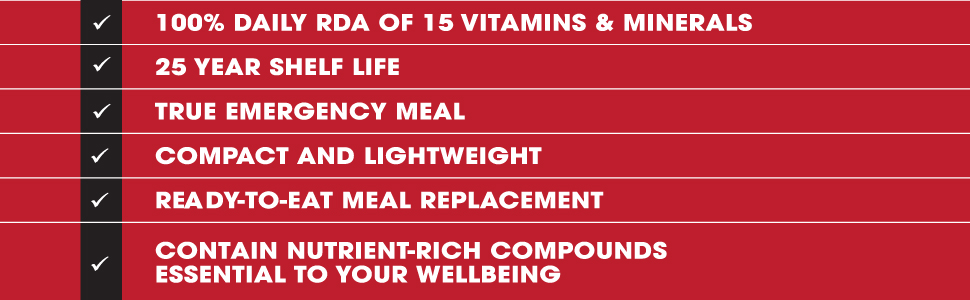
1. Nutrient density: Survival Tabs provide 100% of the recommended daily intake for 15 essential vitamins and minerals in a more compact form than MREs. They are designed to offer complete nutrition in minimal space.
2. Absorption rate: Survival Tabs have a 99% absorption rate, which is significantly higher than MREs. This means almost all of the nutrients in Survival Tabs are utilized by the body.

3. Protein availability: Within 5 minutes of consuming Survival Tabs, 97% of the protein becomes available for the body to use to repair and replace tissues and fluids. MREs typically take longer to digest and make protein available.
4. Calorie efficiency: 99% of the calorie content in Survival Tabs can be utilized for energy, compared to lower utilization rates for MREs and other traditional foods.
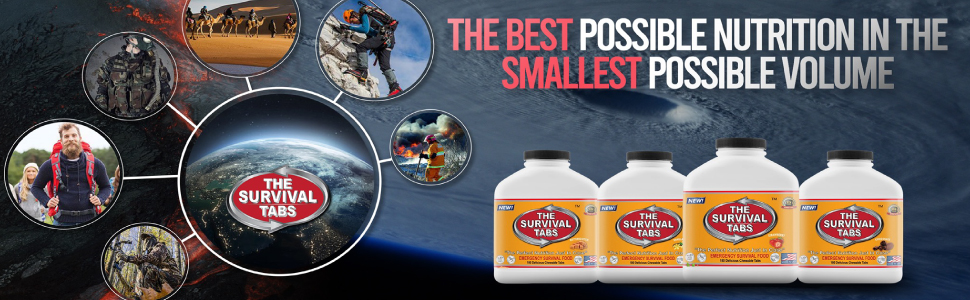
5. Compact size: Survival Tabs provide complete nutrition in a much smaller volume compared to MREs, making them more portable and easier to store.
6. Preparation: Survival Tabs require no preparation and can be consumed immediately, while MREs may require some preparation or heating.
7. Shelf life: Both Survival Tabs and MREs have long shelf lives, with Survival Tabs lasting up to 25 years when unopened.

While Survival Tabs offer advantages in terms of nutrient density, absorption, and portability, it's important to note that they are designed as a supplement or short-term solution rather than a complete meal replacement. MREs, on the other hand, are designed to provide more substantial meals and may offer greater variety in taste and texture.
[3] https://thesurvivaltabs.com/blogs/news/how-the-survival-tabs-compare-to-other-emergency-food-options
 |
 |
 |
 |
 |
|
|---|---|---|---|---|---|
| 720 Tabs Emergency Food Survival Gluten Free and Non-GMO 25 Years Shelf Life | Food Supply 96 Tabs Emergency Food Replacement Disaster Preparedness | Ultimate Preparedness Emergency Food Supply 25 year shelf life | Emergency Food Ration Survival MREs Food Replacement | Emergency Food Survival Food Meal Replacement MREs Gluten Free and Non-GMO | |
| Day Serving | 60 days | 8 days | 120 days | 15 days | 2 days |
| Shelf-Life | 25 years | 25 years | 25 years | 25 years | 25 years |
| Non-GMO | ✓ | ✓ | ✓ | ✓ | ✓ |
| Gluten Free | ✓ | ✓ | ✓ | ✓ | ✓ |
| Tabs Amount | 720 | 96 | 1440 | 180 | 24 |