

Hiking and Trail Food Guide
Hiking and Trail Food Guide
Trail food must support the actual distance, weather, terrain and duration while remaining safe and practical to carry. Always bring more than the ideal itinerary assumes when delay is plausible.
Match food to effort
Use familiar foods and realistic calories. Combine quick snacks with more substantial carbohydrate, protein and fat sources. Test foods during training rather than on a remote trip.
Water comes first
Plan safe water and treatment based on official local information. Food that requires rehydration increases water needs; do not count every natural source as treatable.
Reduce preparation risk
Include no-cook food. Follow stove bans and manufacturer instructions and never cook inside a tent or vehicle.
Allergens and storage
Carry clearly identified foods, protect them from heat and contamination, and follow wildlife-resistant storage rules. Pack out waste.
Emergency reserve
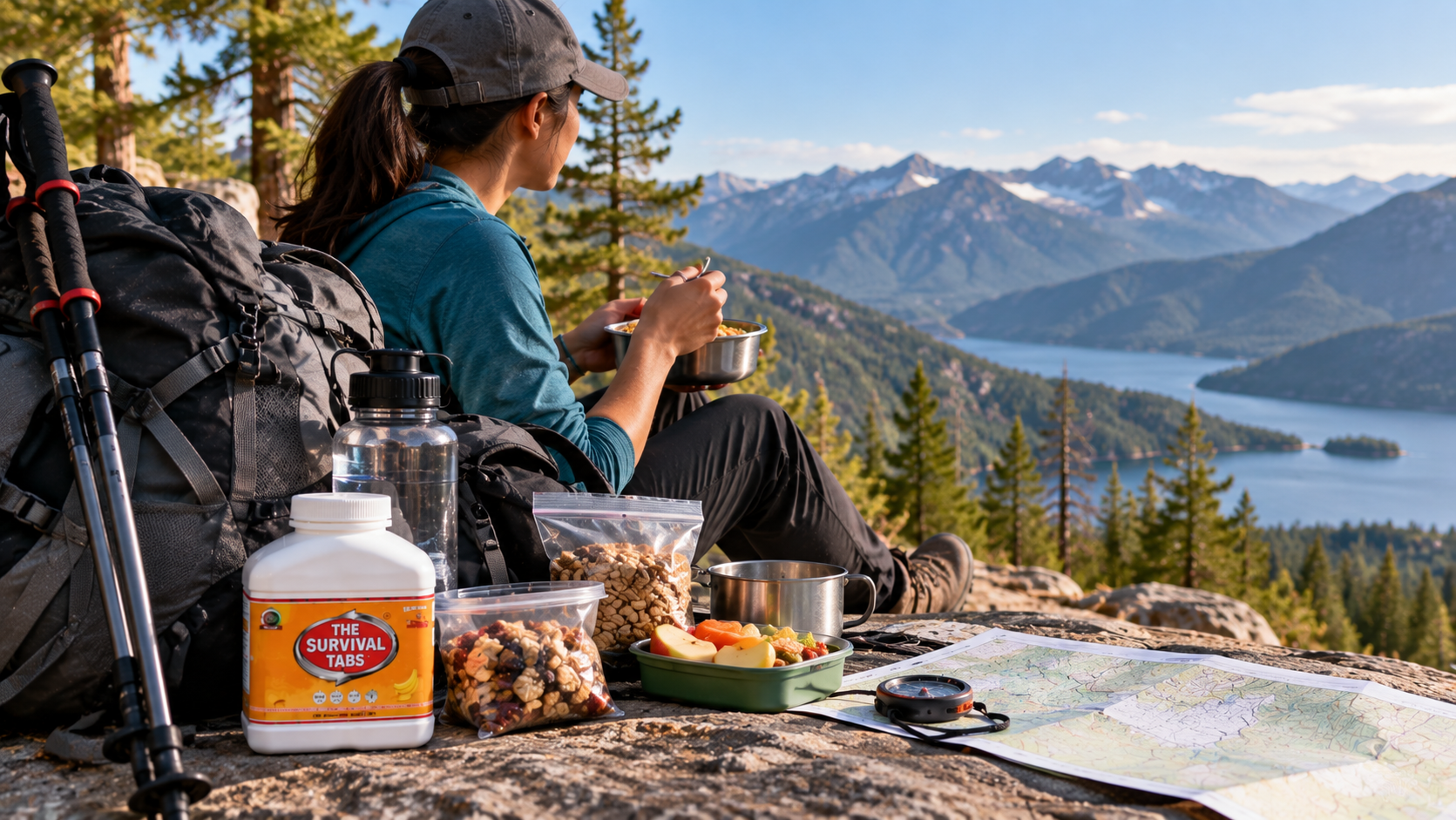
Survival Tabs may add compact backup nutrition, but a current 240-calorie serving is not a normal full day of hiking energy and cannot replace water or adequate trail food.