

Flood Preparedness Guide
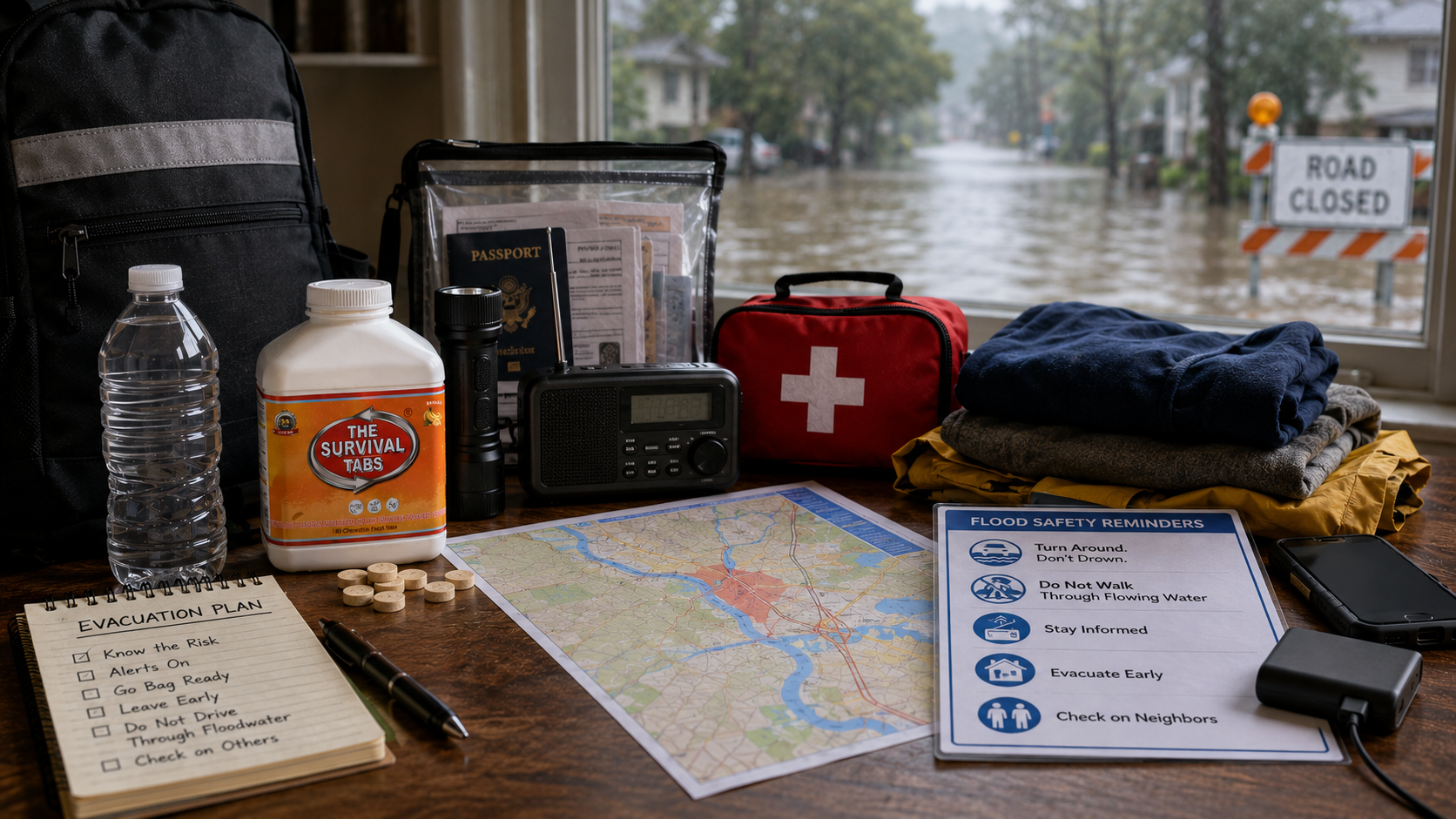
A calm, practical plan for preparing before a flood, acting safely during rising water, and recovering after the water recedes.
Flooding can develop slowly after days of rain or arrive within minutes as a flash flood. The safest plan does not depend on predicting every detail. It gives your household clear triggers, safe destinations, reliable alerts, portable supplies, and rules that prevent the most common life-threatening decisions.
This guide applies to river, coastal, urban, and flash flooding. It replaces location-specific fear-based articles and construction advice with general preparedness guidance from public-safety authorities. Always follow local emergency managers, evacuation orders, and utility instructions.
Quick answer
If flooding is possible, know whether your home, workplace, school, and normal travel routes are exposed; enable official alerts; prepare to leave early; keep documents, medications, water, food, and essential equipment portable; and never walk, swim, or drive through floodwater.
The most important flood rule
Turn around. Do not enter a flooded road or path. Water can hide washed-out pavement, debris, contamination, downed power lines, and stronger currents than they appear to have. A vehicle is not a protective shelter in moving floodwater.
1. Understand your flood risk
Flood risk is specific to place and route. A household on higher ground may still be isolated by low bridges, drainage channels, underpasses, or roads that flood before the home does.
Check the following before flood season:
- Your local flood-risk maps and emergency-management information.
- The elevation and access routes for your home, workplace, school, and regular destinations.
- Whether roads cross streams, dry washes, levees, coastal zones, or low-lying areas.
- Where local shelters or higher-ground assembly areas may be opened.
- Whether anyone in the household needs accessible transportation, electricity-dependent medical equipment, refrigerated medication, or help evacuating.
- Insurance coverage, because standard property policies may not include flood damage.
Flood watch and flood warning
A flood watch means flooding is possible and conditions are favorable. Use it as a trigger to review routes, charge devices, move supplies, and prepare to leave.
A flood warning means flooding is occurring or expected. Take protective action immediately and follow local instructions. A flash-flood warning requires especially rapid action because conditions can change within minutes.
2. Build a household flood plan
A useful flood plan is short enough to follow under stress. Write down who decides to leave, where everyone will meet, how you will communicate, which route is primary, which route is the backup, and who will help children, older adults, pets, or people with disabilities.
Choose two destinations
Select one nearby destination on reliably higher ground and one destination outside the broader risk area. Do not depend on a single bridge, tunnel, or low road.
Set early departure triggers
Examples of sensible triggers include an official evacuation order, a flash-flood warning for your area, water approaching your only exit route, a household member needing extra travel time, or authorities advising that roads may close.
Household communication plan
Choose an out-of-area contact who can relay updates if local networks are overloaded. Give every household member a paper copy of key phone numbers, meeting points, medical information, and the address of your destination.
Practice once before the season
Drive or walk the primary and backup routes in normal conditions. Confirm that the destination is actually on higher ground. Practice loading essential supplies and assisting anyone who needs help.
3. Alerts, weather, and information
Use more than one way to receive warnings because electricity, cellular service, or internet access may fail.
Recommended information layers include:
- Local emergency alerts and evacuation notices.
- National Weather Service alerts or an equivalent official weather authority.
- A battery-powered or hand-crank weather radio.
- Local radio for road closures, shelters, boil-water advisories, and reentry instructions.
- A charged phone plus a portable power bank and cables.
Do not use social media rumors as the sole basis for a safety decision. Confirm critical instructions with an official source whenever possible.
4. Assemble portable flood supplies
Flood supplies must be protected from water and easy to move. Store critical items in waterproof pouches or sealed containers inside a bag that one person can carry.
Core evacuation supplies
- Water and ready-to-eat, non-perishable food for the expected journey and initial shelter period.
- Prescription medications, copies of prescriptions, medical supplies, and a written medication list.
- Identification, insurance information, emergency contacts, and copies of important records in waterproof protection.
- Phone, chargers, power bank, flashlight, spare batteries, and weather radio.
- First-aid supplies, hygiene items, masks, sturdy footwear, work gloves, and rain protection.
- Cash in small denominations, keys, maps, and a written destination address.
- Supplies for infants, older adults, pets, and people with disabilities.
- A change of dry clothing and warm layers, even in mild weather.
Emergency food planning
Choose foods that can be eaten without cooking, refrigeration, or clean-up water. Include familiar foods, dietary needs, and enough calories for the people carrying the supplies.
Compact emergency nutrition can be one component of a layered food plan, especially when space and portability matter. It should not replace drinking water, medical nutrition, infant formula, or a varied long-term diet. Follow the product label and store products in their original packaging under the manufacturer’s recommended conditions.
5. Prepare your home before water rises
Only take property-protection steps when there is enough time and authorities have not told you to leave. Personal safety takes priority over belongings.
Before a likely flood:
- Move documents, medications, electronics, chemicals, and valuables above expected water levels.
- Bring loose outdoor items inside or secure them so they do not become debris.
- Move vehicles to higher ground before roads begin to flood.
- Clear gutters and drains when conditions are safe; do not enter flowing water to clear a blockage.
- Charge devices and battery packs.
- Fill clean water containers before any possible contamination or service interruption.
- Photograph rooms and important possessions for insurance records.
- Know how utilities are shut off, but only do so when local officials or the utility instruct you and it is safe.
Never operate a generator, grill, charcoal burner, or fuel-powered pump inside a home, garage, basement, carport, porch, or other enclosed or partly enclosed space.
6. Evacuate safely
Leave early when authorities advise evacuation. Waiting until water reaches the road can remove your safest route and place rescuers at risk.
Evacuation sequence
- Check the official alert and destination.
- Notify your household contact that you are leaving.
- Take people, pets, medications, documents, water, food, phones, and essential equipment.
- Use the planned route unless officials direct otherwise.
- Avoid low areas, underpasses, streams, bridges over fast water, and barricaded roads.
- Continue to the designated safe location and check in.
If you are trapped
Move to the highest safe level and call emergency services. Avoid a closed attic where rising water could trap you without an exit. Signal your location clearly. Go onto a roof only when necessary and wait for professional rescue instructions.
7. Vehicle safety during floods
Most flood-driving mistakes begin with uncertainty about depth or road condition. The safe decision is not to test the water.
- Never drive around a barricade.
- Never assume another vehicle’s passage proves your vehicle can cross.
- Do not park on a bridge or near a stream to watch rising water.
- If water begins covering the road, turn around before it becomes difficult to reverse.
- If your vehicle is threatened or becomes trapped, call emergency services and follow their instructions; conditions determine whether staying or exiting is safer.
Keep the fuel tank at least partly filled during flood season and maintain a vehicle kit, but do not let supplies create false confidence about entering floodwater.
8. Water, sanitation, and food safety
Floodwater is not safe drinking water. It may contain sewage, chemicals, sharp objects, animal waste, fuel, and other hazards. Keep children and pets away.
Drinking water
Use sealed bottled water or water authorities have declared safe. Follow boil-water or do-not-use notices exactly. Boiling can kill many germs but does not remove fuels, toxic chemicals, or heavy metals.
If a private well has been flooded, do not assume it is safe. Follow local public-health guidance for inspection, disinfection, and testing before drinking from it.
Food
Discard food that contacted floodwater unless a public-health authority specifically identifies a safe salvage method. Discard food in damaged, leaking, swollen, or severely rusted containers.
When flooding also causes a power outage, use official time-and-temperature guidance for refrigerated and frozen foods. When in doubt about food safety, throw it out; never taste food to decide whether it is safe.
Hygiene
Wash hands with soap and safe water before eating or preparing food, after contact with floodwater, and after cleanup. Clean flood-exposed wounds promptly and seek medical advice for deep, dirty, infected, or puncture wounds.
9. Returning home
Return only after authorities say the area is open. Flood-damaged buildings can contain structural damage, electrical hazards, gas leaks, mold, sewage, displaced animals, and contaminated dust.
Before entering:
- Look for shifting foundations, collapsed walls, sagging ceilings, damaged stairs, and leaning trees or poles.
- Do not enter if the building appears unstable or if you smell gas.
- Assume wet electrical equipment is energized until the utility or a qualified professional says otherwise.
- Use daylight when possible and wear boots, gloves, eye protection, and other task-appropriate protective equipment.
- Keep children, pets, and medically vulnerable people away from the work area.
Do not restart flooded heating, ventilation, cooling, or electrical systems until qualified professionals inspect them.
10. Cleanup and mold prevention
Cleanup is part of the emergency, not merely a home-improvement task. Work with another person, pace the work, drink safe water, and stop if conditions become unsafe.
Safe cleanup priorities
- Document damage before removing items when it is safe to do so.
- Confirm electrical and structural safety.
- Remove standing water using safe equipment and carbon-monoxide precautions.
- Discard heavily contaminated porous materials that cannot be cleaned safely.
- Clean and dry the building as quickly as practical to limit mold growth.
- Follow public-health guidance for disinfecting surfaces and handling sewage contamination.
- Seek professional help for major structural damage, extensive mold, hazardous materials, or contaminated HVAC systems.
Never mix bleach with ammonia or other cleaners. Follow product labels, ventilate work areas, and use the protective equipment recommended for the task.
11. Recovery records and insurance
Keep a written and photographic record of damage, cleanup expenses, temporary housing, damaged food, and conversations with insurers or assistance agencies.
Save receipts and avoid permanent repairs until the property has been documented and the insurer has provided instructions, unless immediate work is necessary to prevent further danger or damage.
Be cautious of unsolicited contractors and disaster scams. Verify licenses, insurance, references, written estimates, payment terms, and local requirements.
12. Household-specific planning
Children
Teach children never to play near storm drains, ditches, streams, or floodwater. Give them a simple meeting plan and an identification card with contact information.
Older adults and people with disabilities
Plan transportation early, register for local assistance programs where available, keep backup power and charging plans for essential devices, and prepare written instructions for caregivers or responders.
Medical needs
Discuss emergency medication quantities, refrigeration needs, dialysis, oxygen, mobility, and evacuation planning with the appropriate clinician, pharmacy, equipment supplier, and local emergency service before a flood.
Pets and service animals
Identify shelters or lodging that accept animals. Pack carriers, leashes, food, water, medications, vaccination records, identification, and waste supplies.
13. Monthly and seasonal maintenance
Monthly
- Test alerts and radios; recharge power banks; check flashlights; review medications; and confirm contact information.
Before flood season
- Review risk maps and routes; practice the evacuation plan; inspect waterproof storage; update household needs; photograph property; and verify insurance contacts.
After any warning or evacuation
- Replace used supplies, dry and clean equipment, document lessons, and revise routes or triggers that did not work.
Flood preparedness checklist
- I know my local flood hazards and official alert sources.
- I have a primary and backup route to higher ground.
- My household has early departure triggers and two meeting destinations.
- Everyone has emergency contacts on paper.
- Medications, documents, water, food, phones, chargers, and special-needs supplies are portable.
- Important items are stored in waterproof protection.
- I will never walk, swim, or drive through floodwater.
- I know not to use fuel-burning equipment in or near enclosed spaces.
- I will wait for official reentry permission and professional utility guidance.
- I have a plan for safe water, food, sanitation, cleanup, and recovery records.
Frequently asked questions
Should I shelter upstairs or evacuate?
Follow local instructions. If a safe route is open and authorities advise evacuation, leave early. If sudden flooding makes travel unsafe, move to the highest safe level and call emergency services.
Can I drive through shallow floodwater?
No depth should be assumed safe. Water can hide damage and currents, and conditions can change quickly. Turn around and use a route authorities identify as open.
Can I drink boiled floodwater?
Do not use floodwater as a drinking-water source. Boiling does not remove chemical contamination. Use water authorities have declared safe and follow all local advisories.
Can sealed food be saved after a flood?
Flood-exposed food decisions depend on the container and official food-safety guidance. Many packages are not waterproof. Discard questionable or damaged food and follow public-health instructions rather than improvising.
When is it safe to return home?
Return only when authorities permit reentry. Even then, inspect from outside and avoid structures with apparent instability, gas odors, standing water near electrical systems, or other immediate hazards.
Does this guide cover flash floods?
Yes, but flash floods require faster action. Treat a flash-flood warning as an urgent signal, move away from low ground and flowing water, and follow immediate local instructions.
Limitations
This guide provides general preparedness education. It does not replace local evacuation orders, emergency responders, engineers, electricians, medical professionals, public-health officials, insurers, or legal and regulatory advice.
Flood behavior, safe routes, water systems, construction, utilities, and assistance programs differ by location. Always use current local information.
Sources
CDC — Safety Guidelines: Floodwater