

Firewood Storage and Safety Guide
Knowledge Center ID: ST-KC-095
Quick answer: Firewood Storage and Safety Guide helps households prepare with practical, low-risk steps that prioritize official guidance, essential supplies, and safe decision-making.
<!-- IMAGE:IMG-ST-KC-095-01 -->
Why Firewood Storage Matters
Firewood is useful only when it is dry, safely stored, and appropriate for the appliance you use. Wet wood burns inefficiently and produces more smoke. Poorly placed piles can also attract pests, hold moisture against buildings, block access, or create unnecessary fire exposure.
Treat firewood storage as part of home safety rather than simply stacking wood wherever space is available.
Season Wood Before Burning
Freshly cut wood contains substantial moisture and needs time to dry. EPA guidance recommends seasoning wood for at least six months, with longer drying often needed for hardwoods. Wood generally burns best when moisture content is below about 20 percent; a moisture meter is a simple way to check.
Split wood before storage so more surface area is exposed. Stack it to allow air circulation instead of packing pieces tightly together.
<!-- IMAGE:IMG-ST-KC-095-02 -->
Keep the Top Covered and the Sides Open
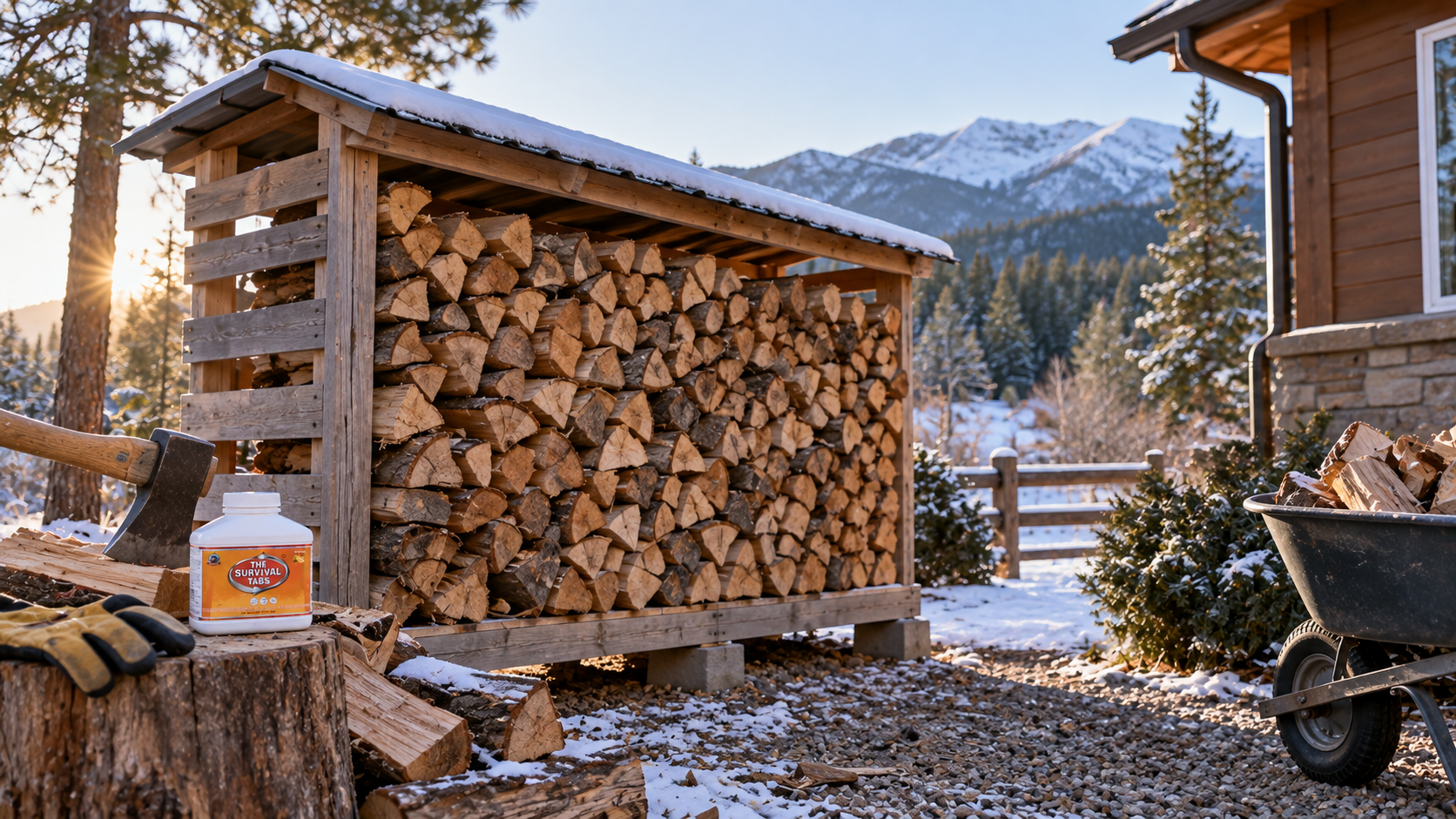
Protect the top of the pile from rain and snow while allowing the sides to breathe. Fully wrapping a pile can trap moisture and slow drying. Store wood off the soil on a rack, pallet, or other stable base so the bottom row does not sit in standing water or damp ground.
Choose a stable location where the stack cannot fall into a walkway, play area, or vehicle path.
Do Not Stack Firewood Against the House
Firewood and wood debris should not be piled directly against a building. Keeping the pile separated from the structure helps reduce moisture and pest problems and makes inspection easier. Local fire codes, wildfire rules, and insurance requirements may specify additional clearances, especially in fire-prone areas.
Do not block vents, utility equipment, escape routes, electrical panels, fuel tanks, or access for emergency responders.
<!-- IMAGE:IMG-ST-KC-095-03 -->
Bring In Only What You Need
Indoor firewood storage should be limited. Bringing large amounts of wood inside can introduce insects and debris and may increase combustible material near a heating appliance. Bring in a modest quantity for near-term use and keep it a safe distance from fireplaces, stoves, heaters, and other ignition sources.
Follow the appliance manufacturer’s required clearances.
Burn Only Appropriate, Dry Wood
Never burn garbage, plastics, pressure-treated lumber, painted wood, or other materials that can release harmful pollutants. Use dry, seasoned firewood suitable for the appliance.
Have chimneys and wood-burning appliances inspected and maintained as recommended. Smoke and carbon monoxide alarms should be installed and maintained according to local guidance and manufacturer instructions.
Firewood Storage Checklist
- Split wood before long-term storage.
- Elevate the stack off damp ground.
- Cover the top while leaving the sides ventilated.
- Keep the pile away from the building and follow local fire rules.
- Do not obstruct exits or utilities.
- Check for pests and moisture.
- Use a moisture meter when practical.
- Bring only a small working supply indoors.
- Burn only dry, untreated wood.
- Maintain smoke and carbon monoxide alarms.
Frequently Asked Questions
Should firewood be completely covered?
Usually no. Covering the top protects against precipitation, while open sides allow ventilation.
How dry should firewood be?
EPA guidance says wood burns best at moisture content below about 20 percent.
Can I store firewood in a basement or garage?
Large indoor piles are generally undesirable because of pests, moisture, and combustible loading. Follow local fire codes and appliance guidance.
Can I burn construction scraps?
Avoid painted, treated, glued, or otherwise processed wood. Burn only appropriate dry firewood.
Related Knowledge Center Topics
Complete Guide to Emergency Preparedness; 72-Hour Emergency Kit Guide; Emergency Radio and Communication Guide; Power Outage Preparedness Guide; Apartment Emergency Preparedness Guide.
SEO and Publishing Package
SEO title: Firewood Storage and Safety Guide
Meta description: Learn how to season, stack, cover, separate, and safely use firewood while reducing moisture, pest, smoke, and household fire risks.
Suggested URL: /blogs/knowledge-center/firewood-storage-and-safety-guide
Suggested schema: Article with FAQPage markup where supported and validated.
Manual Image Plan
IMG-ST-KC-095-01
Placement: Featured
Prompt: Realistic organized outdoor firewood stack on a raised rack with a simple top cover and ventilated sides, located safely away from the house, winter preparedness editorial photography, no text.
Alt text: Dry firewood stacked off the ground with a covered top and ventilated sides.
IMG-ST-KC-095-02
Placement: After “Season Wood Before Burning”
Prompt: Close editorial photo of a moisture meter checking split firewood, clean natural light, no brand logos, no text.
Alt text: Moisture meter being used to check seasoned firewood.
IMG-ST-KC-095-03
Placement: After “Do Not Stack Firewood Against the House”
Prompt: Wide residential scene showing a safe separation between a firewood rack and the exterior wall of a home, clear walkway and vents, calm educational composition, no text.
Alt text: Firewood stored separately from a home with access areas kept clear.
Official Sources
EPA — Best Wood-Burning Practices: https://www.epa.gov/burnwise/best-wood-burning-practices
EPA — Burn Wise Health and Safety Tips: https://www.epa.gov/burnwise/burn-wise-facts-figures-health-and-safety-tips
EPA — Termite Prevention: https://www.epa.gov/safepestcontrol/termites-how-identify-and-control-them
Editorial note: This guide is educational and does not replace instructions from emergency officials, building authorities, public-health agencies, utilities, qualified professionals, or product manufacturers.