

Firewood Storage and Safety Guide
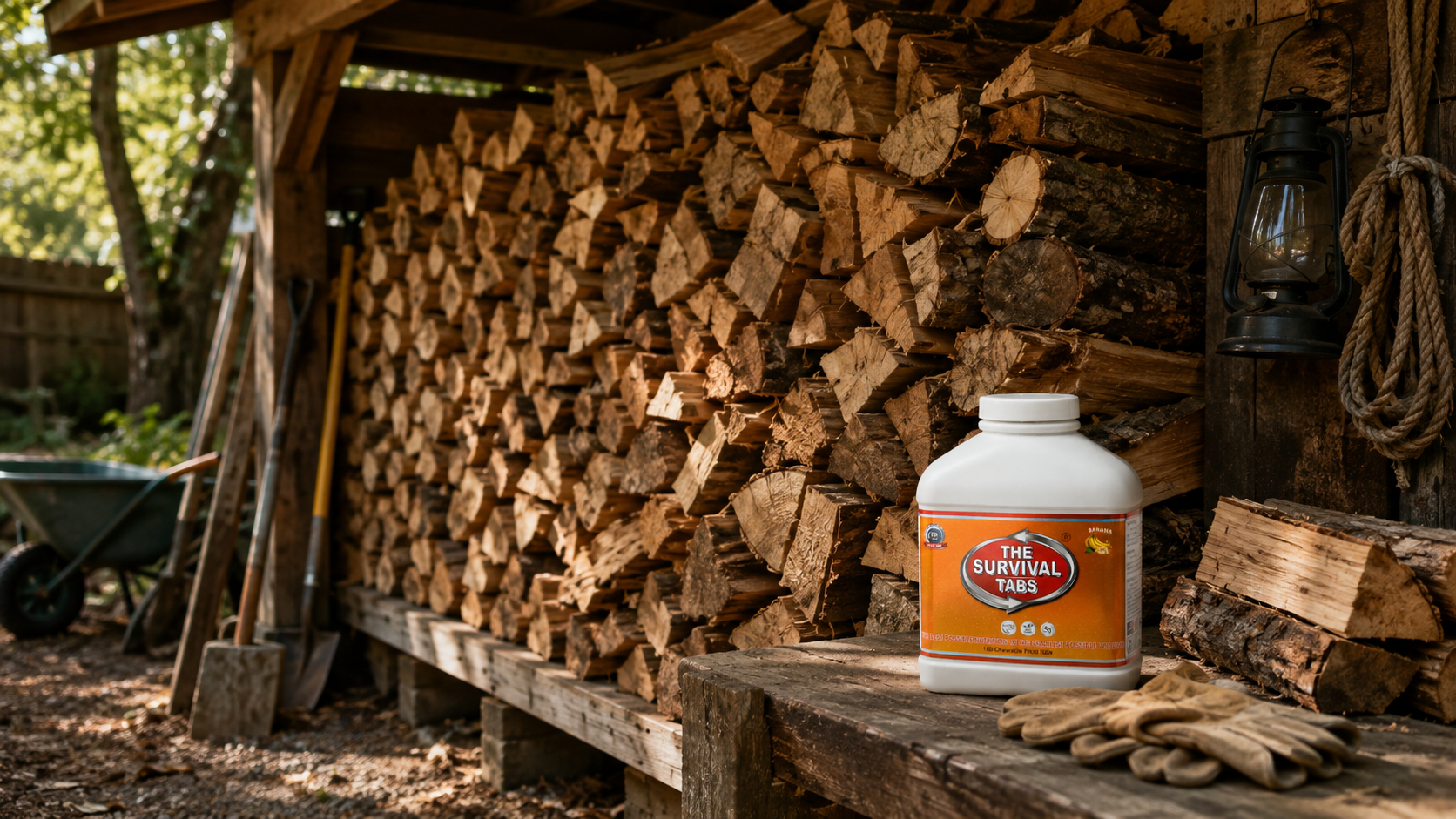
How to keep firewood dry, usable, pest-aware, and separated from avoidable fire hazards
Firewood can be a useful heating or cooking fuel when local rules and properly installed equipment allow it. But a woodpile is also combustible material, a possible pest pathway, and a source of moisture, mold, splinters, and unstable-stack injuries.
This guide focuses on storage and handling. It does not replace appliance instructions, chimney inspection, wildfire-defensible-space requirements, building codes, fire bans, or advice from your local fire department.
Quick answer
For most households, the safest general approach is to keep firewood outdoors, raised off the ground, open at the sides for airflow, protected mainly across the top, and well separated from buildings, decks, vehicles, fuel containers, heat sources, and vegetation.
* Use locally sourced or certified heat-treated wood when transport restrictions apply.
* Split and stack wood so air can move through and around it.
* Cover the top, not every side, unless a local expert recommends another arrangement for your climate.
* Keep stacks stable, modest in height, and away from play areas and normal walkways.
* Bring indoors only a small amount for near-term use.
* Inspect the pile through the year for leaning, decay, moisture, pests, vegetation, and ignition hazards.
1. Start with the hazards, not the rack
A storage plan should solve several different problems at once. Drying wood is important, but dryness alone does not make a location safe.
Fire exposure
A large woodpile can become fuel for a structure fire or wildfire. Separation distances vary with local fire codes, property layout, slope, vegetation, building materials, and wildfire exposure.
Do not copy a single distance from the internet as a universal rule. Ask the local fire department or fire-mitigation authority what applies at your address. Wildfire guidance can call for substantially more separation than ordinary residential storage practice.
* Keep the pile away from doors, windows, vents, eaves, decks, fences, sheds, vehicles, generators, propane, gasoline, and electrical equipment.
* Do not stack against the home, under an attached deck, inside an exit route, or next to an appliance.
* Keep leaves, dry grass, cardboard, kindling, and other fine fuels from collecting around the pile.
* Respect burn bans, evacuation orders, and temporary wildfire instructions.
Moisture and decay
Ground contact and trapped humidity slow drying and can promote rot. Fully wrapping a pile may keep rain off while also trapping moisture.
* Raise the lowest row on a sound, noncombustible or weather-resistant support.
* Keep the sides open enough for airflow.
* Direct roof runoff and irrigation away from the pile.
* Avoid low spots where water pools.
* Separate visibly wet or decayed pieces so they do not destabilize the stack.
Pests
Firewood can shelter insects, spiders, rodents, and invasive forest pests. Moving untreated firewood can transport pests into new areas.
* Buy or gather wood near where it will be burned, subject to local rules.
* Follow federal, state, tribal, park, and local quarantine requirements.
* Do not spray household firewood with pesticides unless the product label explicitly allows that use and a qualified professional recommends it.
* Do not store a season’s supply inside the living space.
* If you see signs of a regulated pest, contact the appropriate state plant-health or extension office.
Stack collapse and handling
A tall, narrow, or poorly supported pile can shift as pieces dry and shrink. Children should not climb on woodpiles.
* Build on firm, level ground.
* Use sound end supports or cross-stacking where appropriate.
* Keep heavy or irregular pieces low.
* Do not exceed the rack manufacturer’s load or height limits.
* Wear gloves and stable footwear when handling rough, wet, icy, or splintered wood.
2. Choose the storage location
Walk the property before buying or building a rack. Mark possible sites and reject any that create a conflict with fire separation, drainage, access, or emergency movement.
Location checklist
* Local rules allow firewood storage at the location.
* The site is separated from the home and other structures as local fire guidance requires.
* The site does not block a door, gate, driveway, hydrant, utility access, or evacuation path.
* The ground is reasonably level and drains after rain.
* The pile will not sit under roof runoff, sprinklers, or a snow-slide path.
* Sun and prevailing wind can help drying without exposing the cover to constant damage.
* The pile is not beside dry brush, tall grass, propane, fuel, or hot equipment.
* You can reach it safely in rain, snow, or darkness.
* It is far enough from the living space to reduce pest entry.
Wildfire-prone properties
In wildfire country, a normal-looking backyard arrangement may be unsafe. Firewood, wooden fencing, mulch, shrubs, and decks can form a continuous path for flame or embers.
Use location-specific defensible-space guidance. If the fire department recommends relocating a pile seasonally or during high fire danger, make that part of the household plan.
3. Select a safe storage system
A rack or shed should support the load, resist tipping, promote airflow, and shed rain without creating an enclosed damp box.
Simple rack
* Use a rated commercial rack or a sound design appropriate for the expected weight.
* Place it on a stable base.
* Confirm that end supports cannot spread outward.
* Inspect fasteners, welds, blocks, and feet before loading.
Open-sided woodshed
* Use a roof to protect the top of the stack.
* Keep sides open or ventilated.
* Provide a raised, load-bearing floor or supports.
* Follow permit, setback, structural, and wildfire rules.
Do not improvise a roof or rack that could collapse under snow, wind, or the weight of a full cord. If the structure is substantial, consult the local permitting office or a qualified builder.
Pallets, masonry, and improvised supports
Improvised supports can work only if they are sound and stable. Damaged pallets may contain nails, broken boards, chemical contamination, or unknown treatment markings.
* Reject cracked, rotten, oily, chemically stained, or unknown pallets.
* Do not stack loose masonry in a way that can topple.
* Keep wood from bridging unstable gaps.
* Recheck the base after heavy rain, freeze-thaw cycles, or soil movement.
4. Stack firewood for drying and stability
Split wood exposes more surface area and usually dries more effectively than unsplit rounds. Drying time depends on species, piece size, climate, starting moisture, airflow, and storage method.
A practical stacking sequence
1. Prepare firm, level ground and the raised base.
2. Sort out rotten, contaminated, excessively irregular, or pest-regulated pieces.
3. Place large, stable pieces in the lowest course.
4. Stack split faces and irregular shapes so the pile remains interlocked but not airtight.
5. Keep rows straight and stop if the stack begins to lean.
6. Use stable end supports or careful cross-stacking.
7. Leave airflow around the pile and between separate rows.
8. Cover the top while leaving the sides open.
9. Label sections by delivery or cutting season so older dry wood is used first.
10. Reinspect after the first weeks as wood shrinks and settles.
How high should the pile be?
There is no universal safe height. Use the rack’s rating, local conditions, the stability of the pieces, and the users’ reach. A lower, wider, well-supported stack is generally easier to handle than a tall narrow one.
Never stand on a pile to load the top. Reduce the height if anyone must reach overhead, if the ground is soft, or if children or animals can access the stack.
5. Cover without trapping moisture
EPA guidance recommends outdoor storage, off the ground, with the top covered. Covering every side can trap moisture and slow seasoning.
* Use a sound roof, metal cap, or secured top cover.
* Slope the cover so water drains away from the pile and walking path.
* Secure lightweight covers against wind without creating loose cords or trip hazards.
* Keep cover material away from chimneys, appliances, sparks, and hot ash.
* Repair tears and sagging areas that collect water.
In very wet, coastal, snowy, or humid climates, local extension or fire officials may recommend climate-specific details. Preserve airflow even when more weather protection is needed.
6. Know when wood is ready to burn
Appearance, sound, weight, and cracked ends can offer clues, but they do not reliably prove moisture content. EPA says wood burns best below 20 percent moisture and recommends testing with a wood moisture meter.
Moisture-meter check
1. Bring a representative piece to the temperature recommended by the meter manufacturer.
2. Split the piece to expose a fresh inner face.
3. Measure on the fresh face according to the meter instructions.
4. Test several pieces from different parts of the stack.
5. If readings remain high, continue drying rather than trying to compensate with a hotter or larger fire.
The meter reading is about combustion quality, not permission to burn. You must still follow appliance instructions, air-quality rules, burn bans, and local law.
7. Bring only a small amount indoors
Indoor storage increases exposure to pests and places combustible material closer to ignition sources. Keep only a modest near-term supply indoors, in a location approved by local fire guidance.
* Inspect each piece before bringing it inside.
* Keep wood at least as far from fireplaces, wood stoves, and other heat sources as official guidance requires; USFA’s general rule is at least 3 feet from heat sources.
* Do not pile wood where it blocks a screen, stove door, extinguisher, alarm, or exit.
* Use a stable container or rack that contains bark and debris.
* Remove insects by taking the piece back outside rather than applying unapproved chemicals indoors.
8. Handle ash separately from firewood
Ashes can retain heat and ignite combustibles long after a fire appears out. Never mix ash with the firewood pile.
* Allow ashes to cool.
* Place them in a tightly covered metal container.
* Keep the container outdoors and away from the home and other buildings.
* USFA recommends at least 10 feet of separation for the ash container.
* Never empty ashes directly into a combustible trash container.
* Follow local disposal rules.
9. Seasonal inspection and maintenance
Monthly during the heating season
* Check for leaning, bulging, settling, or broken supports.
* Remove leaves, grass, cardboard, and litter around the pile.
* Check top cover, fasteners, and drainage.
* Look for water staining, mold, decay, rodents, or insect activity.
* Confirm paths remain clear and nonslip.
After severe weather
* Check after high wind, heavy rain, flooding, snow load, wildfire alerts, or freeze-thaw movement.
* Do not approach a visibly unstable pile.
* Relocate fallen pieces only when conditions are safe.
* Replace damaged supports before restacking.
Before wildfire season
* Review current defensible-space guidance for the property.
* Increase separation or relocate the pile if directed.
* Remove vegetation and fine fuels around the storage area.
* Make sure the pile is not connected to the home by fencing, brush, mulch, or stored items.
End of season
* Use older dry wood first.
* Do not move leftover untreated wood to a different region.
* Repair the rack or shed while the load is low.
* Update the household fuel plan for the next cold season.
10. What not to do
* Do not stack firewood against the house for convenience.
* Do not store a large supply in a basement, attached garage, or living area without explicit local approval.
* Do not place the pile beside propane, gasoline, generators, grills, or hot ash.
* Do not seal wet wood inside plastic on all sides.
* Do not burn painted, pressure-treated, glued, chemically contaminated, or trash wood.
* Do not move untreated firewood across quarantine boundaries.
* Do not climb on the stack or let children play on it.
* Do not rely on a single moisture reading.
* Do not ignore a leaning rack, soft base, or spreading end support.
* Do not assume that dry wood is safe to burn during a ban or poor-air advisory.
11. Emergency and outage planning
If firewood is part of an emergency heating plan, verify that the appliance is installed, inspected, ventilated, and operated according to manufacturer instructions and local code. Stored fuel does not make an improvised indoor fire safe.
* Maintain smoke alarms and carbon-monoxide alarms.
* Keep exits clear.
* Have the chimney and heating system inspected as recommended by qualified professionals.
* Keep a backup plan for households that cannot safely use wood heat.
* Never use an outdoor grill, fire pit, or unvented combustion device to heat an enclosed space.
* Follow evacuation orders rather than staying to protect a woodpile.
12. Firewood storage checklist
* Local storage and wildfire rules checked.
* Local or certified heat-treated wood selected where required.
* Site separated from structures and ignition sources.
* Firm, level, well-drained base.
* Wood raised off the ground.
* Sides open for airflow.
* Top protected from rain and snow.
* Stack stable and within rack limits.
* No exits, access points, or utilities blocked.
* Vegetation and debris cleared.
* Older wood labeled for first use.
* Moisture checked on several freshly split faces.
* Small indoor supply kept away from heat.
* Ash stored separately in a covered metal container.
* Monthly and post-storm inspections scheduled.
Frequently asked questions
Should firewood be completely covered?
Usually no. EPA recommends covering the top while leaving the sides open so moisture can escape. Climate-specific designs may add protection while preserving ventilation.
Can firewood be stored against a house?
It is a poor general choice because it places combustible material and pests directly beside the structure. Wildfire guidance may require considerable separation. Follow local fire requirements.
Is a tarp enough?
A secured top tarp can help, but it should not wrap the entire pile or create pooled water, loose cords, wind hazards, or contact with ignition sources.
How long does firewood need to season?
EPA advises seasoning for at least six months, but actual time varies. Verify representative pieces with a moisture meter rather than relying only on elapsed time.
Can firewood stay in an attached garage?
Large indoor supplies can add fuel and pest risk. Ask the local fire authority and insurer what is permitted. Keep any allowed amount away from ignition sources and exits.
What moisture level is recommended?
EPA says wood burns best below 20 percent moisture. Test several freshly split inner faces with a meter used according to its instructions.
Should I burn wood that has insects in it?
Do not transport it elsewhere. Confirm local pest rules and, if a regulated pest may be present, contact the appropriate plant-health authority. Avoid chemical treatments that are not explicitly approved for firewood.
Can I burn pallet wood?
Avoid pallets with paint, stains, oil, unknown treatment, composite components, or embedded hardware. Local rules and appliance instructions still apply. When origin is uncertain, do not burn it.
Scope and review notes
This guide provides general preparedness and storage information. It does not provide structural engineering, appliance installation, chimney repair, pest-control treatment, wildfire-site assessment, or legal advice.
Local fire-code and wildfire requirements can be stricter than the general examples here. Have the final publication reviewed by a qualified fire-safety or wildfire-mitigation professional, especially before publishing fixed separation distances or construction details.
Official and authoritative sources
EPA Burn Wise — Best Wood-Burning Practices
U.S. Fire Administration — Heating Fire Safety
U.S. Fire Administration — Discard Ashes Safely
USDA APHIS — How to Stop Invasive Pests
National Park Service — Community Wildfire Preparedness
University of Minnesota Extension — Carpenter Ants
Survival Tabs is compact emergency nutrition, not a substitute for a balanced diet, safe drinking water, emergency planning, or professional fire-safety guidance.