

Financial Preparedness for Disasters
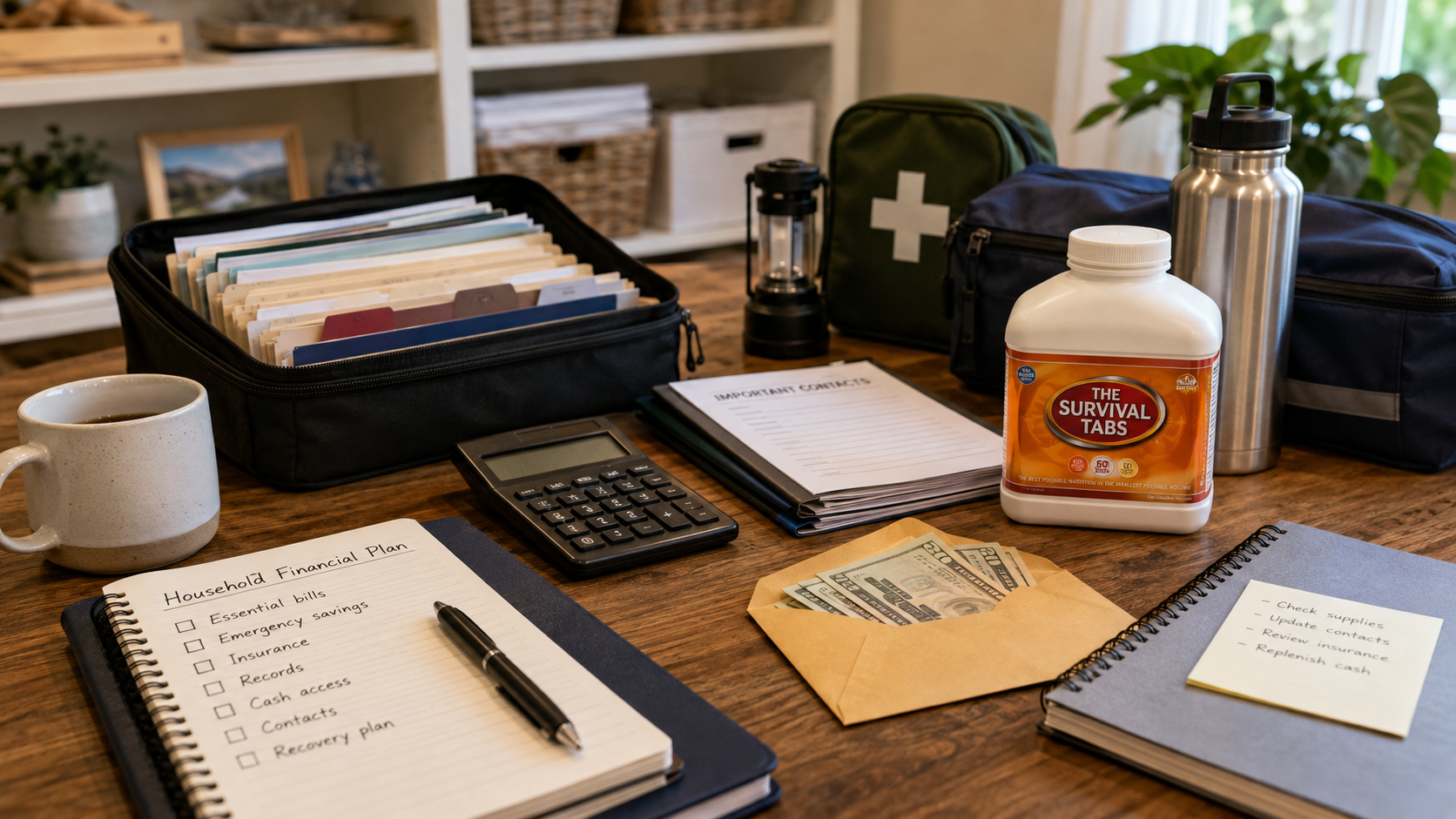
A practical household guide to protecting access to money, records, insurance, essential services, and recovery support.
Purpose and limits
This guide provides general preparedness education. It is not individualized financial, legal, tax, insurance, investment, or benefits advice. Use official sources and qualified professionals for binding decisions.
Immediate checklist
- List essential bills and income.
- Build a realistic emergency reserve.
- Protect critical records.
- Review insurance coverage and exclusions.
- Prepare for brief payment outages.
- Record official contacts.
- Strengthen account security.
- Practice the recovery sequence.
Household financial snapshot
Create a concise record of resources, obligations, and authorized decision makers.
- List regular income and essential expenses.
- Record account providers and contact channels without passwords.
- Identify debts, automatic payments, subscriptions, and renewals.
- Note benefits, insurance, child support, pensions, and other income.
Essential-payment priorities
Protect life, health, shelter, utilities, communication, transportation, and legal deadlines before discretionary spending.
- Separate essentials from expenses that can be paused.
- Identify payments tied to eviction, foreclosure, repossession, coverage lapse, or loss of service.
- Write an order of payment for short and longer interruptions.
- Do not assume a disaster automatically suspends bills.
Emergency savings
A useful reserve is accessible, secure, and realistic; no single target fits every household.
- Choose a first milestone that fits current income.
- Avoid transfers that cause missed essentials.
- Use occasional windfalls when practical.
- Rebuild the reserve after use.
Cash and payment outages
Power, networks, ATMs, and card processing can fail temporarily.
- Keep a modest household-appropriate amount of cash when safe.
- Use small denominations for essential purchases.
- Store cash discreetly in a fire- and water-resistant location.
- Never publish or casually share its location.
Critical records
Records can support evacuation, claims, identity verification, benefits, and account recovery.
- Protect identification, insurance, housing, vehicle, tax, employment, medical, and legal records.
- Use encrypted digital copies and protected physical copies.
- Keep one secure copy away from the primary residence.
- Document how an authorized person can gain access.
Insurance review
Coverage, exclusions, deductibles, limits, and waiting periods vary.
- Read declarations and exclusions.
- Ask what hazards require separate coverage.
- Inventory property with photos, receipts, serial numbers, and descriptions.
- Store claim numbers and policy information outside the home.
Housing and evacuation costs
Renters, owners, and people in shared housing face different barriers.
- Estimate transport, lodging, meals, pet care, medication, and accessibility costs.
- Plan for deposits, mobility equipment, and pet restrictions.
- Record landlord, property manager, lender, and insurer contacts.
- Keep receipts for potentially reimbursable expenses.
Income interruption
Disasters can close workplaces, disrupt transport, or reduce work hours.
- Know employer emergency pay, leave, remote-work, and communication policies.
- Keep recent pay records and employer contacts.
- List public-benefit and unemployment channels that may apply.
- Preserve business continuity records if self-employed.
Debt and lender communication
Relief may be available, but it is account-specific.
- Contact lenders early when difficulty is likely.
- Ask for fees, interest, credit-reporting effects, and end dates in writing.
- Avoid promises you cannot keep.
- Do not pay unsolicited callers demanding immediate disaster fees.
Children, older adults, and disability needs
Cover people who depend on services, equipment, caregivers, or benefits.
- Budget for accessible transport and lodging.
- Record benefit and caseworker contacts when relevant.
- Plan for medicine and equipment continuity.
- Share only the private data caregivers genuinely need.
Digital security
Online recovery can increase exposure to account takeover.
- Use unique passwords and multifactor authentication.
- Protect recovery codes separately from devices.
- Keep account contact information current.
- Use official apps, typed addresses, and trusted networks.
Disaster scams
Fraud may target claims, repairs, donations, housing, benefits, and identity records.
- Verify contractors, charities, agencies, and payment instructions independently.
- Reject urgent demands for gift cards, cryptocurrency, wires, or cash.
- Read contracts and cancellation terms.
- Report suspected fraud promptly.
Damage documentation
Evidence matters, but never more than physical safety.
- Enter only after officials or qualified professionals say it is safe.
- Photograph damage from safe locations.
- Inventory damaged or discarded items.
- Save estimates, contracts, receipts, correspondence, and claim numbers.
Recovery sequence
Use a written order to reduce missed deadlines and impulsive decisions.
- Confirm safety and temporary housing first.
- Notify relevant institutions and agencies.
- Track claims, contacts, promises, and deadlines.
- Keep copies of everything submitted.
Assistance programs
Aid programs have different rules and documentation requirements.
- Use official application channels.
- Provide accurate information and correct errors promptly.
- Ask how one payment may affect another claim.
- Never treat assistance as guaranteed or immediate.
Practice and maintenance
Household members should know where records are and which actions they may take.
- Run a one-day and one-week payment disruption exercise.
- Test secure record access.
- Confirm backup contacts and authorizations.
- Update the plan after exercises and real events.
Frequently asked questions
How much emergency cash should I keep?
There is no universal amount. Base it on likely short-term essentials, household size, local risk, and secure storage.
Should I stop paying bills after a disaster declaration?
No automatic rule covers every account. Contact each provider and obtain any relief terms in writing.
Are digital records enough?
They help, but access can fail. Use a protected combination of digital and physical copies.
Does renters or homeowners insurance cover every disaster?
No. Coverage and exclusions vary, and some hazards require separate policies.
Should I use retirement savings for recovery?
That may create taxes, penalties, and long-term harm. Seek qualified advice before irreversible withdrawals when time permits.
How can I help another adult safely?
Agree on limited roles, use formal authorization when required, protect privacy, and document transactions.
What if my records are destroyed?
Use official replacement channels through issuing agencies, institutions, insurers, employers, landlords, and government offices.
Where do Survival Tabs fit?
They may be one compact component of a broader food plan. They are not money, financial protection, a sole diet, or a substitute for water, medicine, shelter, or insurance.
Professional review required before publication
- Emergency-management review
- Consumer-finance review
- Insurance review
- Legal and privacy review
- Tax and benefits review
- Accessibility and safeguarding review
- Product-compliance review
Authoritative sources
Ready.gov financial preparedness
Ready.gov Emergency Financial First Aid Kit
Consumer Financial Protection Bureau disaster preparation
Consumer Financial Protection Bureau disaster recovery
CFPB disaster checklist
Ready.gov low- and no-cost preparedness