

Family Emergency Preparedness Guide
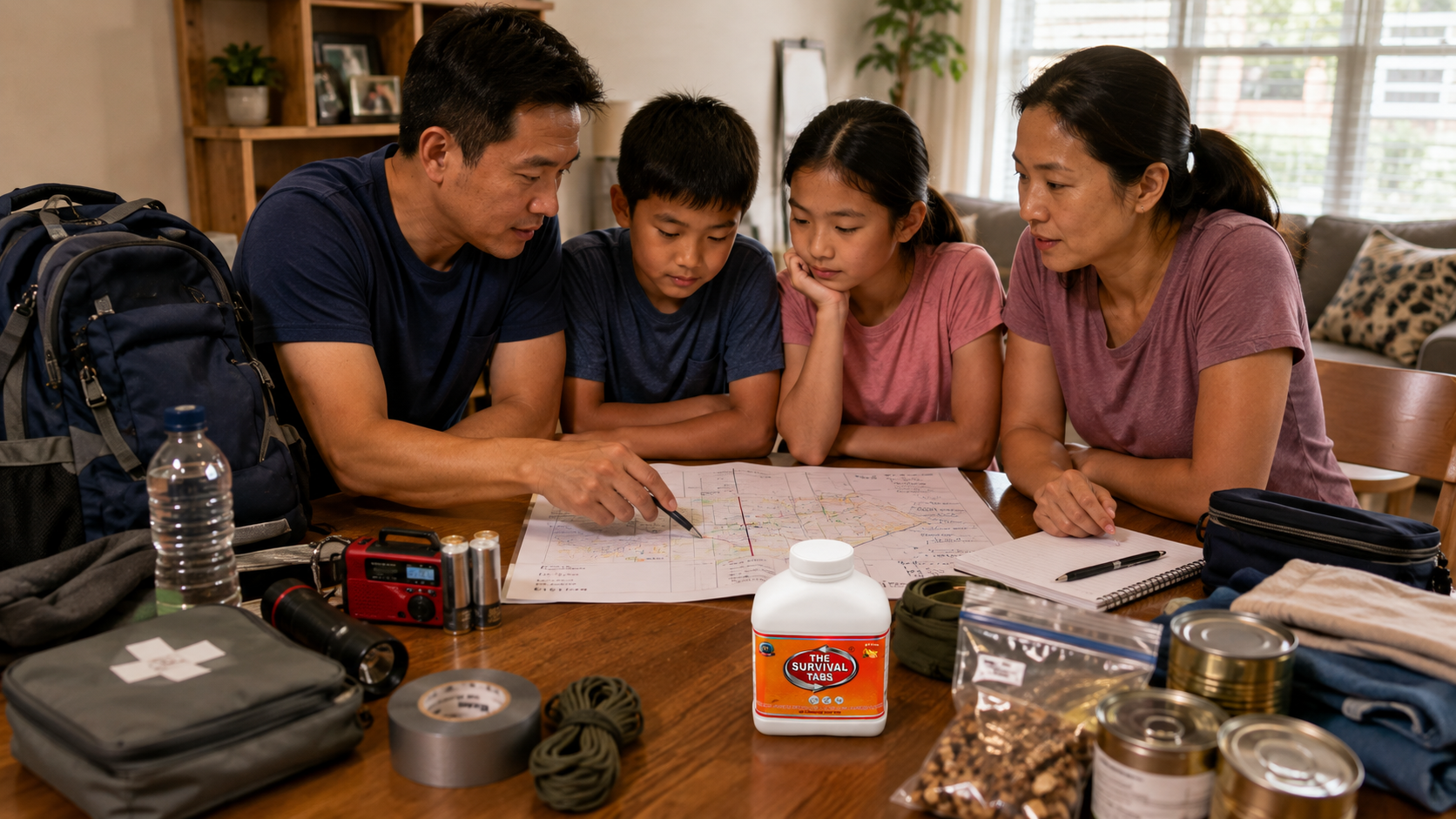
A calm, practical household plan for communication, supplies, evacuation, sheltering, and recovery
Emergencies are easier to manage when every household member knows what to do, how to communicate, and where to reunite. A family plan should be simple enough to use under stress and flexible enough for different hazards.
This guide is for families, chosen families, roommates, caregivers, and multigenerational households. Adapt every step to the people, pets, health needs, transportation, language, and local risks in your home.
Start with three actions: know your risks, make a written plan, and build supplies that match your household. Review the plan regularly and practice it before an emergency.
1. Know the Risks Around Your Home
Use your local emergency management office, weather service, utility, school, workplace, and public-safety agencies to identify the events most likely to affect you.
- List the hazards that can happen with little warning, such as fire, earthquake, tornado, flash flood, or hazardous-material release.
- List the hazards that usually provide some warning, such as hurricanes, winter storms, extreme heat, or river flooding.
- Mark evacuation routes, community shelters, higher ground, and safe indoor locations.
- Learn how your community issues alerts and what each warning means.
- Plan for power, water, phone, internet, transportation, and pharmacy disruptions.
The safest action depends on the event. Your plan should clearly separate evacuation, shelter-in-place, and stay-home procedures.
2. Build the Household Communication Plan
Assume household members may be at work, school, childcare, medical appointments, or away from home when an emergency begins.
Choose contacts
- Select one local emergency contact who knows the household plan.
- Select one out-of-area contact. Long-distance messages may sometimes work when local networks are overloaded.
- Give every household member the same contact list in printed and digital form.
- Teach children how and when to call emergency services if they are old enough.
Choose meeting places
- An indoor safe place for hazards requiring shelter.
- A location immediately outside the home for a fire or rapid evacuation.
- A neighborhood meeting place if the block is inaccessible.
- An out-of-neighborhood location if the area is evacuated.
Write the exact address and access instructions for each location. Do not rely on everyone remembering a nickname or landmark.
Create a wallet-size contact card
- Names and phone numbers for parents, guardians, caregivers, and emergency contacts.
- Home, school, childcare, workplace, and meeting-place addresses.
- Important medical conditions, allergies, communication needs, and essential equipment.
- A reminder to text when possible and conserve battery.
Protect private information. Carry only what is necessary and store fuller records securely.
3. Assign Roles Without Making the Plan Fragile
Give people age- and ability-appropriate responsibilities, but make sure every critical task has a backup.
- Who receives alerts and announces the household action.
- Who gathers the go-bags, medications, documents, and communication equipment.
- Who helps children, older adults, or anyone needing assistance.
- Who handles pet carriers, leashes, food, and records.
- Who shuts off utilities only when authorities or a known hazard require it.
- Who contacts the out-of-area person and records everyone’s status.
Never assign a child a role that requires entering danger, using hazardous equipment, or caring for another person without adult support.
4. Plan for Children and Separation
Children may be at school or childcare when an emergency happens. Learn each facility’s notification, evacuation, sheltering, medication, and reunification procedures.
- Ask where children will be moved if the normal site is unsafe.
- Confirm who is authorized to pick up each child and what identification is required.
- Keep school and caregiver contact information current.
- Place a contact card in the child’s bag and the caregiver’s wallet.
- Provide approved extra medication, food, diapers, formula, batteries, or medical supplies when the facility permits it.
Explain emergencies in calm, age-appropriate language. Practice simple actions such as getting low in smoke, moving to the safe room, or following a trusted adult.
Add familiar comfort items, quiet activities, and hearing protection when appropriate. Predictable routines can help children manage stress.
5. Include Health, Medication, and Accessibility Needs
A household plan must reflect real daily needs, not an idealized checklist. Involve healthcare professionals when medication, refrigeration, oxygen, mobility, feeding, or other specialized care is involved.
- Maintain an up-to-date medication list, dosage information, prescribers, pharmacies, allergies, and insurance details.
- Ask clinicians and pharmacists how to build an emergency supply legally and safely.
- Plan for medicines or equipment that need refrigeration or electricity.
- Keep backup chargers or power options appropriate for essential devices.
- Document communication preferences, transfer assistance, service-animal needs, and accessible transportation.
- Build a support network of trusted people who understand the plan and can assist.
Do not change doses, ration medicine, or use another person’s prescription. During a disruption, seek guidance from a pharmacist, clinician, emergency responder, or shelter medical staff.
6. Prepare Pets and Service Animals
Plan for animals from the beginning. Evacuation destinations, transportation, and shelters may have different rules.
- Identify pet-friendly lodging, shelters, boarding facilities, veterinarians, and a backup caregiver.
- Use secure carriers, leashes, harnesses, and current identification.
- Keep vaccination, medication, ownership, and veterinary records with the kit.
- Pack food, water, bowls, waste supplies, bedding, and familiar items.
- Use a buddy system in case you cannot reach home.
- Practice loading animals into carriers and vehicles before an emergency.
Service animals are not pets, but they still need food, water, medication, identification, and an evacuation plan.
7. Build Household Emergency Supplies
Start with several days of essentials and increase the amount as space, budget, climate, medical needs, local guidance, and likely service disruptions require.
Water and food
- Store water for drinking, food preparation, and hygiene according to current local and federal guidance.
- Choose familiar shelf-stable foods that household members can safely eat.
- Account for infants, pregnancy, allergies, medical diets, cultural preferences, and pets.
- Include a manual can opener and low-preparation options.
- Check labels, storage conditions, package integrity, and rotation dates.
Compact emergency nutrition products can supplement a broader food plan when their label directions and dietary information fit the user. They do not replace water, medical care, or a varied long-term diet.
Core equipment
- Flashlights or headlamps and compatible spare batteries.
- Battery-powered or hand-crank radio and local alert access.
- First-aid supplies appropriate to the household’s training and needs.
- Phone charging cables, power banks, and safe backup power.
- Weather-appropriate clothing, sturdy shoes, blankets, and rain protection.
- Hygiene, sanitation, masks, gloves, and waste-management supplies.
- Cash in small denominations and copies of essential documents.
- Basic tools only when household members know how to use them safely.
Store supplies in more than one useful location: a home kit, portable go-bags, and smaller vehicle, work, or school kits where appropriate.
8. Protect Important Information
- Identification, insurance, medical, prescription, property, and pet records.
- Emergency contacts, household plan, maps, and meeting-place details.
- Account and policy numbers needed for recovery, without carrying unnecessary sensitive information.
- Photos or records of important property for insurance purposes.
Use a waterproof portable container for copies and a secure encrypted backup when possible. Keep originals protected and limit access.
9. Make Evacuation Plans
Leave immediately when authorities order evacuation. Delaying can put the household and responders at risk.
- Identify at least two routes from home and alternative ways out of the neighborhood.
- Plan transportation if no household vehicle is available.
- Keep the vehicle maintained and avoid letting fuel or charge fall too low during elevated risk.
- Know which supplies can be collected quickly and which should already be packed.
- Plan accessible transport, mobility-device space, car seats, and animal carriers.
- Tell the out-of-area contact where you are going and when you arrive.
Never drive through floodwater or around barricades. Follow official routes and instructions.
10. Plan to Shelter Safely
Choose the safest available location for the specific hazard. A tornado safe area, smoke sheltering location, and earthquake response are not interchangeable.
- Identify the best interior safe area and how everyone will reach it.
- Bring communication equipment, medications, water, lighting, and essential supplies.
- Follow official instructions about ventilation, utilities, and protective actions.
- Keep generators and fuel-burning devices outdoors and far from openings; never use them inside a home or garage.
- Monitor alerts and be ready to evacuate if conditions change.
11. Practice the Plan
A short drill reveals problems that a written checklist cannot.
- Send a test alert to the household.
- Move to the correct safe place or meeting location.
- Practice contacting the out-of-area person.
- Collect go-bags, medication, assistive items, and animal equipment.
- Review what was slow, missing, confusing, or inaccessible.
- Update the written plan and repeat the difficult part.
Practice at least twice a year and whenever the household, school, work, medical, pet, address, or transportation situation changes.
12. During an Emergency
- Protect life first and follow official alerts.
- Use the planned communication method; keep messages short.
- Do not return to a dangerous area to collect property.
- Keep children with trusted adults and follow formal reunification procedures.
- Document major decisions, expenses, damage, and assistance received when it is safe.
- Check on neighbors only when doing so does not create additional danger.
13. After the Immediate Danger
- Wait for official clearance before returning home.
- Avoid downed lines, floodwater, unstable structures, gas odors, and damaged utilities.
- Seek qualified help for medical, electrical, structural, gas, water, and sanitation hazards.
- Photograph damage before cleanup when safe and contact insurers or assistance programs.
- Restock used supplies, replace damaged items, and record lessons from the event.
- Watch for stress reactions in adults and children and seek support when needed.
A One-Page Family Plan
- Local hazards and alert methods.
- Evacuate, shelter, and fire procedures.
- Four meeting places: indoor, outside, neighborhood, and out-of-area.
- Local and out-of-area contacts.
- School, childcare, workplace, and caregiver procedures.
- Health, medication, disability, pregnancy, infant, and older-adult needs.
- Pet and service-animal plan.
- Roles and backups.
- Supply locations and go-bag owners.
- Review date and next drill.
Common Mistakes to Avoid
- Making one adult responsible for every critical action.
- Depending only on phones, cloud files, or internet access.
- Forgetting school reunification, prescriptions, mobility, pets, or transportation.
- Using fear-based scenarios instead of practicing clear actions.
- Assuming every shelter accepts pets or every route will remain open.
- Buying supplies without a plan to inspect, rotate, and use them.
- Giving children unsafe responsibilities or making unsupported product promises to them.
Frequently Asked Questions
How much emergency food and water should a family store?
Begin with current local and federal recommendations for several days, then adjust for household size, heat, medical needs, infants, pregnancy, pets, storage space, and the disruptions likely in your area.
Should each person have a go-bag?
Portable supplies are useful, but the load must fit the person. Adults should carry shared heavy items, while children’s bags should stay light and contain only age-appropriate essentials and comfort items.
What if family members are separated?
Use the written contact plan, out-of-area contact, meeting places, and school or workplace reunification procedures. Do not improvise a pickup location that conflicts with official instructions.
How should we plan on a limited budget?
Start with the written plan, contact cards, alerts, and supplies already at home. Add the highest-priority items gradually, check second locations, and rotate food and water into normal household use before waste occurs.
How often should the plan be reviewed?
Review it at least twice a year and after any change in address, school, caregiver, medical needs, medications, pets, vehicle, workplace, phone numbers, or local risk.
Important Limits
This guide provides general preparedness education. It does not replace instructions from emergency officials, individualized medical advice, professional safety training, or local laws and shelter policies.
Product labels and official manufacturer information control how any emergency food product should be stored and used. Always verify current facts before publishing product-specific claims.
Official Sources
Ready.gov — Prepare Your Pets for Disasters
Ready.gov — People with Disabilities
CDC — Before, During, and After an Emergency
CDC — Keeping Children Safe Away from Home
CDC — Emergency Medical Kit for Children with Special Healthcare Needs
Editorial and Compliance Notes
- Education first; calm, inclusive language.
- No gender stereotypes, culture-specific crisis marketing, self-defense tactics, or fear-based prepper framing.
- No unsupported claims that children prefer a product or that any food prevents stress, improves cognition, or guarantees safety.
- Survival Tabs are presented only as one optional component of a broader emergency food plan.
- All medical, medication, accessibility, pet, evacuation, and child-safety guidance should be checked against current official instructions before publication.
Legacy consolidation: 17 production-queue records mapped to ST-KC-021. The safe, useful material has been consolidated; promotional, discriminatory, unsupported, and out-of-scope content has been excluded.