Environmentally friendly sanitation solutions
Composting toilets offer numerous benefits for off-grid living, making them an ideal choice for those seeking sustainable and environmentally friendly sanitation solutions. Here are some of the key advantages:
1. Water Conservation
One of the most significant benefits of composting toilets is their minimal water usage. Traditional flush toilets can use up to 7 gallons of water per flush, which is impractical for off-grid homes that often rely on limited water resources like rainwater collection. Composting toilets generally use no water, making them an excellent choice for conserving water in remote locations[1][2].
2. Simplified Installation and Maintenance
Composting toilets are easier to install than conventional septic systems because they do not require extensive plumbing or excavation. This ease of installation makes them particularly suitable for remote areas where access to professional plumbing services may be limited[1]. Additionally, they require less maintenance compared to traditional sewage systems, as they do not rely on plumbing and running water[5].
3. Efficient Waste Management
Composting toilets convert human waste into compost through a natural decomposition process, reducing the need for frequent waste removal. This process not only minimizes environmental impact but also provides a practical way to handle waste sustainably[1][3]. The resulting compost can be used to enrich soil in non-edible gardens and landscapes, contributing to a healthier environment[1][4].
4. Cost Savings
Although the initial cost of a composting toilet may be higher than a conventional toilet, the long-term savings are significant. They reduce household water usage by up to 60%, saving money on water bills and decreasing overall maintenance costs associated with traditional plumbing systems[2][4].
5. Environmental Benefits
Composting toilets promote eco-friendly waste management by recycling waste into usable compost, which can enhance soil fertility without the need for chemical fertilizers and pesticides. This practice helps reduce organic materials in landfills, minimizing methane production and leachate formation[2][3]. Additionally, they prevent pollutants from contaminating soil and water sources, further supporting environmental conservation efforts[3].
6. Versatility and Adaptability
Composting toilets can be used in various settings, including remote cabins and RVs, where conventional sewage systems are impractical or impossible to install. They provide flexibility in land development and reduce gray-water loading, making them an adaptable solution for diverse off-grid living scenarios[5][6].
By choosing composting toilets for off-grid living, individuals can enjoy a sustainable lifestyle that conserves precious resources and supports environmental health while maintaining modern comforts.
 |
 |
 |
 |
 |
|
|---|---|---|---|---|---|
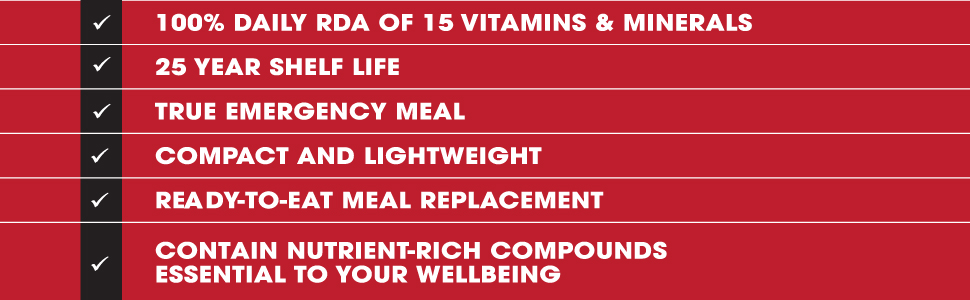
| 720 Tabs Emergency Food Survival Gluten Free and Non-GMO 25 Years Shelf Life | Food Supply 96 Tabs Emergency Food Replacement Disaster Preparedness | Ultimate Preparedness Emergency Food Supply 25 year shelf life | Emergency Food Ration Survival MREs Food Replacement | Emergency Food Survival Food Meal Replacement MREs Gluten Free and Non-GMO | |
| Day Serving | 60 days | 8 days | 120 days | 15 days | 2 days |
| Shelf-Life | 25 years | 25 years | 25 years | 25 years | 25 years |
| Non-GMO | ✓ | ✓ | ✓ | ✓ | ✓ |
| Gluten Free | ✓ | ✓ | ✓ | ✓ | ✓ |
| Tabs Amount | 720 | 96 | 1440 | 180 | 24 |