

Emergency Water Sources and Treatment Guide
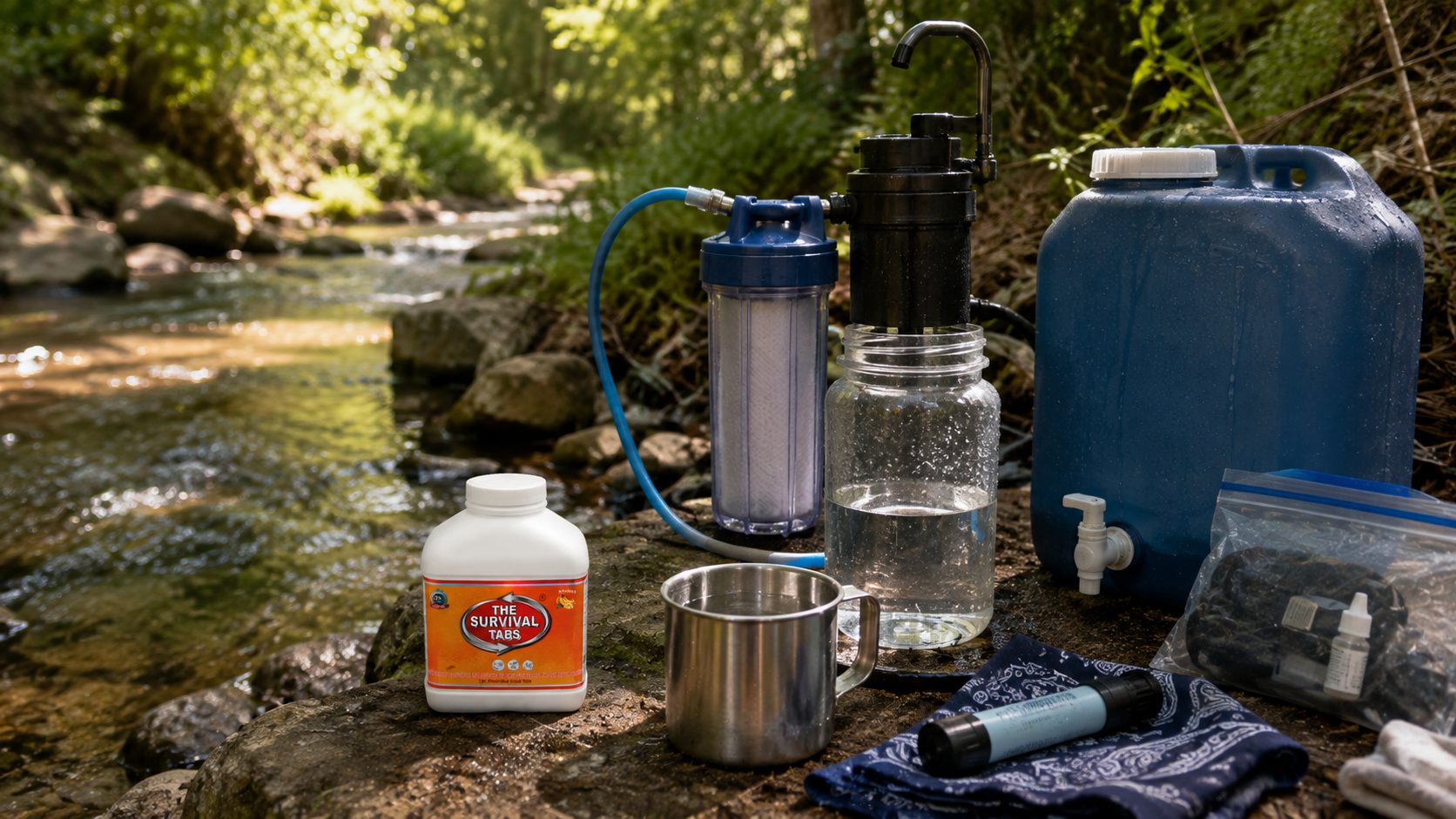
A calm, practical guide to finding, treating, storing, and using water safely when normal service is disrupted.
Legacy source: Survival Tabs content record 119.
Quick answer
Use commercially bottled or properly stored water first. If officials say tap water is unsafe, follow the exact advisory. When no safe supply is available and biological contamination is the concern, boiling is the most reliable household treatment. Water that may contain fuel, toxic chemicals, harmful algal toxins, or radioactive material cannot be made safe by boiling, disinfecting, or ordinary portable filtration.
The safest order of choices
- Commercially bottled water from an intact container.
- Water stored before the emergency in clean, food-grade containers.
- Water supplied by emergency officials or an approved distribution point.
- Tap water used exactly as directed under the current local advisory.
- An alternative source treated with a method suitable for its likely contaminants.
Do not choose water only because it looks clear. Clear water can contain disease-causing organisms or dissolved contaminants that cannot be seen, smelled, or tasted.
Start with the official advisory
Local water utilities and public-health agencies may issue a boil-water, do-not-drink, or do-not-use advisory. These instructions are not interchangeable.
Boil-water advisory
This usually means germs may be present. Use bottled water or water brought to a rolling boil for drinking, cooking, brushing teeth, making ice, washing produce, and preparing infant formula, following local directions.
Do-not-drink advisory
This may involve chemicals or toxins. Use bottled water for drinking and food preparation. Boiling can concentrate some contaminants and does not make chemically contaminated water safe.
Do-not-use advisory
Avoid contact with the water unless officials specifically authorize a use. Use an alternative supply for drinking, cooking, hygiene, and other activities covered by the notice.
How much water to store
Ready.gov recommends storing at least one gallon per person per day for several days for drinking and sanitation. Actual needs can be higher in hot weather, during strenuous activity, during illness, or for people who are pregnant or nursing.
- Include additional water for pets.
- Plan for medications, infant feeding, wound care, and mobility or medical equipment needs.
- Keep some water in small, portable containers for evacuation.
- Do not deliberately dehydrate yourself to make a supply last. Reduce nonessential uses and seek a safe resupply.
Potential emergency water sources
Stored household water
Pre-emergency storage is the safest and simplest option. Keep commercially bottled water in its original sealed container or use durable food-grade containers intended for water.
Home water heater
A conventional tank-type water heater may hold usable water if the public supply was safe when service stopped. Shut off the incoming supply if authorities warn that contamination could enter the system. Follow the manufacturer's instructions before draining, and switch off electricity or gas first when required for safety.
Household plumbing
Water remaining in pipes may be available after the main supply is closed. Open the highest faucet to admit air and draw water from a lower faucet. Do not use this approach when officials warn that the plumbing supply may be contaminated.
Melted ice
Ice made before contamination or service failure can be melted. Treat ice made after an advisory as unsafe unless officials say otherwise.
Rainwater
Rainwater is not automatically safe to drink. Roofs, gutters, storage tanks, air pollution, animal waste, and floodwater can introduce contaminants. Use ST-KC-017 for system design and maintenance, and treat collected water according to the likely hazards.
Streams, rivers, lakes, springs, and ponds
Assume untreated surface water contains germs. Choose the clearest available source away from sewage, livestock, campsites, industrial areas, mining, fuel spills, algal blooms, and flood debris. Treat it before drinking or food preparation.
Private wells
Flooding can contaminate wells. Do not drink from a flooded or damaged well until it has been inspected, disinfected when appropriate, and tested or cleared by the relevant authority. Fuel or chemical odors require a different safe source.
Swimming pools and decorative water
Pool and spa water may contain chemicals and microorganisms and should not be treated as drinking water. It may sometimes be reserved for toilet flushing or cleaning when local instructions allow and skin contact is not restricted.
Water from appliances
Water from a refrigerator tank, ice maker, or other appliance is only as safe as the supply and timing that filled it. Check the advisory and discard water produced after suspected contamination.
Sources to avoid
- Floodwater.
- Water with fuel, solvent, pesticide, sewage, or chemical odor.
- Water near a harmful algal bloom or unexplained fish or animal deaths.
- Water from radiators, boilers, hot-water heating systems, waterbeds, or toilet bowls.
- Seawater unless treated by a purpose-built desalination system.
- Any source prohibited by emergency officials.
Match treatment to the hazard
No single portable method removes every hazard. First ask whether the concern is germs, suspended dirt, salt, chemicals, toxins, or radioactive material.
Biological contamination
Boiling, appropriate disinfection, and correctly selected filtration can reduce different groups of microorganisms. Filters vary: many remove parasites but do not remove viruses or all bacteria. Read the device specifications and follow the manufacturer's instructions.
Chemical, toxin, fuel, or radioactive contamination
Do not rely on boiling, bleach, iodine, chlorine tablets, ordinary pitcher filters, or common backpacking filters. Use bottled water or another source identified as safe by authorities.
Saltwater
Boiling alone does not remove salt; it leaves salt behind. Desalination requires equipment designed to separate water vapor or use a suitable membrane system, with correct operation and maintenance.
Method 1: boiling
For clear water, CDC guidance is to bring water to a full rolling boil for one minute. At elevations above 6,500 feet, boil for three minutes. Let it cool naturally and store it in a clean, covered container.
- If water is cloudy, let sediment settle or prefilter it through a clean cloth, paper towel, or coffee filter.
- Draw off the clearer water without disturbing the sediment.
- Boil using the time appropriate to the elevation.
- Avoid burns; keep hot containers away from children.
- Do not add untreated water after boiling.
Boiling kills germs but does not remove most chemicals, salts, heavy metals, or radioactive materials.
Method 2: chemical disinfection
When boiling is not possible and chemical contamination is not suspected, use a water-disinfection product exactly as labeled. Contact time, water temperature, cloudiness, and organism type affect performance.
CDC provides emergency instructions for using regular, unscented household chlorine bleach containing 5%–9% sodium hypochlorite. Product concentration and label directions matter, so use the current CDC table rather than relying on memory.
- Never use scented, color-safe, splashless, powdered, or bleach products with added cleaners.
- Prefilter cloudy water before dosing.
- Measure the water volume and disinfectant carefully.
- Mix well and wait for the full specified contact time.
- If chlorine dioxide or iodine tablets are used, follow the package directions and limitations.
Some disinfectants do not reliably kill Cryptosporidium. Chlorine dioxide can work when used for the full label contact time. Boiling remains the strongest easily recognized household method for germs.
Method 3: filtration
A filter must be selected by verified performance, not pore-size marketing alone. Check whether it is rated for protozoa, bacteria, viruses, chemicals, and sediment; many products cover only some of these.
- Prefilter turbid water to reduce clogging.
- Keep the clean outlet and clean container away from untreated water.
- Do not exceed cartridge capacity or flow limits.
- Replace or backwash the filter as directed.
- After filtering natural water, CDC generally recommends adding an appropriate disinfectant to address viruses and bacteria that may pass through many filters.
Activated carbon may improve taste and reduce some chemicals, but its capabilities vary and it does not make every contaminated source safe.
Method 4: ultraviolet treatment
UV devices can inactivate microorganisms when the water is clear and the device delivers the specified dose. Cloudiness can shield organisms. UV does not remove sediment, salt, chemicals, toxins, or radioactive material.
- Use fresh batteries or a reliable power source.
- Treat only the volume specified by the manufacturer.
- Keep the lamp or optical surface clean.
- Prefilter cloudy water.
A practical emergency treatment sequence
- Check official alerts and identify the suspected hazard.
- Choose the safest available source.
- Avoid any source with suspected chemical, fuel, toxin, or radioactive contamination.
- Let sediment settle and prefilter cloudy water.
- Boil, or use a suitable alternative when boiling is impossible.
- Transfer treated water into a clean, sanitized, tightly covered container.
- Label the container and prevent hands, cups, or dirty utensils from touching the stored water.
Safe containers and storage
Use food-grade containers that can be tightly closed, are durable, and have not held toxic chemicals. Narrow openings or spigots help reduce hand contact.
- Wash containers with soap and rinse completely.
- Sanitize them using current CDC instructions before filling.
- Store water away from gasoline, pesticides, paint, solvents, direct sun, and excessive heat.
- Keep treated and untreated containers clearly separated.
- Pour water instead of dipping cups or hands into the container.
- Replace or rotate stored water according to the container or manufacturer guidance and inspect for leaks, damage, or contamination.
Using water safely
Use safe water for drinking, cooking, brushing teeth, making ice, washing produce, preparing beverages, and mixing infant formula. During an advisory, follow official instructions for handwashing, dishes, bathing, laundry, pets, and cleaning.
Infants
Ready-to-use liquid formula is the safest option when water safety is uncertain. If powdered formula must be prepared, follow public-health and medical guidance for the emergency.
People with weakened immune systems
Ask a clinician or public-health authority whether additional precautions are needed. Some treatment methods may not reduce all organisms to an acceptable level for highly vulnerable people.
Pets
Pets can become ill from contaminated water. Provide the same safe alternative recommended for people unless a veterinarian or public-health instruction says otherwise.
Common mistakes
- Assuming clear water is safe.
- Boiling chemically contaminated water.
- Using a filter without knowing what it removes.
- Guessing bleach concentration or dose.
- Mixing treated and untreated water.
- Touching the inside of a clean cap or container.
- Ignoring a do-not-use advisory because water has been boiled.
- Drinking seawater or untreated floodwater.
- Rationing water so severely that dehydration becomes the immediate danger.
Emergency water kit
- Stored drinking water.
- Food-grade portable containers.
- A metal pot and safe heat source for boiling.
- A clean cloth or coffee filters for prefiltration.
- A treatment device selected for the expected hazards.
- Labeled water-disinfection product with current instructions.
- Accurate measuring tools reserved for emergency use.
- Protective gloves, labels, and a waterproof marker.
- Printed local utility and public-health contact information.
Frequently asked questions
Can I drink from a clear mountain stream?
Not without treatment. Even clear water can contain Giardia, Cryptosporidium, bacteria, or viruses. Boil it, or filter and disinfect it using a suitable system.
Does a refrigerator filter make advisory water safe?
Not necessarily. During a boil-water advisory, CDC advises boiling tap water even if it has passed through a home filter unless local officials say otherwise.
Can bleach remove chemicals?
No. Emergency chlorine disinfection is intended to kill many germs. It does not remove fuel, pesticides, heavy metals, salts, radioactive materials, or many toxins.
Can I purify floodwater?
Do not treat floodwater as a routine drinking source. It may contain sewage, fuel, chemicals, debris, and other hazards that household methods cannot reliably remove.
Is rainwater safe after boiling?
Boiling can kill germs, but it does not remove chemical contamination collected from air, roofs, gutters, or storage tanks. Source conditions and local guidance still matter.
Should I drink less to conserve water?
Avoid waste, but do not deliberately dehydrate yourself. Prioritize drinking and essential medical uses, reduce nonessential cleaning, and seek an authorized resupply.
When to get help
Seek medical help for severe or persistent diarrhea, repeated vomiting, signs of dehydration, confusion, fainting, inability to keep fluids down, or symptoms in an infant, older adult, pregnant person, or someone with a weakened immune system. Follow local emergency instructions.
Limitations and compliance note
This guide provides general preparedness education. It does not replace local water advisories, product labels, utility instructions, environmental testing, medical advice, or professional well and plumbing services. Water conditions and approved methods vary by incident and location.
Official sources
CDC — How to Make Water Safe in an Emergency
CDC — Drinking Water Advisories: An Overview
CDC — How to Create and Store an Emergency Water Supply