

Emergency Vegetable Gardening Guide
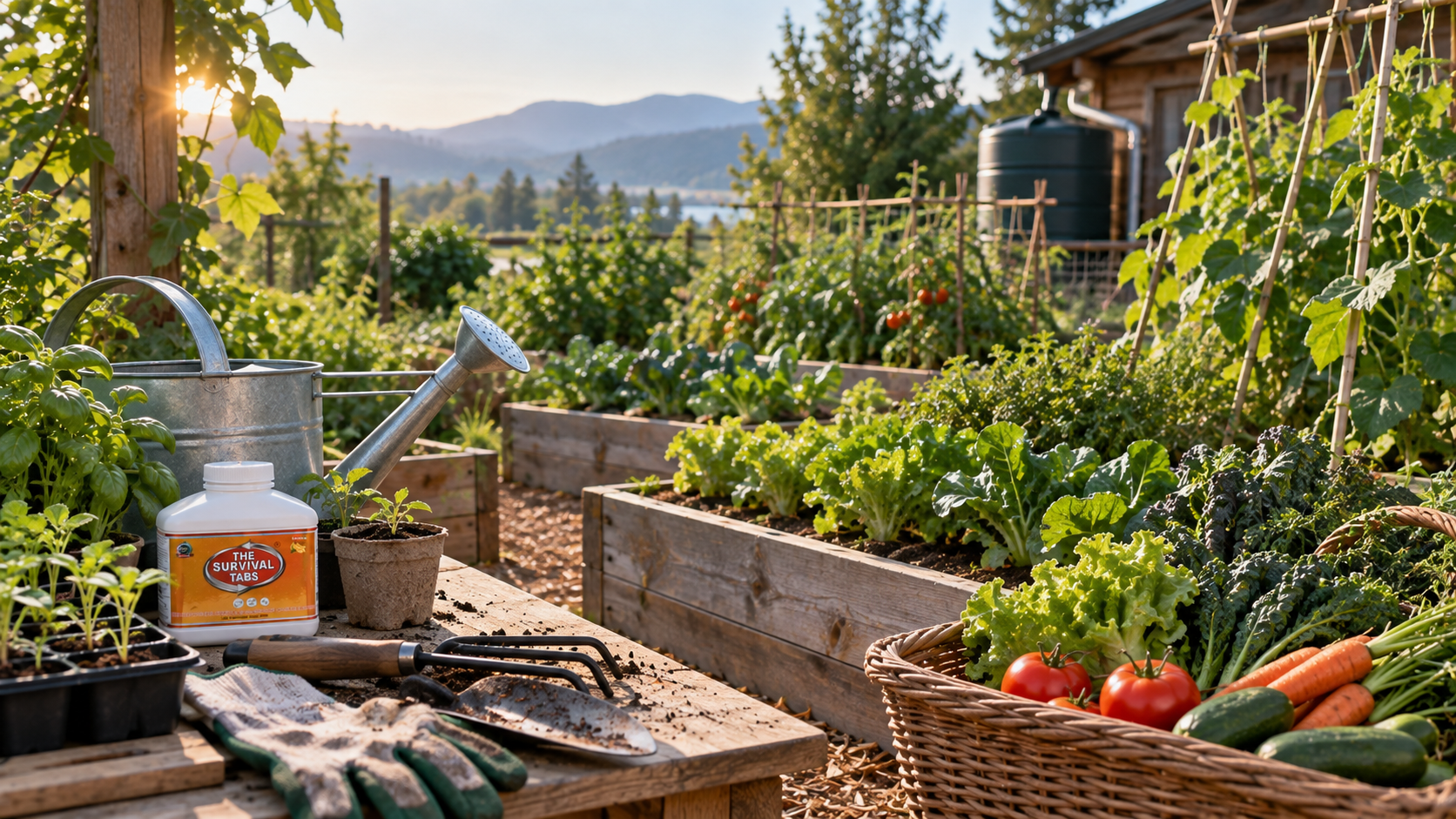
A vegetable garden can strengthen long-term household resilience, but it is not instant emergency food. Productive gardening requires time, suitable climate, soil or growing media, water, sunlight, seeds or transplants, tools, pest management, and repeated practice.
Start Before an Emergency
Learn gardening while normal supplies and advice are available. Begin with a small area or containers and expand as skills improve. Keep records of planting dates, varieties, harvests, pests, weather, and failures.
Understand the Growing Season
Planting dates vary by climate and crop. Learn local frost dates, heat patterns, rainfall, day length, and seasonal hazards. Local agricultural extension services and regional growing guides are more useful than a single national planting calendar.
Choose Practical Crops
Prioritize foods the household actually eats and crops suited to local conditions. Consider a mix of fast-growing vegetables, longer-season crops, nutrient-dense greens, legumes where appropriate, herbs, and storage crops. No single crop provides a complete emergency diet.
Water
Gardens can require substantial water. Plan irrigation before expanding the growing area. Mulch, soil improvement, appropriate plant spacing, and watering at suitable times can reduce waste. Do not use contaminated water on edible crops without authoritative guidance.
Soil and Containers
Good drainage and suitable growing media are essential. Urban and previously developed land can contain contaminants, so soil testing may be appropriate before food production. Containers can make small-space gardening possible but dry out faster and require adequate drainage.
Seeds and Transplants
Store seeds under appropriate conditions and track their age. Germination declines differently among species and storage conditions. Maintaining more than one planting method—stored seed plus access to local seed or transplants—reduces dependence on a single supply.
Pests and Disease
Inspect plants regularly. Use integrated pest-management principles and follow pesticide labels exactly when products are used. Avoid unverified homemade treatments that could damage plants, pollinators, soil, pets, or people.
Harvest and Storage
Learn how each crop should be harvested, handled, refrigerated, dried, frozen, canned, or otherwise stored. Preservation is a separate food-safety skill and should use tested methods.
Small-Space Options
Balconies, patios, windows with sufficient light, raised beds, and containers can contribute fresh food. Expectations should remain realistic: a small garden supplements stored food rather than replacing a complete household emergency supply.
Resilience Through Diversity
Maintain stored emergency food while building gardening skills. A resilient system combines stored food, safe water, local food sources, gardening, preservation skills, and community relationships.
A Simple Progression
1. Grow several familiar crops successfully.
2. Learn the local planting calendar.
3. Improve soil and water management.
4. Save records and seeds where appropriate.
5. Add storage and preservation skills.
6. Increase production only after the smaller system is reliable.
Editorial note: Consolidates legacy IDs 202 and 247 and related gardening material. Claims of immediate self-sufficiency, guaranteed yields, unsafe water use, and unverified pesticide or preservation methods excluded.