

Emergency Stockpile Guide
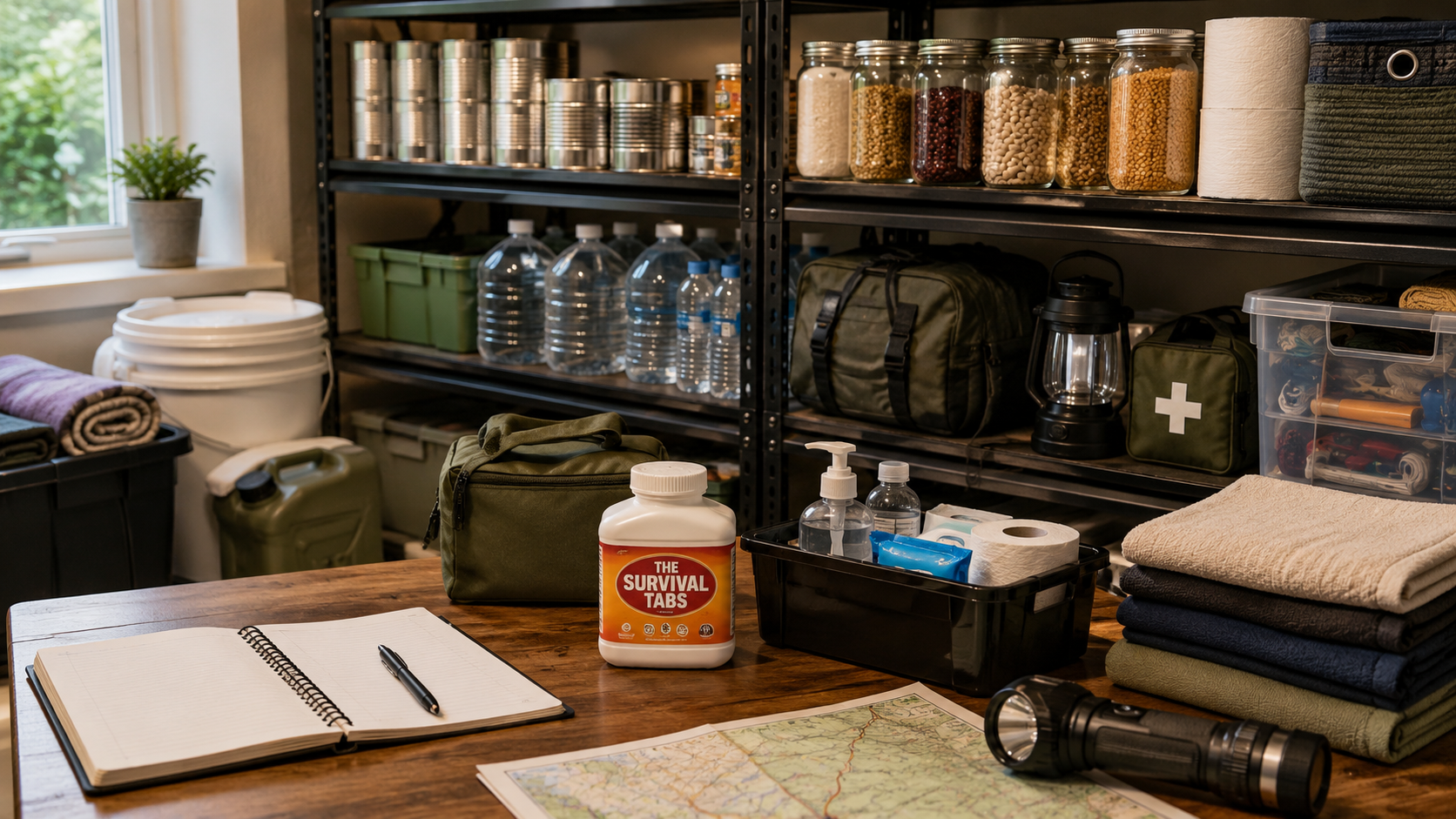
A calm, scalable household system for building, storing, rotating, and using emergency supplies
Knowledge Center ID: ST-KC-054
This guide consolidates legacy article IDs 484 and 485. It is designed for household preparedness, not panic buying, hoarding, speculative scarcity, or tactical stockpiling.
Article
Purpose and scope
An emergency stockpile is a managed reserve of ordinary supplies that helps a household continue essential functions during outages, severe weather, evacuation, supply interruptions, illness, or delayed access to stores and services.
The goal is resilience, not accumulation. A useful stockpile matches the household, local hazards, storage conditions, budget, health needs, and realistic ability to rotate supplies before they expire or deteriorate.
This article complements—but does not replace—the 72-hour emergency kit, emergency water, medication, food-storage, power, sanitation, evacuation, and small-space storage guides.
What this guide covers
- Assessing household needs and local hazards.
- Building supplies in affordable priority tiers.
- Separating stay-at-home reserves from portable evacuation modules.
- Coordinating food, water, medications, hygiene, lighting, communications, documents, cash, accessibility, children, and pets.
- Choosing safe storage locations and containers.
- Maintaining an inventory and rotation schedule.
- Testing equipment and replacing damaged or recalled items.
- Using supplies fairly during an emergency.
- Scaling the system for apartments, renters, students, older adults, caregivers, and larger households.
What this guide does not do
- It does not prescribe one universal quantity for every household.
- It does not recommend buying beyond safe storage capacity.
- It does not endorse panic buying during an active shortage.
- It does not provide instructions for storing gasoline, propane, ammunition, pesticides, or other hazardous materials inside living spaces.
- It does not replace local fire codes, building rules, medication laws, food-safety guidance, or clinician advice.
- It does not treat Survival Tabs as a sole diet or substitute for a varied emergency-food plan.
- It does not guarantee that any stockpile will cover every emergency.
Start with the household, not a shopping list
A generic checklist can miss the items that matter most. Begin with the people, animals, health conditions, equipment, routines, and local disruptions your household must manage.
Create a household profile
- List every person who may rely on the reserve.
- Include regular visitors or nearby relatives you have explicitly agreed to support.
- Record ages, mobility needs, communication needs, dietary requirements, allergies, and chronic conditions.
- List prescription and nonprescription products used routinely.
- Identify equipment that needs electricity, batteries, refrigeration, consumables, or replacement parts.
- Include service animals and pets with species-specific needs.
- Record realistic lifting, carrying, reaching, reading, hearing, and opening limitations.
- Identify who can maintain the inventory and who needs an accessible backup copy.
Identify likely disruptions
- Short power outage.
- Extended utility outage.
- Unsafe tap-water advisory.
- Severe heat or cold.
- Storm, flood, wildfire smoke, earthquake, or tornado.
- Temporary evacuation.
- Road, transit, or delivery disruption.
- Temporary pharmacy or grocery closure.
- Household illness or isolation.
- Loss of phone, internet, or electronic payment access.
Use local emergency-management information to prioritize hazards. Do not build around dramatic but low-probability scenarios while neglecting frequent outages, heat, flooding, medication continuity, or evacuation.
Define essential household functions
- Safe drinking and basic hygiene.
- Adequate food and nutrition.
- Medication and medical-device continuity.
- Lighting and safe movement.
- Temperature protection appropriate to the climate.
- Receiving official alerts and contacting support.
- Sanitation and waste control.
- Care for children, older adults, pets, and service animals.
- Access to identification, insurance, financial, and medical records.
- Safe evacuation when officials direct it or conditions become unsafe.
Build in priority tiers
A tiered system prevents an all-or-nothing purchase. Complete the highest-consequence gaps first, then extend duration and comfort only when storage and rotation remain manageable.
Tier 1 — immediate life and health
- Safe water and appropriate containers.
- Essential prescription medications obtained lawfully.
- Critical medical supplies and device power.
- Ready-to-eat food that household members can safely consume.
- Flashlights or headlamps with compatible batteries.
- Official alert access, radio, phone charging, and contact information.
- Basic sanitation, hygiene, and waste supplies.
- Weather-appropriate clothing, bedding, and protective items.
- Infant, pregnancy, disability, older-adult, service-animal, and pet essentials.
- Working smoke and carbon-monoxide alarms where required.
Tier 2 — continuity and redundancy
- Additional food variety and safe preparation options.
- Expanded water reserve within structural and handling limits.
- Backup charging methods and spare compatible batteries.
- Duplicate essential hygiene and cleaning supplies.
- Printed documents, maps, and contact lists.
- Emergency cash in practical denominations, stored securely.
- Basic tools appropriate to the home and user.
- Replacement eyeglasses, hearing-aid supplies, or other approved backups.
- Portable modules for evacuation, work, school, and vehicle use.
Tier 3 — duration and recovery
- Longer-duration food and water only if they can be stored and rotated safely.
- Seasonal clothing and bedding rotation.
- Repair and cleanup supplies that do not create chemical or electrical hazards.
- Additional comfort, privacy, and stress-management items.
- Backup household records and recovery checklists.
- Supplies for supporting an agreed number of neighbors or relatives without compromising household essentials.
- Budget reserves for replacement, transport, temporary lodging, and recovery.
Water planning
Water is heavy, space-intensive, and essential. Coordinate this stockpile with the Complete Guide to Emergency Water and follow current public-health guidance.
Water rules
- Use commercially bottled water or containers intended for water storage.
- Follow current public-health guidance for minimum quantities and consider additional needs for heat, illness, pregnancy, pets, and hygiene.
- Store water where the floor or shelving can safely support the weight.
- Keep containers away from fuels, pesticides, solvents, and other chemicals.
- Protect containers from direct sunlight, excessive heat, freezing, pests, and physical damage.
- Label fill or purchase dates and inspect for leaks, swelling, cloudiness, damage, or contamination.
- Do not assume a household filter removes chemicals, salt, fuel, or every microorganism.
- Follow official boil-water, do-not-drink, or do-not-use advisories exactly.
- Allocate water deliberately among drinking, food preparation, medication, hygiene, sanitation, and pets.
- Never ration water to a medically dangerous level; seek official assistance early.
Handling and accessibility
- Use smaller containers if large containers cannot be lifted safely.
- Store part of the supply at reachable heights.
- Keep a manual opening or dispensing method.
- Provide cups, straws, pumps, or adaptive equipment needed by household members.
- Prevent children from climbing on stacked water.
- Do not block exits, electrical panels, vents, sprinklers, or access to shutoffs.
Food and nutrition planning
Stock foods the household already eats and can prepare under expected utility conditions. Balance calories, protein, fat, carbohydrates, fiber, micronutrients, hydration needs, and dietary restrictions without promising perfect nutrition.
Food selection checklist
- Nonperishable or shelf-stable under the actual storage conditions.
- Safe for known allergies, intolerances, religious practices, and medical diets.
- Edible without cooking or with minimal safe preparation.
- Requires little water when water may be limited.
- Packaging can be opened by household members.
- Portion sizes reduce leftovers when refrigeration is unavailable.
- Variety supports appetite and practical use.
- Dates and lot information remain visible.
- Items can be rotated into ordinary meals.
- Manual can opener is included when needed.
Food categories
- Ready-to-eat canned or pouched meals.
- Canned fish, poultry, beans, or other protein sources.
- Nut or seed products when allergy-safe.
- Shelf-stable milk or suitable alternatives.
- Whole-grain crackers, cereals, oats, rice, pasta, or other staples matched to available cooking.
- Canned or dried fruit and vegetables.
- Energy-dense spreads, oils, or snacks stored within label conditions.
- Oral rehydration or medically indicated products only when appropriate and used as directed.
- Infant formula and feeding supplies exactly suited to the infant; do not improvise dilution.
- Survival Tabs may serve as one compact supplement within a broader food plan, not as the only food source.
Food safety boundaries
- Follow package storage and preparation instructions.
- Do not rely on smell or taste to prove food is safe.
- Discard leaking, bulging, badly rusted, deeply dented, heat-damaged, flood-exposed, or otherwise suspect containers.
- Do not taste questionable food.
- Track refrigerator and freezer conditions during outages using current food-safety guidance.
- Keep raw, cooked, allergen-containing, and ready-to-eat foods separated as appropriate.
- Do not use improvised canning or preservation methods.
- Keep food away from chemicals, fuels, medicines, and pest contamination.
Medications, medical supplies, and health continuity
Medication reserves must be lawful, prescribed, stored correctly, and coordinated with a clinician or pharmacist. Do not stop, split, substitute, share, or extend medication use without qualified guidance.
Health module
- Current medication list with dose, schedule, purpose, prescriber, pharmacy, and allergy information.
- Lawfully obtained prescription supply consistent with insurer, pharmacy, and legal limits.
- Nonprescription medicines appropriate to the household and used according to labels.
- Medical supplies such as dressings, syringes, test strips, or ostomy supplies when applicable.
- Device instructions, model numbers, supplier contacts, and backup-power plan.
- Cooling plan for temperature-sensitive medicines using approved methods.
- Copies of prescriptions or clinician documentation when useful and lawful.
- Eyeglasses, hearing-aid batteries, communication aids, mobility-device supplies, and chargers.
- Childproof and moisture-resistant storage where appropriate.
- Rotation calendar that prevents expired or damaged stock from being forgotten.
Escalation rules
- Call emergency services for urgent symptoms or device failure that creates immediate danger.
- Contact the clinician, pharmacist, manufacturer, or public-health authority for medication storage excursions.
- Seek official assistance early when a critical supply is running low.
- Never use veterinary medicine for people or human medicine for animals unless specifically directed by the appropriate licensed professional.
- Do not redistribute prescription medication.
Lighting, power, and communications
A stockpile should support safe light and communication without introducing fire, carbon-monoxide, shock, or battery hazards.
Safer equipment priorities
- LED flashlights or headlamps.
- Compatible spare batteries stored according to manufacturer instructions.
- Portable phone power banks tested on a schedule.
- Battery-powered or hand-crank radio capable of receiving local alerts.
- Charging cables labeled by device.
- Paper contact list and household communication plan.
- Whistle or other simple signaling device where appropriate.
- Backup batteries or chargers for assistive and medical devices as approved.
Safety limits
- Prefer flashlights to candles.
- Never operate generators, grills, camp stoves, or fuel-burning devices indoors, in garages, or near doors, windows, and vents.
- Do not backfeed household wiring.
- Do not refuel hot or running equipment.
- Store fuels and hazardous batteries only as permitted by the manufacturer, local code, landlord, insurer, and fire authority.
- Do not mix loose batteries with metal objects.
- Remove damaged, swollen, leaking, recalled, or overheated batteries from service and follow local disposal guidance.
- Keep chargers dry and use manufacturer-compatible equipment.
- Maintain working smoke and carbon-monoxide alarms.
Hygiene, sanitation, and cleaning
Plan for hand hygiene, toilets, menstrual care, diapers, continence, oral care, waste, and cleaning. Separate routine cleaning from disinfection and use products only according to their labels.
Household sanitation module
- Soap and a safe handwashing method.
- Alcohol-based hand sanitizer when appropriate.
- Toilet paper and personal cleansing supplies.
- Menstrual products chosen by users.
- Diapers, wipes, changing supplies, and disposal bags.
- Continence and ostomy supplies where needed.
- Toothbrushes, toothpaste, and denture supplies.
- Gloves for appropriate cleanup tasks.
- Trash bags and leak-resistant containers.
- Unscented household products only when suitable for the intended use and user.
- Cleaning and disinfecting products retained in original labeled containers.
- Pet waste bags, litter, bedding, or species-specific sanitation supplies.
Chemical safety
- Never mix bleach with ammonia, acids, vinegar, alcohol, or other cleaners.
- Do not decant chemicals into drink or food containers.
- Store chemicals away from food, water, medicine, children, and pets.
- Maintain ventilation and use protective equipment specified on the label.
- Follow expiration, disposal, and poison-control guidance.
- Do not use disinfectants on skin, wounds, food, or drinking water unless the product is specifically labeled for that use.
Documents, money, and information
A practical stockpile includes the information needed to obtain help, prove identity, refill medication, file claims, and recover.
Document module
- Government identification copies stored securely.
- Insurance policies and claim contacts.
- Property, lease, vehicle, and utility information.
- Medication, allergy, clinician, pharmacy, and medical-device information.
- Emergency contacts and an out-of-area contact.
- Pet records, photos, microchip numbers, and veterinarian contacts.
- School, caregiver, and workplace plans.
- Household inventory photos or video.
- Evacuation routes, meeting places, and local shelter information.
- Account-recovery information stored securely without exposing passwords.
- Paper copies protected from water and fire as practical.
- Encrypted or otherwise appropriately protected digital backup.
Cash and payment continuity
- Keep only an amount the household can secure and replace responsibly.
- Use practical small denominations.
- Do not advertise the location or amount.
- Keep a record for household accountability.
- Maintain more than one lawful payment method when possible.
- Review fraud risks after disasters and verify requests for money or personal information.
Children, pregnancy, older adults, and caregiving
Children and infants
- Age-appropriate food and safe water.
- Exact infant formula and feeding equipment if used.
- Diapers, wipes, skin-care items, and disposal supplies.
- Medication and dosing tools approved for the child.
- Comfort item, quiet activity, and hearing protection when appropriate.
- Identification and caregiver contact information.
- Car seat or transport equipment appropriate to the child.
- Backup plan for school, daycare, and separated caregivers.
- Keep choking, poisoning, battery, and climbing hazards locked or inaccessible.
Pregnancy and postpartum needs
- Prenatal or prescribed medicines obtained through a clinician.
- Safe water and foods suited to medical guidance.
- Relevant records and maternity-care contacts.
- Transportation and shelter plan.
- Postpartum, infant-feeding, and hygiene supplies where applicable.
- Knowledge of urgent maternal warning signs and where to seek care.
Older adults and caregivers
- Medication and medical-device continuity.
- Mobility, transfer, continence, hearing, vision, and communication supplies.
- Easy-open packaging and reachable storage.
- Printed routine and care instructions.
- Backup caregiver and transportation plan.
- Temperature-control and hydration plan.
- Regular welfare-check arrangements that respect privacy and consent.
Disability and accessibility planning
Accessibility is part of the core system, not an optional add-on. Build around the specific user and involve that person in every decision.
- Store essential items within the person’s reach.
- Use large-print, tactile, pictorial, or translated labels as needed.
- Keep communication boards, hearing-aid supplies, interpreters’ contacts, or speech-device power available.
- Provide backup mobility aids when feasible.
- Plan manual alternatives for powered doors, beds, lifts, or medical devices with qualified guidance.
- Keep service-animal food, water, harness, medication, and records.
- Confirm evacuation equipment and assistance before an emergency.
- Do not separate a person from essential equipment, medication, caregiver, or service animal without necessity and appropriate support.
- Practice the plan under realistic but safe conditions.
Pets and service animals
Animal supplies must be species-specific and coordinated with a veterinarian when health needs are involved.
- Food in waterproof or pest-resistant containers.
- Water planned specifically for each animal.
- Medication with veterinary instructions.
- Carrier, crate, leash, harness, and current identification.
- Current photo and medical records.
- Feeding instructions and manual can opener if needed.
- Bowls, bedding, litter, waste bags, and cleaning supplies.
- Species-appropriate first-aid supplies selected with veterinary guidance.
- List of pet-friendly shelters, lodging, boarding, and backup caregivers.
- Evacuation module stored near an exit without blocking it.
- Rotation schedule for food and medication.
- Plan for heat, cold, smoke, noise, and transport.
Storage design
The safest stockpile is visible enough to maintain, protected enough to last, and accessible enough to use. More supplies are not better if they overload shelving, block exits, or deteriorate unnoticed.
Choose storage zones
- Primary household reserve in a cool, dry, accessible location.
- Evacuation modules near a safe exit.
- Bedroom lighting and shoes for nighttime hazards.
- Small work, school, or vehicle kits suited to conditions.
- Locked medical and chemical zones where required.
- Pet module next to carriers or leashes.
- Document module in a secure, quickly retrievable location.
- Heavy water and bulk items low to the floor on structurally suitable surfaces.
Never block
- Doors, windows used for escape, hallways, or stairs.
- Fire extinguishers, alarms, sprinklers, or emergency equipment.
- Electrical panels, utility shutoffs, water heaters, furnaces, or vents.
- Accessible routes or mobility-device turning space.
- Building inspection and maintenance access.
- Safe reach to everyday household items.
Container and shelf rules
- Use containers compatible with their contents.
- Keep original labels on medicines and chemicals.
- Label bins on more than one side.
- Show category, location, owner, and review date.
- Use shelving rated for the load and anchored where appropriate by a qualified person.
- Keep heavy items low and prevent falling hazards.
- Protect food from pests without using unapproved chemicals near it.
- Do not use damaged, brittle, leaking, or food-incompatible containers.
- Keep an external inventory so sealed bins do not need constant opening.
Inventory and rotation
A stockpile is a living system. If it cannot be inspected, tested, and rotated, it is not production-ready.
Minimum inventory fields
- Item name and category.
- Quantity and unit.
- Storage location.
- Purchase or packed date.
- Expiration, best-by, service, or review date.
- Lot or serial number when useful.
- Household member or device served.
- Minimum restock level.
- Condition at last inspection.
- Replacement or disposal action.
- Notes for allergies, compatibility, or special handling.
Rotation method
- Use the oldest suitable item first.
- Move near-date foods into normal meals.
- Refill the emergency reserve immediately after ordinary use.
- Check water, food, medicines, batteries, chargers, alarms, and seasonal clothing on a written schedule.
- Test equipment according to manufacturer instructions.
- Replace recalled, damaged, leaking, swollen, rusted, contaminated, or unreadable items.
- Update household members, contacts, medications, devices, diets, pets, and evacuation plans.
- Record the inspection instead of relying on memory.
Suggested review triggers
- Twice-yearly scheduled household review.
- Before severe-weather seasons.
- After a move, renovation, or storage change.
- After a birth, adoption, diagnosis, medication change, or new pet.
- After using any supplies.
- After an outage, evacuation, flood, heat exposure, smoke exposure, pest event, or container failure.
- After a manufacturer recall or official guidance change.
Budget-first stockpiling
Preparedness should not create debt, food waste, or unsafe clutter. Build gradually and prioritize high-consequence gaps.
Low-cost sequence
- Write the household profile and hazard list.
- Collect documents and emergency contacts.
- Inventory supplies already owned.
- Fix missing medication, water, lighting, sanitation, and alert access first.
- Add one or two ordinary rotating food items per shopping trip.
- Choose multipurpose items that household members can safely use.
- Use transparent or clearly labeled existing containers before buying specialized bins.
- Track unit price and expiration to reduce waste.
- Buy only quantities that fit safe storage and rotation capacity.
- Use community preparedness programs and official assistance where available.
Avoid false economy
- Do not buy damaged, improperly stored, counterfeit, or untraceable products.
- Do not purchase incompatible batteries or chargers merely because they are cheap.
- Do not buy bulk food the household will not eat.
- Do not delay critical prescriptions or medical supplies to fund lower-priority gear.
- Do not exceed shelf, floor, insurance, landlord, or fire-code limits.
- Do not depend on one device, one payment method, one storage location, or one supplier.
Portable modules and evacuation
A household reserve is not automatically portable. Create smaller modules that can be carried without delaying evacuation or blocking safe movement.
Evacuation module priorities
- Identification and critical records.
- Essential medication and medical supplies.
- Water and ready-to-eat food for the expected movement period.
- Phone, charger, power bank, radio, and contact list.
- Weather-appropriate clothing and footwear.
- Basic hygiene and sanitation supplies.
- Accessibility and communication equipment.
- Child and infant necessities.
- Pet or service-animal supplies and carrier.
- Keys, practical cash, route information, and destination contacts.
Carryability test
- Each person can safely lift or move the assigned load.
- The module fits the planned transportation.
- Essential items are not buried under comfort items.
- Straps, handles, wheels, and closures work.
- Nothing sharp, leaking, unstable, or hazardous is packed.
- Medication and documents are protected from water and extreme temperature.
- The load does not interfere with mobility aids, child carrying, or animal control.
- Officials’ evacuation instructions always take priority over retrieving additional supplies.
Using the stockpile during an emergency
First actions
- Follow official alerts and determine whether to shelter or evacuate.
- Address immediate medical, fire, gas, electrical, flood, structural, and violence hazards.
- Confirm household members and animals.
- Open the inventory and assign one person to record withdrawals.
- Protect safe water, medications, temperature-sensitive items, and communications first.
- Move only supplies that can be moved without entering danger.
- Set a conservative but medically safe daily-use plan.
- Contact assistance early if essential supplies may run out.
Fair allocation
- Base priority on health, safety, age, disability, pregnancy, caregiving, and task needs.
- Do not withhold essential water, food, medicine, warmth, or communication as punishment or leverage.
- Explain constraints calmly and document key decisions.
- Reassess when conditions, people, or official instructions change.
- Seek shelter, public-health, medical, utility, or emergency-management help before a shortage becomes critical.
- Do not advertise stockpile contents publicly or create conflict over supplies.
After the emergency
- Confirm the home and storage area are safe before entry or retrieval.
- Photograph damage when safe and useful for claims.
- Separate uncontaminated supplies from exposed or suspect items.
- Discard food, water, medicine, chemicals, and batteries according to authoritative guidance.
- Do not salvage flood-exposed or heat-damaged items based on appearance alone.
- Record what was used, missing, inaccessible, or unnecessary.
- Replace critical items first.
- Update storage locations, quantities, labels, contacts, and evacuation modules.
- Review emotional and caregiving impacts as well as material losses.
- Use the experience to simplify and improve the system.
Common mistakes
- Buying before assessing household needs.
- Confusing a stockpile with a portable go-bag.
- Storing all supplies in one vulnerable location.
- Keeping water on weak shelving.
- Blocking exits or utility access.
- Forgetting a manual can opener.
- Buying food no one eats.
- Ignoring medication laws and storage conditions.
- Using candles as the primary emergency light.
- Storing fuel or chemicals in living areas.
- Mixing cleaners or removing original labels.
- Failing to plan for infants, disabilities, older adults, pets, or service animals.
- Relying on phone-only records.
- Letting batteries, food, water, or medicines expire unnoticed.
- Treating Survival Tabs or any single product as a complete emergency diet.
- Panic buying during an active shortage.
- Assuming more volume always means more preparedness.
A 30-day implementation plan
Week 1 — assess
- Complete the household profile.
- List likely local disruptions.
- Identify critical medications, devices, and accessibility needs.
- Inventory supplies already owned.
- Choose storage zones and confirm exits remain clear.
Week 2 — close life-safety gaps
- Build the first water reserve.
- Secure essential food appropriate to the household.
- Confirm medication continuity with clinicians and pharmacists.
- Add safe lighting, alert access, sanitation, and device charging.
- Check smoke and carbon-monoxide alarms.
Week 3 — organize
- Label zones and containers.
- Create the inventory.
- Build evacuation modules.
- Protect documents and contact lists.
- Add child, older-adult, disability, pet, and service-animal modules.
Week 4 — verify
- Test lights, radios, chargers, and approved equipment.
- Conduct a safe carryability and accessibility check.
- Review food and water preparation assumptions.
- Confirm every household member knows locations and roles.
- Schedule the next rotation review.
Quick audit checklist
- Household profile is current.
- Local hazards and official alerts are known.
- Water is adequate, accessible, undamaged, and safely supported.
- Food is varied, usable, allergy-aware, and rotatable.
- Medication and medical-device plans are lawful and current.
- Lighting and communications work.
- Fuel-burning devices are not planned for indoor use.
- Hygiene, sanitation, and waste needs are covered.
- Children, pregnancy, older-adult, disability, pet, and service-animal needs are included.
- Documents and contacts have protected paper and secure digital backups.
- Emergency cash and payment alternatives are reasonable and secure.
- Supplies do not block exits, panels, vents, alarms, or accessible routes.
- Containers are labeled and the inventory matches reality.
- Near-date items are being rotated.
- Evacuation modules are carryable.
- Professional and official review needs are identified.
Frequently asked questions
How much should I stockpile?
Start with current local emergency-management and public-health guidance, then tailor it to household size, heat, health needs, pets, storage capacity, and likely disruption duration. Build in stages. A smaller maintained reserve is safer than a large neglected one.
Is a stockpile the same as a 72-hour kit?
No. A 72-hour kit is a portable or short-duration core. A household stockpile can be larger and longer-duration, but it still needs portable evacuation modules.
Should I buy everything at once?
Usually no. Close immediate life-safety gaps first, then add rotating ordinary supplies over time. Avoid debt, waste, and panic buying.
Where should I store it?
Use cool, dry, accessible locations that do not block exits or systems. Distribute supplies so one leak, fire, flood, pest event, or inaccessible room does not eliminate the entire reserve.
Can I store gasoline or propane with the stockpile?
Do not store fuels in living areas or improvise storage. Follow the manufacturer, local fire authority, building code, landlord, and insurer. If those requirements cannot be met, do not store the fuel.
Can Survival Tabs replace emergency meals?
No. Survival Tabs can be one compact component of an emergency-food plan. They should not be presented or used as the only food source or a substitute for water, varied foods, medical nutrition, or clinician guidance.
What if someone needs refrigerated medication?
Create a clinician- and pharmacist-informed plan for approved cooling, temperature monitoring, transport, backup power, and what to do after a temperature excursion. Do not assume an ice chest or household refrigerator remains within the required range.
How often should I check supplies?
Use a written schedule at least twice a year, plus hazard-season, household-change, recall, and post-use reviews. Some medications, foods, batteries, alarms, and pet items require more frequent checks.
Should I share supplies with neighbors?
Plan agreed support in advance if possible. Protect essential household health needs, communicate limits, and involve official assistance early. Do not use supplies to pressure or control others.
What should I discard after a flood, fire, heat event, or chemical release?
Follow current public-health, food-safety, pharmacy, manufacturer, utility, and local hazardous-waste guidance. Do not judge safety only by appearance, smell, or taste.
Stop and get professional or official help
- Anyone has urgent symptoms, injury, poisoning, severe dehydration, breathing difficulty, chest pain, altered consciousness, or uncontrolled bleeding.
- A critical medication or medical-device supply is failing or running out.
- Food, water, medicine, or supplies may be chemically contaminated.
- Flood, fire, smoke, heat, freezing, or power loss may have damaged supplies.
- Fuel, battery, gas, electrical, structural, or chemical hazards are present.
- Storage loads may exceed shelf or floor capacity.
- Local rules for fuel, chemicals, water, medication, or building storage are unclear.
- An evacuation order or other official instruction has been issued.
- Household conflict or safeguarding concerns make fair access unsafe.
Professional review required before publication
- Emergency-management review for all-hazards planning and local alert language.
- Public-health and water-safety review.
- Registered dietitian and food-safety review.
- Clinical, pharmacy, medical-device, and medication-law review.
- Fire-safety, electrical, battery, fuel, and carbon-monoxide review.
- Accessibility and disability-led review.
- Maternal, child, older-adult, and safeguarding review.
- Veterinary and service-animal review.
- Building, storage-load, landlord, insurance, and legal review.
- Product-compliance review for every Survival Tabs statement.
Official sources
Ready.gov — Build A Kit — https://www.ready.gov/kit
Ready.gov — Emergency Supply List — https://www.ready.gov/sites/default/files/2024-05/ready_supply-kit-checklist.pdf
CDC — How to Create and Store an Emergency Water Supply — https://www.cdc.gov/water-emergency/about/how-to-create-and-store-an-emergency-water-supply.html
CDC — Building an Emergency Kit for People with Disabilities — https://www.cdc.gov/disability-emergency-preparedness/people-with-disabilities/build-a-kit.html
CDC — Build a Pet Disaster Preparedness Kit — https://www.cdc.gov/healthy-pets/emergency-preparedness/preparedness-kit.html
U.S. Fire Administration — Severe Weather Fire Safety — https://www.usfa.fema.gov/prevention/home-fires/prevent-fires/severe-weather/
Ready.gov — Financial Preparedness — https://www.ready.gov/financial-preparedness
ASPCA — Disaster Preparedness — https://www.aspca.org/pet-care/general-pet-care/disaster-preparedness
Source guidance can change. Verify current official instructions and local requirements before publication and during any emergency.
Editorial boundaries
Legacy content was used only for topic intent. The replacement excludes panic buying, hoarding, fear-based crisis marketing, universal stockpile formulas, unsafe chemical or fuel storage, improvised medical advice, unverified shelf-life guarantees, and claims that any one product can replace a complete household preparedness system.
End of ST-KC-054.