

Emergency Sanitation and Hygiene Guide
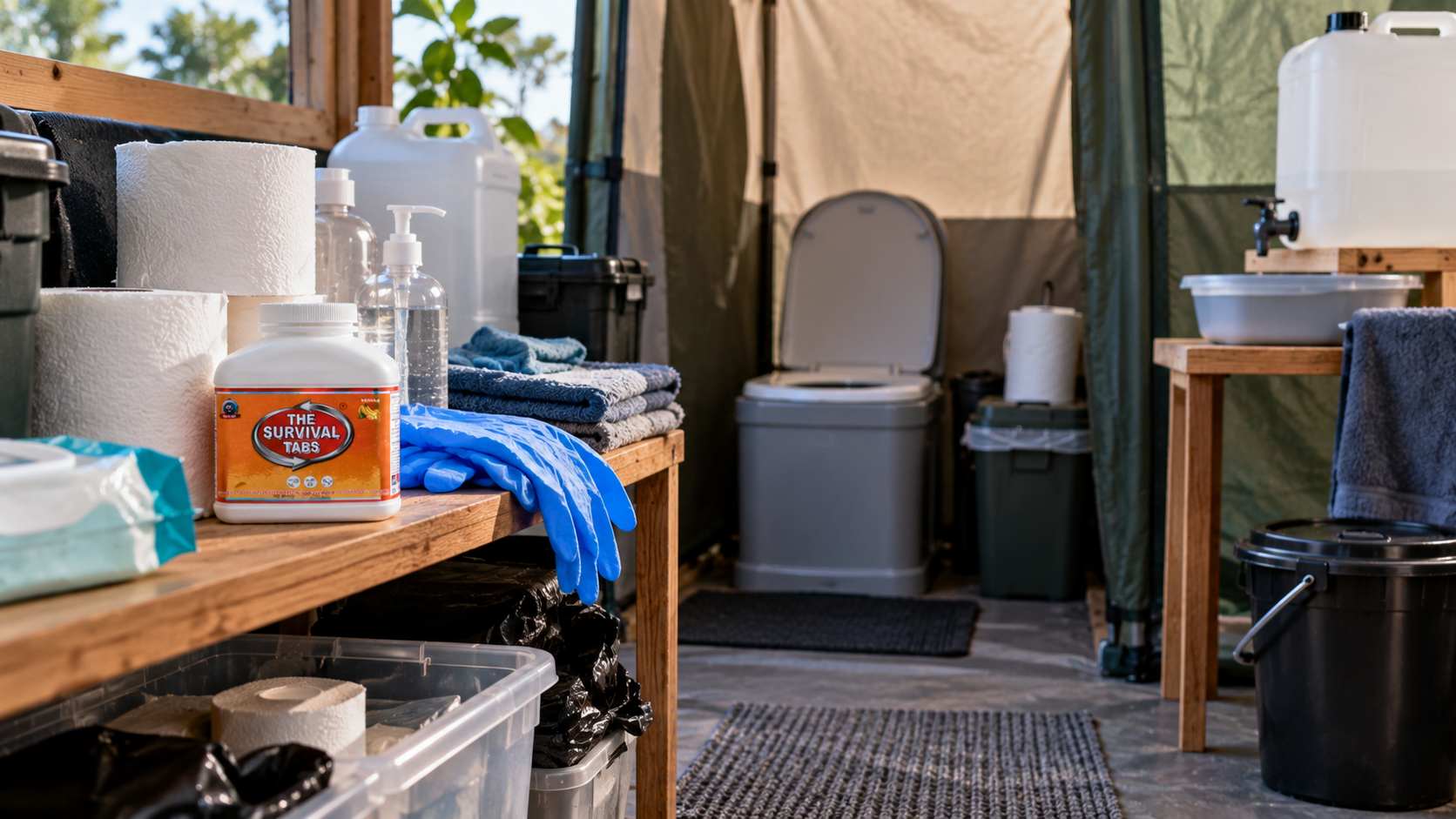
A practical household system for toilets, hand hygiene, waste, cleaning, and disease prevention when normal services fail.
Start with the hazard, not the gadget
- Follow public-health and utility instructions before using any improvised system.
- Keep human waste, drinking water, food, children, pets, and floodwater physically separated.
- Stop using a toilet if sewage is backing up or officials say the sewer is unsafe.
- Treat vomiting, diarrhea, fever, dehydration, or suspected exposure as a medical issue—not a sanitation experiment.
Build a sanitation module before an emergency
- Store soap, alcohol-based hand sanitizer, toilet paper, heavy-duty bags, ties, disinfectant used according to its label, disposable gloves, menstrual supplies, diapers, and cleaning tools.
- Plan for mobility, continence, ostomy, catheter, and caregiver needs with the person and their clinician.
- Keep a written local list for sewer, septic, solid-waste, public-health, and emergency contacts.
- Choose a private, ventilated, accessible location that does not block exits.
If toilets stop working
- Confirm whether the problem is inside the building, at the utility, or caused by flooding.
- Use an approved portable toilet or locally authorized temporary system when available.
- Line, close, label, and store waste only as local officials direct; do not burn, bury, flush, or dump it without authorization.
- Keep a dedicated handwashing station immediately beside the toilet area.
Hand hygiene
- Wash with safe running water and soap whenever available, especially after toilet use and before food handling.
- If hands are visibly dirty, remove soil and wash; sanitizer is not a complete substitute.
- Supervise children and keep sanitizer, chemicals, and waste containers out of reach.
- Use separate towels or disposable drying materials and replace contaminated items.
Cleaning and disinfection
- Clean visible dirt first, then disinfect only with a product appropriate for the surface and hazard.
- Never mix bleach, ammonia, acids, or other cleaners.
- Ventilate as directed on the label and use required protective equipment.
- Discard porous items contaminated by sewage when public-health guidance says they cannot be safely cleaned.
Waste, pests, and odors
- Close food waste and human waste promptly.
- Keep waste away from water storage, food, sleeping areas, and air intakes.
- Use screens, lids, and routine removal to limit flies, rodents, and mosquitoes.
- Odor control never replaces safe containment and disposal.
Flood and sewage boundaries
- Avoid contact with floodwater and sewage whenever possible.
- Do not let children or pets play in contaminated areas.
- Discard food and medicines exposed to floodwater unless authorities specifically say they are safe.
- Use professionals for sewer backups, septic damage, mold, or large contaminated areas.
Daily sanitation check
- Is safe water available for drinking and handwashing?
- Is the toilet system stable, private, accessible, and away from food?
- Are bags, lids, and waste containers closed and intact?
- Are anyone’s symptoms worsening?
- Have local instructions changed?
What not to do
- Do not use unapproved chemicals in toilets or septic systems.
- Do not improvise sharps disposal where children or waste handlers could be injured.
- Do not claim that a homemade system makes contaminated water or surfaces sterile.
- Do not delay evacuation when sanitation failure makes the location unsafe.
Frequently asked questions
- Can I keep using a toilet during a sewer outage? Only if the utility or local authority says the system remains usable.
- Is hand sanitizer enough? It is useful when appropriate, but soap and safe water remain important, especially for visibly dirty hands.
- Can waste be buried? Rules and environmental risks vary; follow local public-health and waste instructions.
- When should I leave? Leave when officials order it or when waste, water, ventilation, accessibility, or health needs cannot be managed safely.
Professional review before publication
- Public-health and WASH review
- Wastewater or septic review
- Accessibility and caregiving review
- Medical and infection-control review
- Environmental and local legal review
Official sources
- CDC emergency sanitation solutions
- CDC WASH and waste disposal
- CDC evacuation-center infection control
- Ready.gov emergency kit
- Ready.gov shelter guidance
- EPA septic systems
Editorial note
This article is educational and must be reviewed by the listed professionals before publication. Follow current official instructions, local law, product labels, and qualified advice during an emergency.
Expanded operational guidance
This section adds the detailed household procedures, decision points, accessibility measures, and stop-use rules required for publication-level implementation.
Expanded operational guidance
- This section adds the detailed household procedures, decision points, accessibility measures, and stop-use rules required for publication-level implementation.
- Sanitation priorities during the first operational period
- Confirm whether local water, sewer, trash, and public-health services are functioning before choosing a household sanitation plan.
- Separate drinking-water storage from water reserved for washing, cleaning, and toilet use; label every container clearly.
- Assign one adult to check water, toilet, waste, cleaning, and symptom conditions at least twice each day.
- Protect the cleanest available room or zone for food preparation, medication handling, infant care, and wound care.
- Move immediately to a safer location if sewage, chemical fumes, uncontrolled waste, or loss of accessible toileting makes the site unsafe.
- Record official notices and the time sanitation conditions change so the household does not rely on memory.
- Prioritize soap, safe water, toilet access, menstrual supplies, diapers, gloves, waste bags, and cleaning materials before convenience items.
- Use the simplest safe system that household members can operate consistently, including at night and during bad weather.
- Water allocation for hygiene without compromising drinking supply
- Estimate hygiene demand separately from drinking and cooking needs, then revise the plan as household size or outage duration changes.
- Reserve the safest water for drinking, food preparation, brushing teeth, medication, infant formula, and cleaning food-contact items.
- Use only water that authorities consider appropriate for handwashing when contamination advisories are in effect.
- Place a controlled-flow handwashing station near the toilet area while keeping runoff away from food, stored water, and walkways.
- Never refill a drinking-water container from a nonpotable source unless it has been cleaned and handled under current official guidance.
- Prevent cross-contact by assigning distinct scoops, taps, or containers to potable and nonpotable water.
- Monitor older adults, children, pregnant people, and anyone with illness for dehydration when water conservation changes normal routines.
- Replenish early when safe access is available; do not wait until the household has only one day of essential water remaining.
- Handwashing station design and daily operation
- Choose a stable location with drainage that does not create mud, ice, falls, pests, or standing water.
- Provide soap, safe water, a controlled dispenser, and individual or disposable drying materials.
- Mount or place supplies so children and people with limited reach or dexterity can use them safely.
- Post a simple sequence: wet hands, apply soap, scrub all surfaces, rinse, and dry with a clean material.
- Clean high-touch parts of the station and replace contaminated towels or catch basins on a fixed schedule.
- Keep hand sanitizer available for suitable situations, but do not treat it as a universal substitute for soap and water.
- Require hand cleaning after toilet use, diapering, waste handling, animal contact, cleanup, and before food or medication tasks.
- Stop using the station if its water source, drainage, container, or dispensing surfaces become contaminated.
- Toilet continuity and backup decision tree
- Ask the utility or local authority whether flushing is permitted; visible water in the bowl does not prove the sewer system is usable.
- Stop flushing immediately when sewage backs up, drains gurgle, wastewater rises, or officials report sewer failure.
- Use an approved portable or lined emergency toilet only as allowed by local public-health and waste rules.
- Place backup toileting on a level surface with privacy, lighting, ventilation, handwashing access, and fall prevention.
- Keep the toilet away from food preparation, stored water, heating equipment, children’s play areas, and air intakes.
- Use absorbent or treatment materials only as directed for the chosen system; never mix unapproved chemicals.
- Seal and store waste in the manner specified by local authorities, protecting workers, animals, and household members.
- Arrange accessible alternatives early for anyone who cannot safely transfer to or operate the backup system.
- Human waste containment and removal
- Use strong, compatible containers or bags designed for the selected system and never overload them.
- Close waste after each required interval and inspect for punctures, leaks, pressure, or animal access.
- Create a marked dirty route for moving waste that does not cross the clean food, water, sleeping, or medication zones.
- Use gloves when indicated, remove them without touching contaminated surfaces, and wash hands afterward.
- Keep children and pets away from stored waste and from all cleaning or treatment products.
- Follow official pickup, drop-off, landfill, septic, or temporary-storage instructions; emergency conditions do not cancel local rules.
- Do not burn, dump, bury, or place human waste in storm drains, waterways, ordinary recycling, or unauthorized land.
- Document missed collections and worsening storage conditions so evacuation or professional support occurs before containment fails.
- Diapers, menstrual care, continence, and caregiving
- Store diapers, wipes, menstrual products, continence supplies, disposal bags, barrier cream, and spare clothing together in a reachable kit.
- Set up a private care surface that can be cleaned and kept separate from food and sleeping equipment.
- Clean hands before and after care and between different people, even when gloves are used.
- Dispose of blood, stool, urine, and used care items according to local health and waste instructions.
- Plan additional water and laundry capacity for reusable products; do not adopt a reusable system during an outage without safe washing.
- Protect dignity by using neutral labels, privacy screens, lighting, and a reliable way to request help.
- Watch for skin breakdown, pain, fever, dehydration, reduced urination, or other concerning changes and seek qualified care.
- Include backup caregivers and written routines for anyone who depends on assistance with toileting or personal hygiene.
- Food-area sanitation and dishwashing
- Create a clean food zone with controlled entry and no waste sorting, diapering, pet feeding, or chemical storage.
- Wash hands and clean preparation surfaces before handling food, infant formula, medications, or clean utensils.
- Use current official guidance for washing, rinsing, and sanitizing food-contact items when water service is disrupted.
- Do not use floodwater, untreated surface water, or water under a do-not-use advisory for dishes or food-contact surfaces.
- Separate raw foods and contaminated items from ready-to-eat foods and clean utensils.
- Discard food-contact items that cannot be safely cleaned after sewage, floodwater, chemical, or rodent contamination.
- Air-dry sanitized items in a protected location rather than wiping them with a potentially contaminated cloth.
- Stop meal preparation when safe water, hand hygiene, temperature control, or a clean work surface cannot be maintained.
- Cleaning and disinfecting safely
- Identify the hazard first; routine dirt, bodily fluids, sewage, mold, and chemical contamination require different responses.
- Clean visible soil before disinfecting unless the product label explicitly directs otherwise.
- Use only labeled products suitable for the surface and intended hazard, and follow concentration, contact-time, ventilation, and protective-equipment directions.
- Never mix bleach with ammonia, acids, vinegar, alcohol, or other cleaners because toxic gases or dangerous reactions may result.
- Keep products in original labeled containers and never transfer them to beverage bottles or unmarked sprayers.
- Increase ventilation without spreading contamination into clean rooms, occupied sleeping areas, or neighboring homes.
- Contact professionals for extensive sewage, mold, chemical, asbestos, or structural contamination.
- Leave the area and seek emergency help for breathing difficulty, chest pain, severe eye exposure, collapse, or suspected toxic gas.
- Laundry, bedding, and personal items
- Separate contaminated laundry at the point of use and avoid shaking items that may spread droplets, dust, mold, or waste.
- Handle soiled items with appropriate protection and wash hands immediately afterward.
- Follow fabric labels and public-health guidance for water temperature, detergent, drying, and disinfection.
- Do not wash sewage- or chemical-contaminated items in a machine if doing so could contaminate plumbing, equipment, or other loads.
- Dry items completely before storage to reduce microbial growth and odor.
- Assign personal towels, washcloths, razors, toothbrushes, and care equipment rather than sharing.
- Provide sealed temporary storage when laundry service is unavailable, keeping it outside clean living zones.
- Discard items that authorities or qualified restoration professionals determine cannot be safely cleaned.
- Solid waste, pests, and vector control
- Reduce waste by choosing durable essentials, but never reuse contaminated food, medical, sanitation, or chemical packaging.
- Use containers with intact lids and liners appropriate for the waste and local collection method.
- Remove food residue promptly and keep trash away from water storage, food areas, doors, windows, and animal feed.
- Inspect daily for flies, mosquitoes, rodents, insects, leaks, gnawing, droppings, and damaged containers.
- Use screens, lids, drainage, and timely removal before relying on pesticides.
- Follow product labels and keep pesticides away from children, pets, food, medications, and ventilation intakes.
- Do not sweep or vacuum rodent droppings until current public-health guidance for safe cleanup has been followed.
- Escalate to public-health, waste, pest-control, or property professionals when infestation or missed collection exceeds household capacity.
- Health monitoring and infection-control triggers
- Keep a confidential daily record of vomiting, diarrhea, fever, rash, breathing problems, wounds, dehydration signs, and unusual clusters of illness.
- Separate ill people from food preparation and shared hygiene supplies when feasible and follow current clinical guidance.
- Clean high-touch surfaces according to the identified illness and product directions rather than using indiscriminate chemical mixtures.
- Seek urgent medical advice for blood in stool, persistent vomiting, severe abdominal pain, confusion, fainting, or inability to keep fluids down.
- Treat reduced urination, very dry mouth, unusual sleepiness, dizziness, or rapid worsening as possible dehydration warning signs.
- Report suspected outbreaks or sewage-related illness through local public-health channels when directed.
- Protect caregivers with hand hygiene, appropriate barriers, ventilation, and rest; a sick caregiver can destabilize the entire plan.
- Do not diagnose the cause of illness from symptoms alone or delay professional care because an emergency sanitation plan is operating.
- Accessibility, children, older adults, and pets
- Test every sanitation route for lighting, steps, narrow doors, slippery surfaces, reach, transfer space, and nighttime use.
- Provide stable seating, grab support approved for the setting, mobility-aid space, and a call-for-help method where needed.
- Use picture instructions, large print, high contrast, plain language, or translated steps for household members who need them.
- Supervise children around buckets, water containers, chemicals, waste, sharps, and temporary toilets.
- Plan extra supplies and temperature control for infants, pregnancy, disability, chronic illness, and older adults.
- Store pet waste separately, maintain animal drinking water, and prevent animals from entering human sanitation and food zones.
- Identify an accessible shelter or alternate location before the home system fails.
- Ask affected household members what works for them; do not substitute assumptions for individual requirements.
- Restoration, reopening, and after-action review
- Wait for official confirmation before resuming normal sewer, water, trash, or septic use.
- Flush, clean, disinfect, or service systems only according to utility, manufacturer, public-health, and qualified professional instructions.
- Inspect stored supplies and discard expired, leaked, unlabeled, flood-exposed, pest-damaged, or chemically contaminated items.
- Replenish soap, water containers, waste bags, gloves, menstrual supplies, diapers, and cleaning products immediately after use.
- Record which quantities, locations, instructions, and accessibility arrangements were inadequate.
- Update household contacts for utilities, public health, waste services, plumbers, septic professionals, shelters, and medical care.
- Practice setting up the backup handwashing and toilet systems after improvements are made.
Keep the article and household plan aligned with current official guidance, product labels, and local law.