

Emergency Radio and Communication Guide
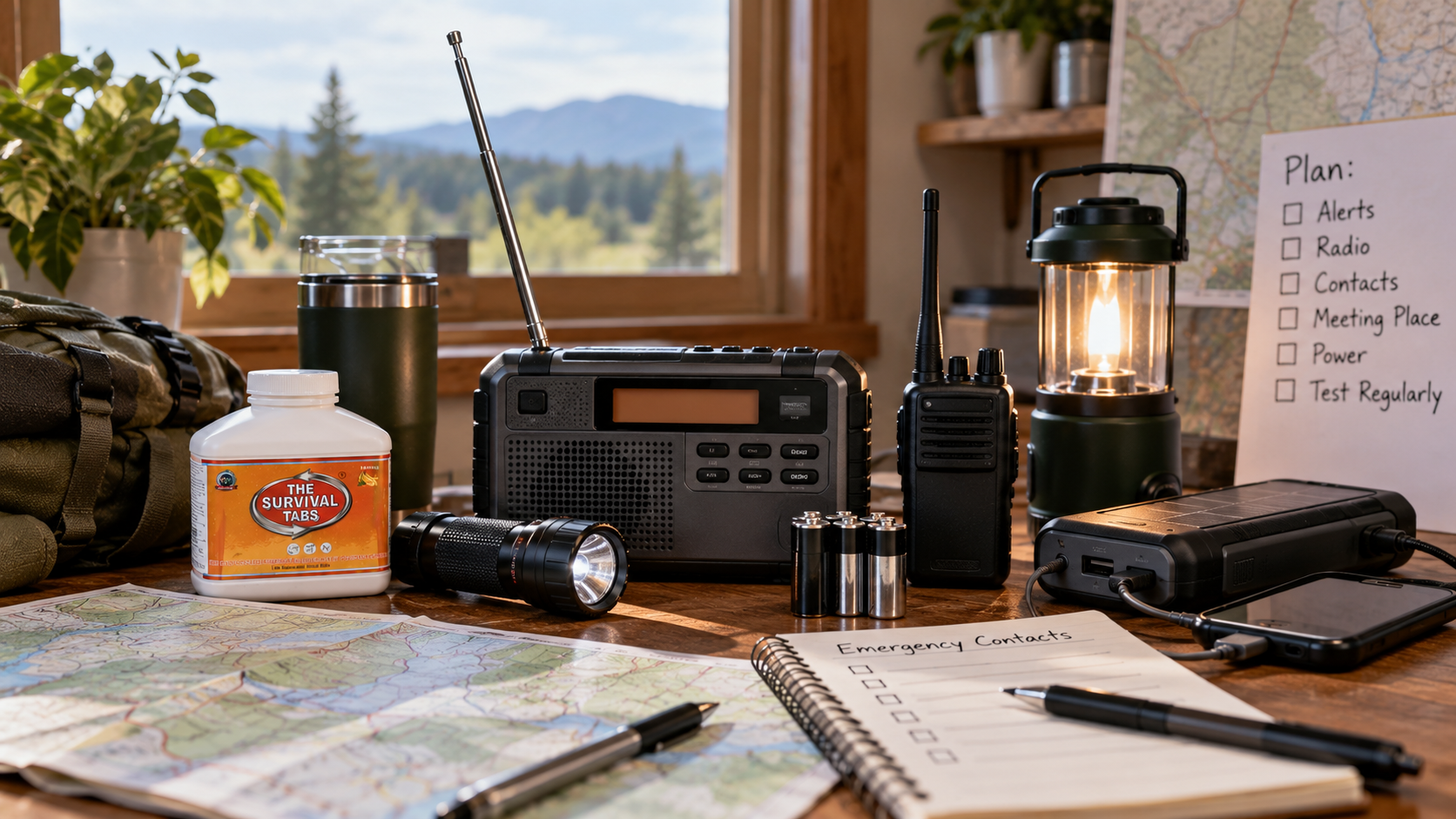
Emergency communication should not depend on a single phone, app, network, or power source. A layered communication plan combines official alerts, local radio, household contacts, backup power, and prearranged actions when networks are congested or unavailable.
Start With Official Alerts
Enable appropriate emergency alerts on mobile devices and learn the official warning channels used by local authorities. In the United States, NOAA Weather Radio All Hazards broadcasts National Weather Service warnings, watches, forecasts, and other hazard information around the clock in covered areas.
Why a Dedicated Weather Radio Helps
A dedicated receiver does not depend on home internet service. Models with alert functions can sound when emergency messages are issued. Battery backup is important during outages.
SAME Alerts
Specific Area Message Encoding (SAME) allows compatible NOAA Weather Radio receivers to be programmed for selected geographic areas. This can reduce unrelated alerts while preserving warnings for the programmed location. Follow current National Weather Service and radio-manufacturer instructions when programming a receiver.
Radio Features to Consider
• NOAA Weather Radio reception where applicable
• alert tone capability
• SAME capability where supported
• replaceable or rechargeable battery power
• easy-to-read controls and display
• external power options
• headphone or accessibility features where needed
• durable construction appropriate to the intended environment
Do Not Rely on One Power Source
Keep spare batteries appropriate to the device and maintain a safe charging plan. A hand-crank or solar feature can be useful, but should not be assumed to replace properly maintained batteries or other backup power.
Household Communication Plan
Choose an out-of-area contact when practical. Record important phone numbers on paper as well as in phones. Decide where household members will meet if they cannot return home. Include school, workplace, caregiver, medical, pet, and accessibility arrangements.
During Network Congestion
Follow local emergency guidance. Text messaging may sometimes work when voice networks are congested, but no communication method is guaranteed. Conserve battery power, reduce unnecessary calls, and keep official information channels available.
Two-Way Radios
Family or handheld radios can support short-range communication in some situations, but range varies greatly with terrain, buildings, antenna height, radio service, and device power. Follow applicable licensing and operating rules. Do not assume advertised maximum range will be achieved in real conditions.
Testing
A radio stored for years without testing is not a reliable emergency tool. Periodically:
• test reception from the intended location
• verify alert settings
• inspect batteries for leakage or deterioration
• recharge rechargeable batteries
• confirm household members know how to operate the device
• update written contact information
Accessibility
Emergency communication plans should account for hearing, vision, cognitive, language, and mobility needs. Use multiple alert formats when appropriate and coordinate with caregivers or local services before an emergency.
Bottom Line
The best emergency communication system is layered: official mobile alerts, radio, household planning, backup power, written contacts, and more than one way to receive critical information.
Editorial note: Consolidates legacy IDs 284, 286, 287, and 288. Product rankings and unrealistic radio-range claims excluded. NOAA Weather Radio coverage and features should be verified for the reader's location before publication.