

Emergency Radio and Communication Guide
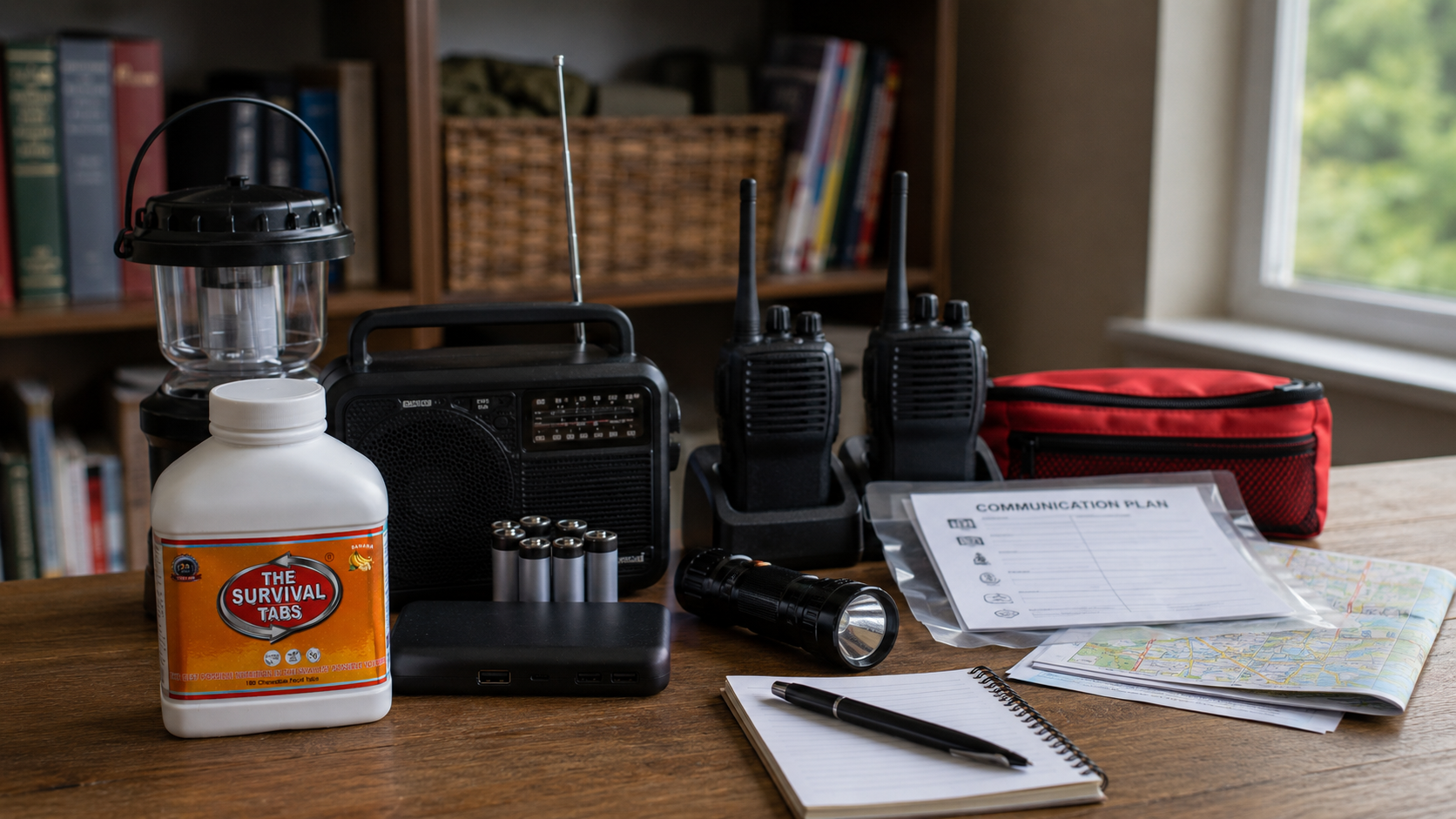
Communication often becomes harder during emergencies at exactly the time reliable information matters most. Power can fail, cellular networks can become overloaded, internet service may be interrupted, and family members may be in different locations. A strong plan uses several methods rather than depending on one device.
1. Start With a Written Family Communication Plan
Record household phone numbers, an out-of-area contact, schools, workplaces, caregivers, medical contacts, utility numbers, and two meeting locations. Give each household member a printed copy.
2. Use Text Messages When Networks Are Congested
Short text messages may get through when voice calls are difficult. Keep messages brief: location, condition, and next action.
3. Choose an Out-of-Area Contact
A person outside the affected area can act as a communication hub if local family members cannot reach one another directly.
4. Keep Official Alert Sources Available
Enable local emergency alerts on mobile devices. A battery-powered or hand-crank radio provides another way to receive official information if internet and cellular service are unavailable.
5. Understand Radio Types
- AM/FM emergency radio: local news and public broadcasts.
- NOAA Weather Radio: weather and emergency information in covered U.S. areas.
- Two-way radios: short-range group communication.
- Amateur radio: broader capabilities that generally require licensing and training to transmit.
6. Do Not Rely on Advertised Range Alone
Two-way radio range depends on terrain, buildings, vegetation, antenna, power, and line of sight. Test radios where you expect to use them.
7. Plan for Backup Power
Keep spare batteries, charged power banks, and the correct charging cables with the equipment. Know how rechargeable radios will be powered during a multi-day outage.
8. Protect Equipment
Keep radios, batteries, and printed contacts in a dry, accessible container. Inspect and test equipment regularly.
9. Establish Check-In Times
If family members are separated, decide when they will attempt contact. A predictable schedule reduces unnecessary battery use and repeated calling.
10. Use Plain Language
State who you are, where you are, whether you are safe, what you need, and what you plan to do next.
11. Communication During Evacuation
Tell your out-of-area contact where you are going when possible. Carry written addresses and phone numbers and keep a paper map.
12. Know Community Communication Channels
Learn how local government, schools, workplaces, apartment buildings, or neighborhoods distribute emergency information.
13. Radio Etiquette
Listen before transmitting, keep messages short, identify yourself clearly, and avoid unnecessary use of shared channels. Remember that many radio channels are not private.
14. Emergency Communication Checklist
- Written household contact list.
- Out-of-area contact.
- Two meeting locations.
- Mobile emergency alerts.
- Battery or hand-crank radio.
- Spare batteries and power banks.
- Two-way radios if useful.
- Charging cables.
- Printed addresses and maps.
- Scheduled check-in plan.
- Regular equipment tests.
15. Practice the System
Run a simple drill: send a short check-in message, contact the out-of-area person, tune the emergency radio, and verify meeting locations.
Conclusion
Emergency communication is a layered system: written contacts, meeting plans, text messaging, official alerts, radio, backup power, and practiced procedures. Redundancy makes the system more useful when normal communications are disrupted.