

Emergency Preparedness for Travelers and Hotel Stays
Emergency Preparedness for Travelers and Hotel Stays
Travel places you in unfamiliar buildings, transportation systems and communities. A small amount of preparation can make disruptions easier to manage.
Before leaving Save your itinerary, lodging address, transportation details, emergency contacts and copies of essential travel documents for offline access. Share the basic itinerary with a trusted person. Check destination weather and significant local hazards.
At the hotel Locate usable exits and notice landmarks between your room and the exit. Read the property's emergency information. Do not assume elevators will be usable during evacuation. Keep shoes, room key, phone and a small light in a consistent location at night.
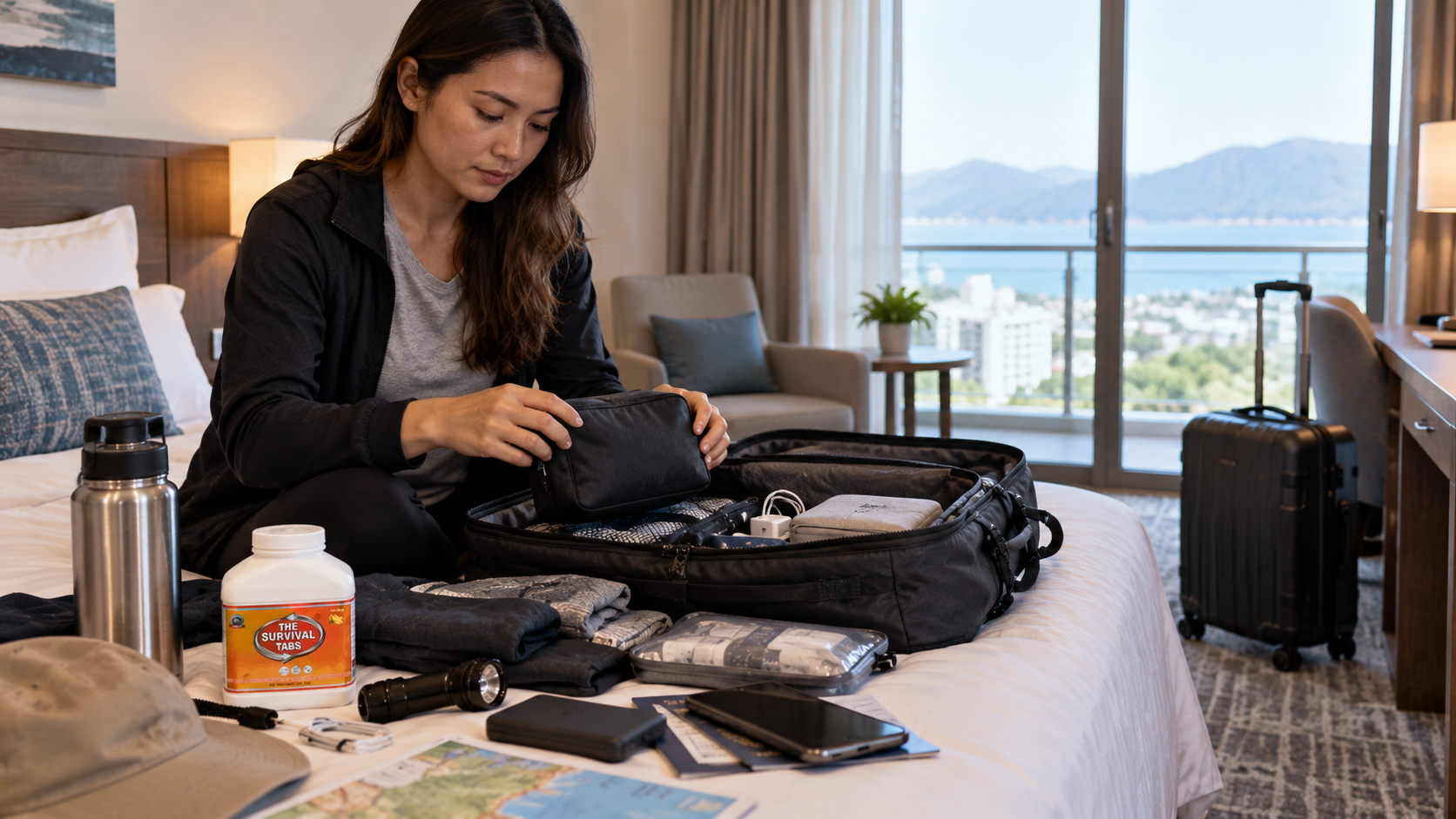
Compact travel layer Useful items may include a power bank, cable, small flashlight, first-aid supplies, essential medications, water where permitted, shelf-stable food, hygiene items and a paper copy of critical contacts. Follow airline, border and venue rules.
Communication Know how to contact family, lodging, travel providers and relevant consular services if your primary connection fails. Download important maps. Keep reservation numbers and addresses outside a single app.
Disruptions Keep enough flexibility in medication, charging and basic supplies for reasonable delays. Follow local authorities and transportation operators rather than entering hazardous areas to maintain an itinerary.
Food and water People with allergies, diabetes, medically prescribed diets or other requirements should plan carefully. Safe water remains fundamental.
Add child-specific, mobility, sensory, communication or medical requirements when relevant. Survival Tabs can be one compact shelf-stable option for appropriate users, but should complement—not replace—water, necessary medications and foods required for individual dietary needs.