

Emergency Preparedness for Older Adults
Emergency Preparedness for Older Adults
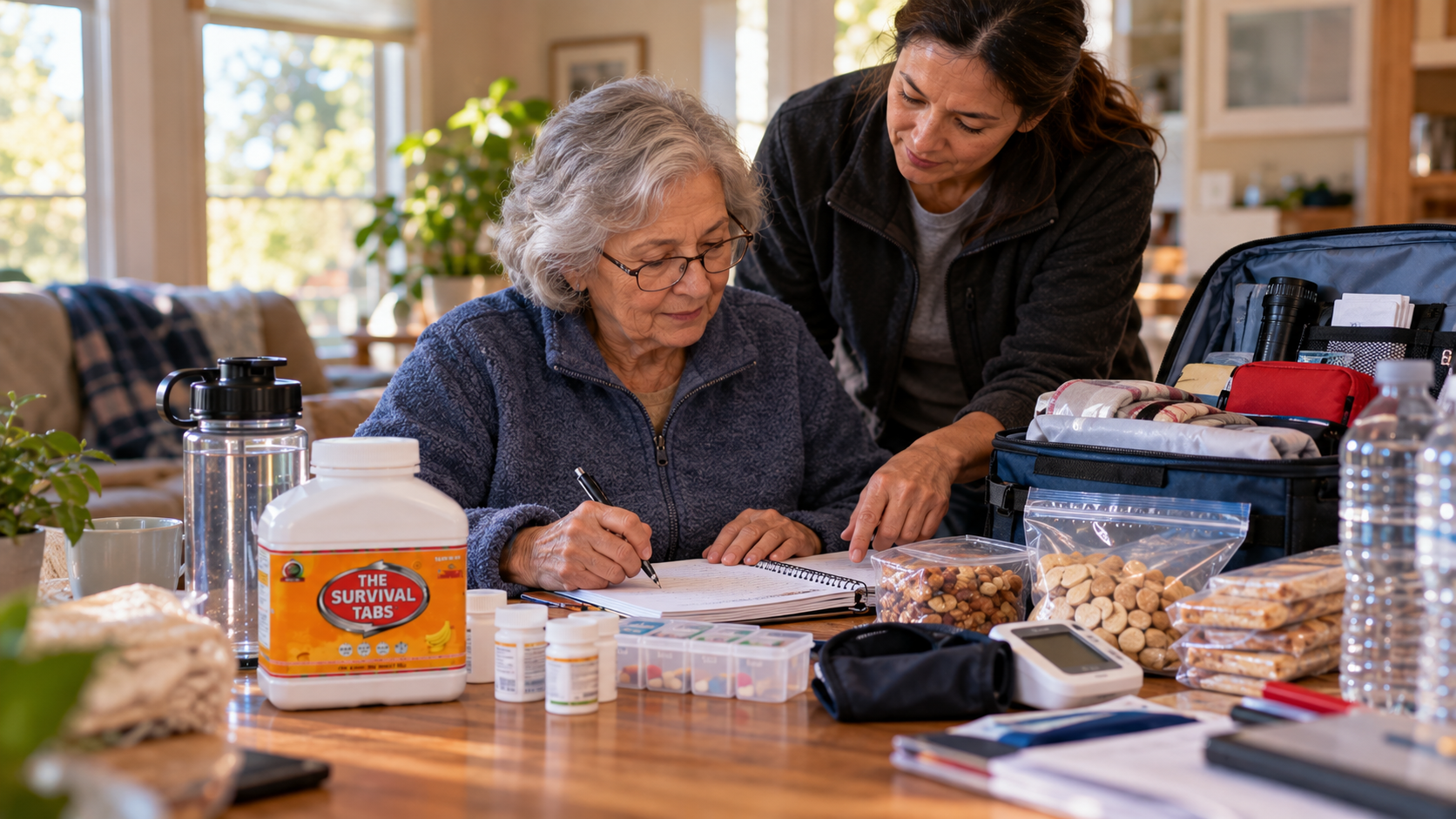
Preparedness should reflect health, mobility, communication, transportation, caregiving and daily routines. Older adults are not one group, so the plan must be individualized.
Create a support network
Identify trusted people who can check in, help evacuate or assist with supplies. Share only necessary information and practice how support will work if phones fail.
Medication and equipment
Keep an updated medication list, clinician and pharmacy contacts, allergies and equipment instructions. Ask qualified providers about refill, refrigeration and powered-device continuity.
Accessible evacuation
Plan transport, mobility aids, hearing or vision supports, service animals and accessible destinations. Leave early when movement takes additional time.
Food and water
Store easy-to-open, familiar foods that fit medical, chewing and swallowing needs, plus safe water. Do not rely on one product or a food that has not been tested.
Documents and communication
Protect identification, insurance, health records and contacts in accessible formats. Follow official alerts and local older-adult preparedness resources.