

Emergency Preparedness for People with Cognitive Disabilities
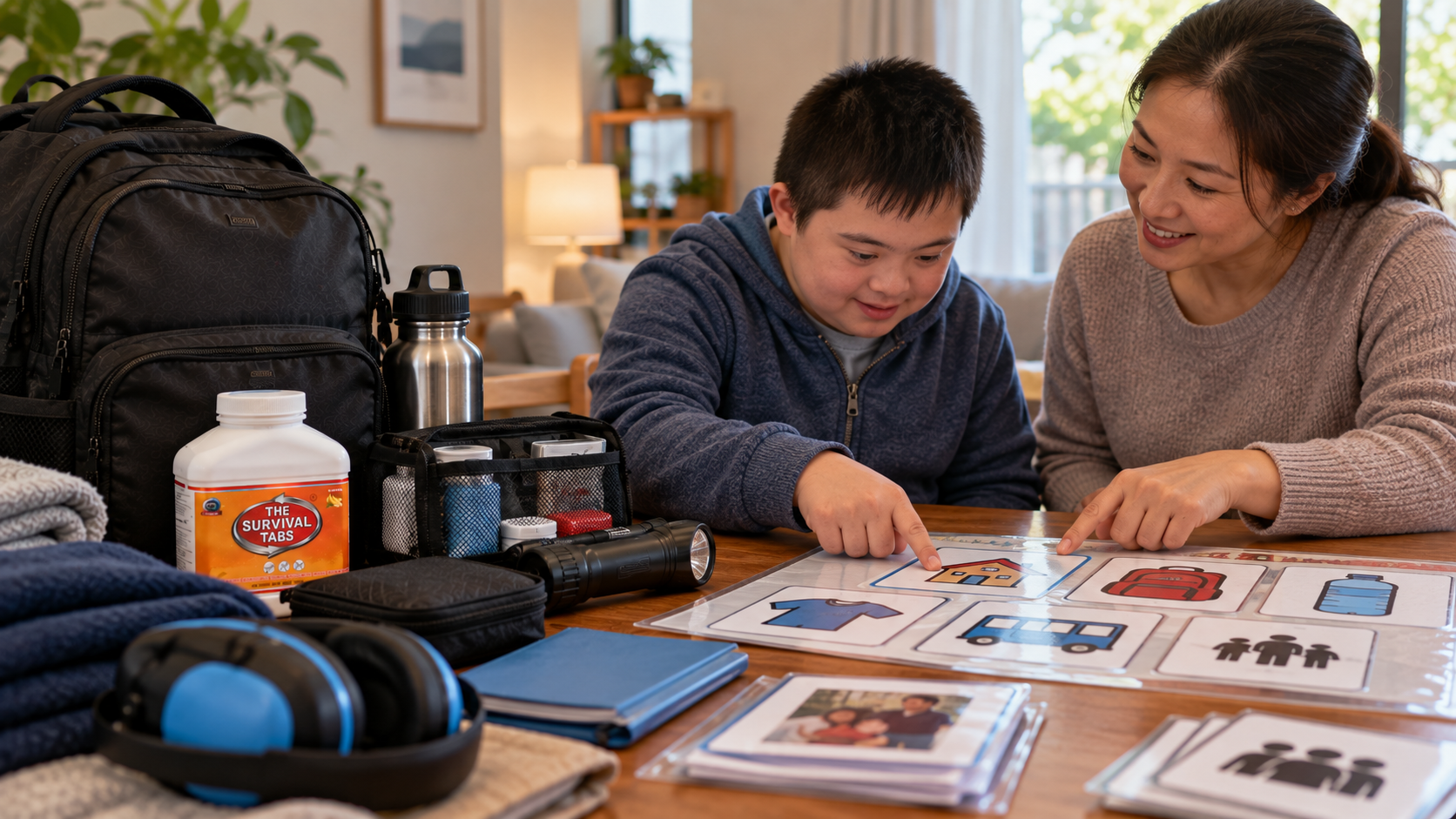
Quick answer: Use a person-centered plan with short instructions, familiar tools, repeated practice, and trusted support. Avoid assuming that one communication method or level of assistance fits everyone.
Identify how the person understands best
Use plain language, pictures, demonstrations, checklists, color or object cues, audio, or other familiar formats. Keep instructions short and focused on the next safe action.
Preserve routine where possible
Pack familiar food, comfort items, communication aids, medication, identification, sensory supports, and schedule information. Explain changes honestly without creating unnecessary fear.
Practice specific actions
Rehearse alarms, exits, meeting places, identification, transport, and shelter routines in manageable steps. Do not use surprise drills that may cause harm.
Build consent-based support
Record who the person trusts, how assistance should be offered, decision-making arrangements, triggers, calming approaches, and what responders should avoid. Protect dignity and privacy.
Plan for separation and reunification
Use current photographs, identification, contacts, and a clear pickup plan. Follow safeguarding procedures for children and adults who need support.
Quick checklist
- Save official alerts and contacts offline.
- Include medication, accessibility, children, older adults, animals, and transport needs.
- Practice the plan and update it after household changes.
- Follow current local instructions during an actual emergency.
Official sources
- Ready.gov — People with Disabilities: https://www.ready.gov/people-disabilities
- FEMA Disability Toolkit: https://www.ready.gov/disability-toolkit
This guide provides general preparedness education and does not replace emergency services, product labels, or qualified professional guidance.