

Emergency Preparedness for Blind and Low-Vision People
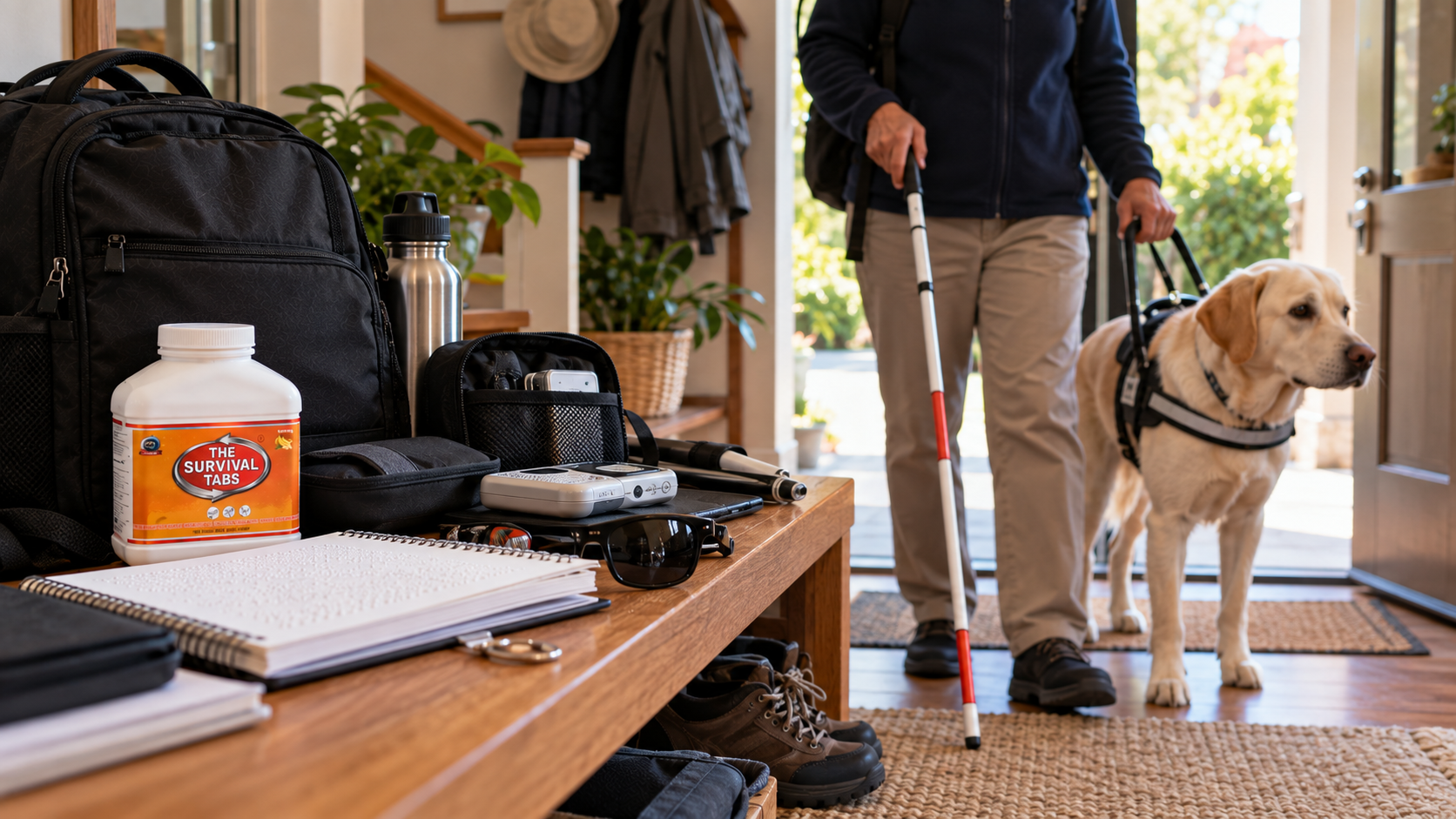
Quick answer: Organize supplies and routes in formats the individual can use independently, preserve familiar layouts, and plan for debris, outages, inaccessible signage, and separation from mobility tools or service animals.
Make information accessible
Store contacts and plans in preferred formats such as large print, audio, Braille, accessible digital files, or tactile labels. Keep essential information available offline.
Practice routes
Learn primary and alternate exits from home, work, and frequent locations. Practice with the mobility tools normally used and plan for stairs, debris, crowds, darkness, and disrupted landmarks.
Protect essential equipment
Keep canes, glasses, magnifiers, device chargers, batteries, medication, and repair information accessible. Do not move these items without telling the person.
Include service animals
Prepare food, water, medication, harnesses, identification, waste supplies, and veterinary records. Service animals may behave differently during stress; keep backup orientation and assistance options.
Maintain personal control
Support networks should communicate directly, identify themselves, explain hazards, ask before touching, and offer an arm rather than pulling or moving a person without consent.
Quick checklist
- Save official alerts and contacts offline.
- Include medication, accessibility, children, older adults, animals, and transport needs.
- Practice the plan and update it after household changes.
- Follow current local instructions during an actual emergency.
Official sources
- Ready.gov — People with Disabilities: https://www.ready.gov/people-disabilities
- FEMA Disability Toolkit: https://www.ready.gov/disability-toolkit
This guide provides general preparedness education and does not replace emergency services, product labels, or qualified professional guidance.